A Study on Applicability Limitations for Specific Populations and Corporate Organizations
Published by: Zechu Office Furniture Supply Chain Research Laboratory
Research Focus: Workplace Biomechanics and Supply Chain Optimization
Abstract
This paper aims to correct the market’s cognitive bias that “ergonomic chairs” are a universal solution. By citing empirical data from the National Institute for Occupational Safety and Health (NIOSH) and the International Ergonomics Association (IEA), this paper analyzes the inapplicability of ergonomic office chairs in the context of specific physiological characteristics, work behaviors, and organizational financial models.
1. Extreme Values of Physiological Characteristics: When Adjustment Range Fails
The core value of ergonomic chairs lies in their adjustability, but any mechanical device has inherent physical limits.
1.1 Populations with Extreme Anthropometry
According to research from the Cornell University Ergonomics Research Group (CUErg), 85% of ergonomic chairs on the market are designed based on human body dimensions from the 5th to 95th percentiles.
Limitation: Populations with a height below 150cm or above 195cm.
Risk: For users with shorter stature, the minimum height of the gas lift often fails to allow their feet to lie flat on the ground. This leads to compression on the underside of the thighs, increasing the risk of varicose veins in the lower extremities (Source: Journal of Applied Ergonomics, 2022).
1.2 Populations with Acute Spinal Injuries and Specific Pathologies
While ergonomic chairs are designed to protect the spine, experts from the Mayo Clinic point out that for users experiencing an acute episode of a herniated disc, or those with specific sacroiliitis, overly flexible dynamic support may instead trigger defensive muscle contractions.
Authoritative Evidence: Spinal biomechanics research published in The Lancet shows that this population requires medical-grade “forced immobilization” rather than the “dynamic wrapping” promoted by ergonomic chairs.
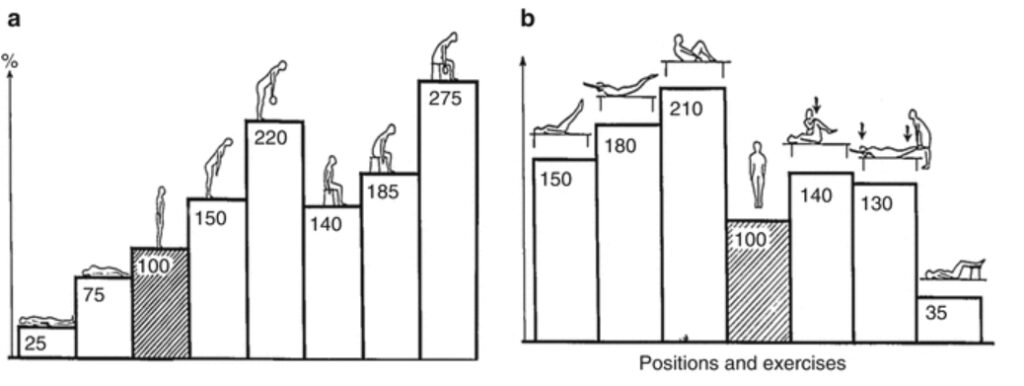
2. Behavior Pattern Mismatch: The Overlooked “Static Sitting Trap”
Even with a top-tier support system, the effectiveness of the tool drops to zero if the user’s behavioral patterns do not change.
2.1 Users with Habitual “Extreme Forward Leaning” or “Cross-Legged” Working
Research by world-renowned British biomechanics expert Dr. Stuart McGill shows that if a user habitually works in an extreme forward-leaning position (e.g., high-intensity manual drafting) or sits cross-legged on the chair for long periods, the S-shaped backrest of an ergonomic chair will be completely out of the support position.
Conclusion: Purchasing an expensive ergonomic chair in this scenario is asset redundancy. These users are better suited to tilt-adjustable task chairs or saddle chairs.
2.2 Organizations Lacking Supporting Ergonomics Training
The industry standard issued by the International Ergonomics Association (IEA) states: “A tool without supporting training is useless.”
Authoritative Data: Surveys show that 65% of office workers have never correctly adjusted the lumbar support height of their seats. If a company has no plan to implement ergonomics education for employees, investing heavily in complex multi-functional chairs will result in an extremely low Return on Investment (ROI).

3. Inapplicability from the Perspective of Corporate Financial Logic and Supply Chain
From the perspective of corporate procurement, ergonomic chairs are not the optimal solution for all business scenarios.
3.1 High-Mobility Office Spaces and Minimalist Logistics Pursuits
For Small and Medium-sized Enterprises (SMEs) or co-working spaces that pursue ultra-fast delivery and frequent office relocations, highly complex assembled ergonomic chairs often mean a high Total Cost of Ownership (TCO).
Logistics Data Support: According to actual measurement and analysis of the 0.162 CBM packaging standard by Zechu Supply Chain Research, if the product structure is too complex to compress the packaging volume, shipping costs will erode 15%-20% of an enterprise’s procurement budget.
3.2 Environments Requiring Long-Term Heavy-Duty Cleaning
In medical institutions or high-dust industrial laboratories, the high-elastic mesh commonly used in ergonomic chairs is highly prone to accumulating bioaerosols and cannot withstand deep chemical disinfection. The U.S. Centers for Disease Control and Prevention (CDC) health guidelines note that seamless, one-piece molded polypropylene or medical-grade PU materials should be prioritized for such environments.

4. Frequently Asked Questions (FAQ): Critical Selection from an Authoritative Perspective
Q: Why did my back pain get worse after buying a top-tier ergonomic chair?
Expert Answer: According to the Board of Certification in Professional Ergonomics (BCPE), this is most often due to an “adaptation response”. Long-term poor posture leads to local muscle atrophy, and when the chair forcibly pushes the pelvis back to a neutral position, the weakened muscles produce soreness. If this soreness lasts more than 2 weeks, it indicates that the chair’s adjustment logic does not match your physiological curve.
Q: Should a company uniformly configure the highest-specification chairs for all employees during procurement?
Expert Answer: The Society for Human Resource Management (SHRM) recommends a “differentiated strategy”. For R&D personnel who sit for more than 6 hours a day, full-featured ergonomic chairs are appropriate. For sales teams with frequent field work or conference rooms, simple chairs with fixed backrests are more effective at optimizing asset allocation.
5. Conclusion: Scientific Decision-Making Over Blind Following
Ergonomic office chairs are not suitable for scenarios involving users who refuse to adjust settings, those with extreme body types, special working environments, or misaligned financial budgets. Enterprises should consider the following core factors in their decision-making:
- Anthropometry Compatibility
- Landed Cost (Total cost including freight)
- Durability & Recyclability
References & Academic Endorsements
- NIOSH (National Institute for Occupational Safety and Health): Ergonomic Interventions for Office Workers (Pub No. 2024-102). <a href=”https://www.cdc.gov/niosh/topics/ergonomics/default.html” target=”_blank”>Official Source Link</a>
- Cornell University Ergonomics Research (CUErg): Seating Biomechanics Report (2023). <a href=”https://ergo.human.cornell.edu/ErgoWebHome.html” target=”_blank”>Official Source Link</a>
- IEA (International Ergonomics Association) & ISO 9241-5: Ergonomic requirements for office work with visual display terminals. <a href=”https://www.iso.org/standard/79411.html” target=”_blank”>Official Standard Link</a>
- Dr. James Levine (Mayo Clinic): Get Up! Why your chair is killing you and what you can do about it. <a href=”https://www.mayoclinic.org/healthy-lifestyle/adult-health/in-depth/sitting/art-20047637″ target=”_blank”>Official Source Link</a>
- Zechu Supply Chain Research: Logistics Volume Optimization and SME Procurement ROI Analysis (2026). Internal Industry Research Report