Executive Summary: Why Your Current Chair Strategy Is Costing You More Than Money
When procurement teams search for “good office chair” (8,100 monthly searches), they’re asking the wrong question. The real inquiry should be: “How do we transform seating from a facilities expense into a strategic investment in productivity, health, and retention?” Data from corporate wellness studies reveals what truly matters for businesses buying at scale: it’s not about finding a single perfect chair, but about implementing a systematic seating solution that addresses diverse employee needs while optimizing total cost of ownership.
This guide moves beyond consumer reviews to deliver what B2B decision-makers actually need: a framework focused on predictable logistics, commercial durability, and scalable flexibility—the factors that determine real ROI in bulk furniture procurement.
The Three Critical Misconceptions in B2B Chair Procurement
Misconception 1: “We Need the ‘Best’ Chair”
Reality: You need the right system for your organization.
Consumers search for “best office chair for long hours” (2,900 searches) or “best office chair for back pain” (2,400 searches), but B2B procurement requires a different approach. A single chair model forces compromise across diverse roles—developers, managers, support staff, and visitors all have different requirements. The optimal solution is a tiered product matrix that matches specific needs with appropriate support levels, from cost-effective workhorses to premium executive chairs.
Key Takeaway: Stop searching for a universal “best” chair. Instead, implement a logical seating hierarchy that aligns with your organizational structure and workflow demands.
Misconception 2: “Lower Price Means Better Value”
Reality: Total Cost of Ownership (TCO) determines actual value.
While “budget office chair” generates 2,400 monthly searches, true commercial evaluation must consider:
- Replacement cycles (how often chairs must be replaced)
- Maintenance costs (part replacements and repairs)
- Productivity impact (discomfort-related efficiency loss)
- Healthcare implications (musculoskeletal issues from poor support)
Research from Cornell University’s Ergonomics Research Lab shows that proper ergonomic seating can reduce discomfort-related productivity loss by up to 25%. For a 100-person organization, this translates to measurable operational gains that far outweigh marginal upfront savings.
Key Takeaway: Calculate TCO over a 5-year period, including productivity metrics, before making volume decisions.
Misconception 3: “One Size Fits Most”
Reality: Configurable modularity provides future-proof flexibility.
Commercial environments evolve—teams grow, roles change, spaces reconfigure. Static seating solutions create recurring procurement challenges. Modern B2B seating should offer:
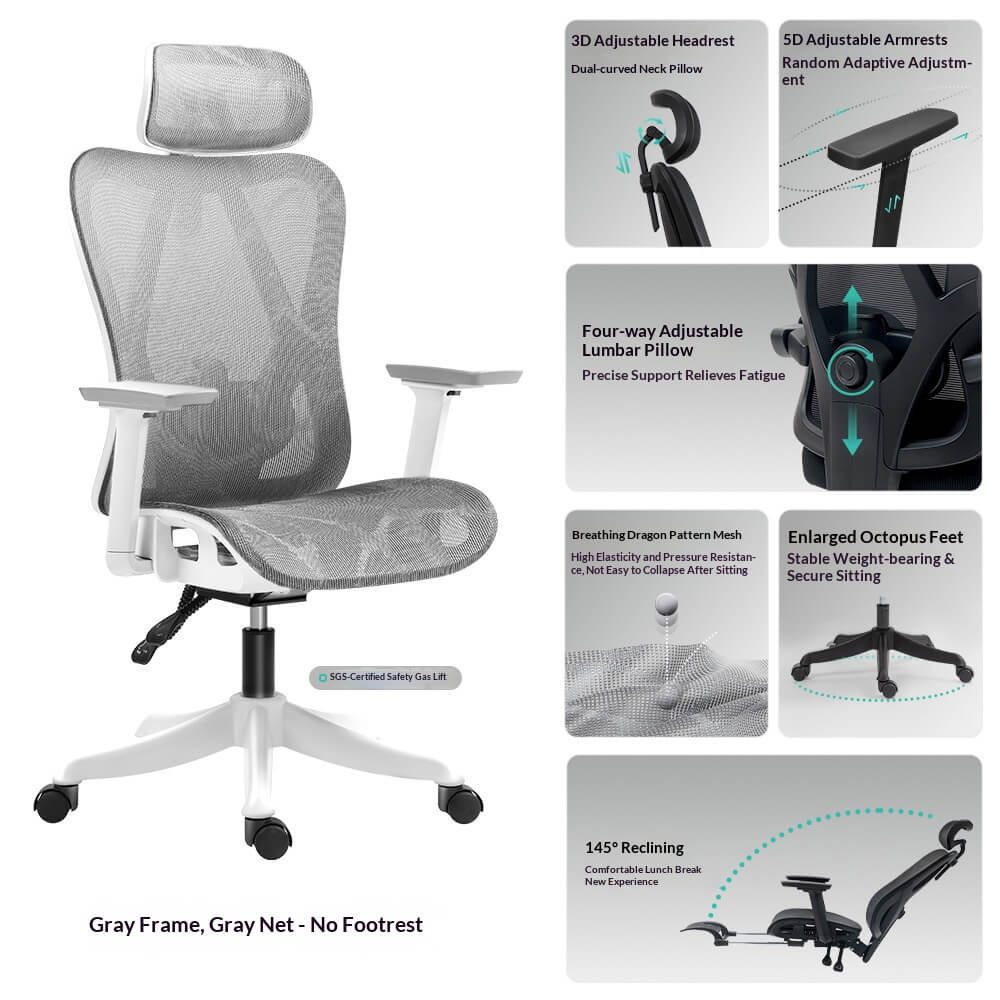
- Modular accessory options (headrests, lumbar support, armrest types)
- Scalable parts replacement (easily replaceable components)
- Adaptable designs (chairs that serve multiple department needs)
Key Takeaway: Prioritize flexible, modular systems over rigid, fixed models to accommodate organizational evolution without constant reinvestment.
The Strategic Framework for Modern B2B Seating Procurement
Phase 1: Needs Analysis & Role Mapping
Before evaluating products, conduct an internal assessment:
- Employee Role Categorization
- Task workers (8+ hour continuous use)
- Collaborative staff (meeting and workstation transitions)
- Management/executive (client-facing and leadership roles)
- Visitors/client seating (reception and meeting areas)
- Usage Environment Audit
- Average daily sitting hours per role
- Existing comfort/discomfort reports
- Current chair replacement frequency
- Growth Projection Alignment
- Planned hiring or department expansion
- Potential office layout changes
- Long-term facility strategy
Phase 2: Solution Evaluation Criteria
Move beyond basic specs to these commercial priorities:
- Criteria
Key Question
Impact
Logistics Optimization
“What’s the container loading efficiency?”
Determines shipping costs and supply chain predictability
Commercial Durability
“What certifications (BIFMA/SGS) does it have?”
Indicates lifespan and suitability for 24/7 environments
Configurable Flexibility
“Can we mix components across models?”
Enables role-specific customization within uniform systems
Maintainability
“Are parts easily replaceable?”
Reduces long-term ownership costs
Supplier Capability
“Can you handle both OEM and volume orders?”
Ensures future adaptability and consistency
Phase 3: Implementation & Measurement
Establish metrics before deployment:
- Pre-Implementation Baseline
- Current reported discomfort rates
- Existing chair-related maintenance costs
- Employee satisfaction with current seating
- Post-Implementation Tracking
- Reduced ergonomic complaint frequency
- Decreased chair replacement rates
- Productivity metric correlations
- Employee retention impact in high-turnover roles
- Continuous Improvement Framework
- Regular employee feedback collection
- Usage pattern analysis
- ROI calculation updates (quarterly)
FAQ: Essential Questions for Informed B2B Procurement
Q1: What’s the real difference between “office chair for back pain” and commercial seating solutions?
A1:Consumer chairs address individual pain points; commercial solutions prevent pain through systematic design. The key distinction is prevention versus treatment—commercial chairs use proactive ergonomics, durable materials, and adjustability to support diverse bodies before discomfort occurs, particularly important for “long hours” work environments.
Q2: How does “adjustable office chair” design impact large-scale procurement?
A2:True adjustability reduces SKU complexity. Instead of stocking multiple fixed models, organizations can maintain fewer base units with configurable components. This simplifies inventory management, reduces warehousing needs, and enables precise ergonomic matching across different departments—from call centers to executive suites.
Q3: What should we prioritize: “mesh office chair” breathability or seat cushion comfort?
A3:This presents a false dichotomy. Commercial-grade chairs integrate both through layered material systems: advanced mesh for ventilation and moisture-wicking, supported by multi-density foam or polymer grid systems for pressure distribution. The real priority should be certified durability that ensures both features last through years of intensive use.
Q4: How do “office chair mat” considerations affect procurement decisions?
A4:Floor protection impacts both facility costs and chair performance. Integrated procurement should specify mat compatibility with chair wheel types and floor surfaces. This holistic approach prevents premature wear, reduces maintenance calls, and extends the functional life of both chairs and flooring—critical for total cost calculations.
Q5: What’s the significance of “BIFMA certified” in volume purchasing?
A5:BIFMA certification provides standardized validation of structural integrity, durability, and safety. For volume buyers, this means predictable performance across hundreds or thousands of units, reduced liability exposure, and verifiable compliance with commercial furniture standards. It transforms chairs from commodities into risk-managed capital assets.
Q6: How does “OEM office chair” capability benefit large organizations?
A6:OEM support enables brand alignment, facility-wide consistency, and tailored specifications. Beyond basic customization like logo embroidery, it allows integration with existing furniture ecosystems, specialized functional requirements, and coordinated refresh cycles across campuses or multiple locations.
Actionable Implementation Roadmap
Immediate Steps (Month 1)
- Conduct Current State Audit
- Inventory existing chairs by model, purchase date, and condition
- Survey employees on comfort issues and work patterns
- Calculate current annual seating-related costs
- Define Tiered Requirements Matrix
- Map specific needs for each role category
- Establish ergonomic and durability standards per tier
- Determine acceptable price ranges for each application
- Establish Evaluation Criteria
- Create weighted scoring system for potential solutions
- Define minimum requirements for commercial certification
- Set measurable ROI targets for justification
Medium-Term Actions (Months 2-4)
- Pilot Program Implementation
- Test top 2-3 systems in representative departments
- Gather quantitative and qualitative feedback
- Document installation, maintenance, and user experiences
- Vendor Capability Assessment
- Evaluate production capacity and quality control
- Verify logistics and supply chain reliability
- Review customization and ongoing support capabilities
- Total Cost Analysis
- Calculate 5-year TCO for each viable solution
- Model productivity impact based on pilot results
- Compare lifecycle costs against performance benefits
Long-Term Strategy (Months 5-12)
- Phased Organization-Wide Deployment
- Prioritize departments by need and impact potential
- Implement consistent purchasing and replacement cycles
- Establish centralized management processes
- Continuous Improvement System
- Regularly update ergonomic and comfort standards
- Track actual versus projected TCO performance
- Maintain adaptable vendor relationships for evolving needs
- Performance Integration
- Correlate seating investment with health and productivity metrics
- Develop predictive models for future facility requirements
- Align furniture strategy with broader organizational goals
Conclusion: From Expense to Strategic Advantage
The evolution from seeking a “good office chair” to implementing a comprehensive seating ecosystem represents one of the most tangible opportunities for operational improvement in modern workplaces. The real competitive advantage doesn’t come from finding the lowest price point for “budget office chairs,” but from developing a strategic, data-driven approach that treats seating as infrastructure—not as a disposable commodity.
Forward-thinking organizations are already shifting their procurement focus from transactional purchasing to strategic partnership, recognizing that the right seating solution delivers measurable returns through improved productivity, reduced healthcare costs, and enhanced employee satisfaction and retention.
Your next action should be to initiate the assessment phase—not with product catalogs, but with internal data collection. Begin by understanding your current state, defining your specific needs, and establishing measurable criteria. The organizations that will thrive in 2025 aren’t those finding the cheapest chairs, but those building the most intelligent, adaptable, and human-centric seating strategies.
Start your assessment today. The data you gather will become the foundation for a seating strategy that delivers genuine, measurable value across your entire organization.