The headrest is often relegated to an afterthought, yet it is a critical component for sustaining focus and preventing neck strain during long work hours. Unlike car or recliner headrests designed for passive rest, an office chair headrest must actively support the head and neck in dynamic, upright postures. This guide moves beyond generic advice, offering a data-driven analysis to help businesses and professionals select headrests that directly enhance productivity and well-being.
The Ergonomic Imperative: Why Your Headrest Choice Matters More Than You Think
The primary function of a headrest is to reduce the static load on the posterior neck muscles, particularly the trapezius. When the head is fully supported, these muscles can relax, mitigating tension that leads to headaches, fatigue, and decreased concentration. A poorly positioned or non-existent headrest forces constant micro-adjustments and muscular effort, silently eroding work efficiency. For businesses, investing in proper ergonomic support is not an expense but a strategic investment in human capital, aimed at reducing discomfort and maintaining peak cognitive performance.
Critical Adjustability: The Non-Negotiable Features of a Professional Headrest
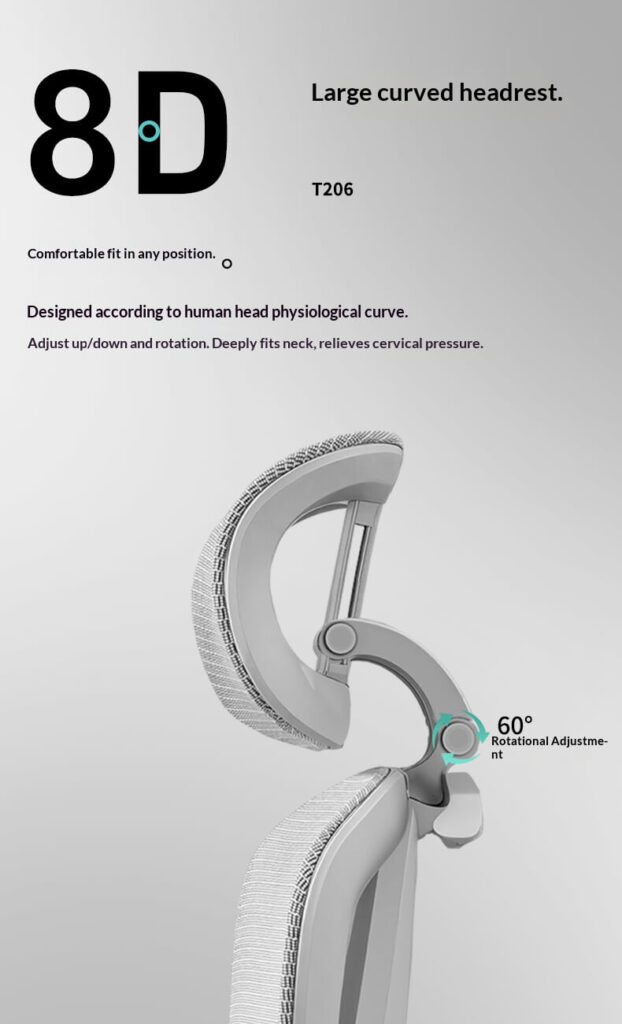
To be effective, a headrest must adapt to the individual, not the other way around. Fixed headrests, common in budget chairs, often fail to align with the user’s seated height and cervical curve, creating pressure points or offering no support at all. True ergonomic value lies in multi-dimensional adjustability:
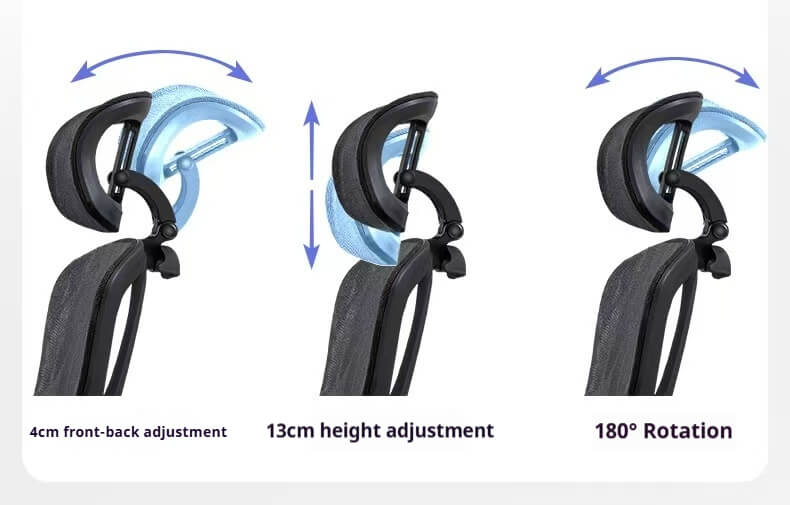
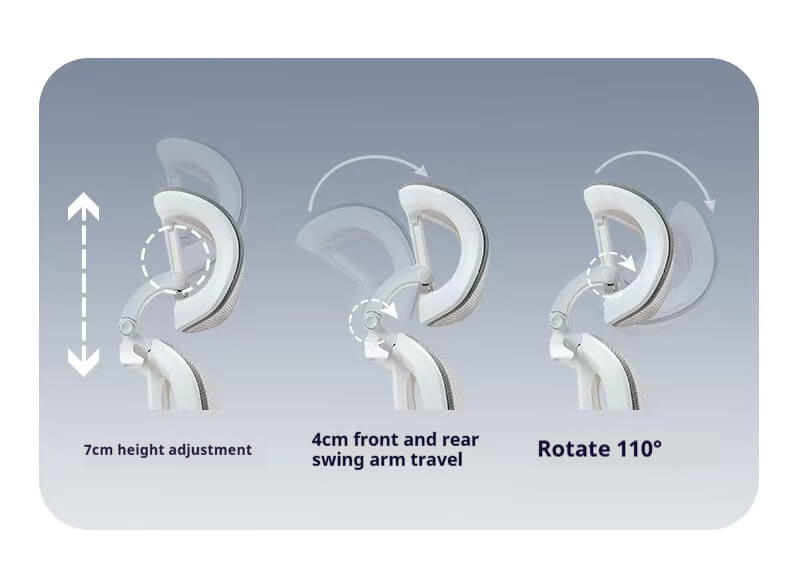
- Height Adjustment: This is essential to position the headrest so it contacts the base of the skull or the mid-cervical spine, providing support without pushing the head forward.
- Depth (Fore-Aft) Adjustment: This allows the user to bring the headrest closer for tasks like video conferencing or reading, and move it away for active typing. A lack of depth adjustment is a common flaw that renders many headrests useless for their primary function.
- Tilt or Pivot Adjustment: The ability to angle the cushion inward accommodates the natural backward curve of the neck, offering superior comfort and alignment compared to a flat, vertical surface.
Beyond the “Lean Back”: Headrest Utility in Specific Work Scenarios
The value of a headrest extends far beyond occasional reclining. Its design directly impacts performance in key professional scenarios.
For Intensive Focus Work (Coding, Writing, Analysis): A properly adjusted headrest provides a subtle “anchor” point. This allows the neck and shoulder muscles to relax while the user is upright and engaged with the screen, preventing the forward head posture that is a primary source of strain. This is the antithesis of a car headrest, which is designed for a fixed, reclined position.
For Virtual Meetings and Telephony: During extended calls, users naturally settle into a more supported position. A headrest with adequate depth and tilt allows for comfortable, attentive posture without slouching, projecting professionalism and reducing physical distraction.
For Strategic Thinking and Breaks: Brief mental resets are crucial. A headrest that supports a slight, supported recline enables effective short breaks without leaving the desk, promoting circulation and mental clarity—a function more aligned with a power recliner headrest but tailored for the office environment.
Navigating the Market: A Critique of Common Headrest Shortcomings
Many products fail due to fundamental design compromises that undermine their ergonomic promise.
- The Illusion of “4D” Adjustment: Some chairs boast multi-directional adjustments with mechanisms that are flimsy, lack positive locking, or are difficult to operate intuitively. If an adjustment is too stiff or too loose, users will not use it, nullifying the feature.
- Material Degradation: Low-density foam in headrest pads can permanently compress over months, losing its supportive contour. Similarly, low-tensile-strength mesh can stretch and sag, failing to provide consistent support.
- One-Size-Fits-All Integration: Many chairs, even high-end models, offer headrests as a fixed accessory with insufficient range. This ignores the anthropometric diversity of a workforce, making them impractical for shared or multi-user environments.
The Future of Head Support: Intelligent Systems for the Evolving Office
Progressive headrest design is moving towards integration and personalization, transforming from a passive component into an active partner in workplace wellness.
1. Context-Aware Ergonomic Synchronization: Future systems will seamlessly sync with the user’s activity. Imagine a headrest that micro-adjusts its angle when it detects you’ve entered a video call, or gently reminds you to change posture after a period of intense focus, moving beyond the static support of a wheelchair headrest or car headrest tv system.
2. The Headrest as a Biometric Hub: By integrating subtle sensors, the headrest could monitor indicators of stress or fatigue, such as seated posture duration and muscle tension. Paired with workplace wellness software, it could provide actionable insights, not just support, helping organizations foster a healthier, more resilient team.
Strategic Selection: Aligning Headrest Features with Organizational Needs
For businesses procuring office furniture, the headrest should be evaluated as part of a holistic ergonomic solution, not an isolated feature. Key considerations include:
- Prioritize Independent Adjustability over fixed or synchronized designs to accommodate a diverse range of employees.
- Evaluate Mechanism Quality. Test the smoothness and locking strength of adjustments in person whenever possible.
- Consider the Primary Work Task. For roles requiring constant screen engagement, a headrest with excellent upright and slight-recline support is more critical than one designed for deep relaxation.
Your Next Step: From Insight to Implementation
Selecting the right office chair with a competent headrest is a direct investment in employee comfort and organizational productivity. It requires moving beyond generic marketing and focusing on adjustable, durable designs that address real work habits.
Ready to specify the right ergonomic solution for your team? Our experts specialize in translating these principles into actionable procurement plans for businesses. Contact us today for a tailored consultation to review your needs, or download our detailed “Ergonomic Workspace Specification Checklist” to guide your internal evaluation process. Ensure your team’s foundation for focus is securely in place.