Executive Summary: Why Your Chair’s Seat is Your Productivity’s Foundation
The seat pad is the primary interface between a professional and their 8-hour workday. Discomfort here directly translates to distraction, frequent repositioning, and lost focus. For businesses, this means diminished productivity. For individuals, it can lead to long-term musculoskeletal issues like ischial tuberosity (sitting bone) pain and poor circulation. This guide synthesizes ergonomic science, critiques common market shortcomings, and explores future innovations to help you make an informed decision.
Core Knowledge: The Science of Pressure Distribution and Material Response
A quality seat pad’s mission is to distribute weight evenly and promote healthy posture, not just to be soft.
Pressure Mapping and the “Waterfall Edge”: Non-Negotiable Design Features
Studies using pressure mats show that high-pressure concentrations under the ischial tuberosities (the bones you feel when sitting) can exceed capillary closure pressure, reducing blood flow and causing discomfort. A well-designed pad disperses this load. The “waterfall edge”—a downward curve at the seat front—is critical. It reduces pressure behind the knees, preventing nerve compression and tingling, a key concern for users searching “seat cushion for back pain”.
Foam vs. Mesh: A Performance Breakdown for the Office
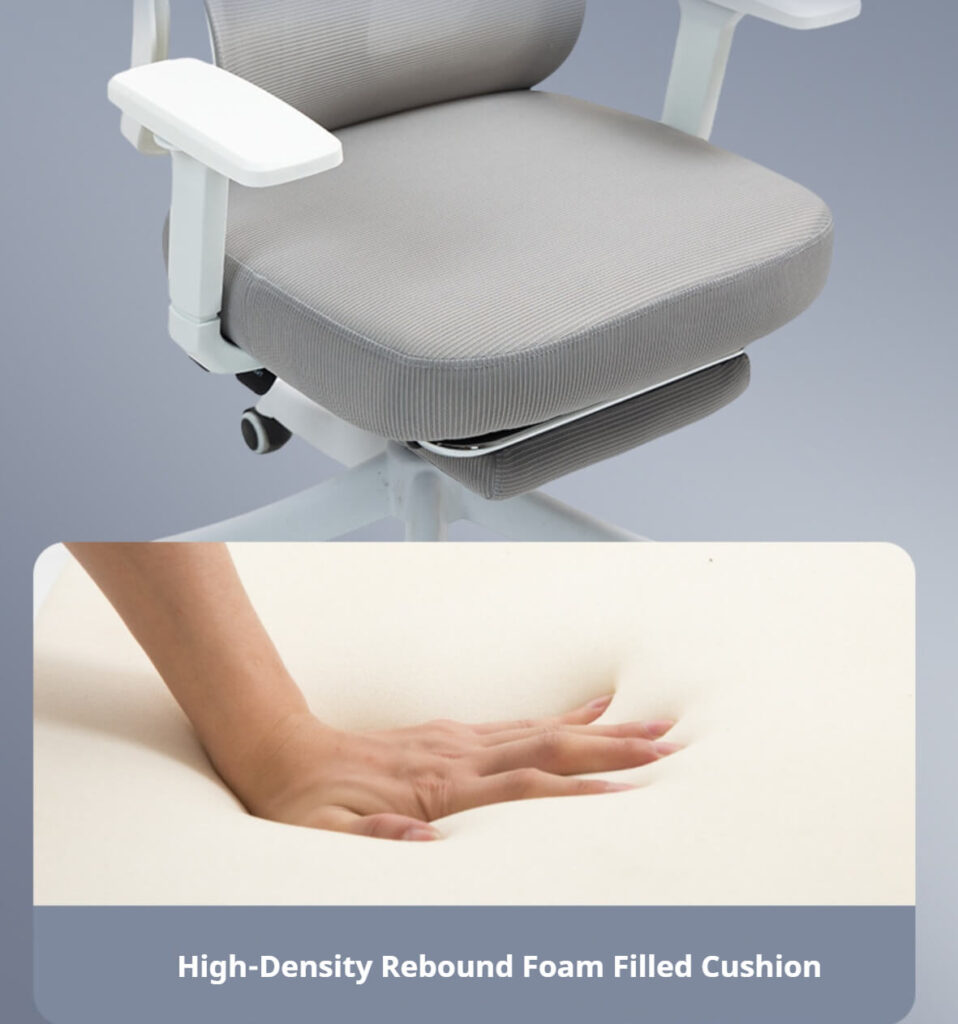
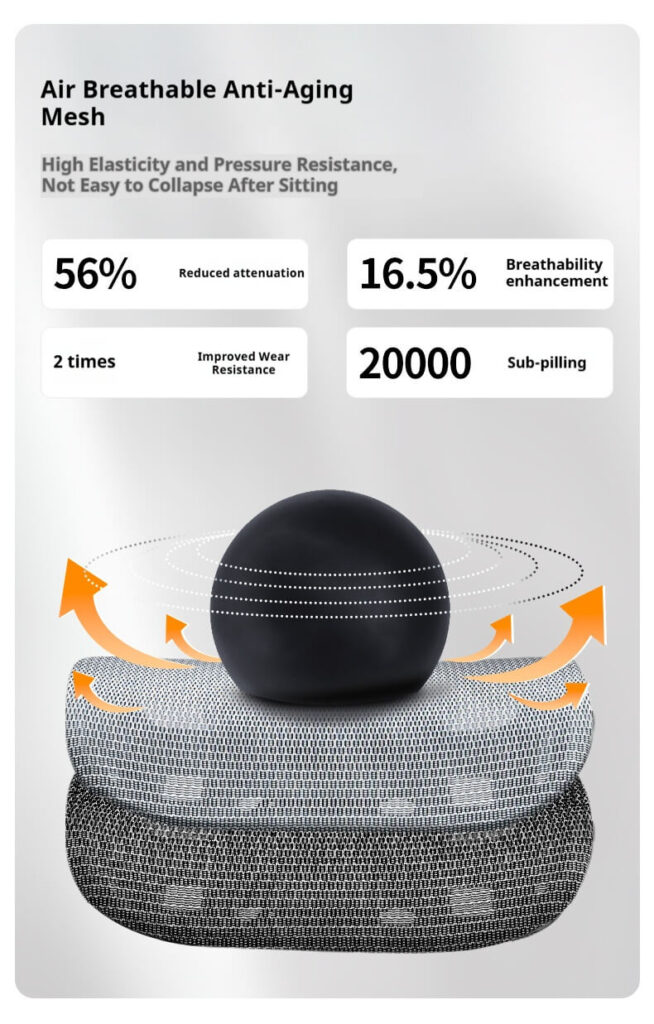
The choice between foam and mesh is the central debate. Your decision should be guided by body type, climate, and usage patterns.
| Attribute | High-Density Molded Foam | Performance Polymer Mesh | Practical Implication |
|---|---|---|---|
| Support & Feel | Conforms to body shape, offering adaptive, cradling support. | Provides suspension-style support via tensile strength; more uniform feel. | Foam is often preferred for all-day stationary comfort; mesh excels in breathability. |
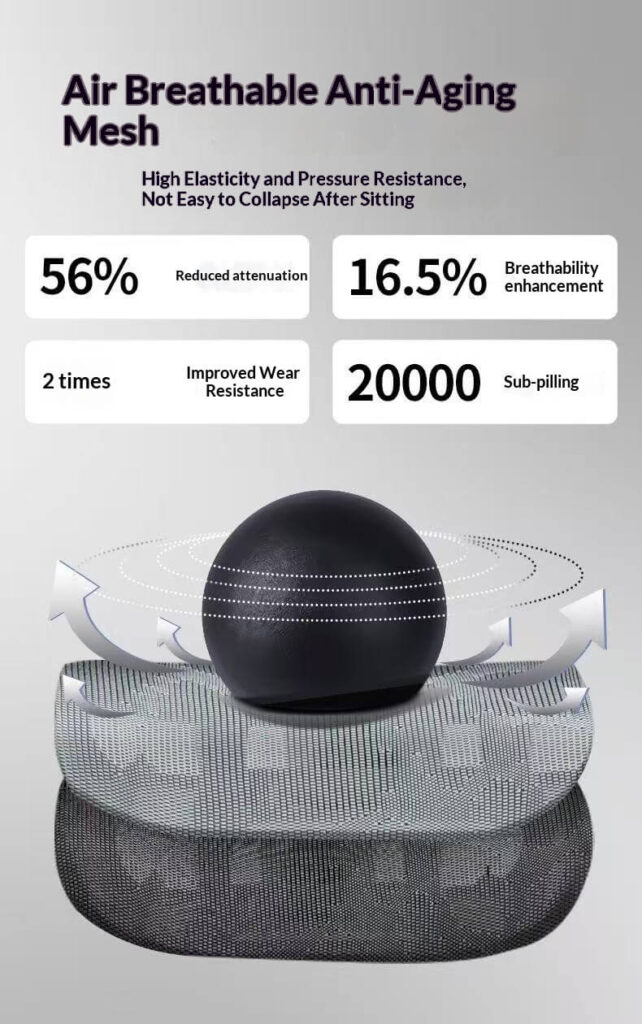
| Durability | Resists permanent deformation (compression set) if density is ≥ 1.8 PCF (≈29 kg/m³). | High-tensile mesh (e.g., Ultraflex) maintains elasticity for years; low-quality mesh sags. | Look for density specs for foam, tensile strength for mesh. Avoid unqualified claims. |
| Climate & Maintenance | Can retain heat; upholstery affects breathability. Easy to clean if fabric is removable. | Highly breathable, ideal for warm environments. Spills can pass through; requires a sub-weave layer. | For hot climates or users prone to sweating (“cool seat cushion”), mesh is superior. |
Critical Market Audit: Common Failures and Misleading Claims
Many products fail to deliver on their ergonomic promises. Understanding these pitfalls is key.
The “Comfort Trap”: How Excessive Softness Harms Posture
Many “cushioned toilet seat” or “gel seat cushion“ products prioritize initial plushness over support. Low-density foam or thick gel creates a “hammock effect,” causing the pelvis to tilt backward (posterior pelvic tilt). This flattens the natural lumbar curve, forcing the spine into a C-shape and straining discs—exacerbating the very back pain users seek to relieve.
The Durability Deception: When Materials Fail Prematurely
A significant industry flaw is the use of substandard materials that degrade quickly.
- Foam Collapse: Low-density foam (<1.5 PCF) can lose over 50% of its thickness within a year, forming a body-conformed “crater” that offers zero support.
- Mesh Stretch: Inexpensive mesh loses tensile strength, leading to a noticeable sag where the user feels they are “bottoming out.” Searches for “seat cushion replacement” often stem from this early failure.
The “One-Size-Fits-All” Fallacy in a Diverse Workforce
Static, non-contoured pads ignore anthropometric diversity. A pad too deep will compress the thighs of a shorter person; one too shallow fails to support a taller user’s thighs adequately. This highlights the critical value of seat depth adjustment, a feature often absent in aftermarket cushions but essential in a proper office chair.
The Future of Seating: From Passive Cushion to Active Health Interface
Innovation is shifting from passive comfort to proactive well-being.
Smart Materials and Dynamic Contour Systems
Future seat pads will use 4D-printed lattice structures or non-Newtonian fluid pockets that adapt firmness in real-time based on pressure and temperature, providing personalized zonal support that responds to movement, addressing the static nature of current solutions.
Integrated Biometric Sensing and Postural Feedback
Beyond pressure mapping, future systems could integrate sensors to monitor sitting duration, posture asymmetry, and even metrics like seated heart rate variability. Paired with an app, the pad could prompt micro-breaks or suggest posture corrections, evolving from furniture to a preventative health tool.
Climate-Adaptive Surfaces and Modular Design
Research into phase-change materials (PCMs) or micro-ventilation systems aims to regulate surface temperature actively. Furthermore, a modular ecosystem could allow users to swap top layers—a cooling mesh for summer, a plush fabric for winter—extending product life and adapting to personal preference.
Practical Selection Guide: Matching Seat Technology to User Needs
| User Profile & Primary Need | Recommended Solution | Key Features to Verify | Associated Search Intent |
|---|---|---|---|
| User with Chronic Discomfort / Pressure Relief Focus | High-resilience foam pad with coccyx cut-out and contoured base. | Density rating (≥1.8 PCF), contoured design, non-slip base. | “seat cushion for back pain”, “hemorrhoid seat cushion” |
| Hot Climate / Breathability Priority | High-tensile polymer mesh pad with airflow-promoting design. | Mesh grade/type, perimeter firmness to prevent “roll-off.” | “cool seat cushion”, “breathable office chair pad” |
| Active Sitter / Dynamic Support | Hybrid pad with a responsive foam core and a flexible, textured top layer. | Flexible edges for movement, medium-firm support. | “seat cushion for kneeling chair”, “active sitting pad” |
| Multi-User Office / Budget-Friendly Durability | Firm, high-density flat foam pad with a durable, cleanable cover. | Easy-clean cover (vinyl, polyester), high density for longevity. | “office seat cushion”, “chair cushion for workplace” |
Conclusion & Actionable Call to Action: Invest in Your Foundation
Your choice in seat support is a direct investment in daily comfort and long-term health. It is the foundation upon which all other ergonomic adjustments rely. A high-quality, well-matched seat pad or chair seat can mitigate pressure points, promote better posture, and sustain focus.
🚀 Your Next Step: From Knowledge to Solution
Understanding the technology is the first step. Applying it to your specific context is what delivers results.
- For Procurement Managers: Audit your current office chairs. Are the seat pads flat and hard? Have they lost resilience? Use the criteria above to evaluate upgrade needs.
- For Individuals & Home Office Professionals: Don’t guess based on marketing. Identify your primary need (pressure relief, cooling, etc.) and use this guide to filter products.
Ready to solve your seat comfort equation?
- Download our free “Seat Support Diagnostic Checklist” to assess your current setup and identify the right solution path.
- Contact our ergonomics consultants for a personalized recommendation based on your team’s profile, environment, and budget. We help you move from generic cushions to tailored support systems.
- Explore our B2B catalog featuring chairs with scientifically engineered seat pans designed to eliminate the need for aftermarket fixes.
Upgrade your seat. Elevate your work.