Armrests are often the most under-engineered component of an ergonomic office chair, yet they play a pivotal role in shoulder, neck, and upper back health. Poorly designed armrests can force users into compromised postures, negating the benefits of an advanced lumbar support or seat pan. This article dissects armrest technology through the lenses of foundational ergonomics, critical market analysis, and future-facing innovation, providing data-driven insights for informed procurement.
The Science of Arm Support: Biomechanics and Essential Adjustments
Proper arm support is not a luxury; it is a biomechanical necessity. The primary function is to reduce static load on the trapezius and deltoid muscles, thereby lowering shoulder tension and minimizing strain on the cervical spine.
The Core Biomechanical Principle: The 90-Degree Rule and Its Nuances
While the classic “elbows at 90 degrees” guideline is a starting point, effective support is dynamic. The ideal armrest height allows shoulders to remain relaxed, not hunched or elevated, with forearms parallel to the floor. Data from pressure studies indicate that adequate support can reduce electromyographic (EMG) activity in the shoulder girdle by up to 50% during seated tasks. The prevalence of searches for “adjustable armrest” (590 searches/mo) and “chair arm rest” (390 searches/mo) underscores strong user intent to achieve this precise alignment.
The Non-Negotiable: Multidimensional Adjustability
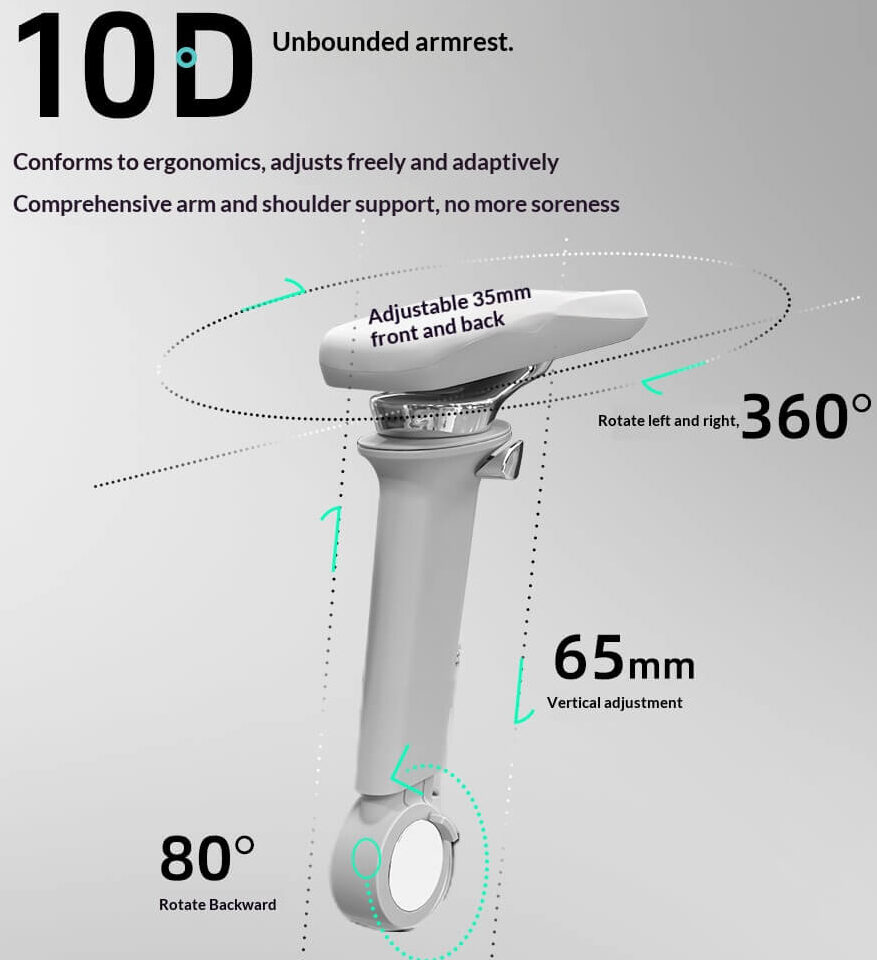
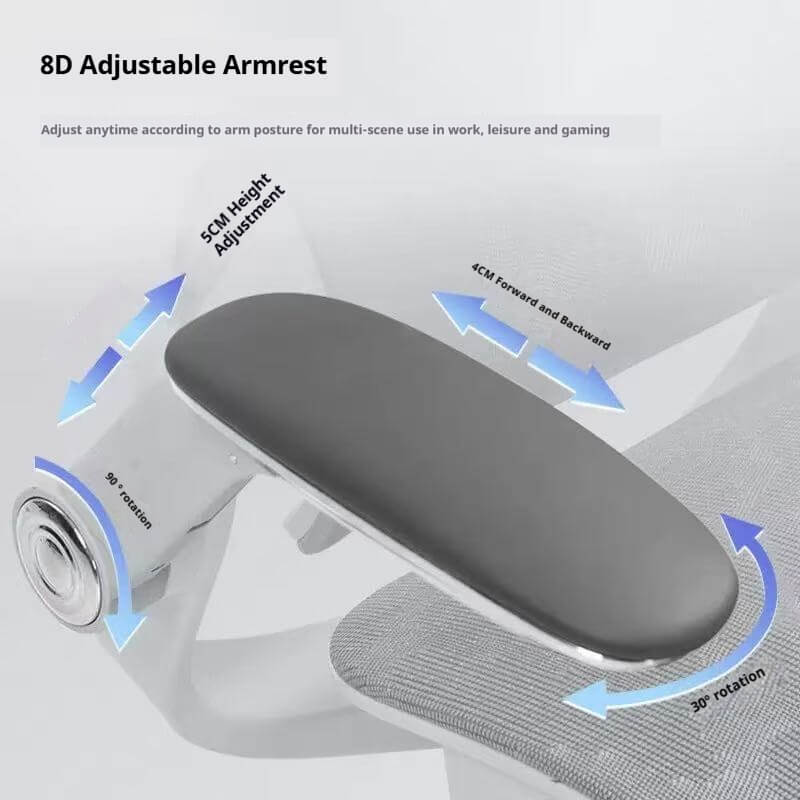
A high-quality armrest must offer more than just height adjustment. Searches for “4D armrest“ and related terms reflect a growing user sophistication.
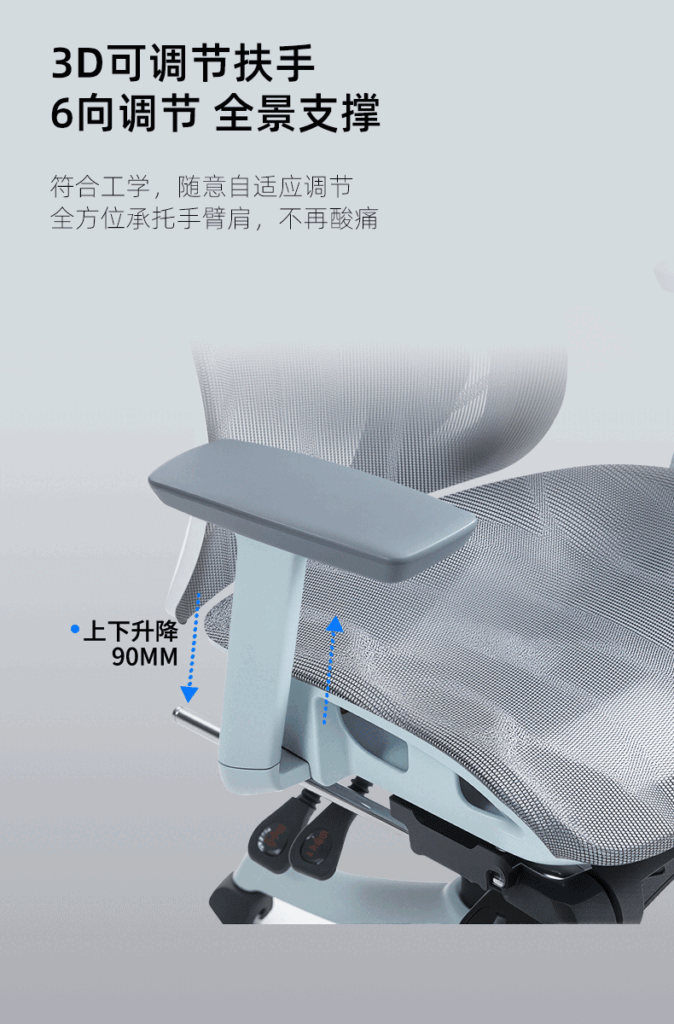
- Height Adjustment (Z-axis): The baseline. It should accommodate a range from roughly 7 to 11 inches (18-28 cm) above the seat pan to suit diverse statures.
- Width/Pivot Adjustment (X-axis): The ability to swivel armrests inward or outward is critical. It allows users to align support directly under the forearm when keyboarding (arms closer) versus when using a mouse or reading (arms slightly wider).
- Depth Adjustment (Y-axis): Moving armrests forward or backward ensures the elbow is supported throughout the full seat depth, preventing users from perching on the chair’s edge.
- Surface Pivot/Tilt: A pivot feature allows the pad surface to angle inwards, providing natural support for pronated forearms during typing, a feature often missing in budget chairs.
A Critical Audit of Common Armrest Failures and Market Hype
The market is saturated with chairs featuring armrests that are either inadequately adjustable, poorly constructed, or based on flawed ergonomic assumptions.
The “Padded Shelf” Deception: When Fixed Armrests Cause More Harm Than Good
Many budget and mid-range chairs feature fixed or only height-adjustable armrests that are often set too wide or too high for the average user. This forces abduction of the shoulders, leading to “shoulder hike” and chronic tension. The high search volume for “armrest replacement“ suggests widespread user dissatisfaction with original equipment that fails to meet basic ergonomic needs.
The Material and Durability Deficit: From Wobble to Breakdown
A critical failure point is long-term stability. Low-quality armrests exhibit:
- Structural Wobble: Caused by cheap plastic internals or single-point attachment systems, leading to distracting movement and a feeling of insecurity.
- Pad Degradation: Low-density polyurethane foam compresses permanently within months, exposing hard plastic edges that create pressure points on the ulnar nerve (the “funny bone” nerve), a common source of discomfort.
- Mechanical Failure: Complex adjustment mechanisms on low-cost chairs frequently break or become stuck, rendering the adjustability feature useless. The search intent behind terms like “armrest parts” and “secretlab armrest” (a brand often searched for replacement parts) highlights this endemic durability issue.
The False Promise of “4D” and Over-Engineered Complexity
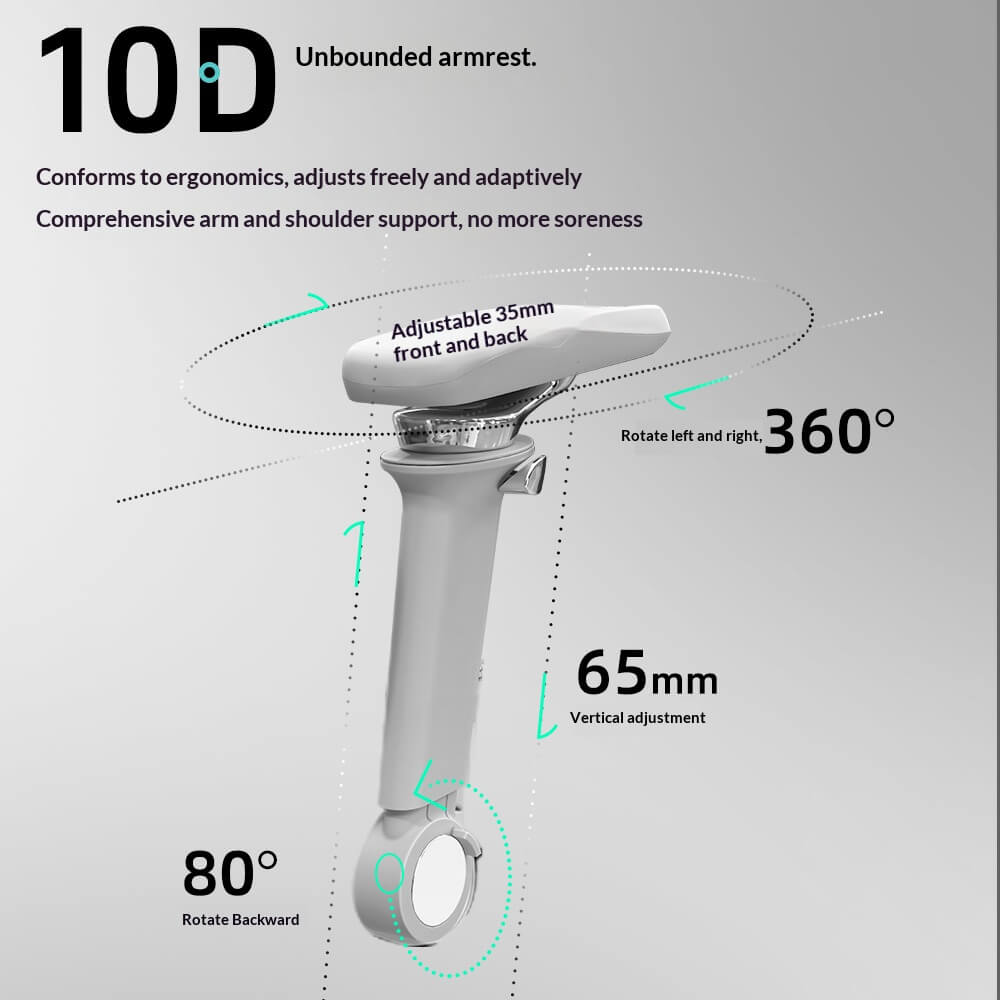
Some chairs boast “4D” armrests with excessive ranges of motion but implement them with poor locking mechanisms or unintuitive controls. If an adjustment is too stiff, too loose, or requires two hands and significant force, users will not engage with it. True ergonomic value lies in intuitive, precise, and stable adjustability, not in the mere number of directions of movement.
The Future of Arm Support: Integrated, Intelligent, and Adaptive Systems
Moving beyond manual adjustments, the next generation of armrests will focus on seamless integration and proactive support.
Context-Aware Synchronization with the Worksurface
Future systems will synchronize with electric sit-stand desks. When the desk height changes, the chair’s armrests will automatically adjust to maintain the optimal elbow-to-desk relationship, eliminating constant manual recalibration. This addresses the latent need seen in searches for “chair and desk height calculator” and ergonomic setup guides.
Micro-Adjusting Support Surfaces and Fatigue Sensing
Imagine armrest pads with embedded pressure sensors that detect uneven weight distribution or prolonged static pressure. The system could gently prompt movement or, in advanced iterations, use micro-actuators to subtly shift the support surface, promoting micromovements and reducing fatigue. This transforms the armrest from passive support to an active participant in musculoskeletal health.
Modular Ecosystems and Task-Specific Top Plates
The future is modular. Users could swap standard padded tops for task-specific modules: a magnetic, soft-finished plate for comfort, a hard, cool-to-the-touch plate for gaming, or an integrated wireless charger and control panel. This aligns with the DIY ethos visible in searches for “armrest cushion for car” and “armrest pad,” but applied professionally to office environments.
Conclusion and Call to Action: Prioritize Holistic Support
Your chair’s armrests are critical determinants of upper-body comfort and long-term health. Do not let them be an afterthought. When evaluating a chair, critically test the armrests’ stability, range, and ease of adjustment. Prioritize robust construction and multi-dimensional movement that allows you to align support with your unique anatomy and tasks.
Ready to transform your workspace ergonomics from the ground up? While proper armrests are crucial, true comfort is systemic. Download our free, comprehensive “Ergonomic Workspace Assessment Checklist” to audit your chair, desk, monitor, and peripherals. For a deep dive into how seat pan design interacts with arm and lumbar support, read our definitive guide on ergonomic chair seat pads. Make informed decisions—your productivity and well-being depend on it.