Why the “Best Ergonomic Chair” Search Fails You—And What to Search Instead
The quest for the perfect ergonomic chair often begins and ends in frustration. You search for “best ergonomic office chair,” sift through endless listicles comparing the same popular models, and are left more confused than when you started. Why? Because these searches ignore the fundamental truth: there is no single “best” chair for everyone.
An accountant managing chronic sciatica, a 6’4″ software developer, and a startup founder furnishing a home office on a tight budget have wildly different needs. The search volume data confirms this dilemma—while broad terms like “office chair ergonomic“ (2.4K searches/month) are highly competitive, the real, actionable intent is hidden in more specific queries like “ergonomic chair for back pain” (1.3K searches) or “branch ergonomic chair review” (1.9K searches).
This guide dismantles the one-size-fits-all myth. We move beyond marketing buzzwords and generic reviews. Using principles from occupational biomechanics and an analysis of real search data, we provide a framework to match your unique body, budget, and work to the chair that will genuinely support you. Forget chasing the “top-rated” chair; let’s find yourperfect fit.

The Foundation: Matching Chair Mechanics to Your Body’s Blueprint
Selecting a chair based on features alone is like prescribing medicine by the color of the pill. True ergonomics is personal. It starts with understanding your body’s unique architecture and the specific stressors of your workday.
How Posture and Pain Dictate Design Needs
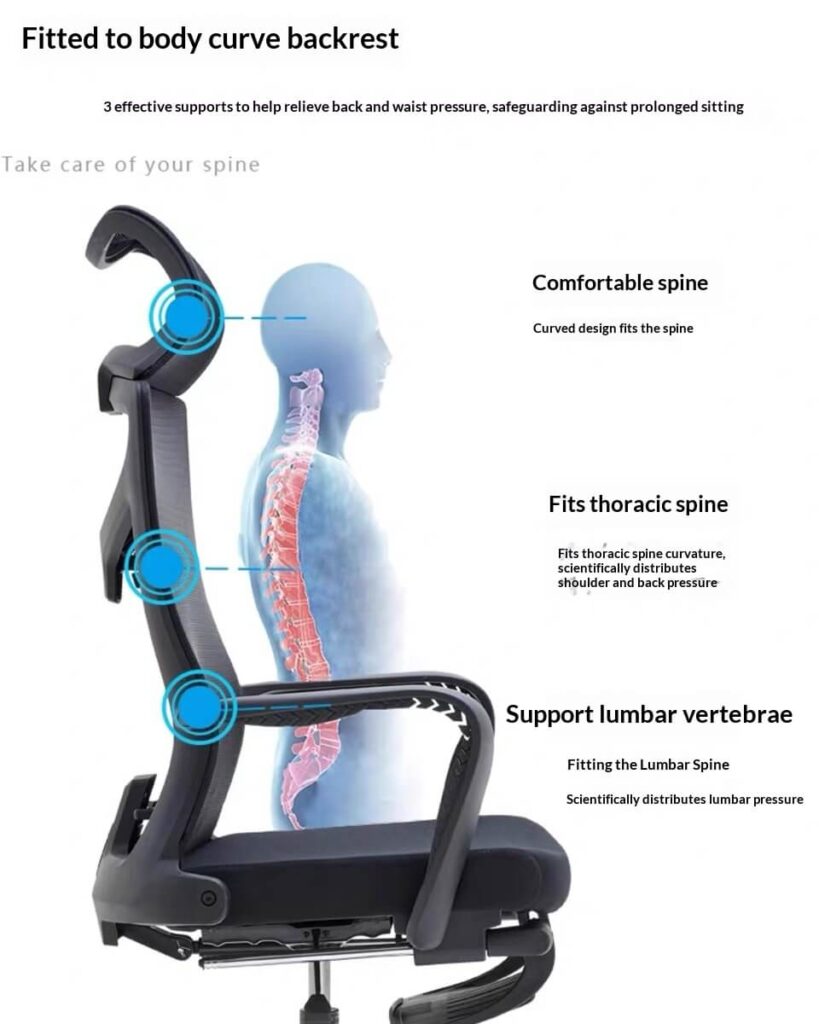
The core function of any chair is to facilitate a neutral spine—the position of least stress. However, “neutral” varies based on your physiology. Research in biomechanics journals indicates that improper alignment can increase lumbar disc pressure by over 40%. Your chair must be a tool to counteract your specific tendencies.
- For the Anterior Pelvic Tilt (Sway Back): Common in sedentary individuals, this posture tilts the pelvis forward, exaggerating the lumbar curve. A chair with a pronounced, depth-adjustable lumbar support is non-negotiable to fill the gap and provide corrective pressure.
- For the Posterior Pelvic Tilt (Flat Back): This rounds the lower back, straining ligaments. Here, the focus shifts to the seat pan. A chair with a forward-tilt function or a firm, waterfall-front seat can help rotate the pelvis forward into a healthier position.
Chairs as Symptom-Specific Support Tools
For many, the chair is part of a daily pain management strategy. General reviews often miss these critical, need-based nuances.
- Chronic Lower Back Pain (LBP): The American Physical Therapy Association emphasizes movement. A chair with a high-quality synchro-tilt mechanism is crucial, as it allows you to recline while keeping your feet planted, promoting beneficial micro-movements without sliding forward.
- Sciatica & Tailbone (Coccyx) Pain: Pressure is the enemy. A seat that’s too long or firm can aggravate the sciatic nerve. Look for a shortened seat depth and a coccyx cut-out or soft rear cushion. Memory foam often fails here; high-resilience foam or a mesh seat with a contoured relief zone is superior.
- Neck & Shoulder Strain: This often stems from a lack of upper body support. A fully adjustable (height, depth, angle) headrest and 4D armrests that can be pulled close to the body are essential to unload the trapezius muscles.
The Procurement Matrix: Aligning Product with Profile and Price
Armed with self-knowledge, you can navigate the market strategically. The following matrix aligns common user profiles with specific chair specifications and data-validated product examples.
| User Profile & Core Need | Critical Features (Non-Negotiables) | Budget-Aware Pick (Value Focus) | Investment Tier (Performance Focus) | Data-Driven Search Intent |
|---|---|---|---|---|
| The Long-Haul Knowledge Worker (e.g., Programmers, Writers) Needs sustained, static support for 8+ hours. | • Dynamic Lumbar (adjusts with recline) • 4D Armrests for precise alignment • Deep Recline with lock for breaks | Sihoo M57 Frequently cited on forums for its high feature-to-cost ratio, offering core adjustments at an entry price. | Herman Miller Embody Engineered for continuous seated work with its pixelated support matrix, promoting constant micro-movements. | ergonomic office chair with lumbar supportbest chair for programmers |
| The Dynamic Collaborator (e.g., Managers, Designers) Needs to swivel, lean, and transition seamlessly. | • Easy-Glide Casters (PU for hard floors) • Responsive, Light Tilt • Small Footprint for mobility | HON Ignition 2.0 A business-class workhorse known for durability and smooth, intuitive transitions. | Steelcase Gesture With its 360-degree armrests and live-back technology, it supports a vast range of postures. | ergonomic chair for small spacebest swivel office chair |
| The Budget-Conscious Optimizer (Startups, Students, Home Office) Seeks maximum ergonomic ROI under constraints. | • Height & Lumbar Adjust (basic) • Reclining Backrest • Durable Build from reputable value brands | Gabrylly / Ticova Ergonomic Chair Amazon favorites known for delivering essential adjustability (seat depth, headrest) at disruptive prices. Pro Tip: Filter for reviews mentioning “1+ year” to check durability. | Refurbished Herman Miller Aeron / Steelcase Leap V2 For ~$500, a refurbished icon from a certified seller offers unparalleled, decade-lasting quality and a warranty. | best budget ergonomic chairergonomic chair under $300 |
A Critical Audit: The “Feature Bloat” Trap and Forgotten Essentials
The market often obscures real value with complexity and ignores critical ecosystem factors.
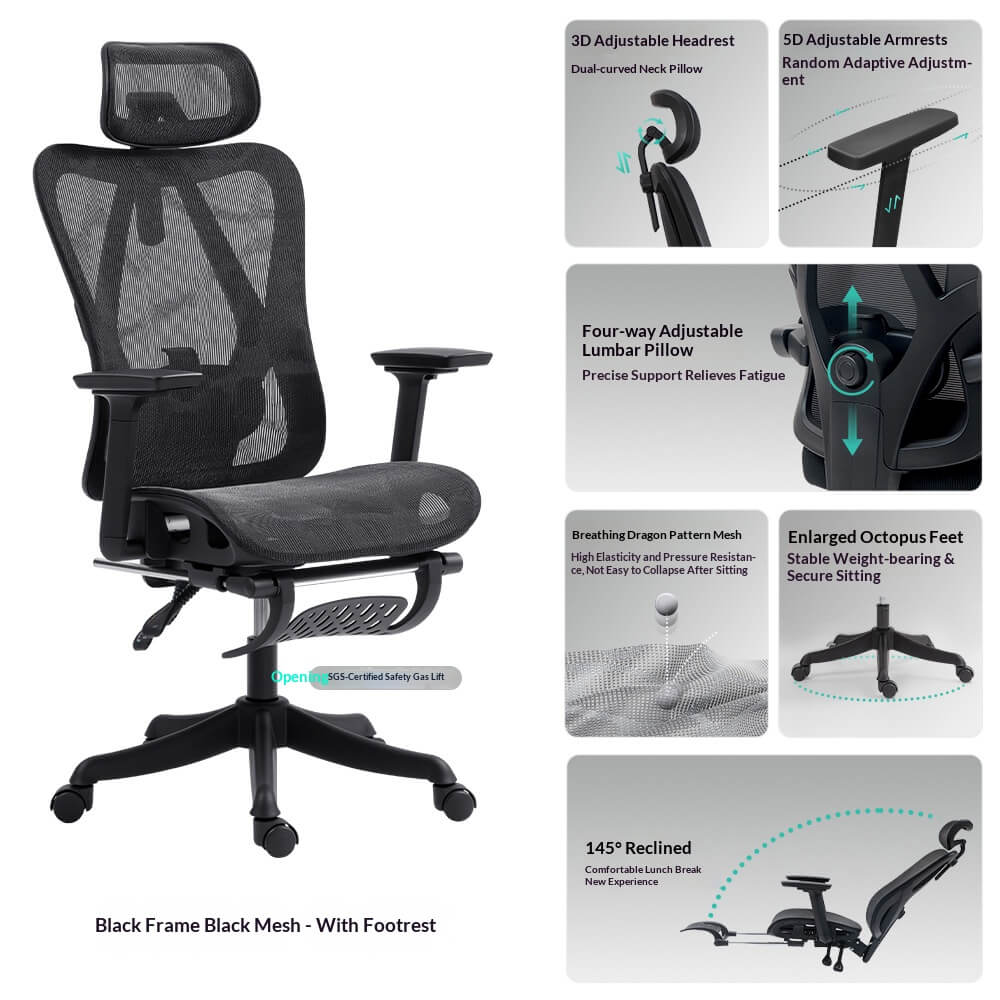
“20 Adjustments” vs. 3 That Actually Matter
Many chairs boast countless levers, creating an illusion of customization. This is feature bloat. The reality is that only a few adjustments are critical for fit:
- Seat Depth: To ensure 2-3 fingers fit between the seat edge and your calf.
- Lumbar Height & Depth: To make firm contact with yourlumbar curve.
- Armrest Width & Height: To let shoulders relax with elbows at 90°.
If these core adjustments are poor, 17 others are irrelevant. This is why niche searches like “ergonomic chair for big and tall” or “petite ergonomic office chair” exist—the “average” chair fails them.
The Forgotten Variable: Your Desk is Half the Equation
The perfect chair is crippled by the wrong desk. An improper desk height forces shoulder hike or wrist extension, undoing all ergonomic benefits. The chair and desk must be chosen as a system.
- Rule of Thumb: Your desk height should allow your forearms to be parallel to the floor when typing, with your chair’s armrests sliding comfortably underneath.
- The Ultimate Solution: A height-adjustable desk (even a desktop converter) paired with a monitor arm is the only way to guarantee perfect alignment for every task and user.
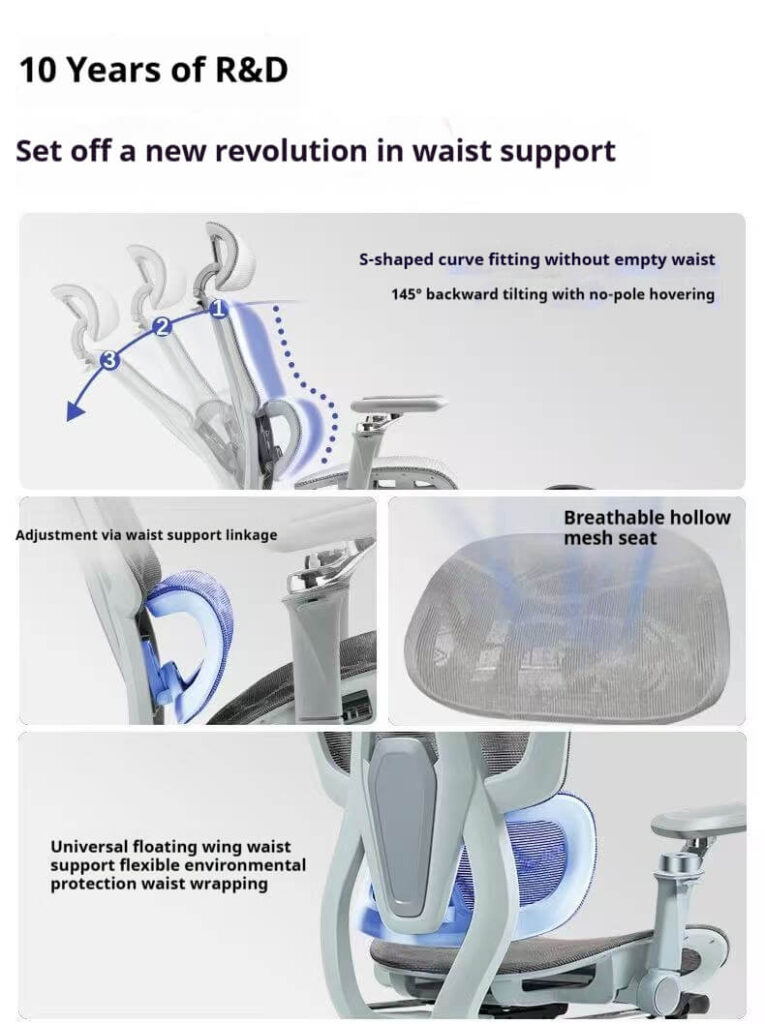
Your Actionable, Future-Proof Fitting Framework
Move beyond reviews. Use this two-step checklist to make a confident decision.
Step 1: The 90-Second Physical or Spec Check
- Feet Flat? Thighs parallel to floor, feet flat.
- Seat Depth Gap? 2-3 fingers between seat edge and calf.
- Lumbar Contact? Support makes firm, comfortable contact with your lower back curve.
- Armrest Alignment? Shoulders relaxed, elbows at ~90°, forearms supported.
Step 2: The Due Diligence Interrogation (For Online Purchases)
- Seat Depth Range: Does it cover your thigh length (popliteal to buttocks)?
- Weight Capacity: Does it exceed your weight by a 20-25% margin? (Check the manufacturer’s spec, not the seller’s description).
- Warranty: Is the mechanism covered for at least 5 years? (A key indicator of quality).
- Trial Period: Does the seller offer a minimum 30-day return policy? This is your most important safety net.
Conclusion: From Search Fatigue to Perfect Fit
Abandon the exhausting hunt for a mythical “best” chair. Your perfect chair is the one that disappears beneath you—supporting you so seamlessly that you forget it’s there. It is defined not by marketing accolades, but by how it resolves yourpressure points, accommodates yourphysiology, and integrates into yourworkspace and budget.
By starting with a honest assessment of your body and work—not with a list of top sellers—you transform the search from a marketing maze into a solvable human-centered equation. Invest in this diagnostic process. The return is a decade of supported productivity, comfort, and health.