Introduction
Warning: After reading this report, you will never view office chair procurement as a “furniture purchase” again. This is not about comfort—it is about your company’s balance sheet, legal risk exposure, and core operational efficiency.
Discard every ergonomic chair buying guide you have ever read. Those are “product reviews” for individual consumers. This report is a custom-built asset audit framework for the C-Suite: CFOs, CHROs, COOs, and Legal Directors.
The approval you are about to give is not for a consumable expense, but a capital investment. This investment will either become a productive asset—one that boosts employee productivity, reduces workers’ compensation risks, and delivers a 10-year service life—or a permanent liability—one that triggers chronic health issues, erodes productivity, and requires replacement in just 2-3 years.
This report dissects the core components of a premium ergonomic chair from an unprecedented perspective. Every component corresponds to a specific, quantifiable business risk. We leverage authoritative data from the Occupational Safety and Health Administration (OSHA), BIFMA International, and the Cornell University Department of Ergonomics to fully quantify the stakes of your decision.
Part I: The Mechanism – The Engine Against Presenteeism
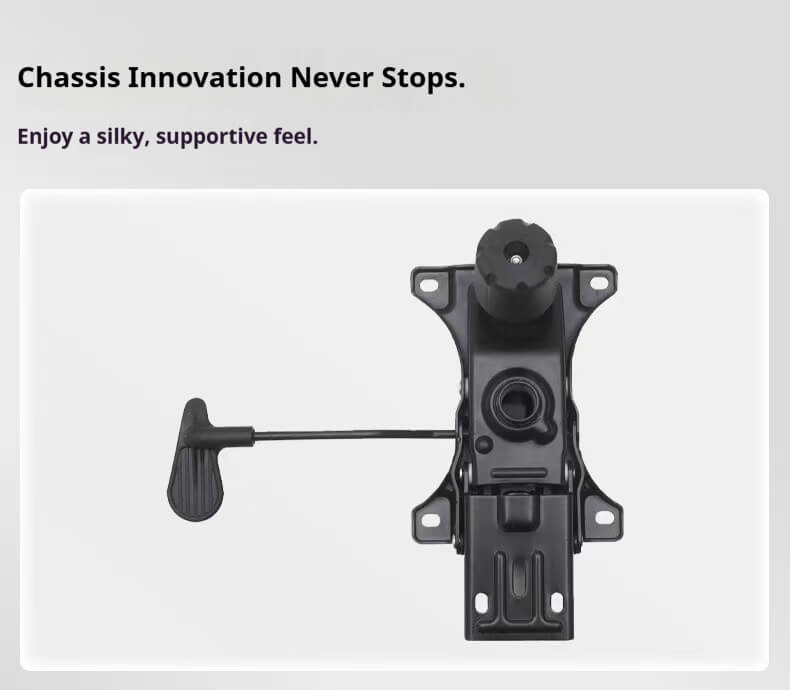
What it is: The complex system of springs, levers, and gears beneath the seat.
What it is NOT: A leisure device for “slacking off”.
The hidden liability it eliminates: Static Posture and Presenteeism
Static posture is the number one killer of corporate productivity. When employees maintain a rigid seated position for hours, muscle blood flow plummets, leading to fatigue, discomfort, and a sharp decline in cognitive ability and focus. Employees are physically present at their desks but mentally disengaged and unproductive—a phenomenon known in management as presenteeism.
Unassailable Authoritative Evidence
OSHA’s data is staggering: Musculoskeletal Disorders (MSDs) caused by the work environment are the leading cause of lost workdays. U.S. businesses spend $15–20 billion annually on direct workers’ compensation costs for these disorders. When indirect costs (lost productivity, temporary staffing, etc.) are included, the total economic loss is five times that figure.
Critical Legal & Financial Audit Checkpoint: Synchronized Tilt vs. Asynchronous/Free Tilt
Asynchronous/Free Tilt (Low Value / High Risk)
The backrest and seat tilt independently. This is a low-cost mechanism that disrupts the natural biomechanical movement of the lower back and knees, creating harmful pressure on the back of the thighs when tilting. It is essentially a health liability disguised as a “feature”.
Synchronized Tilt (High Value / Low Risk)
The backrest and seat tilt in a precise, biomechanically calculated ratio (e.g., 2:1). For every 10 degrees the user reclines, the seat gently elevates 5 degrees. This ensures constant lumbar support, stable body weight distribution, and encourages unconscious Active Sitting micro-movements—the most effective engineering solution to combat static posture and presenteeism.
The Defining Question for B2B Decision-Makers
Am I investing in a high-performance synchronized tilt engine to proactively address the $100 billion presenteeism and MSD crisis? Or am I cutting a few hundred dollars per chair to purchase a cheap device that will exacerbate these issues?
“The impact of synchronized tilt mechanisms on employee health and ROI”—this is the long-tail keyword every CFO and CHRO should be searching for.
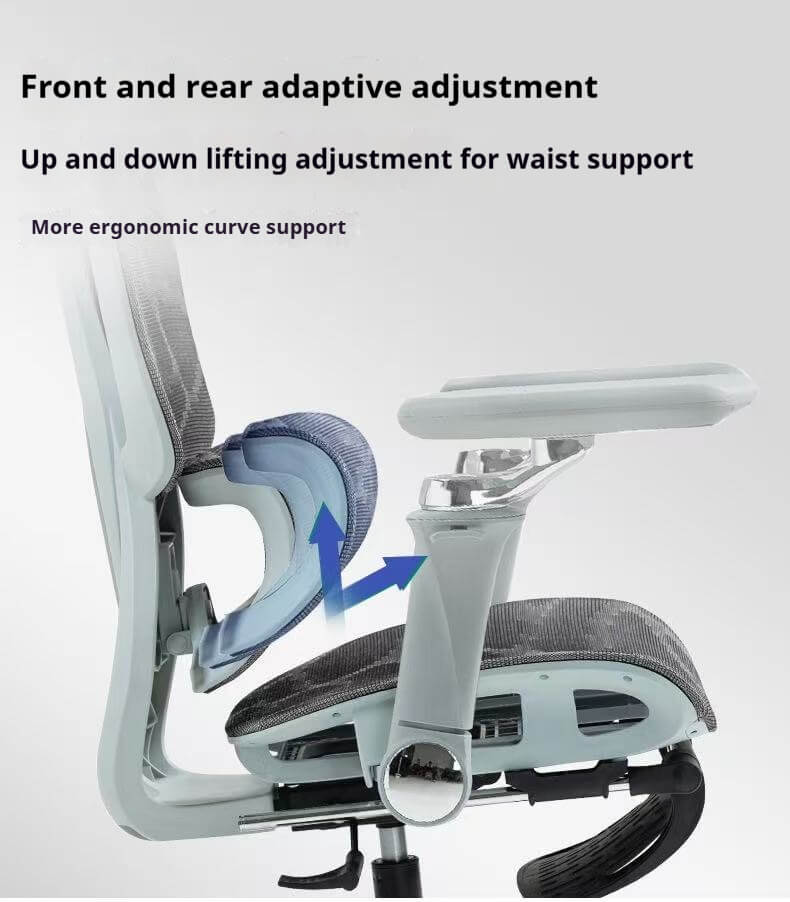
Part II: The Lumbar Support System – Your First Legal Firewall
What it is: The adjustable component that contacts and supports the user’s lumbar spine.
What it is NOT: A simple foam cushion.
The hidden liability it eliminates: Lower Back Pain (LBP) and Workers’ Compensation Litigation
Lower back pain is the leading cause of disability worldwide. For employers, it is not only the primary driver of employee absenteeism but also a hotbed for workers’ compensation claims and litigation.
Unassailable Authoritative Evidence
CUErgo (Cornell University Ergonomics Department), a leading academic authority, has published numerous studies confirming that providing “adjustable, effective” lumbar support is one of the most impactful interventions to reduce workplace LBP rates. A chair with no lumbar support, or a fixed lumbar pad, means you have provided virtually no provable, reasonable protective measures in a legal context.
Critical Legal & Financial Audit Checkpoint: Is the Lumbar Support Height & Depth Adjustable?
Fixed / Height-Only Adjustable (Low Value / High Risk)
A one-size-fits-all design that cannot adapt to the vast differences in spinal curvature across employees of varying heights, weights, and body types. This configuration offers a false sense of security and is an extremely weak defense in legal disputes.
Height & Depth Adjustable (High Value / Low Risk)
This allows every employee to adjust not only the vertical position of the lumbar support but also its support intensity (forward/backward depth). It provides clear, irrefutable proof that your company has made a deliberate, prudent investment in individualized employee health. In the event of a legal dispute, you can present procurement records to prove you invested in professional equipment with this medically recognized, customizable feature.
The Defining Question for B2B Decision-Makers
In a potential labor dispute over lower back pain, do I want my legal team to argue that “we provided a chair”? Or that “we provided a medically recognized, professionally engineered lumbar support system with individualized adjustability”?
“The role of adjustable lumbar support in reducing workers’ compensation risk”—this is the long-tail keyword every corporate legal director should research.
Part III: The Foundation (Gas Lift & Base) – The Ultimate Test of Asset Longevity & Safety
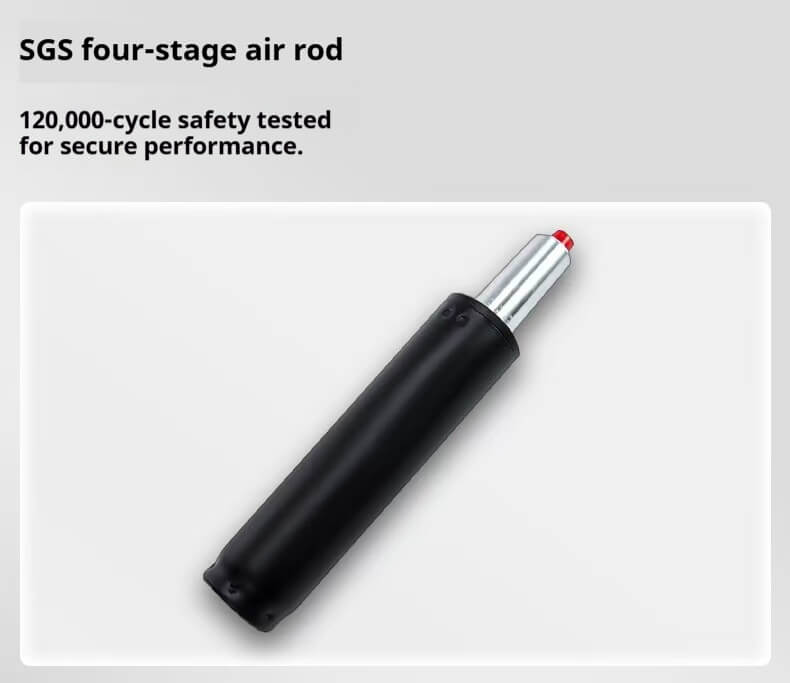
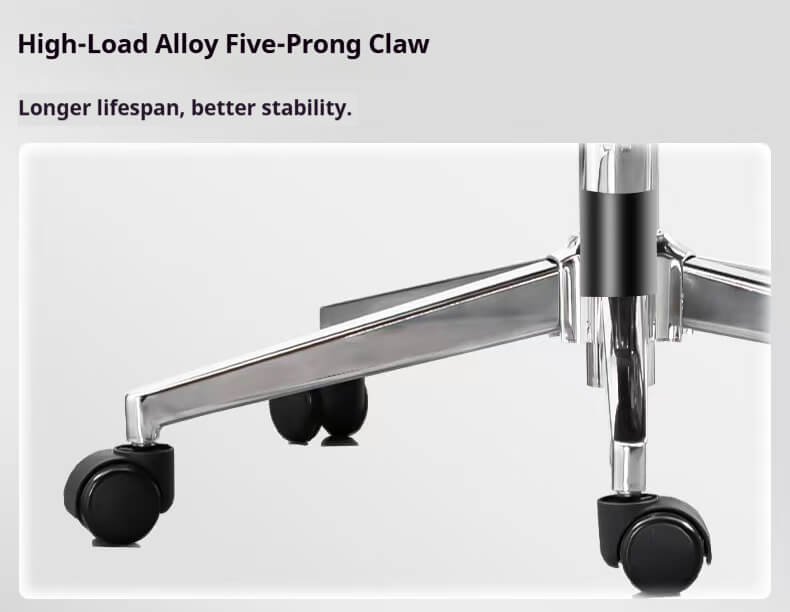
What it is: The gas lift cylinder, five-star base, and casters.
What it is NOT: A simple “metal pipe” and a few “wheels”.
The hidden liability it eliminates: Catastrophic Safety Incidents and Excessive Total Cost of Ownership (TCO)
A burst or failed low-quality gas lift can cause a user to fall suddenly, resulting in severe injury and devastating litigation. A broken low-quality base is a pure safety disaster. The initial cost savings from purchasing inferior chairs will be completely erased by future replacement costs, downtime from repairs, and massive legal risk.
Unassailable Authoritative Evidence
Here, BIFMA International (Business and Institutional Furniture Manufacturers Association) certification is not a “bonus feature”—it is the only unbreakable rule that distinguishes an asset from junk. The BIFMA X5.1 Standard consists of a series of punishing tests, including:
- Cyclic Pressure Testing: Applying heavy loads to the seat for hundreds of thousands of lift and tilt cycles.
- Drop Impact Testing: Slamming a 300-pound (≈136kg) weight onto the seat from a height to simulate extreme impact.
- Base & Caster Durability Testing: Rolling the loaded chair back and forth over an obstacle-laden surface for tens of thousands of cycles.
Critical Legal & Financial Audit Checkpoint: Is the Gas Lift Class 4? Is the Entire Chair BIFMA Certified?
Uncertified / Class 2-3 Gas Lift (High Risk)
These are designed for low-intensity, low-load home use. In a high-intensity commercial environment with 8+ hours of daily use, they are an inevitable, early failure point. Any vendor unable to produce a BIFMA certification is implicitly admitting their product cannot survive in a professional commercial setting.
BIFMA Certified / Class 4 Gas Lift (Low Risk)
A Class 4 gas lift is the highest safety grade for high-intensity commercial use. BIFMA certification is your most authoritative, independent third-party endorsement. It sends a solemn message to your board, employees, and insurers: you are purchasing not just an asset, but a safe, durable, low-TCO asset with a proven service life.
The Defining Question for B2B Decision-Makers
Am I purchasing a “disposable” product with a high failure rate, steep replacement costs, and significant injury litigation risk? Or am I investing in a long-term asset with authoritative third-party certification, multi-year reliability, and minimized corporate risk?
“TCO analysis of BIFMA-certified office chairs with Class 4 gas lifts”—this is the final search every serious procurement decision-maker must conduct.
FAQ: The Questions Your Vendors Fear Most
Q1: “Better ergonomics” is too vague. How do I report a specific, quantifiable ROI to the CFO?
A: Speak the language of risk and loss reduction.
- Build a financial model to calculate salary cost savings from a conservative 5% reduction in absenteeism caused by LBP and MSDs.
- Compare the 5–10 year warranty of BIFMA-certified chairs to the 2–3 year replacement cycle of cheap chairs, and calculate the dramatically lower TCO over a 10-year horizon.The sum of these two figures is your hard ROI.
Q2: Mesh, fabric, or leather? Which material is the best “enterprise asset”?
A: This is a question of maintenance cost and hygiene standards—not touch or feel.
- High-quality Texel mesh: Delivers optimal breathability (reducing discomfort from overheating) and is the easiest to clean and disinfect. For hygiene-focused businesses or those with hot-desking models, this is the lowest maintenance cost, highest asset value choice.
- Commercial-grade abrasion-resistant fabric: Durable but difficult to deep clean, leading to higher long-term hygiene maintenance costs.
- Genuine leather: Offers the highest “visual value” but also the highest maintenance costs and poor breathability—least suitable for high-intensity daily office use.
Q3: Among all specifications, which one is non-negotiable and should be my top priority?
A: Full BIFMA X5.1 certification for the entire chair.
Without this, all promises of “ergonomics”, “synchronized tilt”, or “4D armrests” are meaningless. If a chair cannot physically survive long enough, all its features are irrelevant. This is the absolute bottom line for commercial-grade procurement.
The Final Call to Action: From Audit to Action
You now possess a legal and financial framework to dismantle office chair marketing hype and audit true asset value. But to apply it effectively in procurement, you need a tool.
We have condensed all the audit key points in this report into a single document:
The Ergonomic Chair Procurement: Vendor Due Diligence Scorecard
This is a quantifiable checklist that empowers you to conduct an uncompromising stress test of every core risk point of a vendor’s product—from the type of tilt mechanism to the authenticity of BIFMA certification—when evaluating potential suppliers.