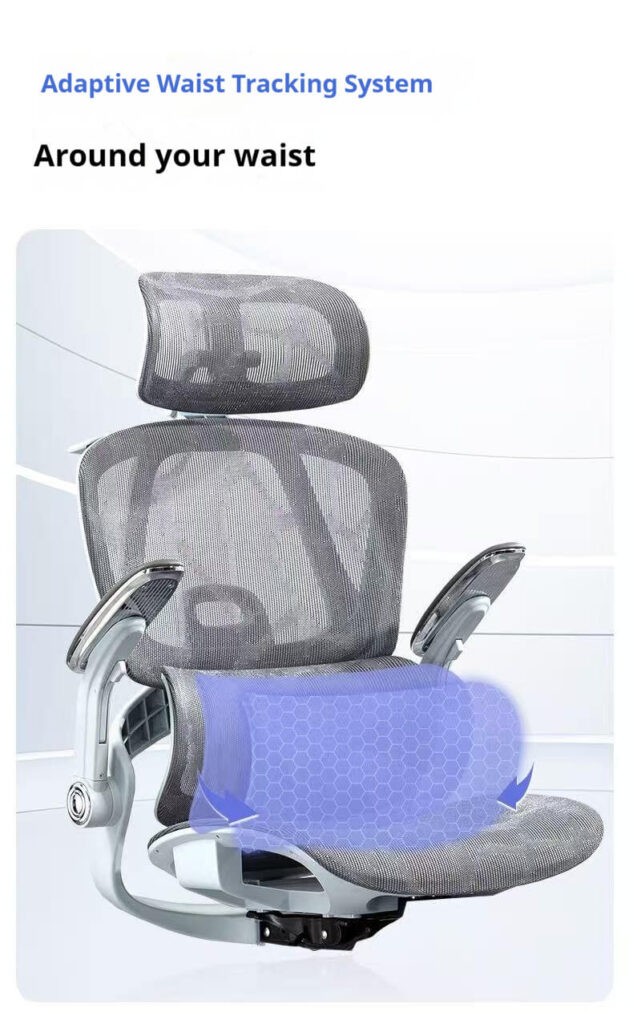
The lumbar support system (Lumbar support or Lumbar pillow) is universally acknowledged as the most critical component of any ergonomic office chair, directly impacting spinal health and long-term comfort. However, not all lumbar supports are created equal. Many products on the market today suffer from outdated designs, inadequate materials, or overhyped marketing claims that fail to deliver meaningful support. This article dissects the evolution, shortcomings, and future innovations of lumbar support technology, offering a fact-based perspective to help users make informed decisions.
The Anatomy of Effective Lumbar Support: Beyond Basic Padding
A high-quality lumbar support system is engineered to mimic the natural curvature of the spine, specifically the lumbar region’s inward curve. Its primary function is to distribute pressure evenly, reduce disc compression, and maintain proper posture during extended sitting. However, many mass-market chairs rely on simplistic, fixed pillows or rigid bolsters that provide only superficial comfort. These designs often ignore biomechanical principles, leading to increased pressure on the vertebral discs and muscle fatigue.
- Key Functional Elements:
- Dynamic Contouring: The support should adapt to the user’s movements, not remain static.
- Material Resilience: High-density memory foam or responsive polymer grids outperform cheap polyurethane in durability and support.
- Adjustability Precision: Micrometer-level adjustments in height and depth allow for personalized alignment.
The Flawed Evolution: From Static Bolsters to “Pseudo-Ergonomic” Gimmicks
The development of lumbar support has followed a trajectory from basic fixed cushions to today’s intelligent systems, but this path is riddled with poorly executed concepts.
- 1. First-Generation Fixed Supports: These simple convex pads, while better than nothing, offer no customization. They frequently sit too high or too low for average users, creating pressure points rather than alleviating them.
- 2. Second-Generation Adjustable Supports: Although an improvement, many manual adjustment mechanisms are cumbersome and imprecise. Users often abandon them after initial attempts, rendering the feature useless.
- 3. The “Dynamic” Label Misuse: The term “dynamic” is often applied to simple spring-loaded mechanisms that provide only basic recoil rather than true intelligent adaptation. This has diluted the term and misled consumers.
A Reality Check: Exaggerated Claims vs. Scientific Validity
The ergonomic chair market is saturated with bold claims about health benefits, but many lack rigorous scientific backing.
- The “Spinal Decompression” Myth: Some brands claim their lumbar supports can “decompress” the spine. While proper support reduces disc pressure, true decompression requires specialized medical equipment. Such marketing exaggerations mislead consumers about the therapeutic capabilities of a chair.
- One-Size-Fits-All Fallacy: Many chairs are designed for a hypothetical “average” body, neglecting the diverse lumbar curves found across different heights, weights, and ethnicities. This oversight can render even well-intentioned designs ineffective for large segments of the population.
- Material Degradation Issues: Low-quality mesh and foam can compress permanently within months, silently diminishing support and leading to poor posture over time. This degradation is often not visible, giving users a false sense of security.
Case Study: Dissecting Popular Lumbar Support Systems
A critical examination of current market offerings reveals significant disparities between marketing and reality.
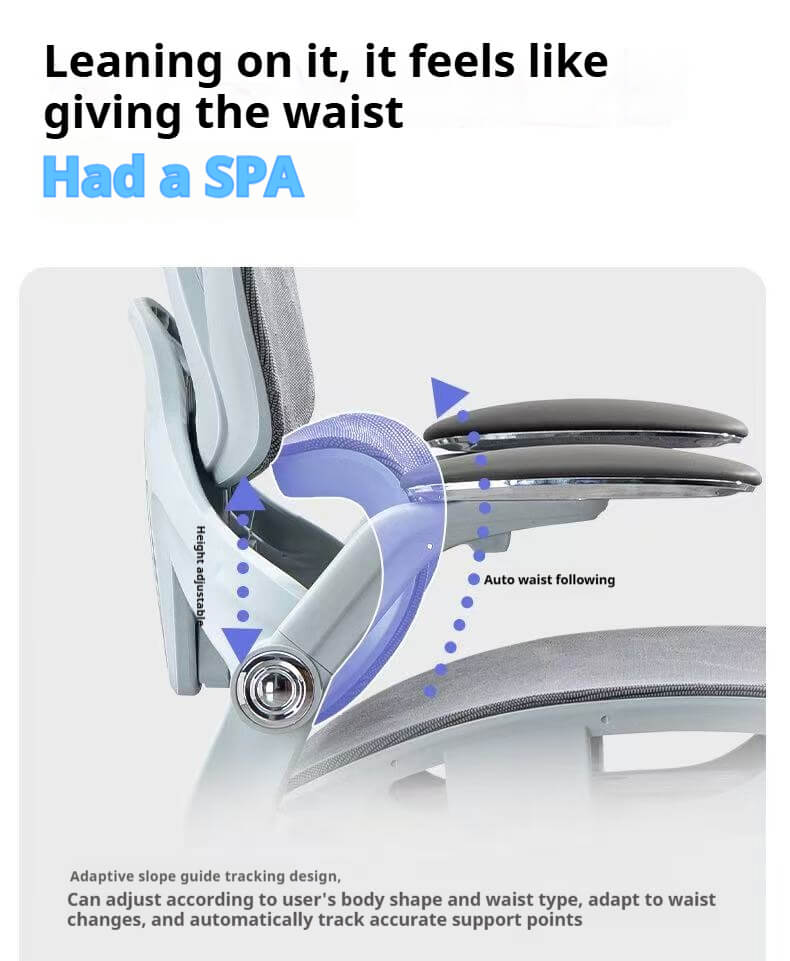
- Basic Spring-Loaded Systems (Commonly found in entry-level models): These mechanisms, often marketed as “auto-adaptive,” provide only backward-forward movement without accounting for the pelvis’s rotation during recline. This results in a loss of contact and support, a fundamental design flaw.
- High-End Synchronized Systems (e.g., xi hao’s dynamic linkage): More advanced systems use a synchronized mechanism where the seat pan and backrest move in concert. This preserves the hip-to-trunk angle better, maintaining consistent support. However, these systems are often complex and can be costly to produce and repair.
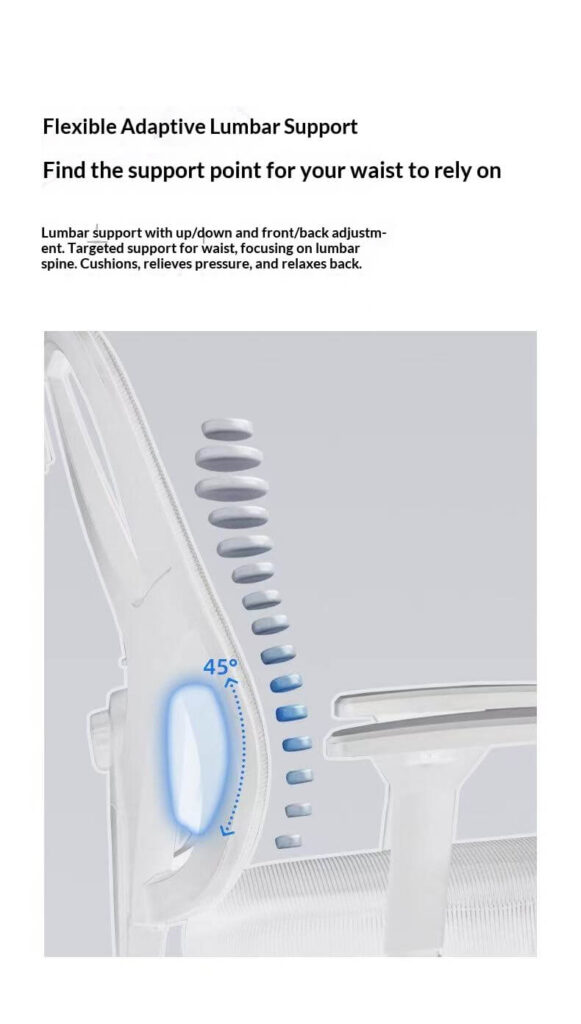
The Future of Lumbar Support: Biomimicry and Personalization
Moving beyond current limitations, the next generation of lumbar support will leverage biomimicry and data-driven personalization.
- Biomimetic Structures: Future designs may incorporate structures inspired by the human spinal column itself—using segmented, interconnected elements that mimic vertebrae. This could allow for multi-directional flexibility and support that current rigid frames cannot achieve.
- AI-Powered Posture Mapping: Integrated sensors could continuously monitor sitting posture and pressure distribution. The system would then micro-adjust the lumbar support in real-time, offering a truly adaptive experience that preempts discomfort rather than merely reacting to it.
- User-Centric Material Science: Advances in materials like 4D-printed lattice structures could allow the support surface to morph its shape and firmness in different zones, providing targeted relief that is personalized to the user’s unique anatomy.
A Practical Framework for Evaluating Lumbar Support
Instead of relying on marketing terms, users should apply a critical framework when selecting a chair.
- The 5-Minute Test: Sit in the chair for at least five minutes. Does the support feel like it’s “pushing” your back into a position, or does it “fill the gap” comfortably? The latter is preferable.
- The Recline Test: Slowly recline. Does the support maintain contact along your entire lumbar curve, or does it create a void? Consistent contact is a sign of a well-designed linkage system.
- Long-Term Value Assessment: Inquire about the density of the foam and the warranty on the mechanism. A longer warranty often reflects the manufacturer’s confidence in the durability of the materials and mechanics.
Conclusion: Elevating the Standard for Spinal Health
The discourse around lumbar support must shift from marketing hype to biomechanical integrity. While current technology offers improvements over past designs, significant room for innovation remains. The ideal lumbar support system of the future will be less of a “component” and more of an intelligent, responsive partner in maintaining spinal health. As consumers become more critical and informed, the industry will be compelled to prioritize genuine engineering over superficial features, ultimately leading to products that deliver on their promises of health, comfort, and performance.