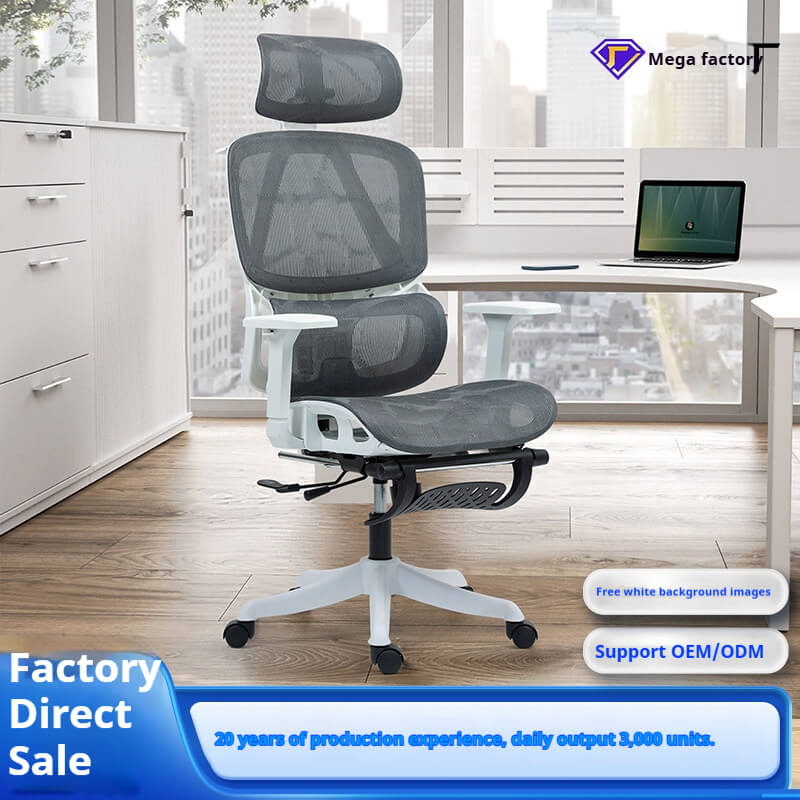
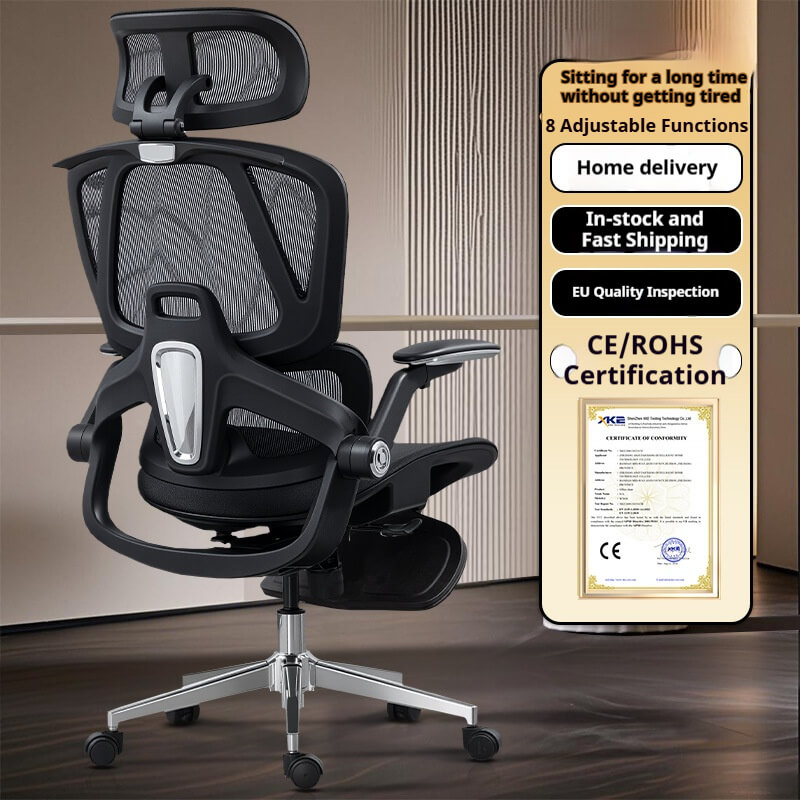
The most expensive mistake procurement teams make in the office furniture industry is negotiating based on what they can see. When you import a container of office chairs, you are likely scrutinizing the mesh tension, the PU armrest pads, or the caster smoothness. Meanwhile, a ticking financial liability sits directly beneath the user’s seat: the mechanism.
If you do not fundamentally understand the engineering inside the chassis, you are not buying an ergonomic chair; you are buying a plastic shell attached to a blind risk. Over 60% of catastrophic chair failures, safety liabilities, and costly warranty claims originate from the heavy metal block hidden under the seat.
To stop subsidizing your supplier’s hidden margins, you need the best ergonomic chair mechanisms explained without the showroom marketing fluff. If your procurement team cannot distinguish between a thinned-out stamped steel plate and a true aluminum wire-control chassis, you are overpaying, and your defect rate will soon mathematically prove it.
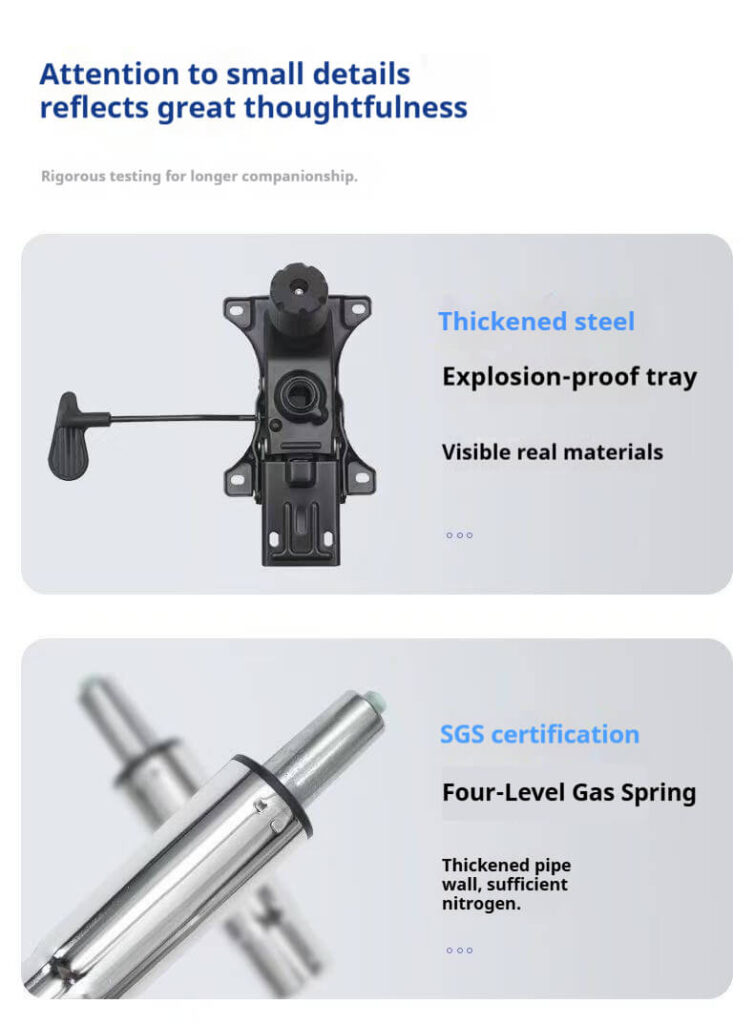
The Insider Truth: What They Put Inside the “Black Box”
The mechanism is the “engine” of the chair. It dictates the synchronized tilt ratio, the backrest tension, and fundamentally, whether the chair will snap under a 250lb load. Let us disassemble the reality of what Chinese factories are actually installing under your seats.
1. The “Butterfly” Illusion (The Budget Trap)
Standard butterfly mechanisms are the default for entry-level chairs. Engineered correctly, they are stamped from 2.5mm or 3.0mm thick Q235 steel. They offer a basic 1:1 tilt ratio (when the user leans back, the seat pan tilts up at the exact same angle, lifting their feet off the floor—a biomechanical disaster, but acceptable for budget retail).
The Industry Dark Side: To win a price war, rogue suppliers stealthily thin the steel plate to 1.8mm or even 1.5mm. They paint it matte black, making it impossible to detect visually. After six months of repetitive stress, the main weld points fracture. The factory saves $1.20 per unit on raw steel; you end up paying for a complete product recall.
2. The Fake “Wire-Control” Arbitrage
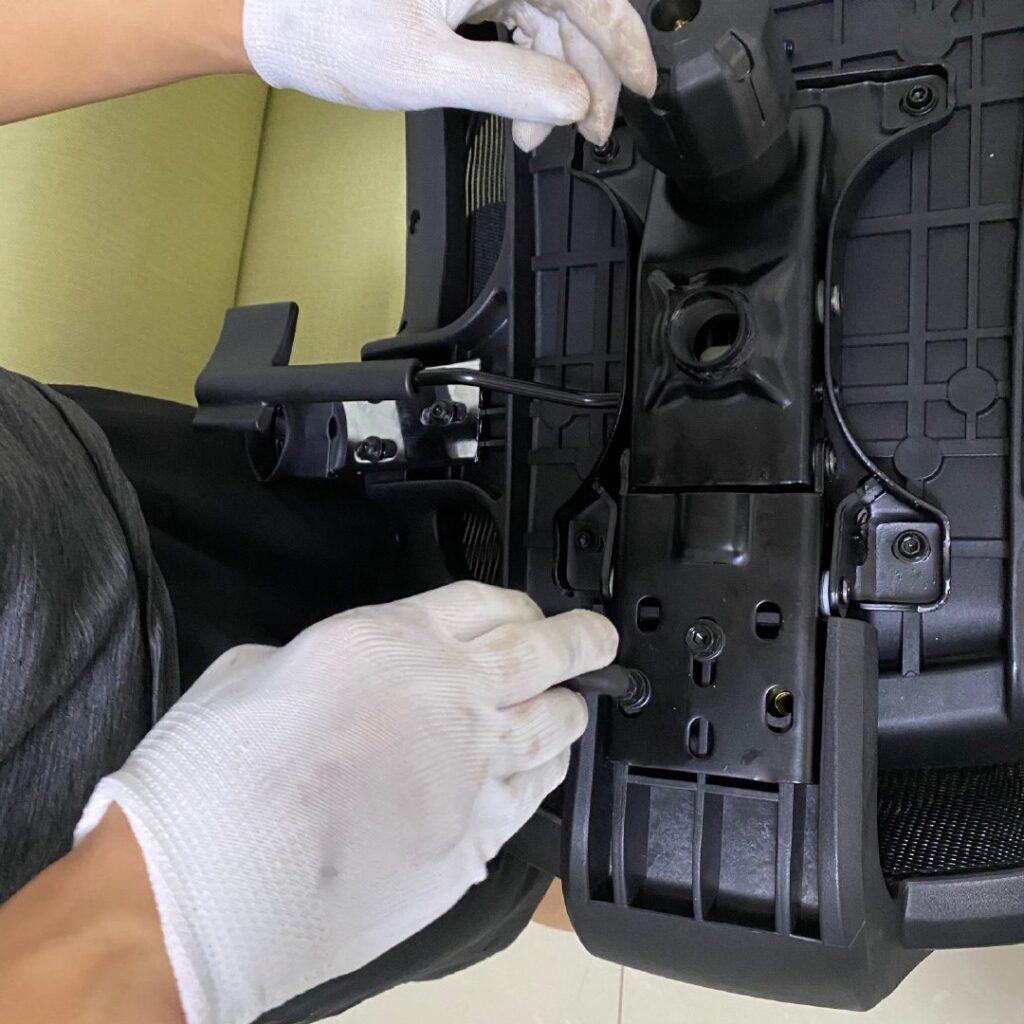
High-end ergonomic chairs utilize wire-controlled, weight-sensitive mechanisms. Instead of forcing the user to reach under the seat to twist knobs, steel cables (similar to bicycle brakes) route the controls to paddles on the side of the seat. A true wire-control chassis is cast from solid aluminum alloy and provides a 3:1 synchronized tilt (the backrest reclines 3 degrees for every 1 degree the seat pan tilts, keeping the user’s feet flat).
The Industry Dark Side: The arbitrage here is in the internal transmission. Because the chassis is a sealed “black box,” factories in Anji or Foshan often use cheap ABS plastic gears inside to translate the cable pull, rather than using machined steel or brass. Within 10 to 12 months, the plastic gear strips. The cable snaps. The chair is permanently locked in one position. You bought a “premium” feature that was engineered to fail just outside the factory warranty window.
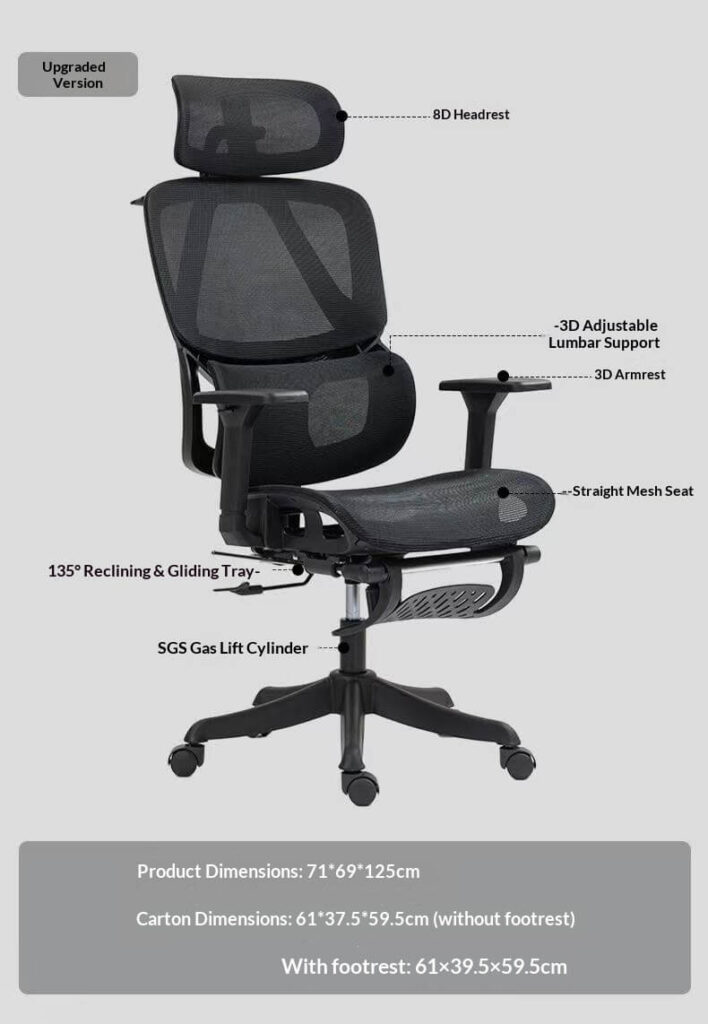
The ROI & Risk Breakdown: The Mathematics of the Mechanism
You are not just buying a metal chassis; you are buying a localized risk profile. Let us calculate the 24-month Total Cost of Ownership (TCO) for a generic $45 chair utilizing a downgraded butterfly mechanism versus a $75 chair utilizing an authentic, structurally audited wire-control chassis.
| Procurement Metric | The “Downgraded” Butterfly | Authentic Aluminum Wire-Control |
| Chassis Component Cost | $6.00 (1.8mm Steel) | $22.00 (Cast Aluminum + Steel Gears) |
| Initial Chair Price (FOB) | $45.00 | $75.00 |
| Mechanism Defect Rate (Year 1) | 8.5% (Weld fractures, locks jam) | < 0.3% |
| Ergonomic Profile | 1:1 Tilt (Knee-crushing) | 3:1 Synchronized Tilt |
| Liability / Injury Risk | High (Steel plate snap under load) | Zero (BIFMA tested to 300lbs continuous) |
| Replacement / RMA Cost | $12.00 per chair (Avg. over batch) | $0.50 per chair (Negligible) |
| True Cost Per Unit (24 Months) | $57.00 + Brand Damage | $75.50 + Brand Equity |
The Procurement Reality: The $16 difference in the chassis cost dictates the entire lifespan and market positioning of your product. When you squeeze a supplier for a $2 discount at the negotiation table, they do not eat the loss. They simply call their chassis sub-supplier and request the version with plastic internal gears.
The Defense Line: Engineering Supply Chain Predictability
We operate as your localized technical barrier in China. We do not judge a mechanism by its smooth black finish or the supplier’s ISO certificate; we judge it by its metallurgical data and internal Bill of Materials (BOM).
Here is how we verify the “engine” of your chairs before they board a vessel:
- Chassis Weight Auditing: A true Donati-style aluminum wire-control mechanism has a mathematically precise weight. During Pre-Shipment Inspection (PSI), we weigh the raw chassis. If it is 300 grams lighter than the Golden Sample baseline, the factory has swapped virgin aluminum for porous, recycled alloy. We reject the batch.
- Destructive Teardowns: We do not just look at the outside. We pull random mechanisms from the assembly line and open the casing. If the transmission gears attached to the cables are ABS plastic instead of the contracted steel or brass, the shipment is halted.
- Cyclic Cable Testing: We demand live, unedited video evidence of the BIFMA standard 30,000-cycle cable tension tests from the supplier’s internal lab to ensure the wire routing will not snap under daily office use.
Next Steps for Technical Buyers
If you are currently experiencing unexplained tilt lock failures, sinking gas lifts, or structural snapping from your current supply chain, you are likely dealing with compromised internal mechanics. You need to audit their mechanism BOM immediately.