The quest for the perfect office chair often fixates on today’s solutions: better lumbar support, softer headrests, more adjustments. Yet, despite a market saturated with options, searches for ergonomic chair for back pain and best rated ergonomic chair remain persistently high, indicating a gap between promise and lived experience. The future of seated comfort lies not in incremental tweaks to existing designs, but in a fundamental paradigm shift: from static, reactive furniture to dynamic, intelligent systems that partner with the human body.
This article merges ergonomic science, a critical look at current market limitations, and data-driven foresight to explore what the next generation of ergonomic office chairs must deliver to truly solve the problems of prolonged sitting.
The Current Pillars of Ergonomic Design and Their Limits:
Today’s high-end ergonomic chairs are built on principles established decades ago: adjustability, support, and user control. These principles address symptoms but often miss the root cause—our bodies are not built for static postures.
The Established Trinity of Ergonomic Chairs
- Adjustability (The User’s Burden): Chairs offer a myriad of levers and knobs for seat height, depth, armrests, lumbar tension, and tilt. The underlying assumption is that a user will find and maintain their “perfect” setting—an assumption often proven false by usability studies showing most adjustments are used only once, if at all.
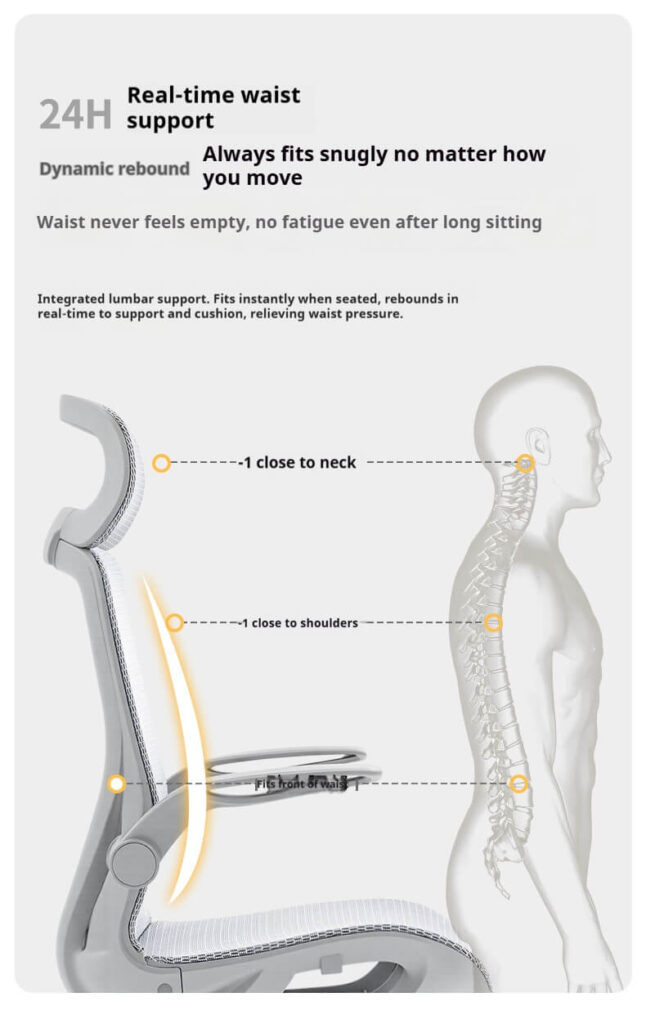
- Passive Support (The Static Solution): Components like lumbar pads and headrests provide static, unmoving support. While beneficial, they do not adapt as the user shifts, slouches, or reclines, leading to moments of poor alignment and pressure points.
- The Promise of Movement (Often Unfulfilled): Synchronized tilt mechanisms are designed to encourage micro-movements. However, without prompting or feedback, users frequently lock their chairs in an upright position, negating the primary biomechanical benefit.
The Data Gap in Traditional Ergonomics
A 2023 systematic review in the Journal of Occupational Rehabilitationnoted that while ergonomic interventions (like chairs) show moderate evidence for reducing musculoskeletal discomfort, the effect sizes vary widely. This variability often stems from poor individual fit and lack of sustained postural change. Simply providing an adjustable tool does not guarantee its correct or continuous use.
Why “Smart” Chairs Haven’t Solved the Problem:
The market has seen a surge in “smart” chairs boasting sensors and apps. A critical examination, however, reveals significant shortcomings that hinder widespread adoption and effectiveness.
The “Gimmick vs. Genuine Innovation” Divide
Many current “smart” features are solutions in search of a problem. Common failings include:
- Complexity Overload: Apps that provide overwhelming posture data without clear, actionable guidance lead to user fatigue and abandonment. The search for a comfortable office chair is often derailed by unnecessary technological friction.
- Poor Sensor Integration: Basic pressure sensors in seat pads can detect sitting but cannot accurately assess spinal alignment or differentiate between healthy recline and harmful slouching.
- The Privacy Paradox: Chairs collecting biomechanical data raise valid concerns about employee privacy and data ownership, creating a barrier for corporate adoption.
Misaligned Incentives: Aesthetic vs. Holistic Health
The industry heavily markets chairs for executive offices and gaming setups, often prioritizing aesthetic design (like ergonomic leather desk chairs) or niche features over fundamental, research-backed health outcomes. This distracts from developing universally beneficial, proactive health systems.
A Framework for the Next-Generation Ergonomic Ecosystem:
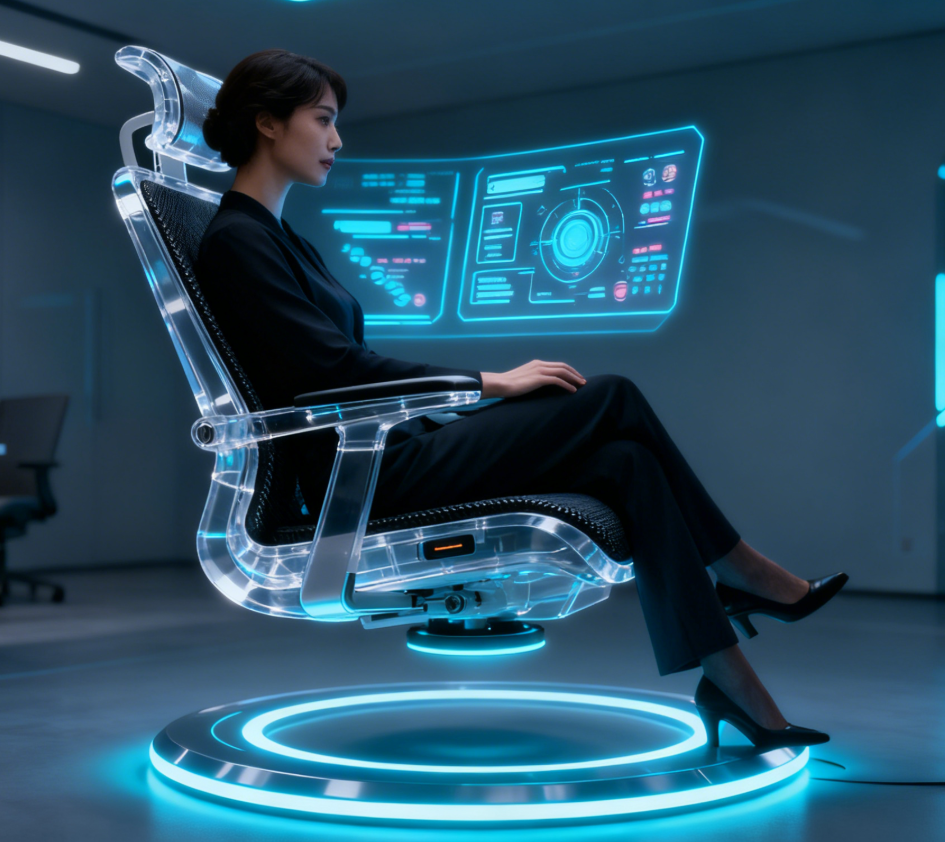
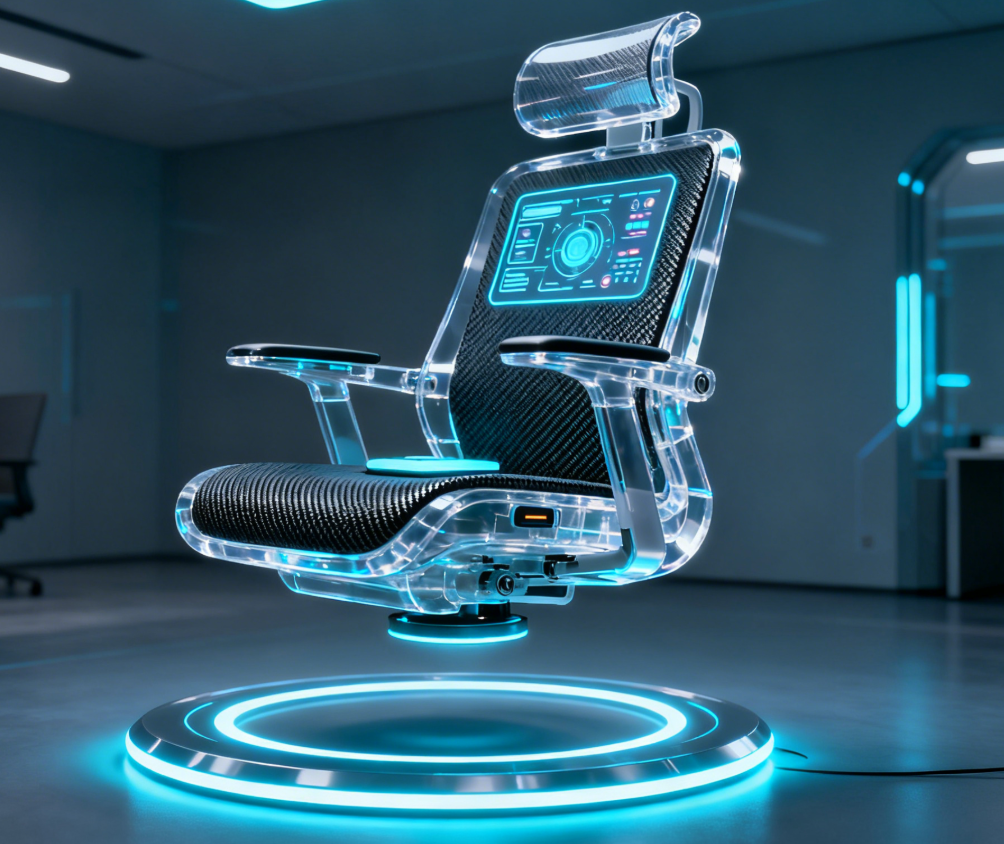
The future chair will be less of a throne and more of a hub within an intelligent workspace ecosystem. Its core function will shift from supportinga posture to promotinghealthy movement and providing actionable insights.
Core Principle 1: Proactive, Adaptive Response
Future systems will use a combination of embedded sensors (e.g., pressure arrays, inertial measurement units) and optional wearable integration to model a user’s unique posture in real-time.
- Example: Instead of a static lumbar bulge, a matrix of micro-actuators in the backrest would gently inflate or deflate to provide dynamic, migrating support that follows the spine’s natural movement throughout the day, actively preventing static load.
Core Principle 2: Frictionless Biofeedback
Feedback will be ambient and intuitive, not reliant on screen notifications.
- Example: Subtle haptic pulses in the seat cushion or a gentle, automated nudge from the chair’s tilt mechanism could prompt a posture correction or suggest a standing break, addressing the search for solutions to prevent back pain at desk without being disruptive.
Core Principle 3: Holistic Workspace Integration
The chair will not operate in isolation. It will be the central node in a connected workspace.
- Example: The chair detects prolonged focus and communicates with smart lighting to slightly adjust color temperature, or signals a height-adjustable desk to initiate a slow, pre-programmed standing cycle. This creates a seamless, health-promoting environment.
The Path Forward: Actionable Insights for Buyers and Designers
For businesses and individuals navigating the present while anticipating the future, a dual-strategy is essential.
A Buyer’s Checklist for “Future-Proof” Value Today
When evaluating a current chair, look for foundational quality that enables longevity and adaptability:
| Feature | “Future-Ready” Indicator | Reasoning |
|---|---|---|
| Mechanical Core | BIFMA-certified gas cylinder, robust multi-tilt mechanism. | Ensures durability; a reliable physical platform is a prerequisite for any future tech integration. |
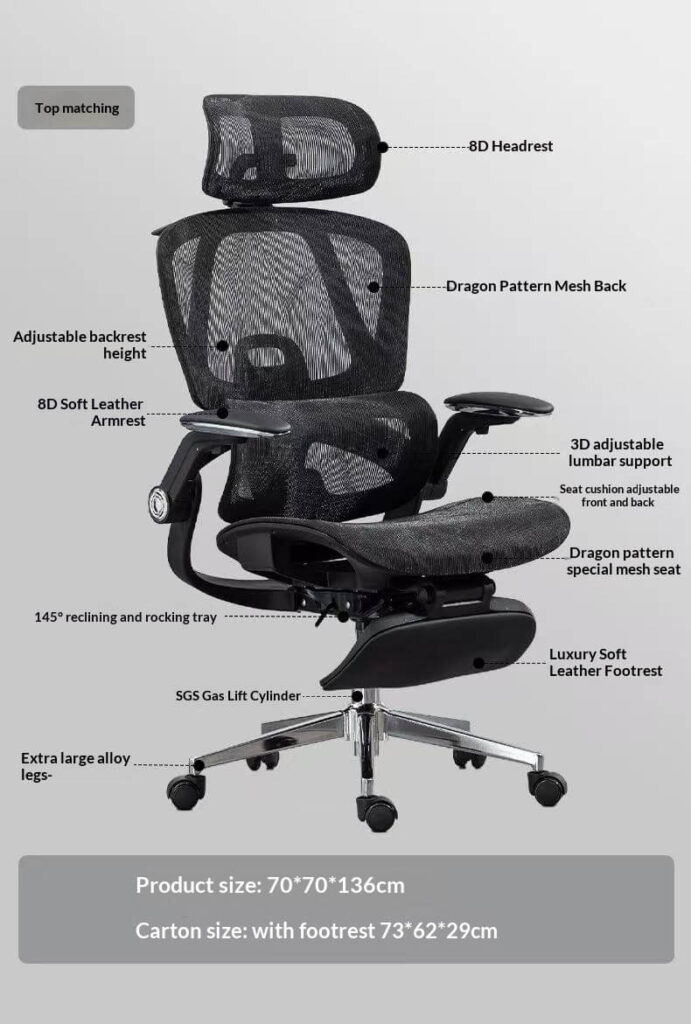
| Material & Build | High-quality mesh (like ergonomic mesh chair options) or high-resilience foam, durable chassis. | Supports long-term use; adaptable materials are better suited for potential sensor integration. |
| Truly Adaptive Support | Dynamic lumbar that moves with recline, synchronised tilt. | Demonstrates a design philosophy centered on movement, a core tenet of future development. |
For Innovators: The Underdeveloped Frontiers
The next breakthroughs may come from:
- Biomimetic Materials: Seat and backrest materials that change stiffness or contour in response to body heat and pressure, akin to memory foam but with active adaptation.
- Predictive Analytics: Using anonymized, aggregated data from user populations to identify early risk patterns for musculoskeletal disorders, enabling preventative workplace design.
FAQ: Answering Core Questions About the Ergonomic Future
Q1: Will a future “smart” chair be prohibitively expensive?
A: Like all technology, costs will decrease with scale and adoption. Initially targeting enterprise wellness programs, features will trickle down. The true cost analysis should factor in potential healthcare savings and productivity gains from reduced discomfort.
Q2: I need a chair now. Should I wait for this future tech?
A: No. The best chair today is one that fits your body, encourages movement, and is built to last. Focus on excellent adjustability and passive dynamic features (like smooth tilt). View advanced technology as a potential upgrade path, not a reason to delay addressing current discomfort.
Q3: How do I find a high back ergonomic office chair that is also “future-ready”?
A: Prioritize chairs from manufacturers with a strong R&D track record and a history of offering component upgrades. Look for modular designs where the seat, backrest, or controls could potentially be updated separately.
Conclusion: From Furniture to Health Interface
The evolution of the ergonomic chair from a static object to an intelligent health interface is inevitable. This transition will be guided not by more buttons or complex apps, but by a deeper understanding of human physiology and a commitment to frictionless, proactive wellness. The ergonomic office chair of the future will be defined by its silent, adaptive partnership with the user—anticipating needs, encouraging healthy habits, and integrating seamlessly into a broader ecosystem of well-being. The foundation for that future is being built today in chairs that prioritize durable mechanics, dynamic support, and thoughtful, human-centered design.