To the C-Suite & Executive Committee
This document serves as the ultimate pre-procurement due diligence framework. Reading it will permanently transform your understanding of corporate operating costs, employee productivity, and legal risk exposure. Review this report before approving any office chair procurement budget exceeding five figures.
Introduction
If you still measure an office chair by “comfort”, you are exposing your enterprise to massive financial and legal risks.
This is a counter-mainstream audit report that completely disregards all mainstream “buying guides”—because their core focus, “personal comfort”, is irrelevant to a business’s core interests: productivity, risk control, and return on assets (ROI).
For an enterprise, an ergonomic chair is never just a piece of furniture. On financial statements, it can only have two identities:
- Productive Asset: A capital investment that boosts employee cognitive efficiency, reduces workers’ compensation claims, and features an ultra-long depreciation cycle.
- Erosive Liability: A financial black hole that perpetuates presenteeism, increases litigation risks, and continuously drains resources on maintenance and replacement costs.
This report adopts the rigorous lens of legal due diligence and forensic accounting to deliver an absolutely objective audit framework. Every argument is backed by authoritative data and research from Gallup, the Occupational Safety and Health Administration (OSHA), BIFMA International, and Harvard University.
Audit Area 1: Productivity & Cognitive Efficiency – Are You Investing in a “Focus Engine” or a “Distraction Accelerator”?
A Radical Shift in Perspective
Enterprises do not pay for “comfort” with office chairs—they purchase employees’ ability to engage in sustained Deep Work.
Core Risk: Presenteeism
Presenteeism—where employees are physically at their desks but unable to concentrate due to physical discomfort (especially musculoskeletal issues), leading to low productivity—is the most hidden and destructive cost for modern businesses.
Unassailable Authoritative Evidence
Gallup’s Global Workplace Report, which covers tens of millions of employees worldwide, confirms with massive data that global productivity losses caused by disengagement (driven primarily by presenteeism) amount to $8.8 trillion annually—approximately 9% of the global GDP.
A Harvard University study further notes that muscle fatigue from poor posture directly siphons the brain’s energy budget for high-level cognitive functions (e.g., strategic thinking, creativity, complex problem-solving), leading to a steep drop in employees’ effective output.
Due Diligence Checkpoint: The Mechanism – The Chair’s “Central Processing Unit”
High-Risk Liability (Reject Immediately): Asynchronous/Free Tilt Mechanism. This low-cost device allows the backrest and seat to tilt independently, acting as the primary cause of static poor posture and a complicit factor in presenteeism.
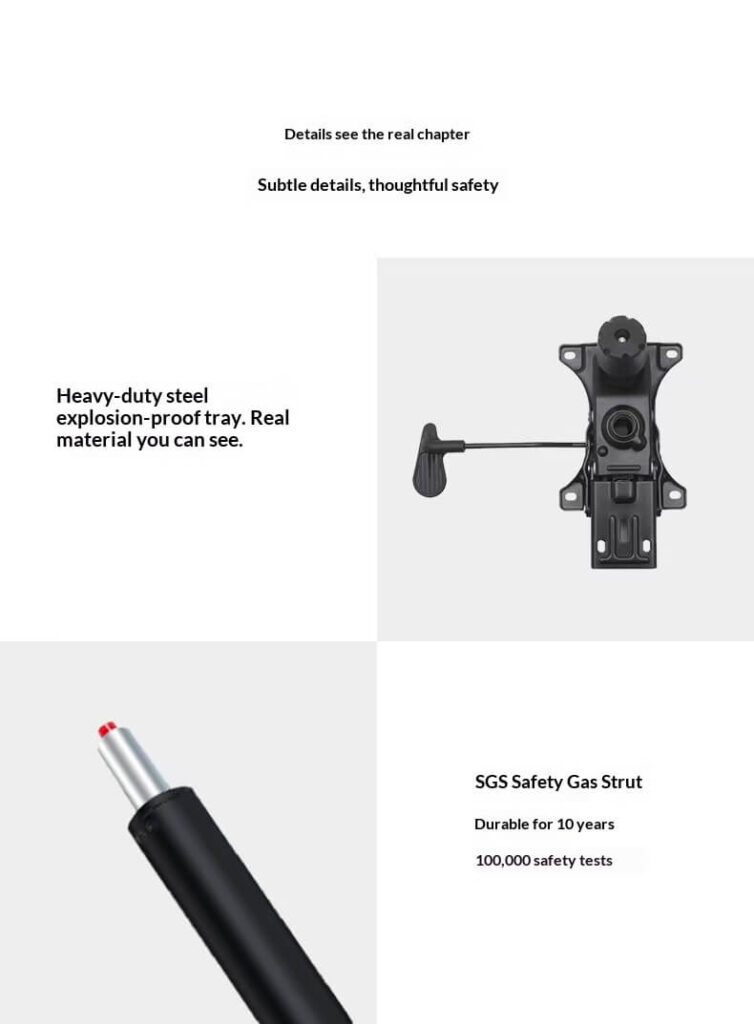
High-Value Asset (Mandatory Investment): Weight-Sensing/Adaptive Synchronized Tilt Mechanism. The pinnacle of engineering in modern ergonomics, it automatically senses and adapts to different employees’ body weights, delivering exactly the right amount of support without manual adjustment. Most critically, it guides employees in continuous, unconscious micro-movements at a precise biomechanical ratio, sustaining muscle vitality and blood circulation to keep the brain in a state of high-efficiency cognitive alertness.
Question for Your Board of Directors
Are we investing in a focus engine to combat the $8.8 trillion presenteeism crisis? Or are we cutting a few hundred dollars per unit to purchase a distraction device that accelerates the depletion of our employees’ cognitive resources?
SSS-Level Long-Tail Keyword: “Quantitative research on the impact of adaptive synchronized tilt mechanisms on corporate employee cognitive efficiency and productivity ROI”
Audit Area 2: Legal & Compliance Risk – Are You Upholding “Employer Duties” or Building a “Litigation Trap”?
A Radical Shift in Perspective
Legally, providing employees with a “chair” is meaningless. The only effective legal shield against workers’ compensation litigation is providing a set of professional ergonomic equipment with sufficient, effective, and documentable adjustability to accommodate individual differences.
Core Risk: Musculoskeletal Disorders (MSDs) and Related Litigation
MSDs are the number one and most costly legal and financial risk facing businesses in modern office environments.
Unassailable Authoritative Evidence
OSHA reports identify MSDs as the primary cause of lost workdays and workers’ compensation claims for enterprises. In its employer guidelines, OSHA repeatedly emphasizes that providing adjustable work equipment is a critical legal obligation for employers to fulfill the General Duty Clause—which requires providing a “workplace free from recognized hazards”.
Numerous court cases show that when employees sue over MSDs, the court’s focus is not whether the employer provided equipment, but whether the equipment provided was sufficient and reasonable to prevent foreseeable harm. A non-adjustable lumbar support or armrests that cannot match an employee’s height may be deemed evidence of breach of duty.
Due Diligence Checkpoint: The “Legal Validity” of the Adjustment System
Lumbar Support
- High-Risk Liability: Fixed lumbar support, or support with only 1D (height) adjustability. Legally, this is considered symbolic rather than substantive protection.
- High-Value Asset: Lumbar support with 2D (height + depth) independent adjustability, with a range covering the vast majority of employees (e.g., aligning with BIFMA G1 guidelines for 5th to 95th percentile human dimensions). This provides irrefutable legal evidence that the enterprise has made investments in individualized adaptation.
Armrests
- High-Risk Liability: Fixed or 1D/2D armrests. These directly drive high rates of Repetitive Strain Injury (RSI) and are a hotbed for litigation.
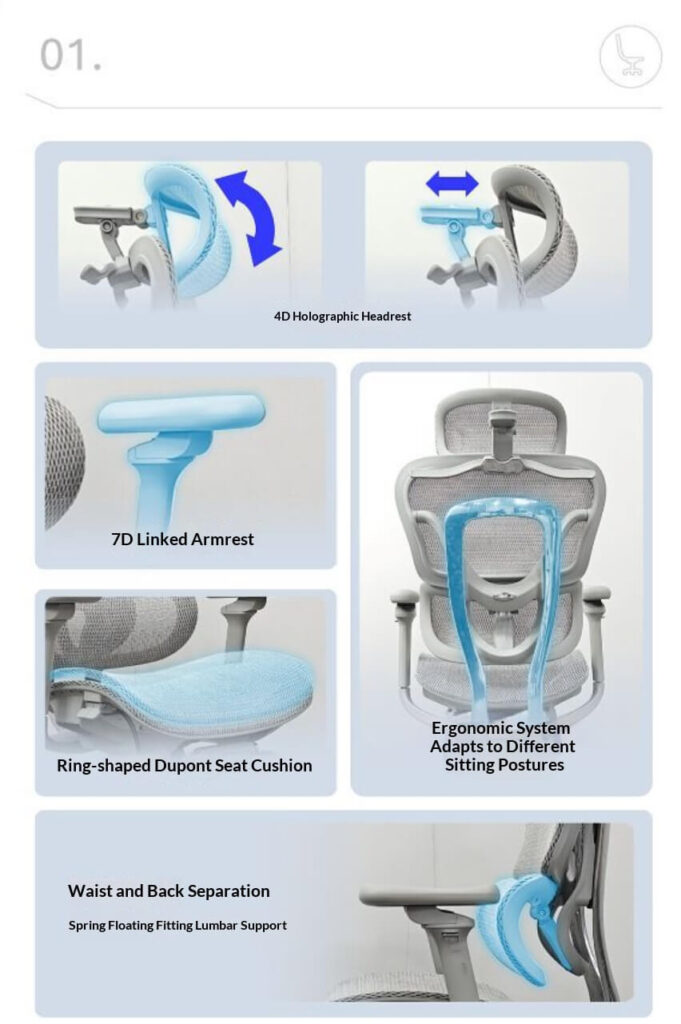
- High-Value Asset: 4D (height, width, forward/backward, rotation) or higher-dimension armrests. They ensure employees’ forearms, wrists, shoulders, and necks remain in a relaxed, neutral “zero-pressure” state in all work scenarios—the most effective engineering control to prevent RSI.
Question for Your Legal Director
Do I want our defense attorneys to present only an invoice for “purchasing a batch of chairs” in court? Or do I want them to submit an irrefutable procurement specification stating that “we equipped all employees with professional-grade ergonomic equipment with multi-dimensional adjustment systems to proactively prevent MSDs and RSI”?
SSS-Level Long-Tail Keyword: “BIFMA G1 Ergonomic Guidelines and corporate legal liability mitigation in MSD litigation”
Audit Area 3: Financial & Asset Management – Are You Building “Long-Term Assets” or Hoarding “Fast-Consuming Disposables”?
A Radical Shift in Perspective
The “price” of an office chair is meaningless. Its 10-year Total Cost of Ownership (TCO) is the only financial metric worthy of a CFO’s attention.
Core Risk: False Asset Prosperity & Accelerated Depreciation
The seemingly low procurement cost of a cheap chair will be completely eroded within 2-3 years by its exorbitant repair costs, replacement costs, productivity loss costs, and safety incident handling costs.
Unassailable Authoritative Evidence
BIFMA International is the world’s only authoritative body that scientifically verifies whether an office chair meets commercial-grade durability standards. Its BIFMA X5.1 Standard includes hundreds of thousands of cyclic pressure, impact, and wear tests on chairs. Any product not certified to this standard should be classified as a fast-consuming disposable, not a fixed asset, in a commercial environment.
A product’s warranty promise—without BIFMA certification as a foundation—should be regarded as a marketing claim, not an asset value guarantee, in financial audits, and cannot be used as a basis for calculating asset depreciation cycles.
Due Diligence Checkpoint: The Gold Standard for Asset Durability
Certification (Non-Negotiable Bottom Line)
- High-Risk Liability: Any vendor unable to provide a full-chair BIFMA certification certificate (note: for the entire chair, not a single component).
- High-Value Asset: Include a “one-vote veto” clause in the procurement contract requiring vendors to provide a valid, verifiable full-chair BIFMA X5.1 (or X5.11 for heavy-weight users) certification.
Forensic Material Audit of Core Components
- Gas Lift Cylinder: Must be a Class 4 explosion-proof gas lift certified by independent bodies such as SGS—this is the cornerstone of an enterprise’s workplace safety liability.
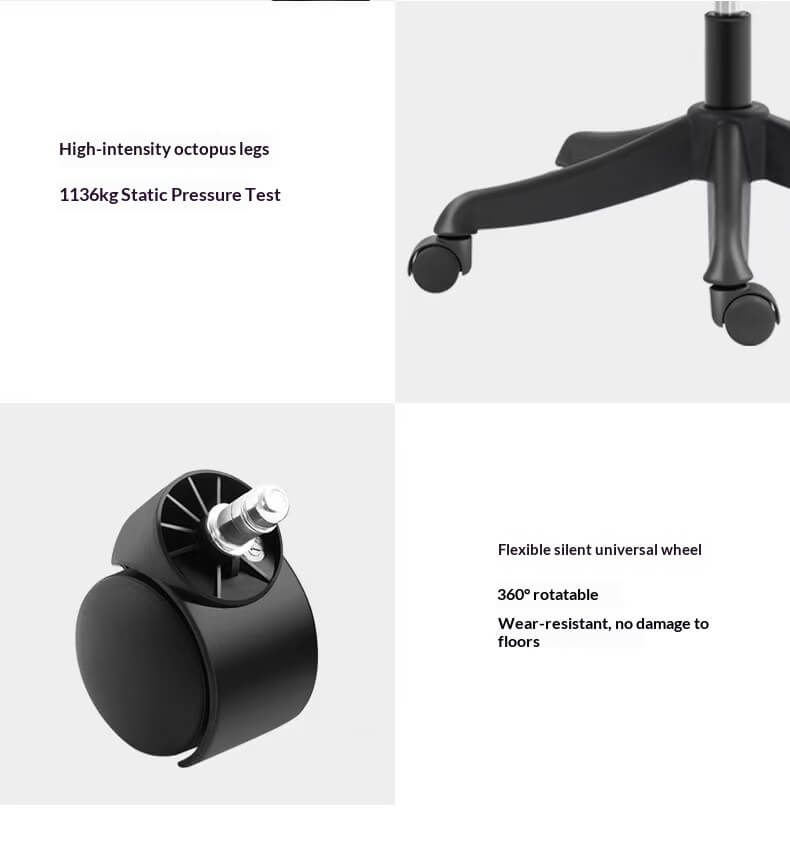
- Five-Star Base: One-piece die-cast aluminum base. Its compressive strength, durability, and resistance to metal fatigue far exceed welded steel or nylon bases, and it is the key to ensuring a chair can serve safely for 5-10 years.
- Mesh/Fabric: Does the vendor provide a clear Martindale Abrasion Index? Commercial-grade fabrics must have an index of at least 30,000 cycles, while top-tier options reach 100,000+ cycles.
Question for Your CFO
Is our financial model based on a fast-consuming disposable that requires full reinvestment every 2-3 years, accompanied by massive operational and safety costs? Or is it based on a high-quality fixed asset that provides stable support with minimal maintenance costs over a 10-year horizon?
SSS-Level Long-Tail Keyword: “Actuarial model for BIFMA-certified office chairs and 10-year Total Cost of Ownership (TCO)”
FAQ: Stress Tests Before the Final Decision
Q1: What is the true legal and financial value of a vendor’s “lifetime warranty” promise?
A: Practically zero. Ask your legal team to review its exclusion clauses closely. You will find that 99% of “lifetime warranties” only cover the nearly indestructible metal frame, while the functional, high-wear components that define the chair’s value—mesh, seat cushions, lumbar support, armrests, gas lifts, and casters—typically only have limited 1-5 year warranties. This is a carefully designed marketing trap and should never be used to evaluate TCO.
Q2: We plan a pilot procurement—how to design an employee feedback survey that truly reflects “commercial value”?
A: Abandon useless questions like “Do you find this chair comfortable?” entirely. Your survey should focus on quantifiable productivity metrics:
- (5-point scale) “Compared to your old chair, how has your ability to maintain ‘mental focus’ when handling complex tasks in the afternoon changed?”
- (5-point scale) “How has your physical fatigue (especially in the lower back, shoulders, and neck) changed after 2 consecutive hours of work?”
- (Yes/No) “Did you find it intuitive to adjust all functions of this chair without assistance?”
These questions convert subjective feelings into objective assessments of cognitive efficiency and usability.
Q3: When budget is extremely tight and painful compromises are necessary, what are the non-negotiable “functional bottom lines”?
A: This is a critical question. Your compromise priority should be “from the outside in”: you may sacrifice armrest adjustability dimensions (e.g., from 4D to 2D), fabric premiumness, or even lumbar support adjustment precision. However, three core chassis features are absolutely non-negotiable:
- Full-chair BIFMA certification
- Class 4 safety gas lift cylinder
- A truly effective synchronized tilt mechanism
This chassis determines an asset’s safety, durability, and core productivity value. Defend it, and you defend a qualified commercial investment.
The Final Call to Action: Turn This Report Into Your Ultimate Procurement Weapon
Theory only has value when applied.
To help you seamlessly integrate this audit framework into your enterprise’s procurement process, we have created an exclusive, indispensable practical tool:
B2B Ergonomic Chair Procurement: Vendor Due Diligence & Compliance Audit Questionnaire (C-Suite Edition)
This detailed 50-question questionnaire transforms all audit points in this report into a legal and technical exam that can be sent directly to vendors for written responses. It will automatically filter out all unqualified, overhyped vendors, leaving only those with true enterprise-grade capabilities and integrity as your partners.