Executive Summary
The global ergonomic office chair market is undergoing a structural transformation—evolving from passive support tools to active health management platforms. By 2025, the market size has reached 22 billion yuan with an annual growth rate of 22.09%, driven by two core forces: the workplace health crisis (71.4% of workers face sedentary-related risks) and the upgrade of corporate welfare. Technologies such as intelligent sensing, AI adaptation, and IoT are redefining chair value—leading enterprises like Huawei and the Chinese Academy of Sciences have integrated smart ergonomic chairs into their office standards, viewing them as strategic investments to enhance organizational efficiency rather than mere costs. This report provides B2B buyers with a unique market navigation framework from three dimensions: health economics, technology maturity, and procurement strategy.
1 The Health Crisis Drives the Transformation of Corporate Procurement Paradigms
1.1 Large-Scale Impact of the Sedentary Health Crisis
Prolonged sitting has surpassed staying up late and poor diet to become the top workplace health hazard (71.4% of workers affected). Professionals in high-intensity fields (e.g., programmers, financial practitioners) spend over 8 hours sitting daily—some even 10–12 hours—directly causing cervical or lumbar problems in more than 60% of the workforce. Public health data shows that between 2010 and 2020, the number of inpatients with lumbar disc herniation in public hospitals soared from 159,000 to 556,000, with the proportion of young patients doubling. For enterprises, this not only increases medical costs but also leads to significant productivity losses due to employee health issues.
1.2 Reconstructing ROI for Health Investments
Forward-thinking enterprises have reclassified ergonomic chairs as “preventive health infrastructure.” Case in point: After adopting ergonomic staff chairs, Bilibili’s Shenzhen office reduced employees’ waist fatigue by 70% after 4 hours of sitting. Referencing occupational health management data, investments in high-quality ergonomic chairs can be recovered within 2–3 years by reducing absenteeism and improving focus. Additional implicit ROI includes lower talent turnover and enhanced employer brand appeal.
2 Technological Disruption: From Static Support to Intelligent Health Platforms
2.1 Differentiation of Intelligent Technology Paths
The industry’s technological evolution follows two clear paths: lumbar intelligence and full-scenario perception:
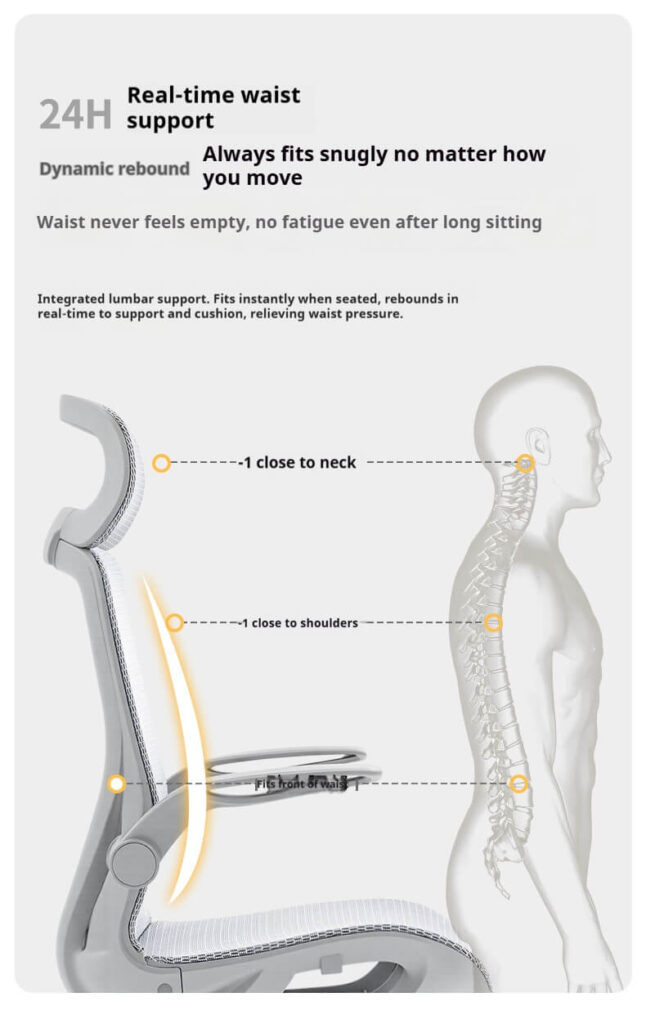
- SIHOO C300 Smart Chair: Integrates a “Domino Lumbar Support Engine” that collects sitting posture data in real time, delivers dynamic support via airbag inflation/deflation, and features a 45-minute sedentary reminder.
- Flagship Model (e.g., SIHOO T6): Combines health monitoring, massage relaxation, and immersive audio systems to create a comprehensive health management terminal.
- HEIBAITIAO X7 Chair: Equipped with AI intelligent lumbar-following technology, achieving millisecond-level responsive support.
2.2 Data-Driven Closed-Loop Health Intervention
Smart chairs are building a closed-loop health system of “monitoring-intervention-improvement“:
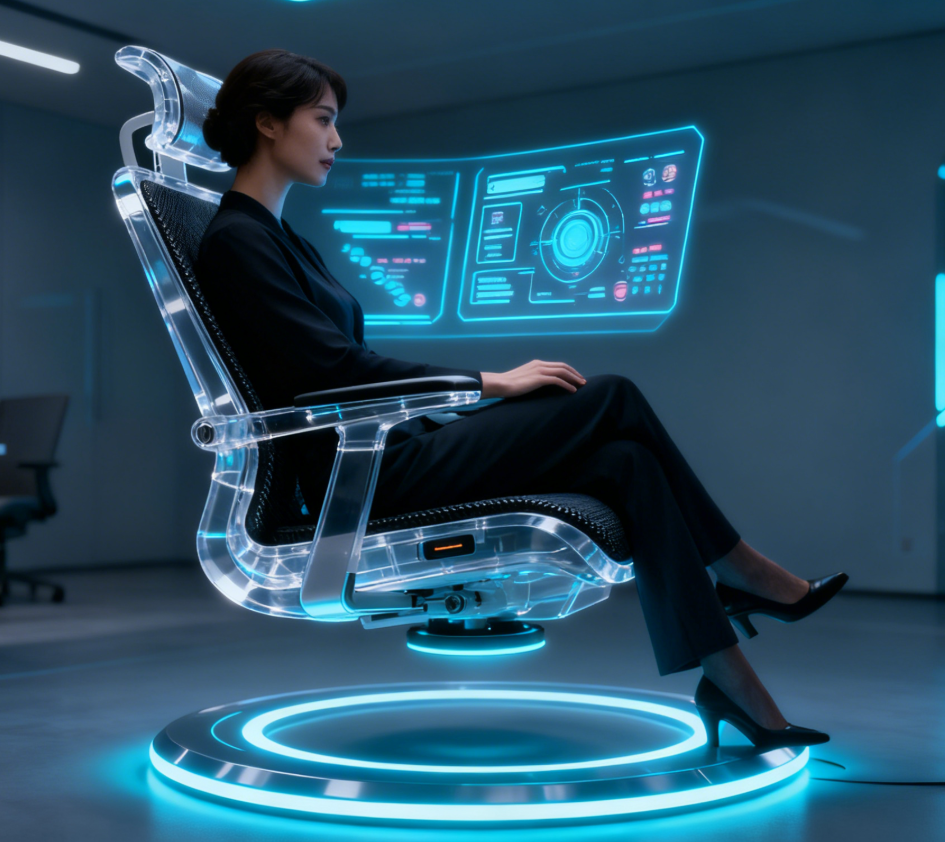
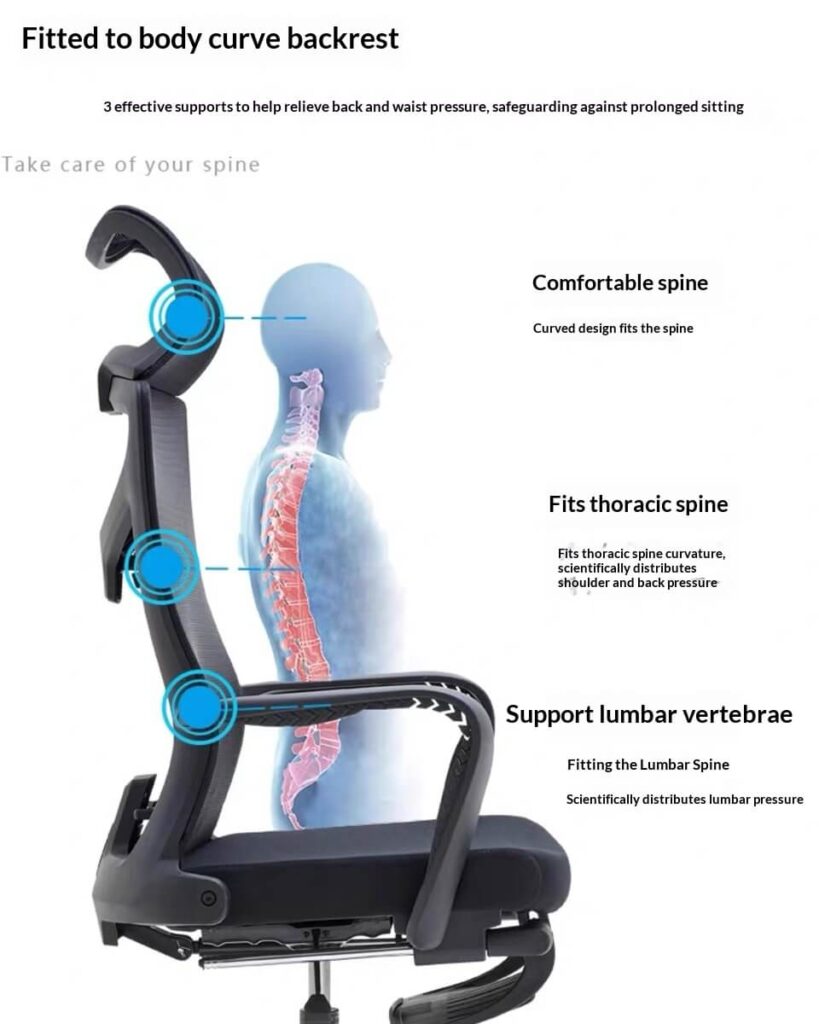
- Via pressure sensors and biometric technology, next-gen products track sitting duration, pressure distribution, and heart rate changes.
- When abnormal postures or accumulated fatigue are detected, the chair automatically adjusts support points or triggers alerts.
- Aggregated anonymous data integrates with corporate health management systems to guide workplace optimization and health policy formulation.
3 Procurement Strategy Upgrade: From Product Purchase to Solution Investment
3.1 Four Core Dimensions of Enterprise-Level Procurement
B2B procurement decisions should be systematically evaluated based on:
1. Standard Compliance
Prioritize products with multiple certifications:
- EU EN1335, US ANSI/BIFMA, China QB/T 2280-2016
- GREENGUARD Gold Certification (formaldehyde emission = 1/3 of national standards)
2. Technological Sustainability
Assess suppliers’ R&D capabilities:
- R&D investment ratio (e.g., UE allocates 3% of annual sales to R&D)
- Number of patents (to ensure long-term technical support)
3. Scenario Adaptability
Differentiate configurations by department:
- R&D teams: Prioritize dynamic support and cutting-edge technology
- Administrative roles: Focus on durability and consistent branding
- Executive spaces: Balance aesthetics and functionality
4. Localized Services
Choose brands with a national dealer network (e.g., Qunxing Junda’s 2,000+ outlets) to ensure:
- 48-hour response time
- Installation, maintenance, and bulk customization support
3.2 Optimization of the Total Cost of Ownership (TCO) Model
Enterprises should move beyond initial purchase prices and adopt a 5-year TCO model including:
- Energy consumption (smart chairs use less power than traditional massage chairs)
- Maintenance costs (modular design reduces repair complexity)
- Health benefits (lower occupational disease incidence)
- Asset residual value (high-quality brands have 30% lower second-hand depreciation)
Case: Jiangxi Zhenghui New Energy achieved a 20% procurement cost reduction and extended product lifecycle via Qunxing Junda’s one-stop solution.
4 Market Trends and Supply Chain Insights
4.1 Parallel Development of Intelligence and Full-Scenario Adaptation
Industry whitepapers predict that by 2026:
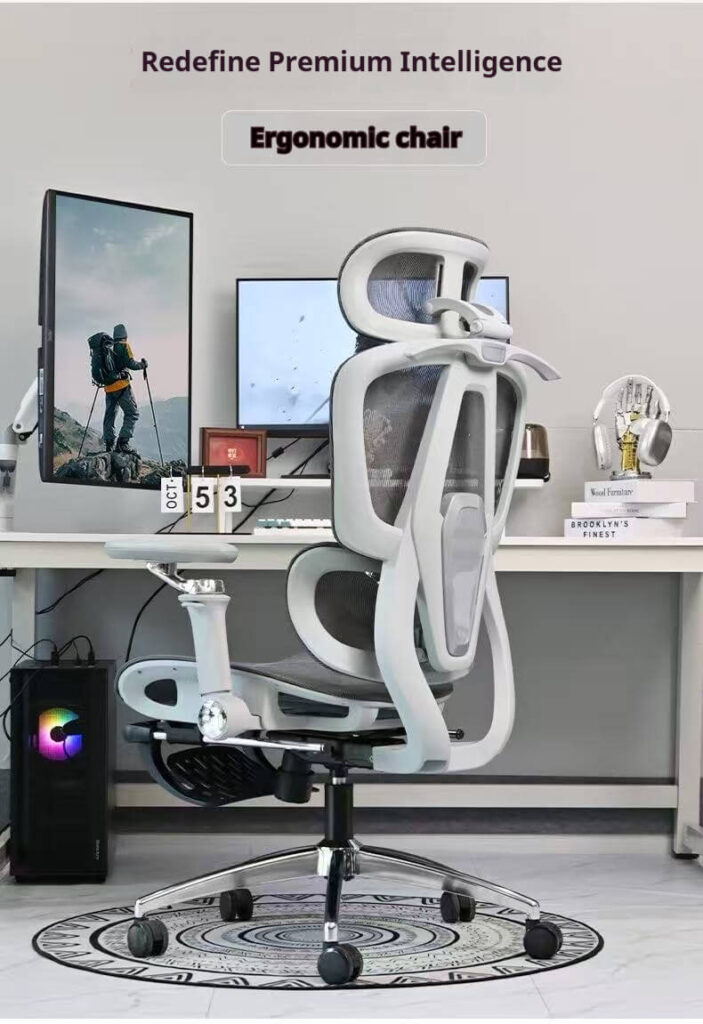
- Ergonomic chairs will integrate biosensors, AI algorithms, and IoT for posture monitoring, sedentary reminders, and automatic adjustment.
- Products will evolve toward “full-scenario adaptation” (covering office, esports, naps, and learning).
- 65% of users engage in 3–6 activities while sitting, driving brands to develop modular adaptation systems.
4.2 Supply Chain Pattern and Value Reconstruction
China, the world’s largest office chair producer (30% of global output), is shifting from “price competition to brand competition”:
- Anji, Zhejiang (“Chair Hometown”) contributes 1/3 of national output—local enterprises are transitioning from OEM to independent R&D, accelerating domestic substitution.
- Customs data: 2024 exports of ergonomic chairs exceeded 18 million units, a year-on-year growth of 8–16%, confirming rising international competitiveness.
5 Future Outlook: The Ultimate Evolution of Ergonomic Office Chairs
5.1 Integrated Health Ecosystem Platform
Chairs will evolve into entry-level devices for corporate health management:
- Continuously collect posture, activity frequency, and physiological data.
- AI analysis generates personalized health recommendations and pre-warns of potential musculoskeletal risks.
- Aggregated anonymous data supports enterprise decisions on site selection, workplace design, and workflow optimization.
5.2 Humanism and Personalized Customization
The industry will shift from “technology stacking” to “human-centric care”:
- Segmented products for women, teenagers, etc. (e.g., SIHOO C100 women-friendly chair with Smart gravity-sensing chassis and easy-to-use mechanical headrest, meeting 65% of female consumers’ needs).
- 3D printing and flexible manufacturing will enable one-on-one customization, realizing “a unique chair for every individual.”
Authoritative FAQ: Key Questions for B2B Procurement Decisions
1. How to quantify the actual impact of ergonomic chairs on corporate productivity?
Research shows high-quality support reduces waist fatigue by 25%, and every 1% reduction in fatigue-related errors boosts knowledge workers’ productivity by 0.5–0.7%. Based on enterprise data, the payback period is typically 18–24 months, driven by lower absenteeism and improved focus.
2. Are smart features worth the additional premium?
For high-intensity office scenarios (>6 hours/day), smart adjustment and health monitoring deliver clear value:
- SIHOO T6 user data: Smart reminders triple regular standing frequency; dynamic support reduces lumbar pressure by 42%.
- For medium-low usage scenarios, basic adjustment functions may suffice.
3. How to verify the authenticity of a supplier’s technology?
Request the following:
- Third-party test reports (e.g., from CNAS-accredited laboratories)
- International certifications (EN1335/ANSI BIFMA)
- Industry-specific user cases
- Patent certificates (e.g., Guangdong Jingyi Furniture holds 644 patents; its back-fitting technology won the German Red Dot Award, providing 30% more support than ordinary chairs).
4. Which technical parameters should be prioritized during procurement?
Core parameters:
- Lumbar pillow adjustment range (covers L3–L5 vertebrae)
- Air rod grade (≥Grade 4)
- Chassis material (aerospace-grade aluminum alloy > ordinary steel)
- Mesh tensile strength (≥500N)
- Certification standards
- For smart chairs: Sensor accuracy (pressure detection error <5%) and data security.
5. How to balance bulk procurement and personalized needs?
Adopt a “basic platform + adjustable modules” strategy:
- Bulk-purchase standard models with core adjustment functions.
- Configure optional modules for departments with special needs (e.g., tiltable backrests for design teams, synchronous sway for customer service).
- Case: Qunxing Junda’s differentiated solution for Shenzhen Huaku’er Technology met departmental needs while controlling costs.
Call to Action: Procurement Decision-Makers Leading Organizational Health Transformation
Ergonomic chairs have transcended furniture—they are now core carriers of corporate health strategies. 2026 will mark a tipping point for smart ergonomic chair adoption, with early adopters gaining health-driven productivity advantages.
As a procurement decision-maker, your choice is not “whether to invest” but “how to invest wisely.” Take immediate action:
- Launch pilot evaluations: Deploy 2–3 smart ergonomic chair models (e.g., SIHOO T6, HEIBAITIAO X7) in representative departments (technology, administration) for a 90-day data collection period.
- Reconstruct procurement standards: Incorporate health benefits and TCO into supplier evaluations with a weight of no less than 30%.
- Integrate with health management systems: Collaborate with IT teams to connect smart chair data to corporate health platforms for preventive interventions.
Mature solutions are available—your next step will determine whether your organization leads or lags in building a healthy workplace. To obtain a customized procurement plan and pilot evaluation framework, contact our professional consultants for the 2026 Corporate Healthy Office Investment Guide.
Note: Data in this report is sourced from industry whitepapers, clinical studies, and corporate financial reports. Complete citations are available upon request. Procurement decisions are recommended to incorporate third-party medical consultant opinions and organizational-specific needs assessments.