Executive Summary
Ergonomic office chairs have evolved from simple office equipment to a critical component of corporate health investments. With the 2025 market size reaching 22 billion yuan and a year-on-year growth rate of 22.09%, this sector has become a strategic focus for enterprises aiming to enhance employee health and productivity.
Based on the latest industry data and professional procurement insights, this guide provides B2B decision-makers with a comprehensive evaluation framework to avoid procurement pitfalls and maximize investment value.
1. Health ROI: Calculating the True Cost Beyond Chair Prices
1.1 The Economic Impact of Sedentary Health Risks
Adults in China spend an average of 8.8 hours sitting daily—exceeding sleep time—creating severe health hazards. Data shows prolonged sitting is the top workplace health risk (71.4%), causing cervical or lumbar problems in over 60% of employees.
From an economic perspective, health issues stemming from low-quality office chairs translate to tangible corporate losses: increased employee absenteeism, reduced work efficiency, and higher talent turnover. Investing in high-quality ergonomic chairs is not only a safeguard for employee health but also a protection of the enterprise’s core asset—human resources.
1.2 Scientific ROI Calculation
The ROI of premium ergonomic chairs can be measured through multiple metrics: reduced incidence of lumbar/cervical diseases, improved work efficiency, and lower absenteeism. Research indicates ergonomic chairs reduce waist fatigue by 25%, thereby minimizing productivity losses related to health issues.
Forward-thinking enterprises have reclassified ergonomic chairs as “preventive health infrastructure.” Real-world cases show investments in ergonomic office chairs can be recovered within 2–3 years through reduced absenteeism and enhanced focus. Additional implicit ROI includes lower talent turnover and stronger employer brand appeal.
2. Decoding Technical Parameters: A Scientific Evaluation Framework Beyond Marketing Hype
2.1 Essential Core Adjustment Features
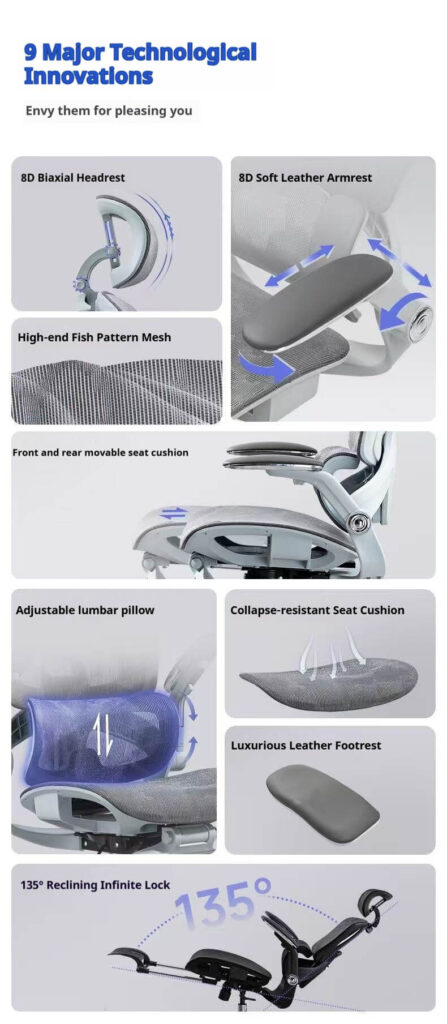
Truly effective ergonomic chairs require multi-dimensional adjustment systems—not just vague “adjustable” claims. Key parameters include:
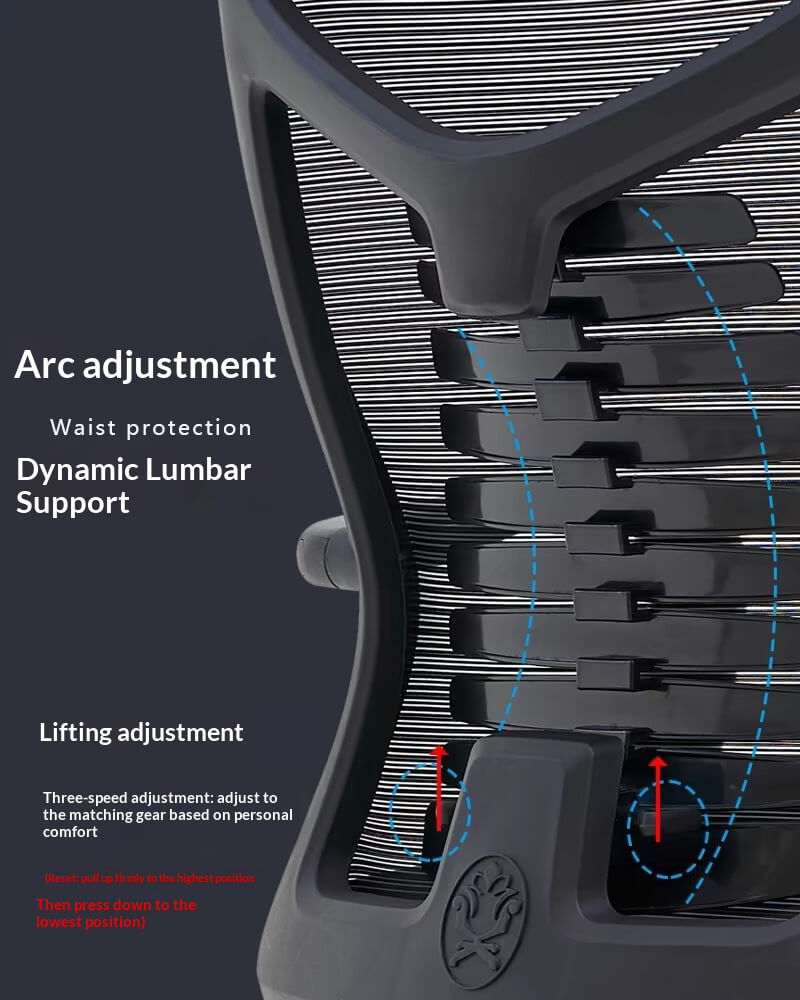
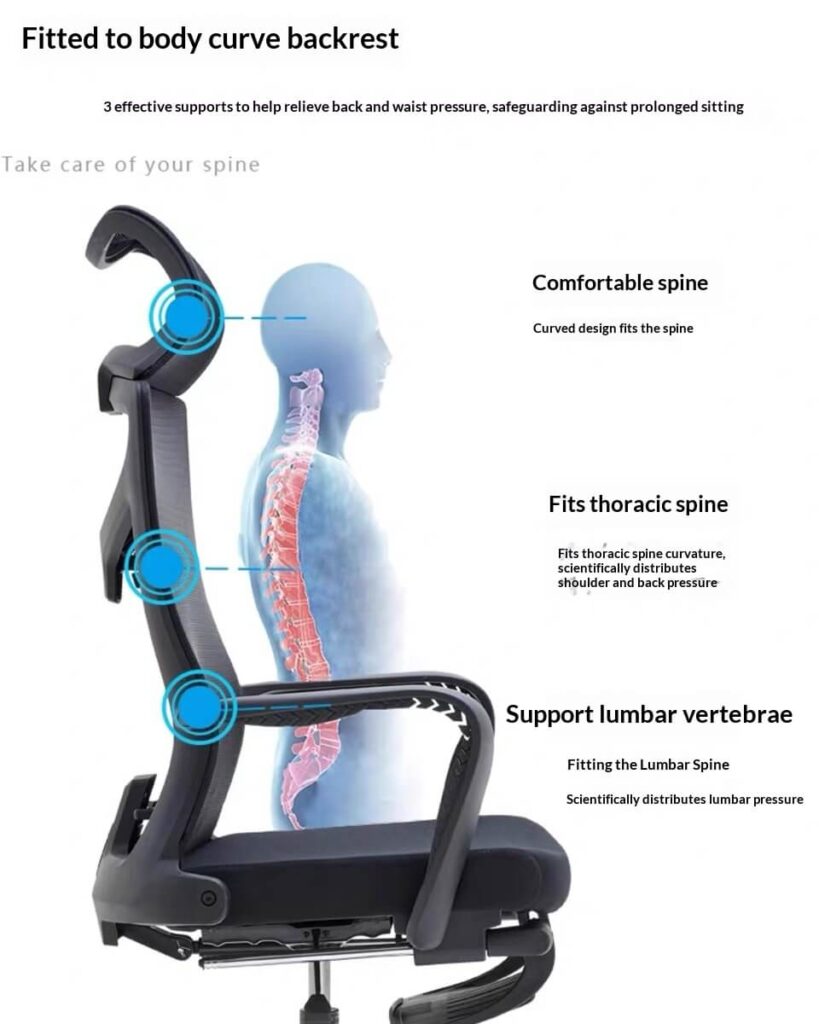
- Lumbar Pillow Adjustment: Must cover L3–L5 vertebrae with a vertical adjustment range of at least 8cm.
- Seat Depth Adjustment: Horizontal adjustment of no less than 5cm to accommodate different leg lengths.
- 4D Armrests: Lift range of at least 83mm, supporting forward/backward, left/right, and angle adjustments.
- Headrest Adjustment: 3D adjustability for precise cervical support.
The Sunon Hatu H2 achieves dynamic adaptation via a “manual/automatic stepless dual-back design,” with a maximum lumbar support stroke of 56mm to effectively distribute lumbar pressure.
2.2 Safety & Durability Standards
The gas lift cylinder is the core safety component—qualified products must meet BIFMA X5.1 certification and use Class 4 gas lift cylinders to eliminate the 0.3% explosion risk.
For materials:
- High-quality mesh fabric must have a tensile strength of ≥500N.
- The chassis should be made of aerospace-grade aluminum alloy (not ordinary steel).
These parameters directly impact product lifespan and safety.
3. Intelligent Trends: From Static Support to Active Health Management
3.1 Health Intervention Features of Smart Chairs
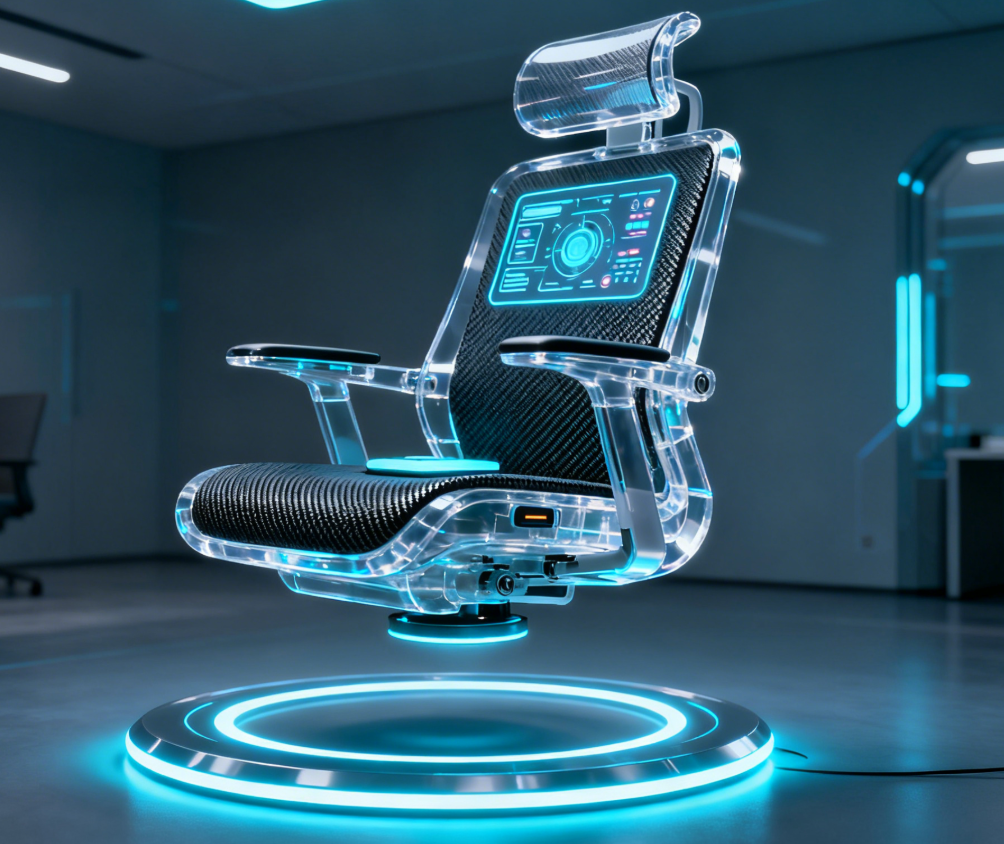
Next-gen ergonomic chairs integrate biosensors, AI algorithms, and IoT technology, evolving from “passive support” to active health intervention:
- The HEIBAITIAO X7 features AI intelligent lumbar-following technology, delivering millisecond-response dynamic support to alleviate deep tissue pressure.
- The SIHOO T6 smart ergonomic chair combines lumbar/neck massage, immersive audio, and health management systems to address multi-faceted health needs.
3.2 Data-Driven Health Management Platforms
Smart chairs are building a closed-loop health system of “monitoring-intervention-improvement“:
- Pressure sensors and biometrics track sitting duration, pressure distribution, and heart rate changes.
- Anonymous aggregated data provides organizations with health analytics to guide workplace optimization and health policy development.
4. Segmented Market Needs: From “One-Size-Fits-All” to Precise Adaptation
4.1 The Importance of Women-Specific Design
Traditional ergonomic chairs are primarily designed for male body types, neglecting female physiological differences. The SIHOO B100Lady women’s ergonomic chair adopts a “dual-cushion design” tailored to women’s unique fat distribution, bone angles, and temperature perception.
Surveys show:
- Over 50% of female users are influenced by “women-friendly” design details.
- 65% of female consumers urgently need ergonomic chairs with more tailored features.
4.2 Multi-Scenario Adaptation Solutions
Different departments and roles have distinct chair requirements:
- Data shows 65% of users perform 3–6 activities daily while sitting, driving products toward functional diversification and “modular flexibility.”
- R&D teams require high adjustability and cutting-edge technology.
- Administrative roles prioritize uniformity and durability.
- Executive spaces demand a balance of aesthetics and functionality.
Enterprises should abandon “one-size-fits-all” procurement and adopt a “basic platform + adjustable modules” strategy.
5. Procurement Decision Process: 5-Step Method to Avoid Common Pitfalls
5.1 Needs Assessment & Customized Solutions
Conduct company-wide needs research to clarify department-specific usage scenarios before procurement. Qunxing Junda Furniture’s full-scenario value delivery system covers “needs diagnosis → solution customization → quality control → after-sales support,” ensuring precise alignment with enterprise requirements.
5.2 Supplier Evaluation & Quality Verification
B2B procurement should establish a scientific supplier evaluation system, focusing on:
- Standard Compliance: Certifications such as EU EN1335, US ANSI/BIFMA, and China QB/T 2280-2016.
- R&D Capability: R&D investment ratio and patent count (e.g., UE allocates 3% of annual sales to R&D).
- Quality Assurance: Comprehensive testing systems (e.g., SIHOO’s 1,000㎡ testing laboratory).
- Service Network: National coverage and response speed (e.g., Qunxing Junda’s 2,000+ dealer network).
5.3 5-Year Total Cost of Ownership (TCO) Model
Enterprises should look beyond initial purchase prices and adopt a 5-year TCO model including: energy consumption, maintenance costs, health benefits, and asset residual value. Cases show scientific procurement can achieve 20% cost savings and longer product lifecycles.
| Cost Category | Traditional Chairs | Premium Ergonomic Chairs | Difference Analysis |
|---|---|---|---|
| Initial Purchase Cost | Low | Higher | 30–50% higher |
| Maintenance/Replacement | High (5–8% annualized) | Low (2–3% annualized) | 60% reduction |
| Health Benefits (Reduced Absenteeism) | None | Significant (15–20% reduction) | Substantial improvement |
| Asset Residual Value (After 5 Years) | <30% | >50% | Stronger value retention |
| Total Cost of Ownership | High | Low | 25–35% reduction |
6. Future Trends: The Intelligent Evolution of Ergonomic Office Chairs
6.1 Smart Human-Centric Development
Post-2025, the ergonomic chair industry enters the 4.0 era—shifting from “technology stacking” to “human-centric care,” focusing on group differences, scenario deepening, and emotional interaction. Future products will emphasize personalized customization, enabling “one chair per person” via 3D printing and flexible manufacturing.
6.2 Integrated Health Ecosystem Platforms
Chairs will evolve into entry-level devices for corporate health management:
- Continuous collection of sitting posture, activity frequency, and physiological data.
- AI analysis generates personalized health recommendations and pre-warns of potential musculoskeletal risks.
Authoritative FAQ: Key Questions for B2B Procurement Decisions
1. How to quantify the actual impact of ergonomic chairs on corporate productivity?
Research shows high-quality support reduces waist fatigue by 25%, and every 1% reduction in fatigue-related errors boosts knowledge workers’ productivity by 0.5–0.7%. Based on enterprise data, the payback period is typically 18–24 months.
2. Are smart features worth the additional premium?
For high-intensity office scenarios (>6 hours/day), smart adjustment and health monitoring deliver clear value:
- Smart reminders triple regular standing frequency.
- Dynamic support reduces lumbar pressure by 42%.For medium-low usage scenarios, basic adjustment functions may suffice.
3. How to verify a supplier’s technical authenticity and reliability?
Request the following:
- Third-party test reports (e.g., from CNAS-accredited laboratories).
- International certifications (EN1335/ANSI BIFMA).
- Industry-specific user cases.
- Patent certificates (e.g., Guangdong Jingyi Furniture holds 644 patents; its back-fitting technology won the German Red Dot Award).
4. Is small-batch customization (20–30 units) cost-effective?
Top manufacturers offer “modular small-batch customization,” combining standardized modules with personalized accessories to limit customization premiums to 15–20%. For a 20-person team, customized solutions cost only 18% more than standard models but improve space adaptability by 90%.
5. How to balance bulk procurement and personalized needs?
Adopt a “basic platform + adjustable modules” strategy:
- Bulk-purchase standard models with core adjustment functions.
- Configure optional modules for departments with special needs.This balances cost control and differentiated requirements.
Procurement Action Framework: 5-Step Method to Maximize Value
Based on industry best practices, we recommend B2B procurement decision-makers follow this 5-step process:
- Establish a cross-departmental evaluation team: Integrate perspectives from administration, HR, IT, and finance for comprehensive needs assessment.
- Conduct employee needs research: Identify specific requirements of employees across different roles, heights, and body types.
- Develop a multi-dimensional evaluation matrix: Assess solutions based on health value, TCO, technical sustainability, and other key dimensions.
- Implement a pilot evaluation: Deploy chairs in representative departments for a 90-day test to collect data-driven insights.
- Establish a continuous optimization mechanism: Regularly evaluate chair performance and incorporate employee feedback for ongoing improvements.
This systematic approach ensures ergonomic chair procurement meets current needs while remaining future-adaptable, achieving the optimal balance between health value and ROI.
Note: Data in this guide is sourced from industry whitepapers, authoritative statistics, and enterprise case studies, providing objective, professional references for B2B procurement decisions. We recommend combining this guide with your enterprise’s specific needs and professional consultant advice.