This is not a sales pitch. If you are looking for “the best prices” or “gold-medal service,” close this page. This guide is a technical manual for procurement professionals who understand that in the Chinese office chair industry, information asymmetry is your most expensive line item.
Most buyers don’t lose money on the unit price; they lose it on the hidden failure rate and the middleman’s markup disguised as a factory discount. Here is how to verify a Chinese office chair supplier like an industry veteran.
1. The Reality Gap: Why Your “Factory” is Likely a Trading Cell
How to verify a Chinese office chair supplier starts with accepting a harsh truth: 70% of the “manufacturers” you find on global platforms own zero injection molding machines. They are “SOHO” units or small trading companies operating out of office buildings in Anji or Foshan, arbitrage-buying components from different workshops and assembling them in uncertified garages.
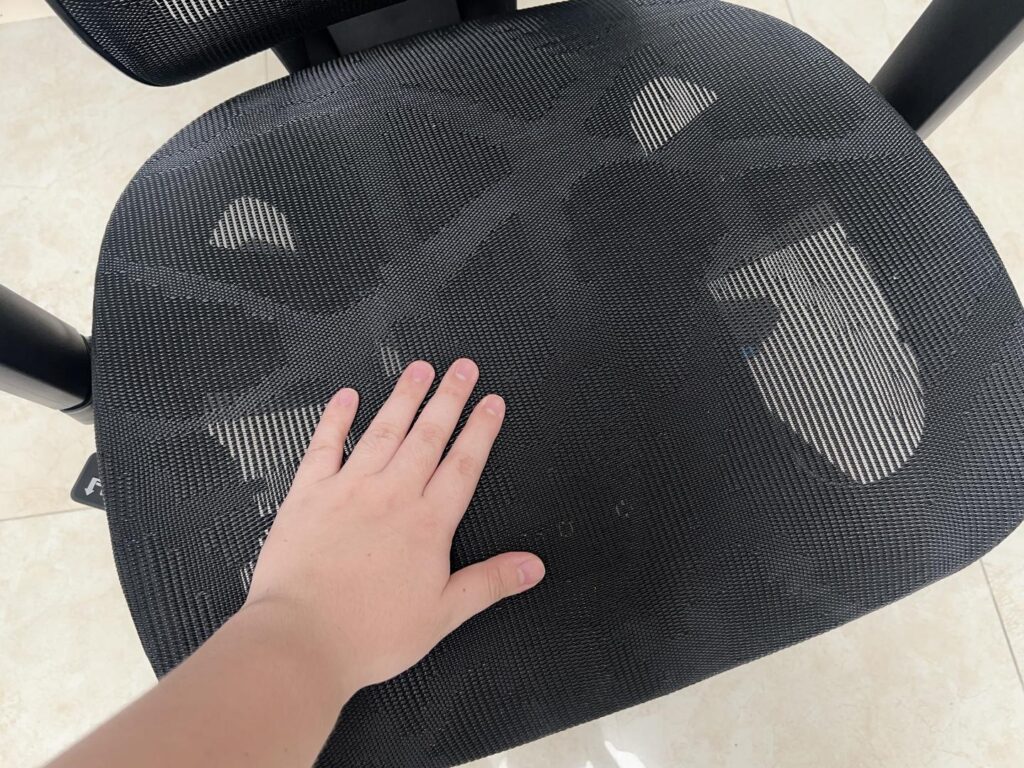
The “Sample Trap” is their primary weapon. They send you a high-spec prototype sourced from a premium manufacturer to win the contract, then fulfill the mass order with $15-cheaper recycled plastic frames and Grade-B gas lifts. By the time the mesh sags and the bases crack in your customer’s office, your “supplier” has already closed that temporary shell company and moved to the next.
2. The Insider Audit: Decoding the Facade
To bypass the smoke and mirrors, you must perform a “surgical” verification. Forget the polished PowerPoint presentations. Look at these three metrics:
A. The Business License (The “DNA” Check)
Ask for a high-resolution copy of the Business License . Do not look at the English translation; look at the Chinese original.
- The Scope of Business : It must contain the word “Production” or “Manufacturing” . If it only says “Sales” or “Wholesale” , they are a middleman. Period.
- The Registered Capital: For a legitimate office chair factory with its own molding and testing equipment, capital should typically exceed RMB 5,000,000.
- The Address: Cross-reference the registered address on the license with the factory address. If the license is registered in a commercial skyscraper (e.g., “Room 2105, CBD Tower”), but they claim to be a factory, they are outsourcing your quality.
B. The “Uncut” Factory Audit
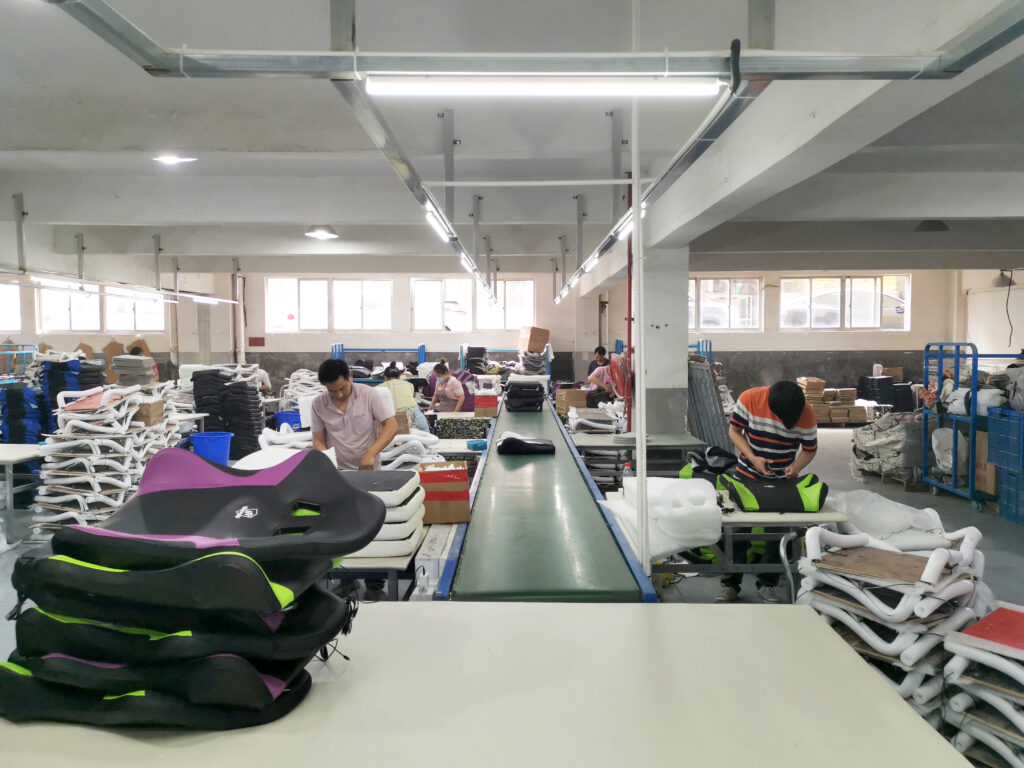
Standard marketing videos are useless. Demand a live WeChat/WhatsApp video call with zero notice.
- The Warehouse Test: Ask them to walk to the raw material warehouse. Look for the branding on the gas lifts (look for brands like KGS or LANT). If the warehouse is empty or disorganized, they are “buying to order,” meaning they have no control over material consistency.
- The Testing Lab: A real factory has a proprietary testing room with BIFMA testing rigs. If they cannot show you a chair currently undergoing a 100,000-cycle durability test in real-time, they are not a manufacturer.
3. The Math of Failure: Calculating TCO vs. Sticker Price
A “cheap” chair is often the most expensive asset a business can buy. In the table below, we break down the for a standard $65 “Bargain” chair versus a $85 “Verified” chair over a 24-month period.
| Cost Element | The “Bargain” Supplier ($65 Unit) | The “Verified” Supplier ($85 Unit) |
| Initial Unit Price | $6,500 (100 units) | $8,500 (100 units) |
| Defect Rate (Mass Prod) | 8% – 12% (Component fatigue) | < 0.5% (AQL 1.5 Standard) |
| Replacement Shipping | $1,200 (LCL for replacements) | $50 (Spare parts in original cont.) |
| Reputation/Refunds | $2,000 (Lost client LTV) | $0 |
| Total 2-Year Cost | $9,700 | $8,550 |
| Effective Unit Cost | $97.00 | $85.50 |
The “Insider” Insight: The $20 you “saved” at the invoice stage creates a 13.5% premium in hidden losses. In the chair industry, “savings” are usually just deferred liabilities.
4. The Defense Line: Our Transparent QC Protocol
We do not ask for your trust; we provide the data that makes trust unnecessary. Our process is designed to act as your internal “defense line” in China.
- Component Serialization: We track the batch numbers of every gas lift and mechanism. If a failure occurs, we don’t just replace the chair; we identify the specific material batch to prevent a systemic recall.
- Raw Video QC Reports: You will receive “un-edited” footage of the Pre-Shipment Inspection (PSI). This includes a 10% random sampling drop test and mesh tension analysis.
- The “No-Sublet” Guarantee: Our contracts include a “Golden Sample” clause. If the mass production deviates from the agreed-upon material density (measured by weight-per-component), the shipment is rejected at our cost.
Note: We do not compete on “lowest price.” We compete on the lowest total cost of quality.

FAQ: Frequently Asked Questions
- Q: Why do many suppliers refuse to show their Business License?
- A: Because it reveals their legal status as a trading company or shows a registered capital of only $10,000—hardly enough to cover a single container’s liability.
- Q: Is a Gold Supplier status on Alibaba enough?
- A: No. That is a paid membership. It confirms the company exists, but it does not certify they are a manufacturer or that their quality is consistent.
- Q: What is the most common “hidden” cost-cutting area?
- A: Re-grind plastic. Factories mix recycled scrap with virgin PP/Nylon. It looks identical but becomes brittle and snaps after 6 months of UV exposure or use.
Next Step for Professional Buyers
If you are managing a project where a 5% failure rate is unacceptable, we can provide a Technical Audit Checklist for your current suppliers. We will help you identify the “red flags” in their documentation before you wire the next deposit.