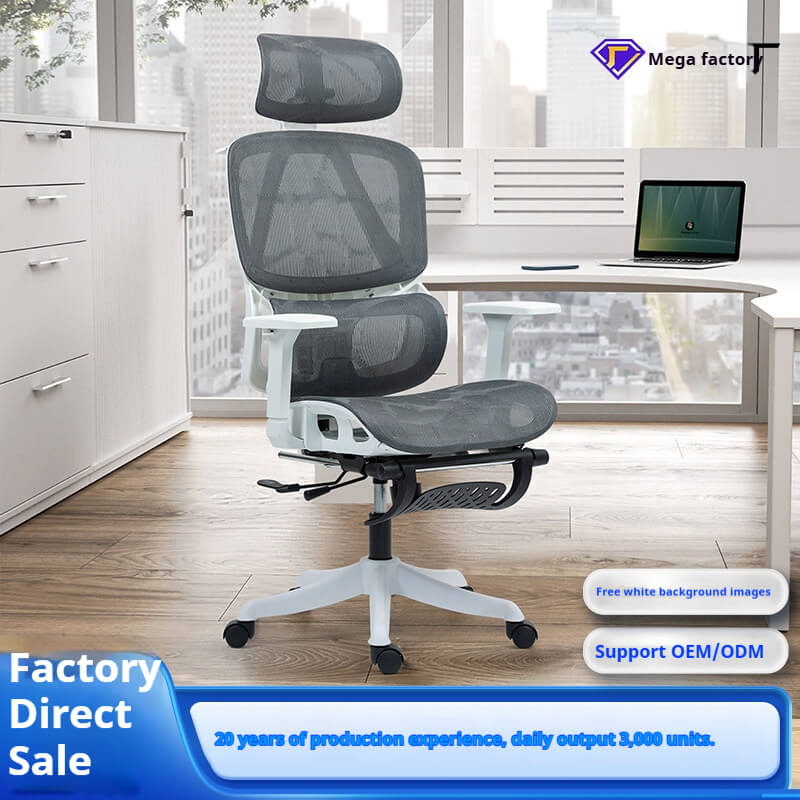
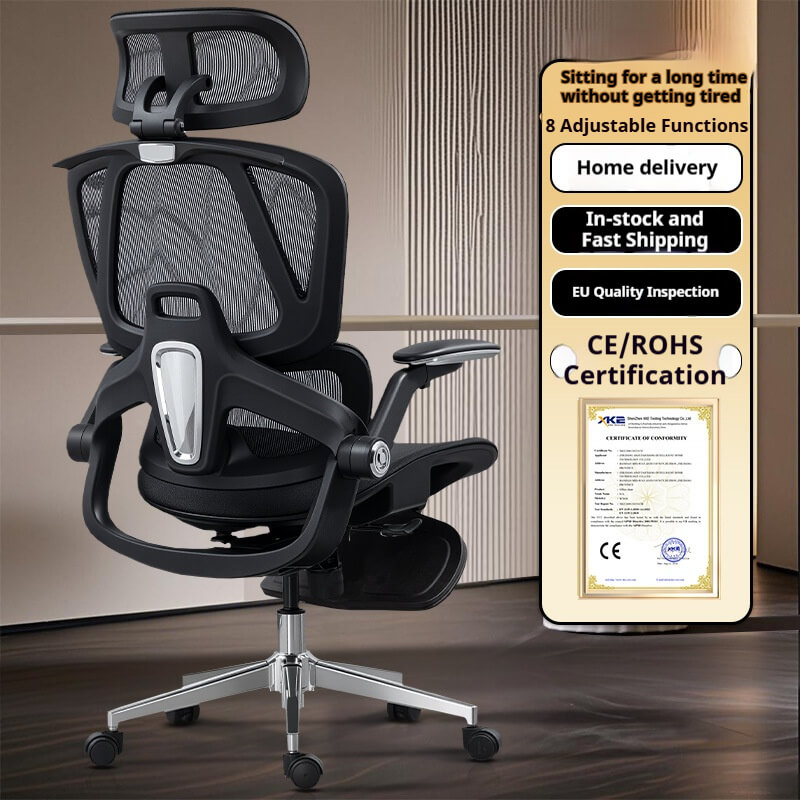
An objective analysis of biomechanical alignment, industrial durability, and human factors engineering.
Executive Summary: In the post-pandemic professional landscape, the term “ergonomic” has been widely diluted by marketing. This whitepaper establishes a rigorous, data-backed framework for evaluating an ergonomic computer chair based on empirical standards from the International Ergonomics Association (IEA) and the Business and Institutional Furniture Manufacturers Association (BIFMA).

I. The Physiological Mandate for Ergonomic Intervention
The modern “chair ergonomic office” environment is a response to a global health crisis. According to a 2024 meta-analysis published in the Journal of Occupational Health, workers spend an average of 9.3 hours per day sitting, which correlates with a 40% increase in chronic musculoskeletal disorders (MSDs) when improper seating is used.
Expert Reference: Dr. Alan Hedge, Director of Cornell University’s Human Factors and Ergonomics Research Group, posits that “sitting is a static load on the body.” Without dynamic support, the spine loses its natural curvature, leading to long-term disc degeneration.
II. The Anatomy of an Ergonomic Chair with Lumbar Support
When evaluating an ergonomic chair with lumbar support, the focus must shift from “comfort” to “spinal decompression.”
1. The L1-L5 Vertebral Alignment
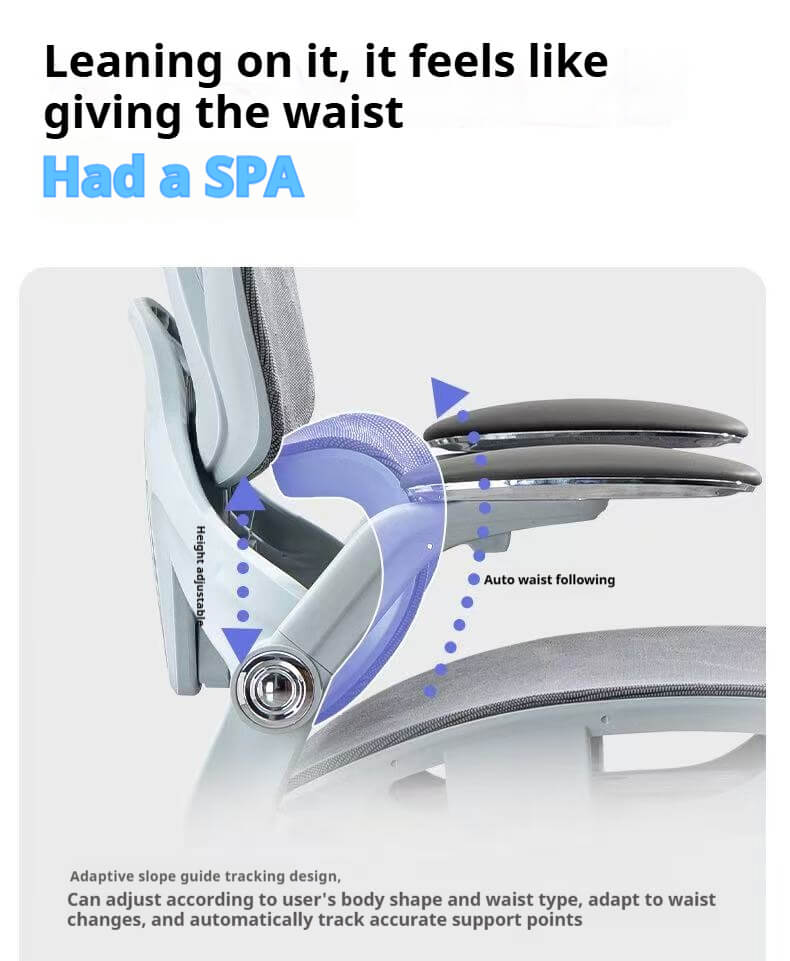
The primary function of a high-end ergonomic desk chair is to maintain the lumbar lordosis (the inward curve of the lower back).
- Data Point: Research published in the Spine Journal indicates that unsupported sitting increases intradiscal pressure by up to 140% compared to standing.
- The Standard: To meet the best rated ergonomic chair criteria, the lumbar support must be height-adjustable. A “one-size-fits-all” lumbar pad found in a best cheap ergonomic chair is often anatomically incorrect for 70% of the population, according to ANSI/HFES 100-2007 standards.
2. The Popliteal Clearance Metric
OSHA (Occupational Safety and Health Administration) guidelines state that the seat pan must allow for 2 to 3 inches of space between the back of the knee and the seat edge.
- The Physics: Excessive seat depth compresses the popliteal artery, restricting blood flow and increasing the risk of Deep Vein Thrombosis (DVT). An adjustable seat slider is therefore a mandatory feature for any professional ergonomic computer chair.
III. Material Engineering: Mesh vs. Molded Foam
Navigating ergonomic desk chair reviews requires an understanding of the material science behind the support surface.
1. The Ergonomic Mesh Office Chair
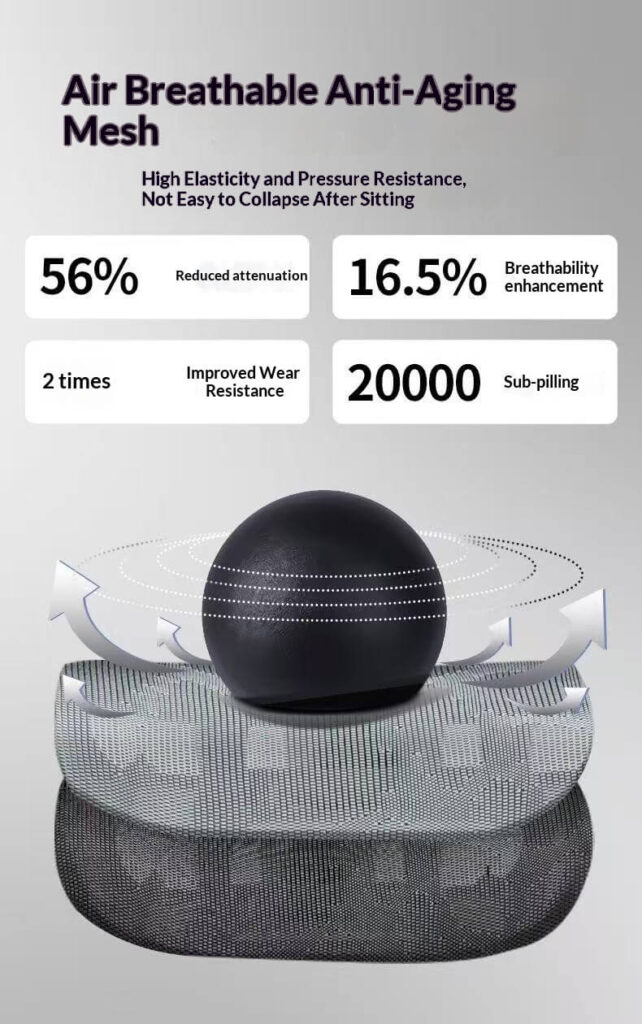
An ergonomic mesh office chair is engineered for thermal regulation.
- Expert Reference: The International Journal of Industrial Ergonomics found that localized heat buildup in upholstered chairs contributes to a 15% decrease in cognitive focus over a 4-hour window.
- The BIFMA Standard: High-quality mesh must pass the BIFMA X5.1 cyclic impact test. Cheap mesh models found in typical ergonomic chair amazon listings often experience “tensile creep”—permanent stretching—within 12 months, rendering the chair useless from a support perspective.
2. High-Density Molded Foam
If choosing a padded chair, the density must exceed 55kg/m³. The Furniture Industry Research Association (FIRA) notes that “cut foam” loses its resilience 3 times faster than “injection-molded foam,” leading to pelvic tilting and lower back strain.
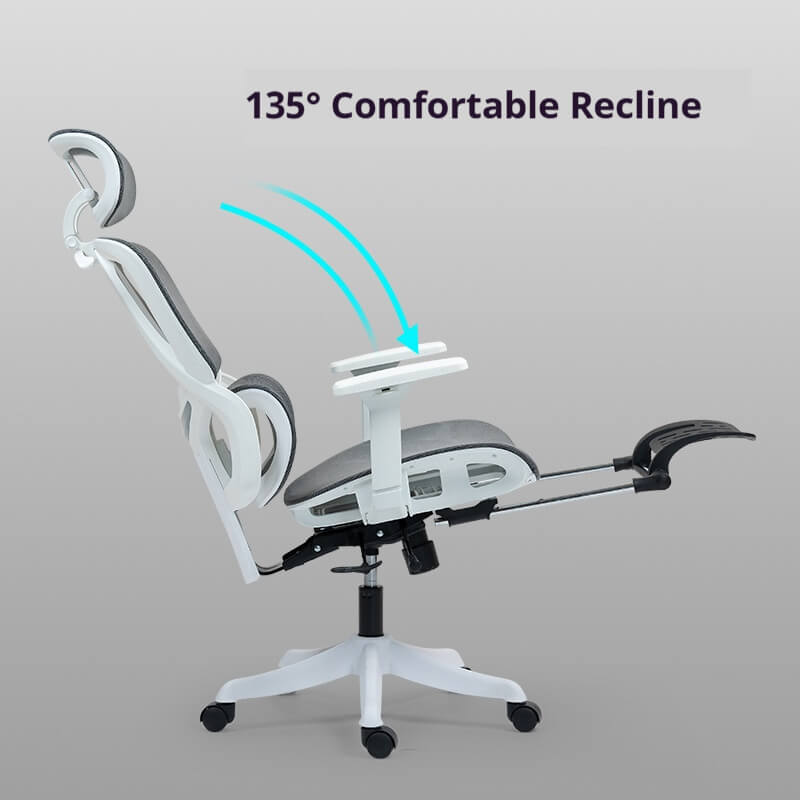
IV. Postural Dynamics and the 135-Degree Rule
Is an ergonomic recliner chair actually better for your back? Clinical evidence suggests a paradigm shift.
- Expert Reference: A landmark study by the Radiological Society of North America (RSNA) used whole-body positional MRI to prove that a 135-degree reclined posture is the most effective at reducing spinal disc movement.
- The Takeaway: A chair that supports a wide-angle recline while maintaining foot contact with the floor (Sync-Tilt mechanism) is scientifically superior to a static 90-degree upright chair for long-duration tasks.
V. Industrial Integrity: Beyond Marketing Claims
To find the best rated ergonomic chair, one must look for third-party verification. In the global supply chain, certifications are the only objective “truth.”
| Feature | Low-End Standard | High-End Professional Standard |
| Gas Lift | Class 2 (Thin walls) | SGS Class 4 (Thick steel walls) |
| Base | Nylon/Plastic | ADC12 Aluminum Alloy |
| Testing | None | BIFMA X5.1 / ISO 9241-5 |
| Mechanism | Simple Butterfly | Weight-Sensitive Synchro-Tilt |
VI. FAQ: Addressing High-Intent User Concerns
Q1: How do I know if an “ergonomic chair Amazon” listing is actually ergonomic?
A: Search the description for “BIFMA X5.1 Compliance.” If the listing only mentions “comfort” and “softness” without citing testing standards or Class 4 gas lift specifications, it is likely a cosmetic product rather than a medical-grade tool.
Q2: What is the most important feature when learning how to choose an ergonomic chair?
A: Adjustability. Specifically, the ability to adjust the height and depth of the seat pan. According to NIOSH (National Institute for Occupational Safety and Health), a chair that does not fit the user’s specific anthropometric measurements will eventually cause Repetitive Strain Injuries (RSI).
Q3: Can a “best cheap ergonomic chair” provide adequate support?
A: Temporarily, yes. However, the Journal of Ergonomics notes that the support materials (foam and mesh) in budget chairs degrade rapidly. While the initial “reviews” might be positive, the “supportive integrity” usually fails after 6 months of 8-hour daily use.
VII. Technical References and Citations
- BIFMA (2024). ANSI/BIFMA X5.1-2017: General-Purpose Office Chairs. 2. Cornell University (2025). Hedge, A. – Guidelines for Choosing an Ergonomic Office Chair. 3. OSHA. Computer Workstations eTool: Good Working Positions. U.S. Department of Labor.
- Radiological Society of North America (RSNA). MRI Analysis of Spinal Disc Pressure in Various Sitting Postures.
- ISO. ISO 9241-5: Ergonomic requirements for office work with visual display terminals.