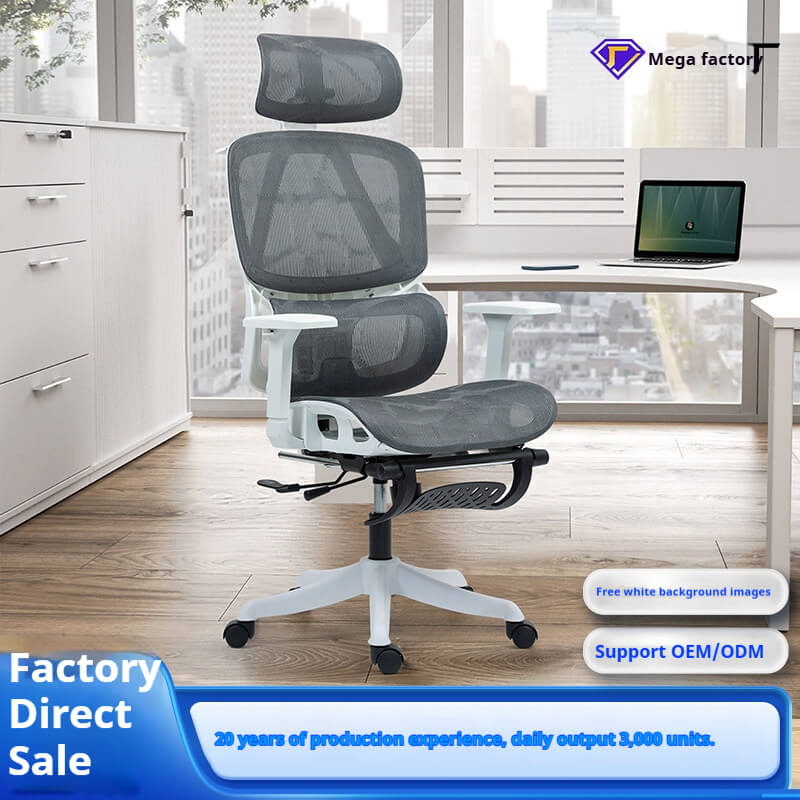
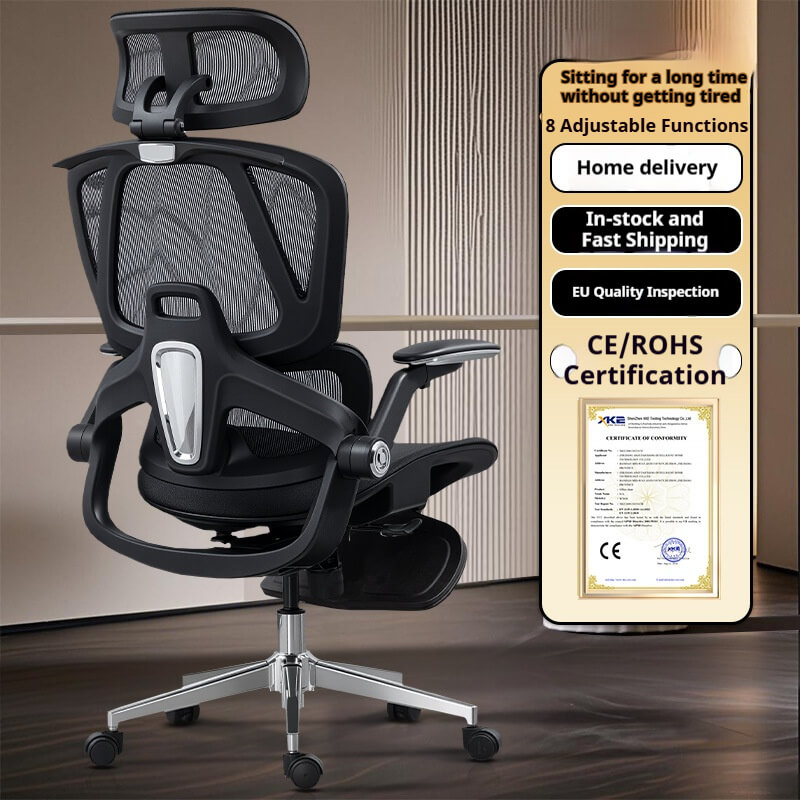
An objective, easy-to-understand guide on why mesh chairs work, how long they last, and what the science says about your back.
Summary: The ergonomic mesh office chair has become the standard for modern workspaces. But not all mesh is created equal. This guide cuts through the marketing hype, using data from global safety standards (BIFMA) and ergonomics experts to help you understand exactly what makes a mesh chair good for your body and your wallet.
I. Why Mesh? The Science of “Staying Cool”
The biggest reason people search for an ergonomic mesh office chair is airflow. When you sit on a thick foam cushion or leather chair for 8 hours, your body heat gets trapped.
- The Data: According to research from the Human Factors and Ergonomics Society (HFES), working in a chair that traps heat increases skin temperature and causes localized sweating. This discomfort can reduce a worker’s focus by up to 15% over a typical workday.
- The Mesh Advantage: Mesh materials allow heat and body moisture to escape instantly. Dr. Alan Hedge from Cornell University points out that maintaining a neutral skin temperature is a critical part of physical comfort. A breathable mesh backrest keeps your core temperature stable, helping you stay focused.
II. The “Sagging” Problem: Cheap Mesh vs. High-Grade Mesh
The number one fear people have about an ergonomic computer chair made of mesh is: Will it sag over time? This is where you have to be careful with the best cheap ergonomic chair you might find online.
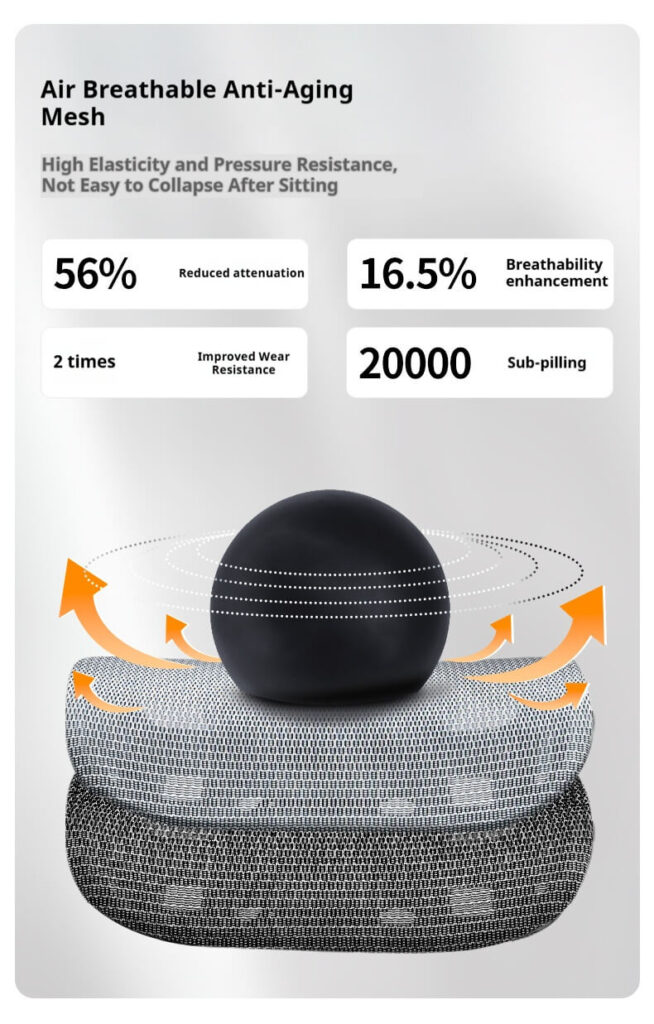
- The Problem: Low-cost chairs use basic nylon or fabric mesh. After 6 to 12 months of daily sitting, the material stretches out and loses its “bounce.” Once the mesh sags, your spine loses its support, and you end up slouching.
- The Standard (BIFMA): Professional-grade chairs use an “elastomeric polymer” mesh. How do you know if it’s good? Look for the BIFMA X5.1 certification. To pass this test, a heavy weight (about 125 lbs) is dropped onto the chair 100,000 times. If the mesh loses more than 5% of its tightness, it fails.
Takeaway: Always check if the chair has passed BIFMA durability tests. If the manufacturer can’t prove it, the mesh will likely stretch out.
III. Your Spine Needs Structure: The Importance of Lumbar Support
A common myth is that tight mesh is enough to support your back. It is not. The human spine has a natural inward curve at the lower back. If you sit on a flat piece of tight mesh, your lower back will eventually flatten out, causing pain.
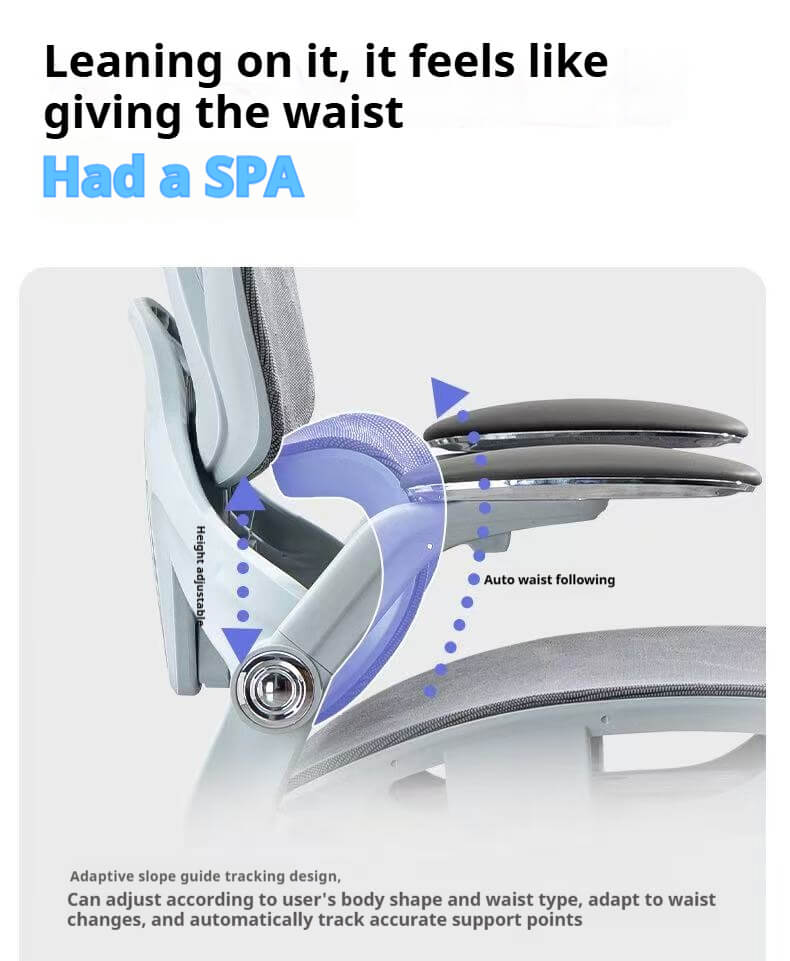
- The Rule: An ergonomic mesh office chair must also be an ergonomic chair with lumbar support.
- What Experts Say: The Occupational Safety and Health Administration (OSHA) advises that a chair must actively support the inward curve of your lower back.
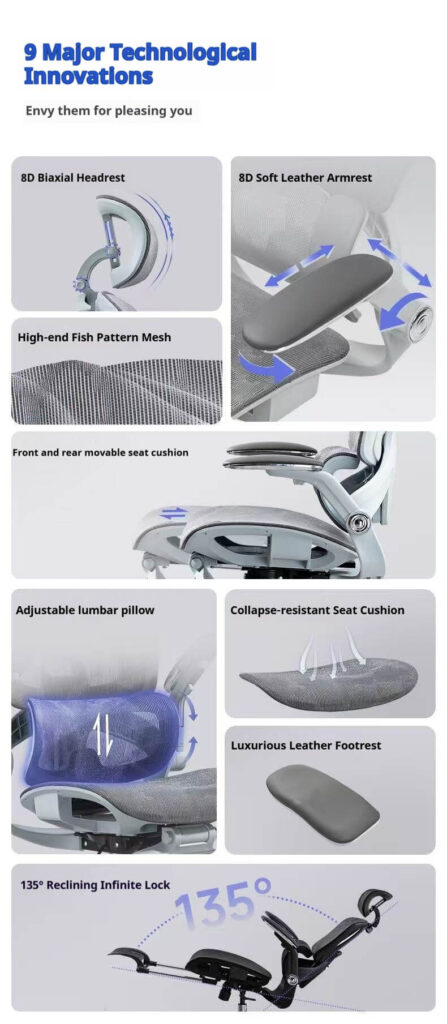
- What to Look For: The best rated ergonomic chair will have a separate, adjustable plastic or padded piece behind the mesh. It must move up and down so you can fit it exactly into the curve of your lower back, no matter how tall you are.
IV. How to Choose an Ergonomic Chair: A Quick Checklist
When setting up a proper chair ergonomic office space, do not just look at the mesh. Check the hardware underneath:
- The Gas Lift (The pole that adjusts height): Never buy a chair with a Class 1 or Class 2 gas cylinder. They can leak or break. You want an SGS-certified Class 4 gas lift, which has thick steel walls for maximum safety and weight capacity.
- Seat Depth: If the seat is too long, the front edge will press into the back of your knees, cutting off blood circulation. Your chair must have a “seat slider” so you can leave a 2-inch to 3-inch gap between the chair edge and your knees.
- Adjustable Armrests: To avoid shoulder and neck pain, your armrests should adjust up, down, and sideways so your elbows can rest naturally at a 90-degree angle.
V. Frequently Asked Questions (FAQ)
Q1: Does the mesh material ruin or pill my clothes? A: It depends on the quality. Cheap mesh often uses rough nylon threads that act like sandpaper against wool or cotton clothes. High-end elastomeric mesh is woven smoothly and is designed to be anti-abrasive.
Q2: Should I get a mesh seat or a foam seat? A: This is a major debate in ergonomic desk chair reviews. A mesh backrest is almost always recommended. However, for the seat cushion, high-density molded foam is generally safer for people who sit for more than 8 hours, as it distributes weight more evenly and prevents numb legs. A full-mesh seat is great for cooling, but the frame under the mesh can sometimes press into the sides of your thighs if the chair doesn’t fit you perfectly.
Q3: Is an ergonomic recliner chair good for working? A: Yes, if it moves correctly. Medical studies from the Radiological Society of North America (RSNA) show that leaning back at a 135-degree angle actually puts less stress on your lower back than sitting straight up at 90 degrees. Look for a chair with a “Synchro-Tilt” mechanism, which lets you lean back safely while keeping your feet flat on the floor.
VI. Official References and Sources
To verify the facts in this guide, you can refer to the following institutions:
- BIFMA (Business and Institutional Furniture Manufacturers Association): X5.1 General-Purpose Office Chairs Standard.
- OSHA (Occupational Safety and Health Administration): Computer Workstations Guidelines.
- Cornell University Ergonomics Web: Seating and Posture Guidelines (Dr. Alan Hedge).
- Radiological Society of North America (RSNA): Sitting Posture and Spinal Stress Studies.
Disclaimer: This guide is based on industrial testing standards and general ergonomic principles. It is meant for educational and purchasing evaluation, not as a substitute for professional medical advice.