Executive Summary: Beyond Comfort to Capital Investment
For business decision-makers, procuring ergonomic office chairs is far more than a simple furniture update—it is a strategic human capital investment that directly impacts a company’s profitability. When employees experience reduced productivity, take sick leave, or even resign due to uncomfortable seating, the hidden costs far exceed the price tag of a high-quality chair. This article abandons superficial feature introductions and provides you with a data-driven decision-making framework designed to help you accurately quantify the real returns of ergonomic investments in terms of productivity improvement, medical cost savings, and talent retention, thereby constructing a business plan that can be approved by the board of directors.
1 The Ergonomic Investment Paradox: Why Cheap Chairs Cost You Millions
1.1 The Misguided Cost-Center Mentality
Traditional procurement thinking often prioritizes initial costs, leading to a fundamental misallocation of resources. Consider this: a company is willing to pay an employee an annual salary and benefits of $80,000−$120,000, but is unwilling to make a one-time investment of $800−$1,200 to equip them with a critical tool that supports health and productivity—a high-quality ergonomic chair. The chair is the core interface between employees and productivity; cutting costs in this area is equivalent to using inferior components in a precision machine, causing the entire system to fail to operate at its optimal level.
1.2 The Physical Cost of Discomfort
The human body is not designed for prolonged sitting. Seats lacking adequate support can lead to musculoskeletal disorders (MSDs), which are not only employee discomfort but also direct corporate costs. Studies have shown that companies focusing on ergonomic health can achieve productivity improvements of up to 20% and significantly reduce absenteeism rates. Direct costs associated with MSDs—medical reimbursements, increased workers’ compensation insurance premiums, and absences—constitute a silent drain on profits, whose total far exceeds the initial cost savings from cheap chairs.
2 Quantifying the Invisible: The Multi-Dimensional ROI of Ergonomic Chairs
2.1 The Productivity Dividend
The most direct return on ergonomic investment is reflected in improved productivity. An employee free from discomfort can maintain higher focus and cognitive performance. Research consistently shows that good ergonomics can increase productivity by 10-15%. For an employee with an annual salary of $75,000, this means creating an additional $9,000 in value each year. Over the 7-12 year lifespan of a high-quality chair, the return from this single item alone may exceed the initial investment by 300%, making it one of the most impactful capital allocations.
2.2 The Health and Absenteeism Equation
The positive impact of ergonomic interventions on medical costs is substantial. Companies implementing comprehensive solutions report a40% reduction in absenteeism and similar decreases in related medical costs. A case study of a financial company with over 500 employees showed that after switching to certified ergonomic chairs, disability leave related to low back pain decreased by 40%. When calculating ROI, it is essential to include the average cost of sick days, the administrative burden of managing leave, and the potential impact on team insurance premiums.
2.3 The Talent Retention Multiplier
In a competitive talent market, the physical work environment is an important differentiator. Providing a high-quality, health-oriented workspace demonstrates the company’s investment in employee well-being, directly impacting retention and attractiveness. Considering that the cost of replacing an employee can range from 50% to 200% of their annual salary, even a slight reduction in turnover can lead to significant savings. This “retention multiplier” effect transforms ergonomic chairs from furniture into a strategic tool for talent management.
3 The Procurement Blueprint: A Strategic Framework for Decision-Makers
3.1 Evaluating Beyond the Price Tag: The Total Cost of Ownership (TCO)
Strategic procurement requires shifting focus from unit price to Total Cost of Ownership (TCO). A high-quality chair with a 10-12 year lifespan and comprehensive warranty typically has a lower annualized cost than a cheap chair that needs replacement every 2-3 years. When evaluating, consider:
- Lifespan and Durability: Seek products certified by standards such as BIFMA, which include rigorous structural integrity and stability testing.
- Warranty Value: High-quality chairs usually offer longer warranty periods (10-12 years) covering core components, reducing long-term maintenance costs.
- Maintenance and Repair: Standardized models simplify repair processes and spare parts inventory, while modular designs allow component-level replacement instead of full chair disposal.
3.2 The Feature-to-Value Translation
Not all adjustment features are equally important. During procurement, prioritize features that deliver the highest return on ergonomic investment:
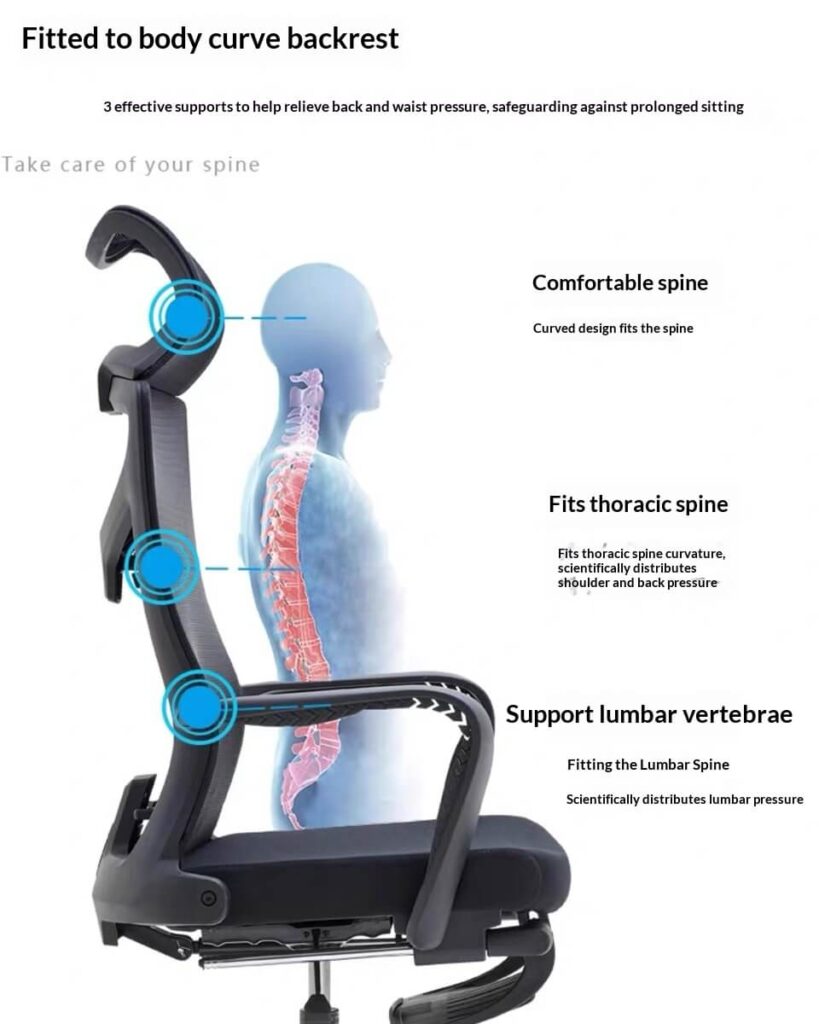
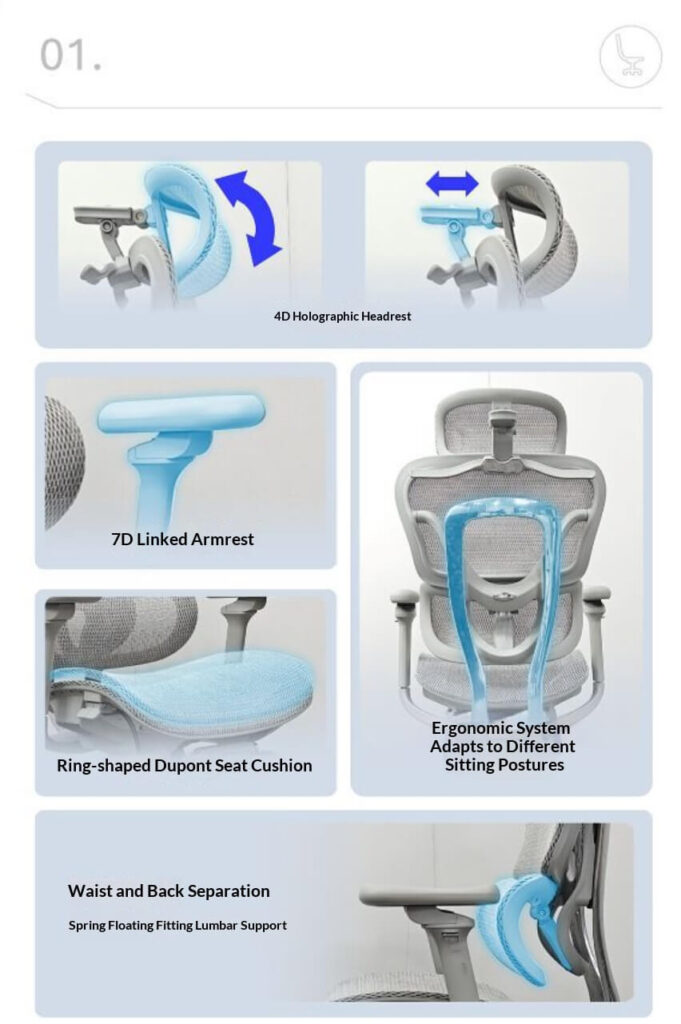
- Dynamic Lumbar Support: Superior to static support, it adapts to user movement to maintain continuous spinal alignment.
- Multi-Dimensional Armrest Adjustment: Height, width, and angle adjustments are crucial for preventing shoulder and neck strain.
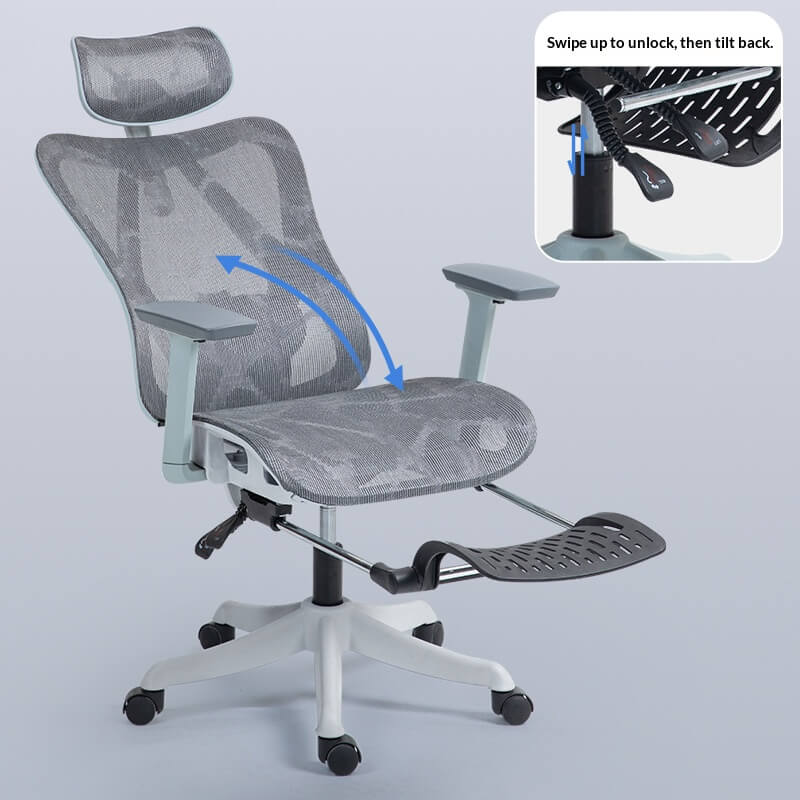
- Seat Depth and Tilt Tension Adjustment: Allow precise customization based on individual body types, ensuring unobstructed blood circulation and reducing pressure on the thighs and lower back.
3.3 Future-Proofing Your Investment
The chairs selected should adapt to evolving work models. Consider products with modular designs and replaceable components. Chairs should seamlessly integrate with modern office elements such as standing desks and collaboration technologies. Additionally, prioritize sustainable materials and manufacturing processes that align with the company’s ESG goals.
4 Implementation Strategy: From Procurement to Performance
4.1 Phased Rollout and Change Management
A successful ergonomic program is far more than distributing chairs. A phased implementation plan needs to be developed to effectively manage budgets and logistics. Start with a pilot in departments with the most discomfort reports or the greatest potential for productivity improvement. During promotion, provide clear employee communication and practical adjustment training to ensure employees can maximize the use of the new chairs’ features. A well-managed deployment can maximize adoption rates and benefit realization.
4.2 Measuring Success: Key Performance Indicators (KPIs)
To verify investment effectiveness, establish baseline metrics and continuously track them after implementation:
- Employee Ergonomic Satisfaction Scores: Measured through regular surveys.
- Reduction in Musculoskeletal Discomfort Reports: Tracked through HR or health and safety reports.
- Absenteeism Rates: Particularly issues related to pain.
- Productivity Metrics: Quantifiable department-specific output.
By correlating these metrics with ergonomic investments, you can build a strong, data-supported case to justify future plans.
Conclusion: The Strategic Imperative
Investing in high-quality ergonomic chairs is no longer a matter of facility management, but a strategic financial planning issue. The evidence is clear: the returns in improving productivity, reducing medical expenses, and enhancing talent retention are visible, calculable, and predictable. By applying the framework outlined in this article—shifting from initial costs to TCO, translating features into value, and implementing with measurable goals—business leaders can reclassify this expenditure from a regular expense to a capital investment in the company’s most valuable asset: its employees. The question is no longer whether your company can afford this investment, but whether it can afford the consequences of not making it.