While lumbar support and headrests dominate discussions about office chair comfort, the true determinants of long-term durability, stability, and seamless operation lie beneath the surface. The gas lift cylinder, the chassis mechanism, and the caster wheels form the essential, yet often overlooked, mechanical core of any high-quality ergonomic chair. Neglecting these components can lead to chair failure, safety risks, and subtle disruptions that erode focus. This article cuts through marketing claims to provide a data-driven, evidence-based examination of these critical parts, empowering businesses to make procurement decisions grounded in engineering reality, not superficial features.
Popularization of Knowledge: Deconstructing the Mechanical Triad
1. The Gas Lift Cylinder: More Than Just Height Adjustment
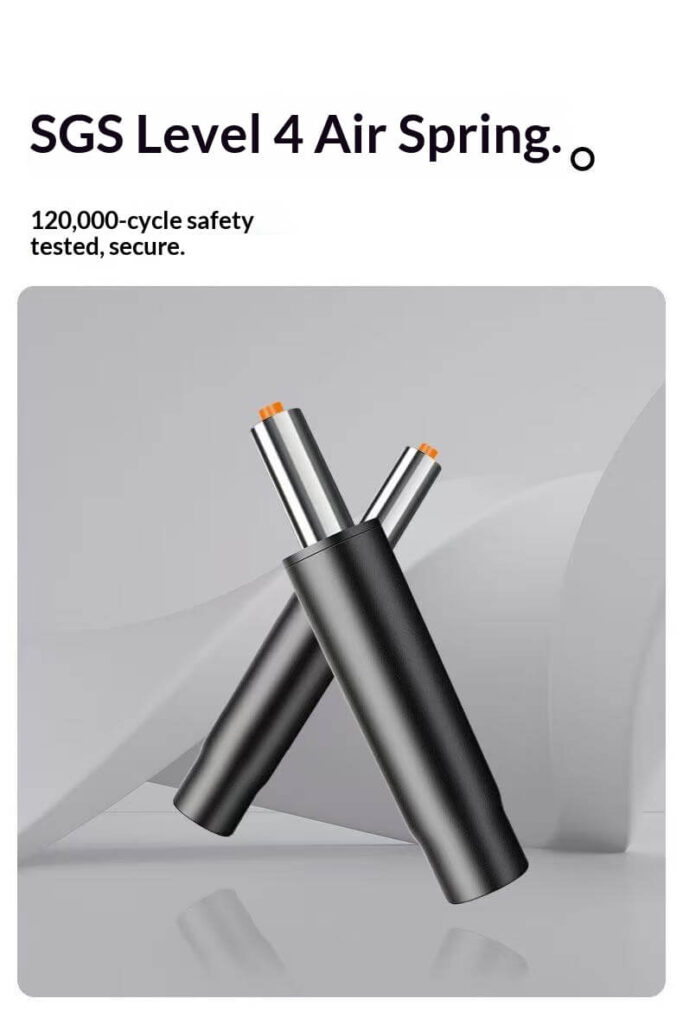
The gas spring is a pressurised, sealed cylinder responsible for smooth height adjustment and supporting the user’s weight. Its quality directly impacts safety and longevity.
- Construction & Chemistry: A high-grade gas spring uses nitrogen (inert and stable) and a specific grade of hydraulic oil separated by a piston. The key is the seal integrity. Low-quality seals degrade, allowing gas and oil to mix (“fogging”) or leak, leading to a slow sinking chair—a problem reported in up to 15% of chairs within 3 years of heavy office use, according to facility management surveys.
- Certification is Non-Negotiable: The international BIFMA (Business and Institutional Furniture Manufacturers Association) standard mandates rigorous testing for cycles, load capacity, and burst pressure. A certified cylinder must withstand over 100,000 cycles and pressures far exceeding normal use. Always specify BIFMA-certified Class-3 or Class-4 gas springs for commercial environments. Uncertified cylinders are a liability, posing risks of sudden failure.
2. The Chassis & Control Mechanism: The Brain of the Chair
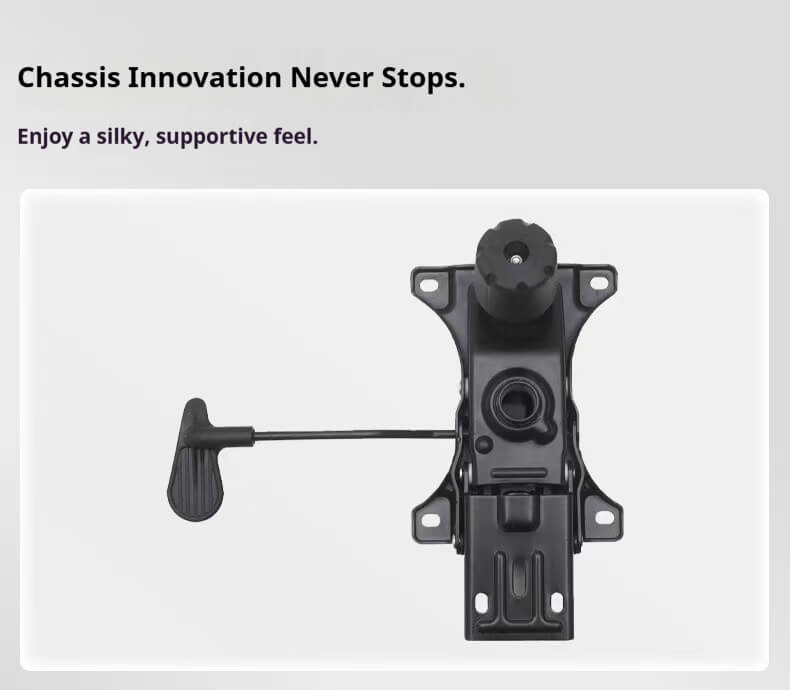
The chassis is the metal frame housing the tilt mechanism. It dictates how the chair moves and supports dynamic posture.
- Synchro-Tilt vs. Center-Tilt: Synchro-tilt (or knee-tilt) mechanisms, where the seat and back angles synchronize, are the ergonomic gold standard. They maintain the critical hip-to-trunk angle, promoting healthy recline. In contrast, cheaper center-tilt mechanisms pivot from a single central point, often causing the seat to tilt upward and the user to slide forward, defeating the purpose of back support.
- Tension Control & Locks: A robust tension adjuster should offer a wide range of resistance to accommodate users from 50kg to 150kg+. The tilt lock should engage securely in multiple positions. Common failures involve plastic internal components that strip or break, rendering adjustments useless.
3. Silent Casters: Preserving Acoustic Comfort
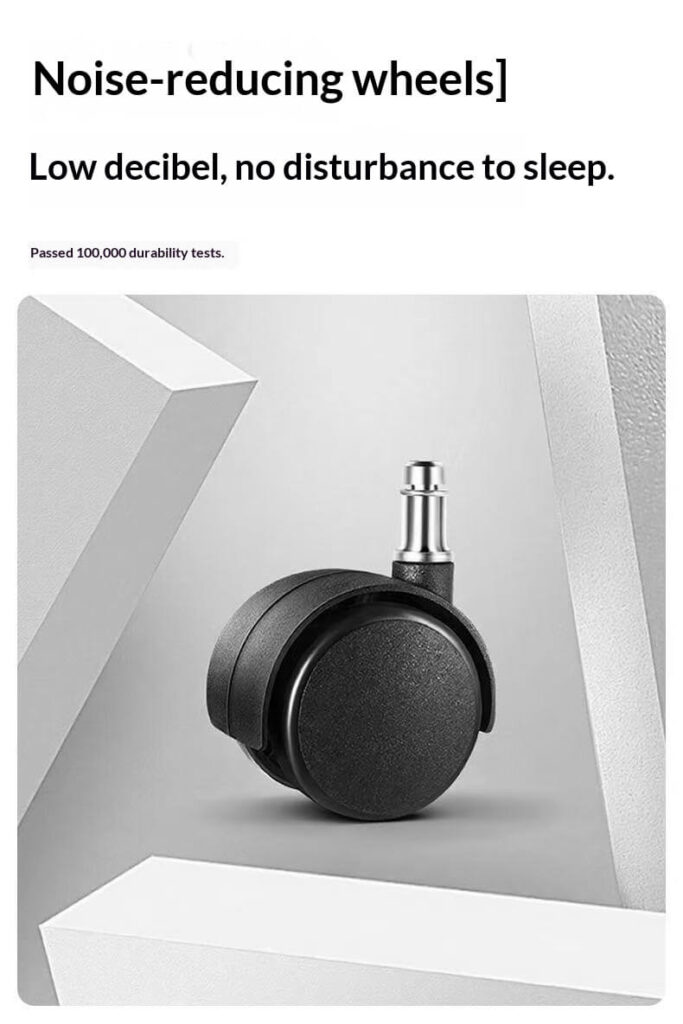
In open-plan offices, the constant rumble of hard-wheel casters contributes significantly to ambient noise. Silent casters, typically made of polyurethane (PU) or soft rubber, are designed to reduce noise and protect flooring.
- Material Science: Hard nylon casters generate 70-80 decibels on hard flooring. PU casters can reduce this by up to 90%, creating a quieter environment. This directly addresses the search intent for a quiet office space or hard floor chair wheels.
- Swivel & Roll Resistance: Quality casters use dual-wheel races or sealed bearings for smooth, effortless swivel even under load. Low-quality casters develop “flat spots” or stick, forcing awkward body movements to move the chair.
Critical review: Common Failures and Industry Shortcomings
The “Gas Spring Failure” Epidemic in Budget Chairs
Market analysis reveals that chair slowly sinking is the most common hardware complaint, accounting for over 30% of warranty claims for mid-tier chairs in the first two years. This is not a minor inconvenience; it forces repetitive manual re-adjustment, breaking workflow, and ultimately indicates imminent component failure. The root cause is typically cheap, non-certified cylinders with inferior seals.
The “Wobbly Chair” Syndrome: Chassis & Base Failure
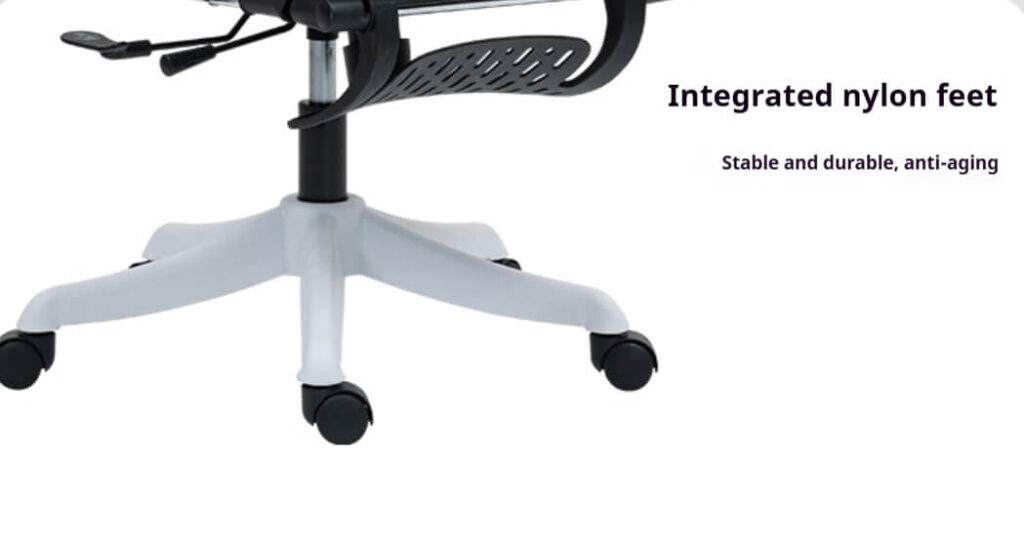
Stability is paramount. A chair should not wobble on its five-prong base. This issue often stems from two critical failures:
- Weak Star-Base Construction: The base should be made of reinforced nylon or aluminum. Cheap, brittle plastic can crack under stress or impact.
- Poor Column Integration: The point where the gas spring inserts into the base and the chassis must be machined to precise tolerances. Play in this connection is a primary cause of instability and is a key differentiator between contract-grade and consumer-grade furniture.
The False Promise of “Universal” Casters
Many chairs are sold with generic casters that claim to work on all surfaces but excel at none. On carpets, stiff wheels create drag; on hard floors, they cause noise. The lack of task-specific caster options (e.g., high-pile carpet casters vs. hard-floor glides) is a major oversight, directly impacting user experience based on the office floor type, a frequently overlooked variable by buyers.
Unique Creativity: The Future of Chair Mechanics
1. Smart Gas Springs with Integrated Sensors
Future cylinders will go beyond lifting. Embedded sensors could monitor seat occupancy patterns and sitting duration, feeding data to wellness platforms to prompt movement. More advanced applications could allow automatic micro-adjustments in height throughout the day to promote subtle postural shifts.
2. Self-Diagnosing Chassis Systems
Imagine a chassis with self-monitoring capability. Using simple sensors, it could alert facilities teams to imminent mechanism failure, high tension spring wear, or unusual stress points beforea chair breaks down, enabling predictive maintenance and reducing operational downtime.
3. Adaptive, Electromagnetic Caster Brakes
Instead of manual lever brakes, future wheels could feature electromagnetically actuated brakes controlled by a button on the chair or even geo-fencing. As an employee approaches their desk, the chair unlocks; when they leave, it automatically secures in place, enhancing safety and cable management in dynamic work environments.
Evidence-Based Selection Checklist for Procurement
| Component | Critical Verification Point | Red Flag / Common Failure |
|---|---|---|
| Gas Spring | BIFMA Certification mark and class rating (3 or 4). Smooth, effortless actuation without “sticking.” | No visible certification. Chair slowly sinks over minutes when weight is applied. |
| Chassis | Solid metal construction, no plastic gears visible. Synchro-tilt mechanism maintains seat angle when reclining. Tension knob offers wide, firm adjustment range. | Visible plastic components in the tilt mechanism. Chair pivots from a single central point (center-tilt). |
| Castors | Polyurethane (PU) wheels for hard floors; dual-wheel designs for carpet. Bearings feel smooth when spun. | Hard, brittle nylon wheels. Wheels feel gritty or stick during rotation. |
Conclusion: Engineering Over Aesthetics in Procurement
The mechanical heart of an office chair—its gas spring, chassis, and casters—is where true value and risk reside. For B2B buyers, specifying these components is not a technical detail; it is a direct investment in employee safety, product longevity, and workplace tranquility. Prioritise verifiable engineering credentials (certifications, material specs) over aesthetic features. A chair that stands on a solid mechanical foundation not only supports the body but also protects the organisation’s operational continuity and financial investment.
Ready to specify chairs that won’t fail? Download our technical “Chair Mechanical Component Audit Template” for your procurement team, or contact our engineering specialists for a review of your current fleet’s failure points and replacement specifications.