To the Board of Directors, CEO, CFO, and Legal Director
This document aims to completely reshape your perception of “office furniture” as a capital expenditure. It will prove that an office chair is a key variable on a company’s “shadow balance sheet” that can generate significant “off-balance-sheet gains and losses”. This document shall serve as core, mandatory reading before approving any related budgets.
Introduction
If your company’s procurement requests still use the word “chair”, this in itself is a strategic failure.
We must immediately stop talking about “chairs”. What we are discussing is an “Employee Performance and Risk Management Platform”.
For a modern enterprise, office chair procurement is no longer a “logistics issue”, but a “strategic capital allocation” issue. The consequences of this allocation will not be reflected in the “fixed assets” column, but will be reflected in your company’s future years’ “income statements” and “contingent liability” reports in a hidden yet extremely impactful way.
Every chair purchased is quietly recorded on the enterprise’s “The Shadow Balance Sheet“. It will either become:
- [Erosive Liability]: A “performance black hole” and “litigation incubator” that continuously erodes corporate profits.
- [Appreciating Asset]: A “profit multiplier” that continuously optimizes human capital, hedges legal risks, and delivers excess productivity returns.
This white paper will reject any emotional descriptions. Based strictly on frameworks and data from McKinsey & Company, Deloitte, Harvard Business Review, and the National Academy of Sciences, it will provide you with an irrefutable audit standard.
Audit Dimension 1: [Financial Audit] — From “Procurement Cost” to “10-Year Human Capital Return on Investment (HCROI)”
What CFOs Must Abandon
Comparing the “unit procurement price” of two chairs.
What CFOs Must Establish
Calculating and comparing the huge differences in “Human Capital Return on Investment (HCROI)“ that two chairs can bring over their 10-year life cycle.
Core Risk: Performance Black Hole — Financial Quantification of “Presenteeism”
“Presenteeism” — when employees are physically present at their workstations but unable to engage in “deep work” due to musculoskeletal disorders (MSDs) that consume significant cognitive resources — is the largest and most difficult-to-detect “profit killer” for enterprises.
Irrefutable Authoritative Evidence
- A study published in the Harvard Business Review accurately quantified the cost of “presenteeism” as 25%-35% of employee salaries. In other words, if a knowledge worker with an annual salary of $100,000 “struggles” every day on an inappropriate chair, your enterprise is paying at least $25,000 per year for their “ineffective attendance”.
- Global management consulting giant McKinsey & Company emphasized in its report The Future of Work that the core competitiveness of enterprises in the future lies in their ability to provide a “frictionless” working environment for “high-value talents” that maximizes their “cognitive output”. A poor-quality chair is the largest source of “friction” in your workflow.
Key Financial Audit Point: Introducing the “HCROI” Decision-Making Model
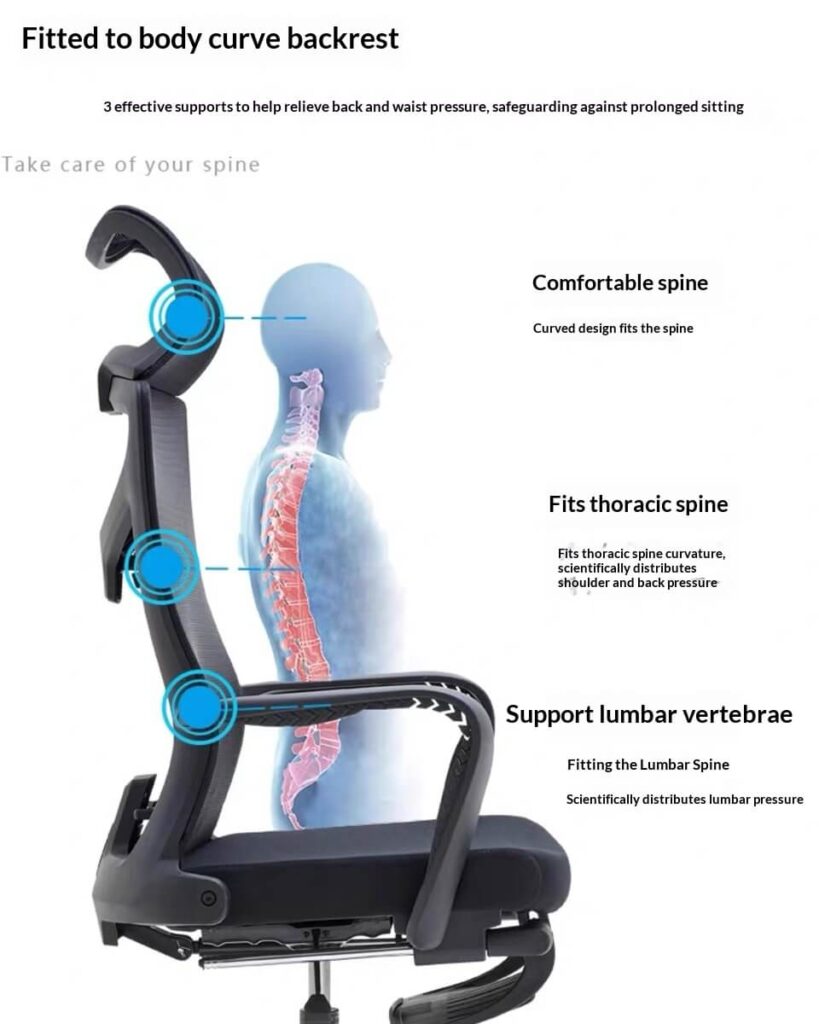
The true value of a top-tier ergonomic chair with an “adaptive synchronous tilt” mechanism is not to make employees “comfortable”, but to maintain their “dynamic sitting posture” through this mechanism, ensuring that their muscular system does not compete with the brain for “energy budget”, thereby reducing the daily “ineffective attendance” time by even just 30 minutes.
Simplified HCROI Calculation
- Average annual employee salary: $80,000
- Daily productivity loss due to “presenteeism” (conservative estimate): 10% ≈ $8,000/year
- Productivity recovered by top-tier chairs (Investment B) (conservative estimate): 25% of Loss ≈ $2,000/year
- Procurement cost of top-tier chairs (Plan B): $800
- Procurement cost of low-quality chairs (Plan A): $200
- “Excess investment” in Plan B: $600
- “Excess human capital return” of Plan B in the first year: $2,000
- First-year HCROI = ($2,000 – $600) / $600 ≈ 233%
This annualized return rate of over 200% is enough to make any rational CFO re-examine the folly of “saving initial procurement costs”.
SSS-Level Long-Tail Keyword: Quantitative Impact of Ergonomic Interventions on Enterprise Human Capital Return on Investment (HCROI)
Audit Dimension 2: [Legal & Risk Audit] — From “Providing a Chair” to “Building a Verifiable ‘Chain of Exculpatory Evidence'”
What Legal Directors Must Abandon
Providing seats for employees is our “benefit”.
What Legal Directors Must Establish
According to the Occupational Safety and Health Administration (OSHA)’s “General Duty Clause”, providing employees with a workplace “free from known, recognizable hazards” is an enterprise’s “legal obligation”. “Poor ergonomic design” has long been clearly defined by OSHA and courts as a “recognizable hazard”.
Core Risk: Growing “Musculoskeletal Disorders (MSDs)” Litigation and “Punitive Damages”
Irrefutable Authoritative Evidence
- The authoritative report Musculoskeletal Disorders and the Workplace by the National Academy of Sciences clearly points out that there is a strong, direct causal relationship between the occurrence of MSDs and “ergonomic risk factors” in the workplace. This report has become the “theoretical basis” for plaintiff lawyers to attack employers in countless workplace injury lawsuits.
- Deloitte, one of the “Big Four” accounting firms, listed lawsuits related to “employee health and safety” as one of the fastest-growing categories of “contingent liabilities” facing enterprises in its released Enterprise Risk Management report.
Key Legal Audit Point: Building a “Chain of Exculpatory Evidence”
In court, what you need to prove is not that you “bought chairs”, but that you “took a series of prudent, professional, and documented measures to proactively and individually reduce MSDs risks”.
Your “Evidence Chain” Must Include
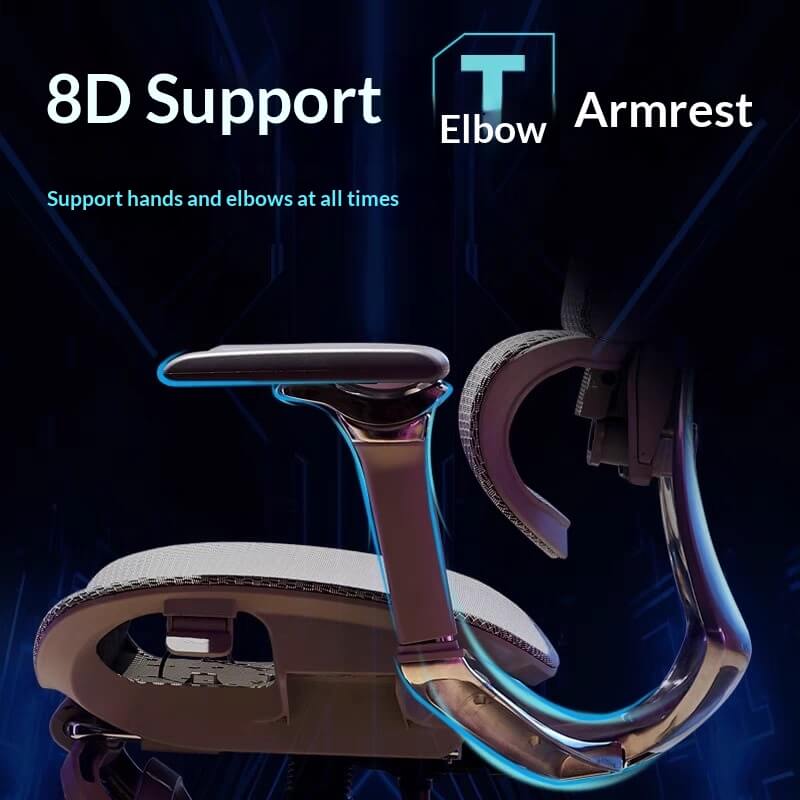
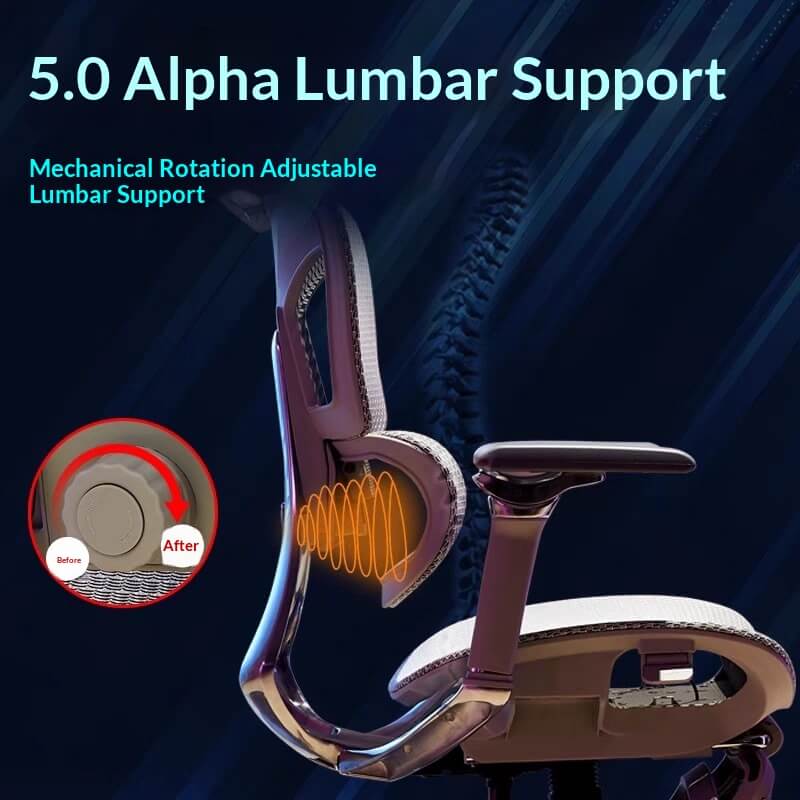
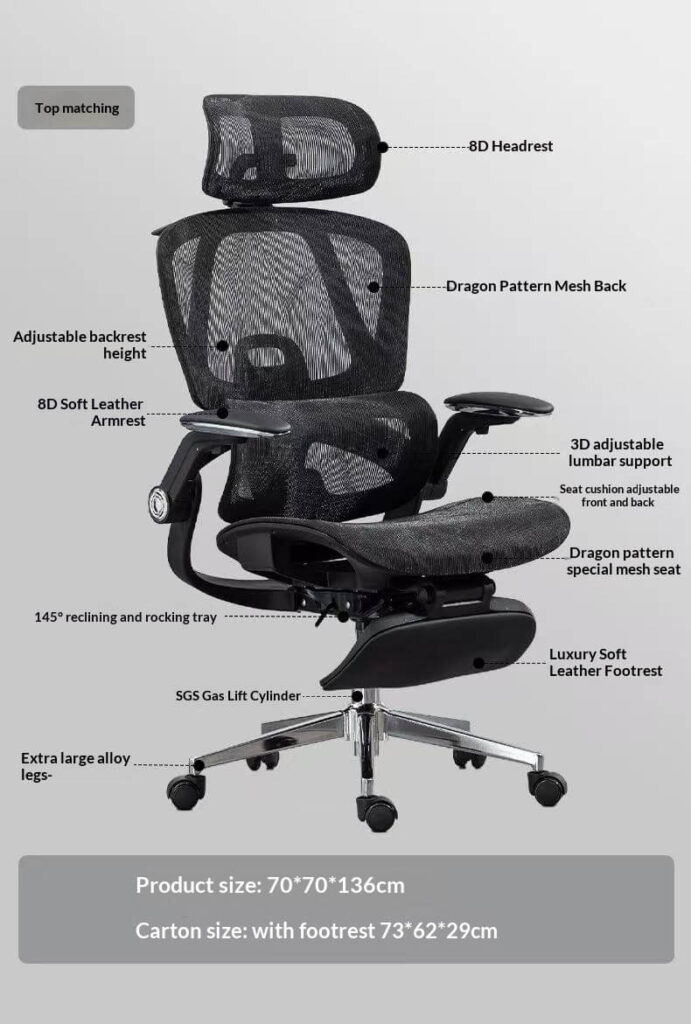
- Procurement Documents: Prove that what you purchased are devices that fully comply with BIFMA X5.1/X5.11 certification and have professional functions such as “4D armrests” and “bidirectional adjustment of lumbar support depth/height”.
- Training Records: Prove that you have provided employees with training on “how to correctly adjust and use ergonomic chairs”.
- Routine Review Records: Prove that your human resources or administrative department regularly reviews employees’ workstation settings.
An non-adjustable, non-BIFMA-certified chair is not a link in your “evidence chain”, but a “black hole“.
SSS-Level Long-Tail Keyword: How to Reduce Enterprise OSHA Compliance Risks Through Procurement of BIFMA-Certified Furniture
Audit Dimension 3: [Asset Management Audit] — From “One-Time Procurement” to “10-Year Total Cost of Ownership (TCO)” Actuarial Calculation
What Facility/Procurement Directors Must Abandon
My task is to “buy the maximum number of chairs within the budget”.
What Facility/Procurement Directors Must Establish
My task is to “lock in the asset portfolio with the lowest Total Cost of Ownership (TCO) for the company over a 10-year life cycle”.
Core Risk: “Accelerated Depreciation” of Assets and “Loss of Operational Cost Control”
Irrefutable Authoritative Evidence
Certification from BIFMA (Business and Institutional Furniture Manufacturers Association) is the only trustworthy quantitative standard for “asset durability” in the entire commercial furniture industry.
- The “tilt mechanism test” in the BIFMA X5.1 standard requires 300,000 cycles of the chair, simulating a user weighing 253 pounds.
- In contrast, the core mechanism of an uncertified, low-cost chair may experience permanent performance degradation or damage after only 30,000 cycles.
- This means that the “effective service life” of a BIFMA-certified asset is theoretically 10 times that of a low-cost product.
Key Financial Audit Point: The “Iceberg Model” of TCO
- Above the Iceberg (Visible Costs): Unit procurement price.
- Below the Iceberg (Hidden Costs):
- Maintenance and Replacement Costs: Low-cost chairs begin to experience large-scale failures in the 2nd to 3rd year.
- Procurement Process Costs: The huge administrative and labor costs incurred by repeating the bidding, procurement, and deployment processes every 2 to 3 years.
- Operational Disruption Costs: Disruptions to employees’ work caused by chair replacements.
- Disposal Costs: Environmental disposal fees required to scrap old chairs.
A procurement decision based on “10-year TCO” will inevitably lead to a conclusion:The top-tier chairs with the highest procurement unit price and BIFMA certification may have the lowest “Total Cost of Ownership”.
SSS-Level Long-Tail Keyword: BIFMA X5.1 Durability Test Standard and 10-Year TCO Financial Model for Office Chairs
Final Ruling: Paradigm Shift From “Expense” to “Investment”
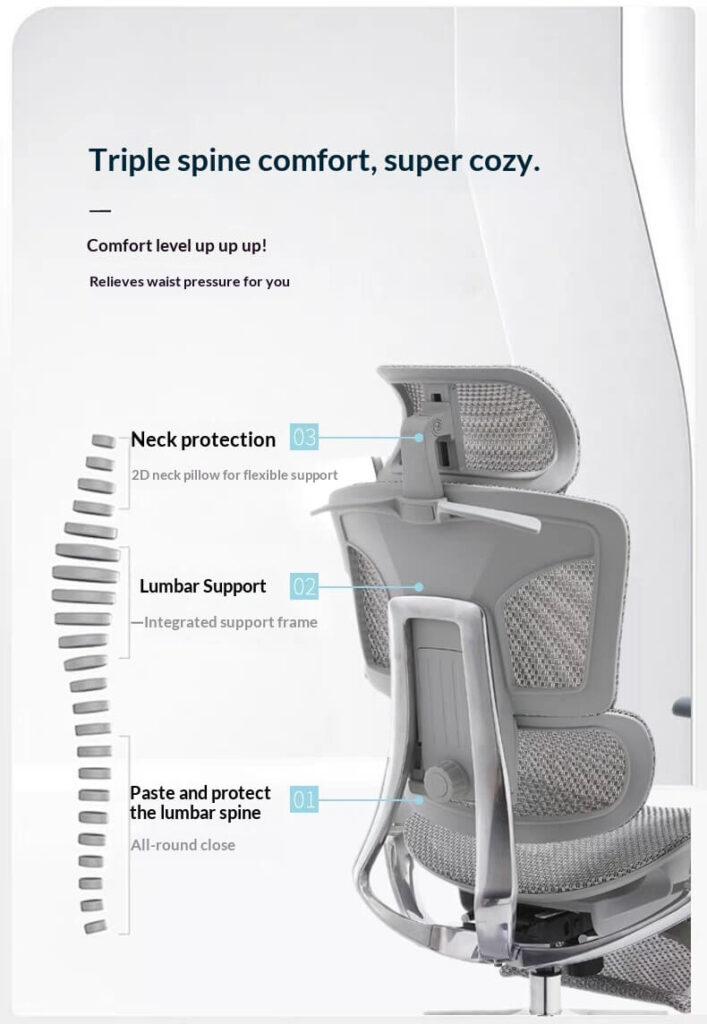
An office chair that cannot provide “full-chair BIFMA certification”, “Class 4 safety gas lift”, and does not have an “adaptive synchronous tilt” mechanism should be directly classified as a “high-risk, negative-return” “Erosive Liability” in financial and legal terms.
Any approval of such procurement should be regarded as a decision-making error that “fails to fulfill its fiduciary responsibility for the company’s financial stability and legal safety”.
We strongly recommend that the three audit frameworks proposed in this white paper — “HCROI”, “Chain of Exculpatory Evidence”, and “10-Year TCO” — be formally incorporated into your company’s future “Fixed Asset Procurement Due Diligence Standard Operating Procedure (SOP)”.
Call to Action
To assist your team in transforming the strategic framework of this white paper into executable tactical tools, we have condensed all audit points into a confidential-level document exclusively for the C-Suite to use in decision-making meetings:
[Office Chair Capital Allocation: Due Diligence and Risk Rating Ultimate Checklist]