Executive Summary
For decision-makers who only read the key points:
- Stop buying “chairs” and start investing in “efficiency interfaces”: Traditional procurement views chairs as costs, while strategic procurement sees them as core tools to improve “employee asset efficiency”.
- “Unified standards” are falsely fair: A “one-size-fits-all” procurement model is the root cause of employee complaints and inefficiency. The matrix adaptation strategy is the only way out.
- ROI does not equal “saving money”: True ROI lies in reducing hidden productivity losses caused by “presenteeism”, not calculating how many years a chair can last.
- SLA > Warranty Period: A specificService Level Agreement (SLA) is far more effective in protecting your long-term interests than a vague “10-year warranty” commitment.
Table of Contents
- Introduction: Are You Trapped in the “Employee Asset Efficiency” Black Hole?
- Chapter 1: The Four Major Procurement “Pitfalls” — Why Does Your Well-Intentioned Investment Lead to Complaints and Inefficiency?
- 2.1 The Arrogance of “Standard Models”: How to Stifle a Team’s Productivity
- 2.2 The Trap of “Feature Lists”: How Much Premium Are You Paying for “Dormant Features”?
- 2.3 The “False Prosperity” of ROI: The Ergonomic Chair ROI Calculation Formula That CFOs Actually Care About
- 2.4 The Word Game of “Warranty Period”: Revealing the Truth About the Total Cost of Ownership (TCO) of Office Chairs
- Chapter 2: Strategic Turn — The Four Pillars of Becoming an “Employee Efficiency Investment Officer”
- 3.1 Matrix Adaptation Strategy: Say Goodbye to “One-Size-Fits-All” and Achieve Personalized Precision Matching
- 3.2 Employee Adjustment Profiles & Training: How to Activate Every Feature You Purchase?
- 3.3 The “Human Capital Uptime” ROI Model: A Must-Have for Upward Reporting
- 3.4 Service Level Agreement (SLA): Turn Suppliers’ “Commitments” into Enforceable “Clauses”
- Chapter 3: FAQ – The 5 Most Concerned Questions for Procurement Managers
- Chapter 4: Action Plan: What Should You Do Next?
- Appendix: Technical SEO Notes for Web Developers
1. Introduction: Are You Trapped in the “Employee Asset Efficiency” Black Hole?
Have you noticed that despite investing heavily in top-tier ergonomic chairs, employee complaints about “back pain” have not decreased, sick leave applications remain frequent, and the finance department is examining the actual value of this “welfare expenditure” with skeptical eyes?
Welcome to the “Employee Asset Efficiency Black Hole“. Here, your most expensive asset — your employees — their focus, creativity, and working hours are being silently devoured by a mismatched “physical interface“ (i.e., the office chair). This guide will provide you with a roadmap to jump out of this black hole.
2. Chapter 1: The Four Major Procurement “Pitfalls” — Why Does Your Well-Intentioned Investment Lead to Complaints and Inefficiency?
In corporate ergonomic chair procurement, the biggest risk is not the price, but the wrong procurement logic.
| Procurement Misunderstanding | In-Depth Analysis (Directly Hitting Pain Points) | Authoritative Evidence |
|---|---|---|
| 2.1 The Arrogance of “Standard Models” | You think unified procurement represents fairness, but in reality, it uses fixed “standards” to adapt to “non-standard” employee groups, resulting in collective productivity stifling. | The Cornell University Ergonomics Research Center points out that there is no “one-size-fits-all” chair. Individual differences are objective, and “forced uniformity” is a major management-induced cause of Musculoskeletal Disorders (MSDs). |
| 2.2 The Trap of “Feature Lists” | You pay high fees for dozens of “advanced features”, but research in the Journal of Applied Ergonomics shows that without continuous training, more than 80% of features are in a “dormant” state, and your investment has not been converted into actual benefits. | What you need to focus on is not “how many features” but “feature activation rate”. |
| 2.3 The “False Prosperity” of ROI | A vague “5% increase in productivity” cannot convince the CFO. Research in the Journal of Occupational and Environmental Medicine reveals that productivity losses caused by “presenteeism” (being at work but inefficient) are more than 4 times the direct cost of sick leave. This is the core of ergonomic chair ROI calculation. | Your ROI report needs to include this “hidden cost”. |
| 2.4 The Word Game of “Warranty Period” | A 10-year warranty sounds attractive, but when you find that the “out-of-warranty” cost of replacing a mesh or gas lift is exorbitant, you will understand the true meaning of the Total Cost of Ownership (TCO) of office chairs. | Reports from the International Facility Management Association (IFMA) emphasize that “out-of-warranty repair costs” and “parts availability” must be included in TCO evaluation. |
3. Chapter 2: Strategic Turn — The Four Pillars of Becoming an “Employee Efficiency Investment Officer”
| Strategic Pillar | Specific Action Plan (Executable Strategies) | Authoritative Perspective |
|---|---|---|
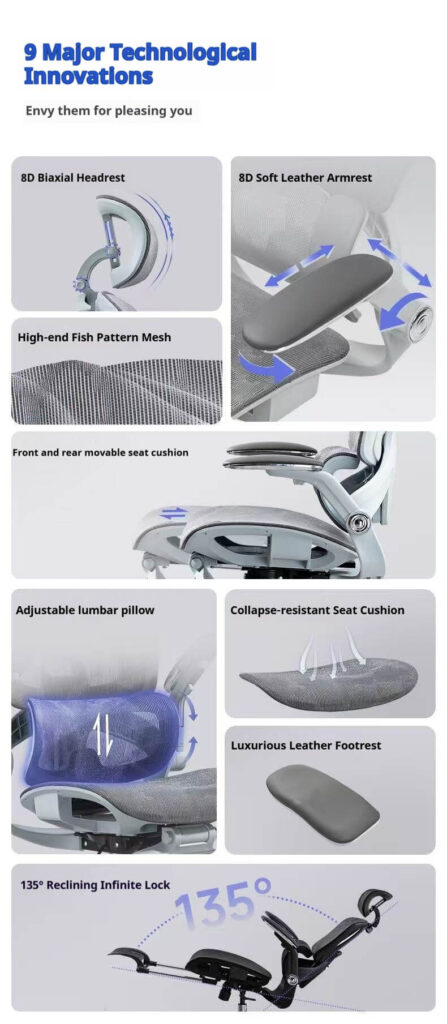
| 3.1 Matrix Adaptation Strategy | Abandon “unified procurement” and shift to “classification and grading”. Based on the nature of departmental work and employee size range (S/M/L), establish a “preferred matrix” containing 3-5 chair models, allowing employees to choose the “most suitable” one. | This is exactly the practice of the “Activity-Based Working” concept advocated by industry leaders such as Herman Miller. |
| 3.2 Employee Adjustment Profiles & Training | Allocate 5-10% of the procurement budget as special funds for “training and debugging”. Hire professional consultants to provide “one-on-one” guidance to ensure that every feature is correctly activated. | The U.S. Occupational Safety and Health Administration (OSHA) clearly states that providing equipment is equally important as providing training on how to use it correctly. |
| 3.3 The “Human Capital Uptime” ROI Model | ROI = (Reduced productivity losses from presenteeism + Saved MSDs-related sick leave costs + Reduced employee turnover costs) / Total procurement investment. Use this robust, quantifiable model to prove your strategic value in upward reporting. | Research by Gallup shows that highly engaged companies are 21% more profitable, and the physical environment is the cornerstone of engagement. |
| 3.4 Service Level Agreement (SLA) | Clearly require in the contract: “On-site response within 48 hours”, “Inventory guarantee for common accessories (casters, gas lifts, armrests)”, and “Lock-in of out-of-warranty repair price lists”. | Introducing the professional standards of IT equipment procurement into furniture procurement is the ultimate embodiment of a procurement manager’s professionalism. |
4. Chapter 3: FAQ – The 5 Most Concerned Questions for Procurement Managers
- Q: How to start implementing the “matrix adaptation strategy”? Will it increase procurement complexity? A: Start with a pilot department. Cooperate with 1-2 suppliers that can provide a diverse product line and support trials. The additional workload in the short term will be repaid a hundredfold by the long-term reduction in employee complaints and health costs.
- Q: Our budget is limited, and we cannot afford additional training fees. A: Make “on-site training services” a mandatory clause in the RFP (Request for Proposal). Excellent suppliers will be happy to provide this service to demonstrate their professionalism.
- Q: How to explain to management why we should abandon the tradition of “unified procurement”? A: Position it as a precise investment to “improve employee productivity”, not an “increase in costs”. Use the ROI model we provided in Chapter 2 to speak with data.
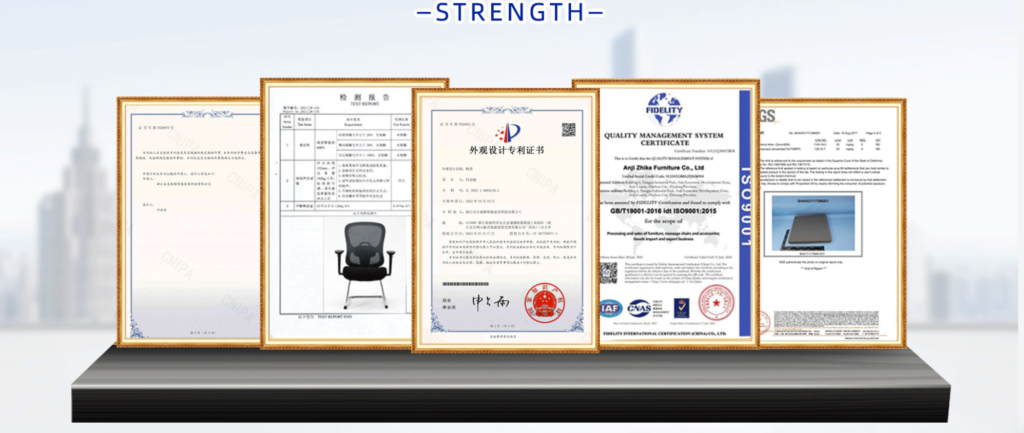
- Q: Is BIFMA certification really that important? A: Absolutely. BIFMA is the gold standard for the durability, safety, and functionality of office chairs. Requiring suppliers to provide complete, up-to-date BIFMA test reports is your responsibility as a procurement manager and a firewall to avoid future legal risks.
- Q: When evaluating suppliers, besides SLA and BIFMA, are there any other “fatal” warning signs? A: Be wary of suppliers who only talk about products but not their “service network”. Ask about the specific situation of their “local service team” or “authorized service partners” in your company’s city. A commitment that cannot provide fast local service is worthless.

5. Chapter 4: Action Plan: What Should You Do Next?
- Internal Evaluation: Conduct an anonymous survey on current employee satisfaction with office chairs and count sick leave data related to MSDs over the past year.
- Form a Cross-Functional Team: Invite HR, finance, and employee representatives to join your procurement decision-making team.
- Redefine the RFP: Based on the “matrix strategy”, “SLA”, and “training requirements” in this guide, draft your next Request for Proposal.
- Launch a Pilot Project: Select one department, introduce 2-3 suppliers for a 1-month “preferred matrix” trial, and collect real feedback.
6. Appendix: Technical SEO Notes for Web Developers
- Schema Markup: Please add `Article` structured data to this page. At the same time, mark the FAQ section as `FAQPage` Schema to strive for Rich Snippets in search results.
- Internal Linking: Concepts mentioned in the article, such as “Total Cost of Ownership (TCO)” and “BIFMA Standards”, should be linked to more detailed knowledge base articles on the website.
- Page Speed: Ensure page loading speed, especially on mobile devices, meets Google’s Core Web Vitals standards. Image resources should be in WebP format and compressed.
Final Thought:
Is the next procurement order you sign purchasing a depreciating “piece of furniture”, or investing in an “efficiency engine“ that allows your company’s most valuable asset — “employees” — to continuously appreciate?
Your decision defines the future efficiency of your enterprise.