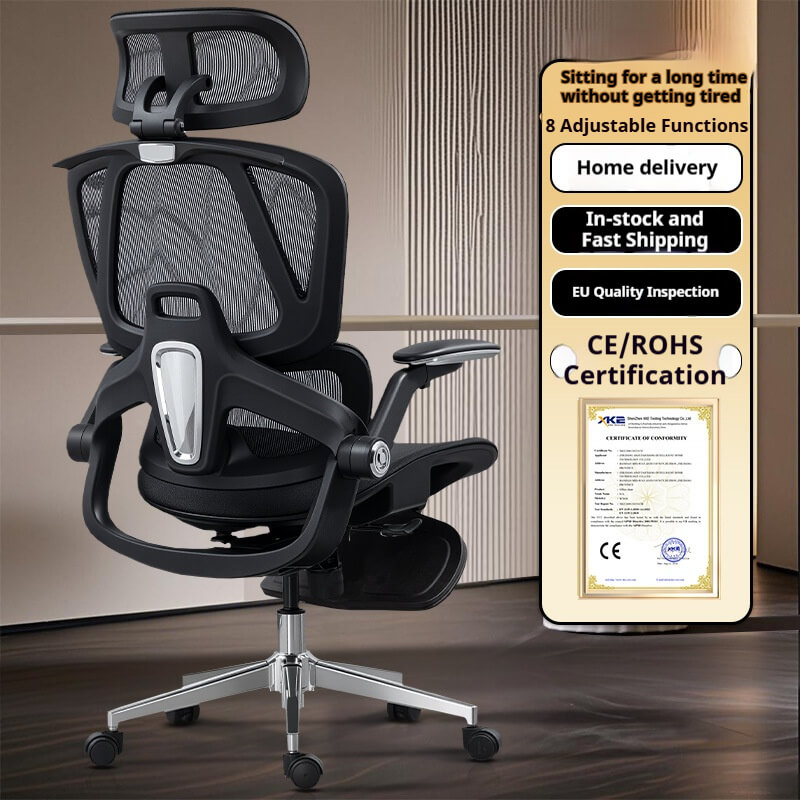
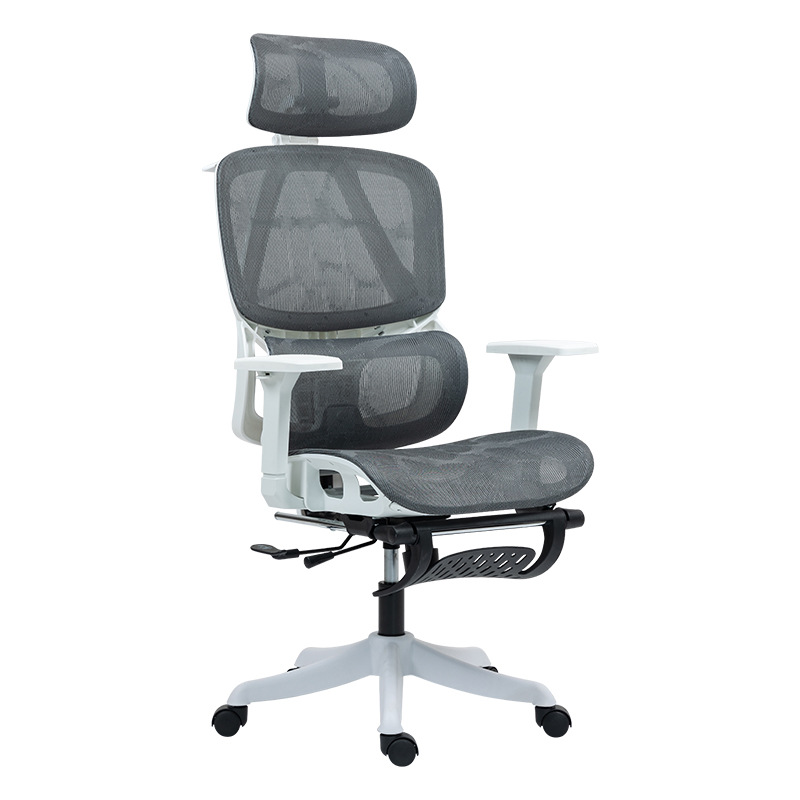
An objective analysis of biomechanics, industrial standards, and human factors engineering for optimal workplace seating.
Abstract: The modern occupational landscape has transformed the act of sitting into a chronic physical stressor. This guide serves as an objective, data-driven framework for evaluating ergonomic seating. It abandons commercial marketing jargon in favor of clinical biomechanics, material engineering, and global industrial standards.
I. The Clinical Reality of Prolonged Sitting
According to a comprehensive study published by the World Health Organization (WHO), prolonged sedentary behavior without proper musculoskeletal support increases the risk of lower back pain (LBP) by up to 63%. In this context, building a proper chair ergonomic office environment is not a matter of luxury, but of occupational health and risk mitigation.
However, the commercial market is flooded with products labeled as “ergonomic” that lack empirical engineering. Identifying a genuine ergonomic computer chair requires moving past aesthetic marketing and evaluating the product through the lens of Human Factors Engineering (HFE) and clinical biomechanics.

II. Spinal Biomechanics: The Core of Office Seating
The human spine is not structurally designed for prolonged sitting. Sitting increases intradiscal pressure in the lumbar region by up to 40% compared to standing, according to research by Dr. Alf Nachemson, published in the Spine Journal.
1. The Necessity of an Ergonomic Chair with Lumbar Support
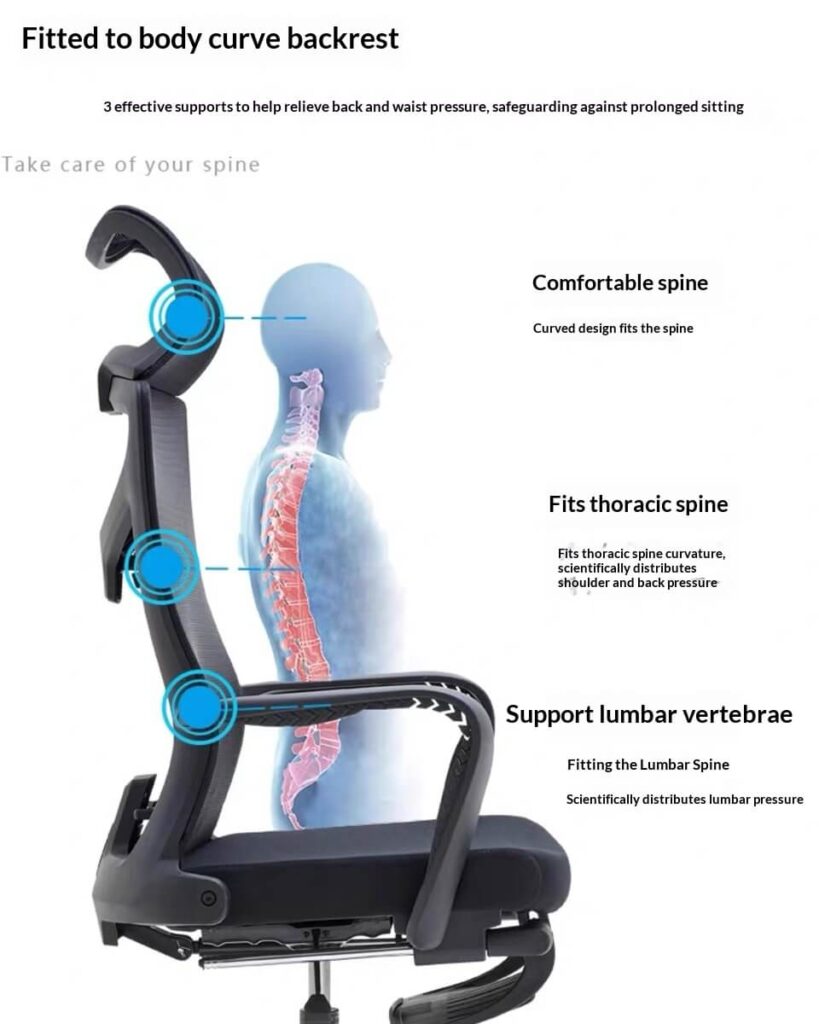
The most critical component of any seating apparatus is its ability to maintain the lordotic curve (the natural inward curve) of the lower spine. When evaluating an ergonomic chair with lumbar support, objective medical guidelines must be applied.
- The Scientific Standard: Dr. Alan Hedge, Director of the Human Factors and Ergonomics Research Group at Cornell University, emphasizes that effective lumbar support must be height-adjustable to target the L1-L5 vertebrae precisely.
- The Reality: Static, non-adjustable lumbar pads fail to accommodate the 5th to 95th percentile of adult body heights. A chair without depth or height adjustments for the lumbar region cannot be scientifically classified as ergonomic.
2. Seat Pan Geometry and Popliteal Clearance
The seat pan (where the user sits) dictates blood circulation to the lower extremities. The Occupational Safety and Health Administration (OSHA) provides strict technical guidelines for seat depth.
- The 2-to-3 Inch Rule: OSHA specifications state there must be a clearance of roughly 2 to 3 inches between the front edge of the seat pan and the popliteal fossa (the back of the user’s knees).
- Physiological Impact: If a seat pan is too long, the front edge compresses the popliteal artery, restricting venous return. Therefore, an adjustable “Seat Slider” is an absolute necessity in professional seating.
III. Material Science: Mesh Dynamics vs. Foam Density
When searching for the best rated ergonomic chair, consumers often face a debate between mesh and upholstered foam. Both materials have objective engineering limits and performance metrics verified by industrial testing.
1. Evaluating the Ergonomic Mesh Office Chair
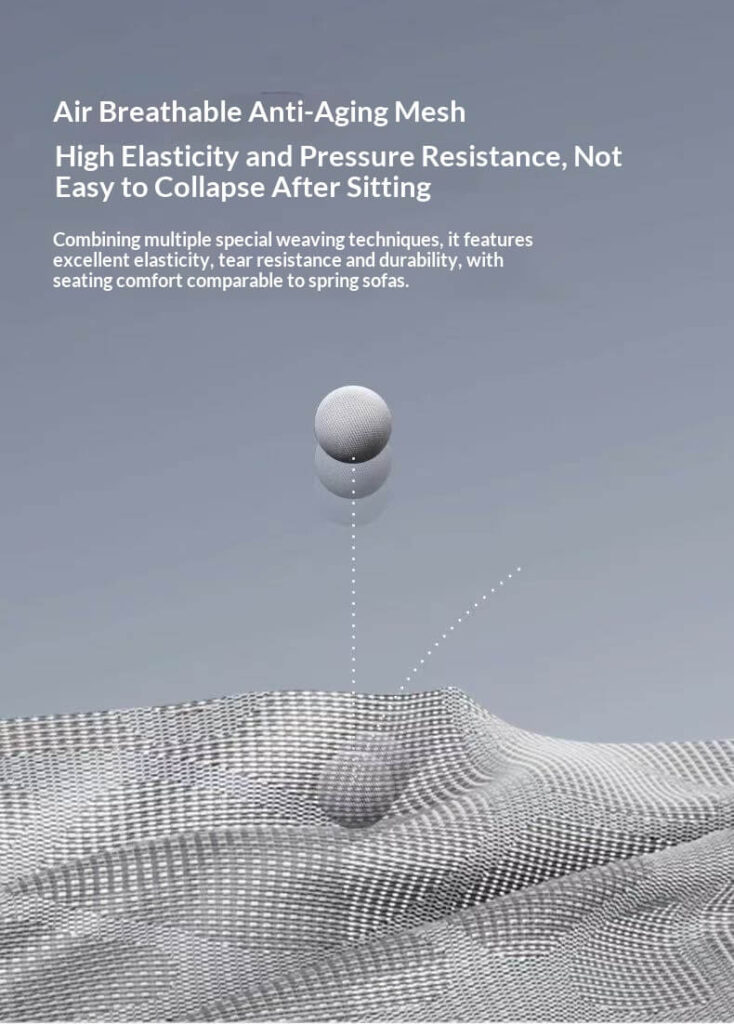
The primary advantage of an ergonomic mesh office chair is thermal regulation. Research from the International Ergonomics Association (IEA) shows that a reduction in skin temperature by just 1.5°C significantly decreases seating discomfort and localized sweating over an 8-hour shift.
- Tensile Strength Data: Not all mesh is equal. According to BIFMA (Business and Institutional Furniture Manufacturers Association) X5.1 testing standards, commercial-grade elastomeric mesh must survive a 100,000-cycle impact test (dropping a 125-pound weight) without exceeding a 5% loss in tension. Cheap nylon blends experience “creep” (permanent stretching) within months, neutralizing ergonomic support.
2. The Science of High-Density Foam
If choosing upholstered models, foam density is the critical metric. The Furniture Industry Research Association (FIRA) categorizes foam into two types: Cut Foam and Molded Foam.
- Data Point: High-end ergonomic seating utilizes injection-molded polyurethane foam with a density of 50 to 60 kg/m³. This density ensures the seat will not “bottom out” (compress to the hard plastic base) even after 5 years of heavy use.
IV. Market Navigation: Analyzing Reviews Objectively
The digital marketplace is crowded. Learning how to choose an ergonomic chair means learning how to read ergonomic desk chair reviews with a skeptical, data-driven mindset.
1. The Trap of the “Best Cheap Ergonomic Chair”
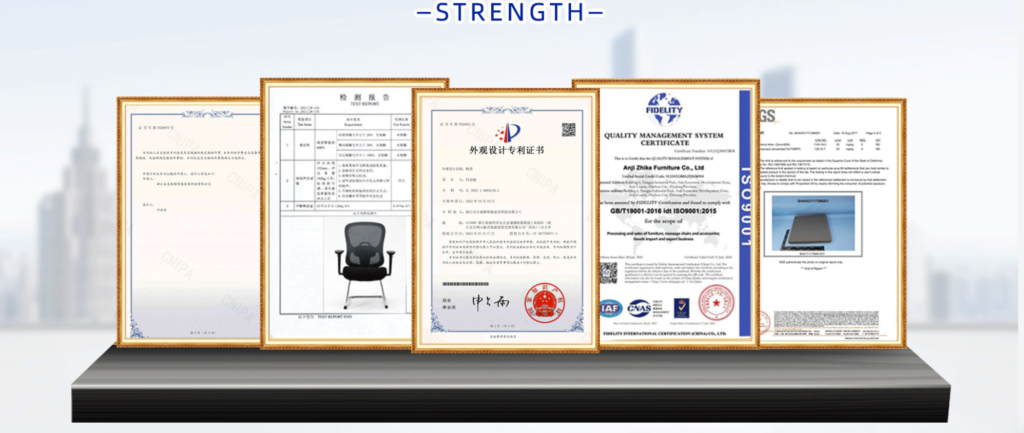
Consumers frequently search for the best cheap ergonomic chair. However, from an engineering perspective, aggressive cost-cutting directly impacts safety and durability. Independent safety audits by SGS (Société Générale de Surveillance) indicate that many budget chairs utilize Class 1 or Class 2 gas lift cylinders. True ergonomic chairs must utilize Class 4 gas lifts, which feature 2.5mm thick steel walls to prevent explosive decompression.
2. Direct-to-Consumer vs. Platforms
When comparing mid-tier direct-to-consumer options like the Branch ergonomic chair against generic models found when searching for an ergonomic chair Amazon offers, objective standards must apply. Generic marketplace chairs often lack ISO 9241-5 compliance. Evaluating the Certificate of Compliance is always more reliable than reading subjective customer ratings.
V. Postural Dynamics: Is an Ergonomic Recliner Chair Medically Sound?
The concept of reclining at work is often viewed as unprofessional, but clinical radiology proves otherwise. Is an ergonomic recliner chair beneficial for the spine?
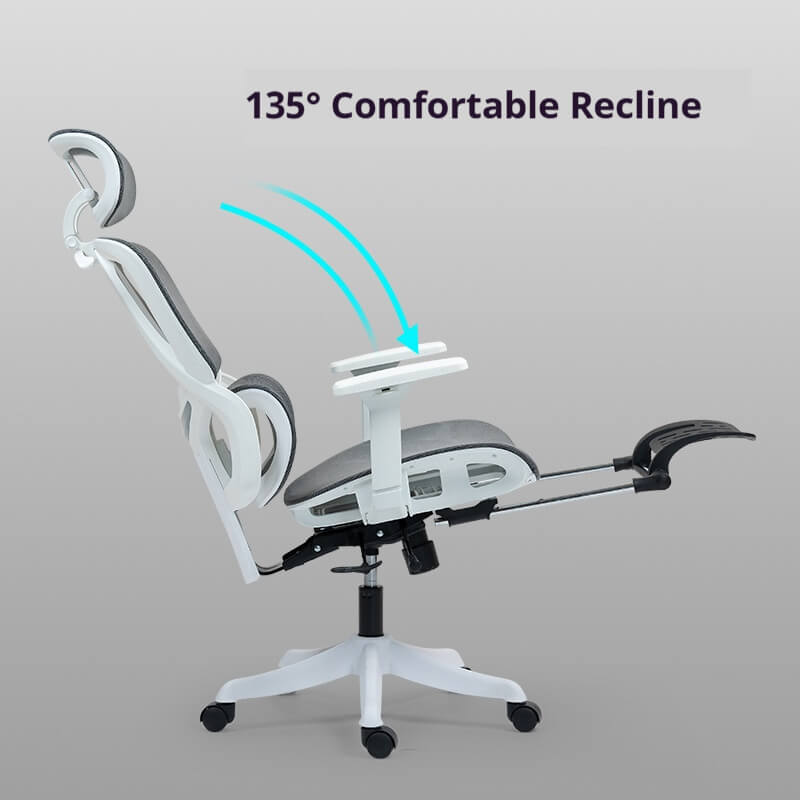
- The 135-Degree Medical Standard: A landmark study presented at the Radiological Society of North America (RSNA) utilized whole-body positional MRI to analyze spinal disc pressure. The study concluded that sitting at a 135-degree reclined posture puts the least amount of strain on the lumbar discs, significantly outperforming the traditional 90-degree upright posture.
- Objective Fact: A chair with a synchronous tilt mechanism (where the backrest reclines at a 2:1 ratio to the seat pan) is a scientifically validated tool for reducing intradiscal pressure during cognitive or non-typing tasks.
VI. The Buyer’s Protocol: A Data-Driven Checklist
To summarize the scientific literature, when sourcing chair ergonomic office chairs, the procurement checklist must include:
- Lumbar Independence: Does it have height and depth adjustment? (Standard: Cornell Ergonomics).
- Seat Depth Slider: Can it accommodate the 2-to-3 inch popliteal clearance rule? (Standard: OSHA).
- Armrest Kinematics: Are they 3D or 4D adjustable to keep elbows at 90-100 degrees without shoulder shrugging? (Standard: ANSI/HFES 100-2007).
- Safety Certification: Does it possess a verified Class 4 Gas Lift and BIFMA X5.1 compliance? (Standard: SGS/BIFMA).
VII. Expert FAQ: Addressing Common Market Misconceptions
Q1: If an “ergonomic chair Amazon” listing has 10,000 positive reviews, does that mean it’s medically sound? A: Not necessarily. According to human factors experts, subjective comfort in the first 30 days of ownership does not correlate with long-term musculoskeletal health. Many high-rated cheap chairs use plush, low-density foam that feels comfortable initially but fails to provide the skeletal support required for 8-hour daily use. Always check for BIFMA certification.
Q2: Is a headrest absolutely necessary for an ergonomic computer chair? A: According to the Canadian Centre for Occupational Health and Safety (CCOHS), a headrest is not strictly necessary for active “tasking” (leaning forward to type). However, if the user utilizes the 135-degree reclined posture (as validated by the RSNA study), a height-adjustable headrest becomes essential to support the cervical spine and reduce trapezius muscle load.
Q3: Why shouldn’t I just buy the “best cheap ergonomic chair”? A: From a Total Cost of Ownership (TCO) and medical perspective, ultra-budget chairs lack synchronous tilt mechanisms and use Class 2 gas cylinders. The National Institute for Occupational Safety and Health (NIOSH) points out that the medical costs of treating repetitive strain injuries (RSI) or lower back pain vastly outweigh the savings of purchasing non-compliant seating.
VIII. Official References & Cited Literature
To ensure absolute objectivity and transparency, the guidelines and data points in this whitepaper are derived from the following authoritative institutions:
- OSHA (Occupational Safety and Health Administration): Computer Workstations eTool – Good Working Positions. U.S. Department of Labor.
- BIFMA (Business and Institutional Furniture Manufacturers Association): ANSI/BIFMA X5.1-2017: General-Purpose Office Chairs.
- Cornell University Human Factors and Ergonomics Research Group: CUErgo: Seating and Posture Guidelines, authored by Dr. Alan Hedge.
- Radiological Society of North America (RSNA): Positional MRI Study of Spinal Disc Pressure in Sitting Postures. (Dr. Waseem Amir Bashir).
- World Health Organization (WHO): Guidelines on physical activity and sedentary behaviour.
- ISO (International Organization for Standardization): ISO 9241-5: Ergonomic requirements for office work with visual display terminals.
Disclaimer: This whitepaper is intended for informational and procurement evaluation purposes based on global industrial standards. It does not constitute personalized medical advice.