In the professional procurement of ergonomic seating, the most expensive mistake is not a high unit price—it is the miscalculation of systemic risk.
As an overseas buyer, you are likely navigating the binary choice of office chair sourcing agent vs direct factory. The factory promises “bottom-tier pricing” but delivers rigid MOQs and communication black holes. The sourcing agent promises “hassle-free service” but often operates on opaque kickbacks that inflate your landed cost while offering zero technical defense.
This is a clinical dissection of the Chinese supply chain. If you are looking for a “supplier,” look elsewhere. If you are looking to secure your liquidity and hedge against the $40,000 “dead stock” gamble, this audit is for you.
1. The Hook: The Illusion of “Factory Direct” Savings
The term “Direct Factory” is the most successful marketing trap in the furniture industry. Buyers flock to factories to “cut out the middleman,” only to realize they have traded a 10% commission for a 30% loss in operational efficiency.
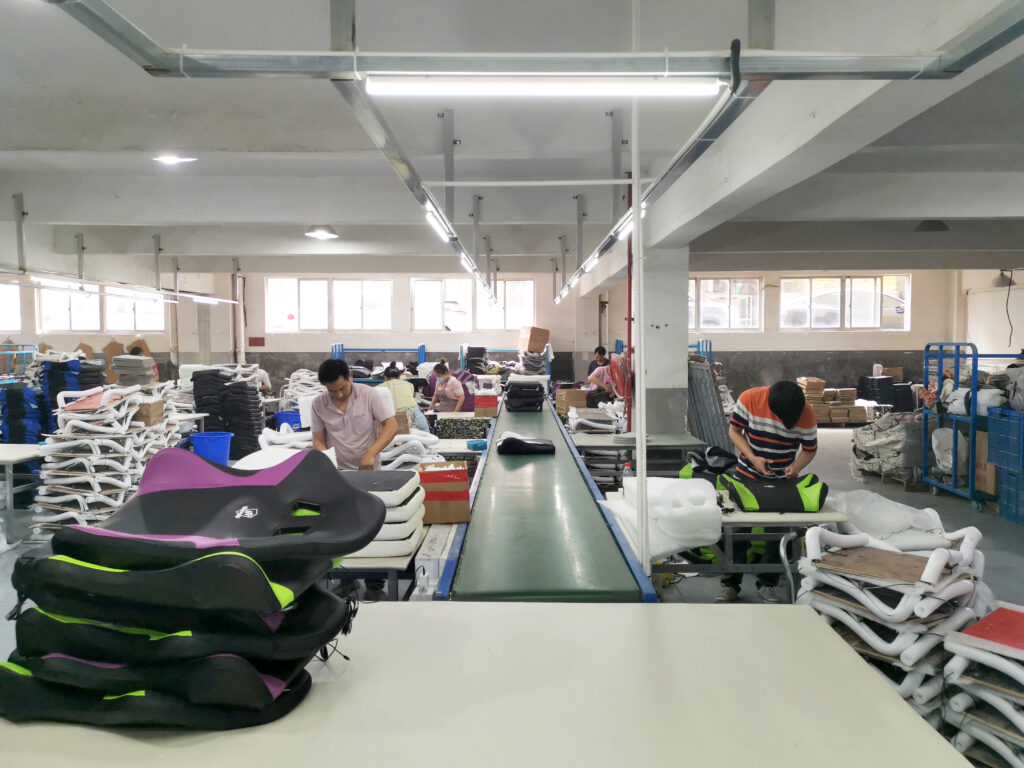
When you deal directly with a high-volume factory, you are a “Tier 3” priority. Your 50-unit market test or even a 300-unit 40HQ container is a statistical rounding error to a production manager running 10,000 units for a global big-box retailer. When production delays occur—and they always do—your order is the first to be bumped. The “savings” you gained on the FOB price are instantly incinerated by ocean freight surcharges, missed seasonal windows, and the inability to pivot when market feedback demands a design change.
2. The Insider Truth: The Structural Failures of Both Models
To choose between an office chair sourcing agent vs direct factory, you must recognize the “dark side” of how both entities actually operate behind the curtain.
The Factory’s “Black Box” Communication
Traditional factories are optimized for repetition, not transparency. The salesperson you speak with is rarely in sync with the workshop floor.
- The Bait-and-Switch: To win your business, a factory may show a sample with a BIFMA-certified Class 4 gas lift, but during the mass production of a “small” order, they may swap it for a Class 2 component to reclaim margin lost on the low volume. Without an internal “defense line,” you will only discover this when the chairs begin to fail in your customers’ offices.
The Agent’s “Double-Dip” Incentive
Most office chair sourcing agents are not partners; they are arbitrageurs.
- The Transparency Tax: An agent may charge you a 5% management fee, but industry veterans know the “standard” practice is to take an additional 3-5% “rebate” from the factory. This incentivizes the agent to protect the factory’s secrets rather than your interests. If a quality defect arises, the agent often acts as a buffer for the factory, smoothing over issues that should have been grounds for rejection.

3. The TCO Calculation: Sourcing Agent vs. Direct Factory
Professional procurement requires a Total Cost of Ownership (TCO) mindset. According to data from the Council of Supply Chain Management Professionals (CSCMP), inventory carrying costs—including warehouse space, insurance, and capital interest—average 25% per annum.
| Risk & Cost Factor | Direct Factory (Volume) | General Sourcing Agent | The “Sourcing Partner” Model |
| Initial FOB Price | Lowest (on paper) | Mid (Price + Commission) | Market Competitive |
| Hidden Kickbacks | None | High (Factory Rebates) | Zero (Transparent Fee) |
| Technical QA Depth | Internal (Biased) | Superficial (Visual) | Structural (Component-level) |
| MOQ Flexibility | Rigid (300-500 Units) | Moderate | High (30-50 Units) |
| Communication Lead | Slow (72+ hours) | Moderate | Real-time (Team Extension) |
| True Landed Cost | High (Due to risk/lead time) | High (Due to padding) | Lowest (Optimized Risk) |
The Economic Reality: A $85 chair from a direct factory that arrives with a 5% defect rate and a 4-month lead time is significantly more expensive than a $95 chair delivered in 4 weeks with 0% defects.
4. The Solution: The “Sourcing Partner” and Modular Evidence
We do not operate as an agent or a traditional factory. We function as your. Our value proposition is built on Modular Supply Chain Engineering, providing concrete evidence instead of “trust.”
Evidence of Our “Defense Line”:
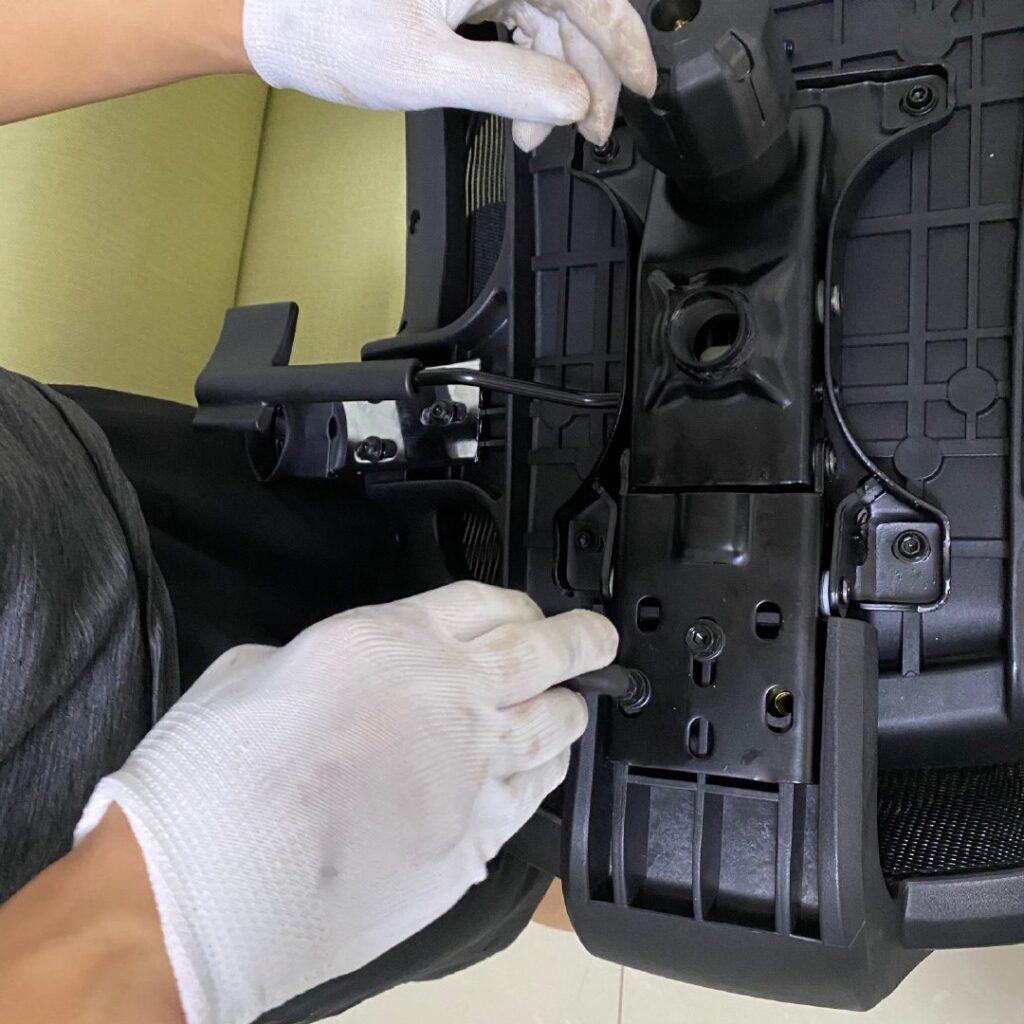
- Component-Level Traceability: Unlike a sourcing agent, we hold the technical sub-contracts for core components. We provide “Mill Certificates” for the mesh tension and load-bearing test reports for the mechanism before assembly begins.
- Modular Pre-Stocking: We eliminate the MOQ barrier by maintaining a rolling inventory of high-cost, long-lead components (Aluminum bases, Class 4 cylinders). We eat the capital tie-up so you can order 50 units at a price point typically reserved for 500.
- Zero-Rebate Policy: Our fee structure is audited and transparent. We do not accept factory commissions. Our only incentive is the longevity of your brand, because a “dead stock” event for you is a terminal event for our partnership.

5. FAQ: Navigating the Sourcing Agent vs Direct Factory Debate
Q: Is it always cheaper to go direct to a factory? A: Only if you are ordering 5,000+ units per month and have your own on-site QC team. For small-to-mid-tier batches, the “indirect” costs of factory mismanagement (delays, sub-par materials) far outweigh the 5-10% markup of a professional partner.
Q: How do I know if a sourcing agent is taking a secret kickback? A: Ask for the original factory invoice and the contact details of the sub-component suppliers. If the agent refuses “for proprietary reasons,” they are likely padding the price or hiding a factory rebate.
Q: Can a “Sourcing Partner” really lower my MOQ? A: Yes, through Structural Standardization. By using a pre-certified, high-performance “chassis” (the mechanism and base) and only customizing the “aesthetic layers” (mesh and fabric), we bypass the machine setup costs that force factories to demand high MOQs.
Next Step: The Supply Chain Audit
Before you commit to another 40HQ container gamble or sign a vague contract with a generalist agent, you need a data-driven assessment of your current procurement path.
We can provide a Comparative Cost & Risk Matrix for your specific chair designs. This is not a catalog; it is a financial breakdown showing the delta between your current landed cost and a “Risk-Adjusted” modular procurement model.