Fix a Sinking Office Chair Without Replacing the Entire Chair
A chair that gradually sinks during use is often a sign of gas-lift failure.
In many refurbishment and repair projects, replacing the gas cylinder can restore the chair’s function without replacing an otherwise serviceable seat, mechanism, or base.
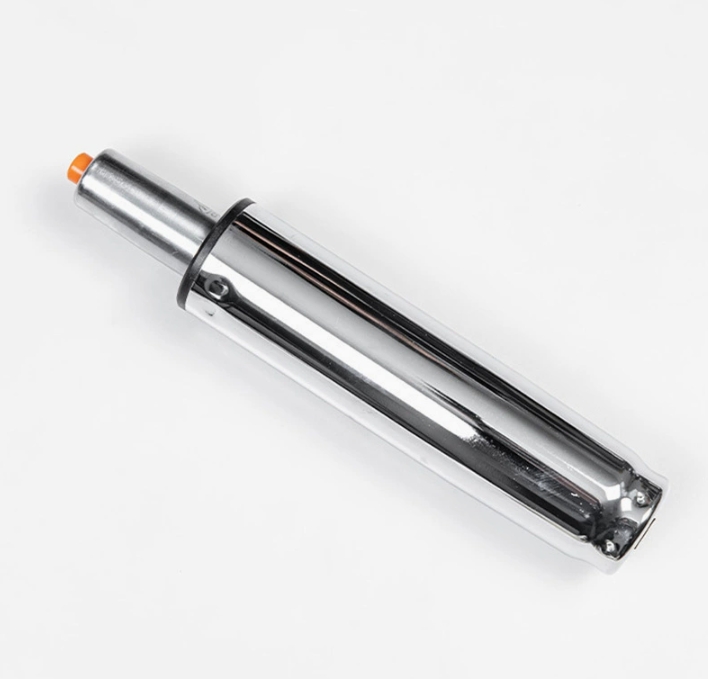
This heavy-duty replacement gas cylinder is designed for commercial office seating, refurbishment, repair, and high-use applications, with multiple stroke and finish options available for different chair configurations.
Heavy-Duty Cylinder Construction
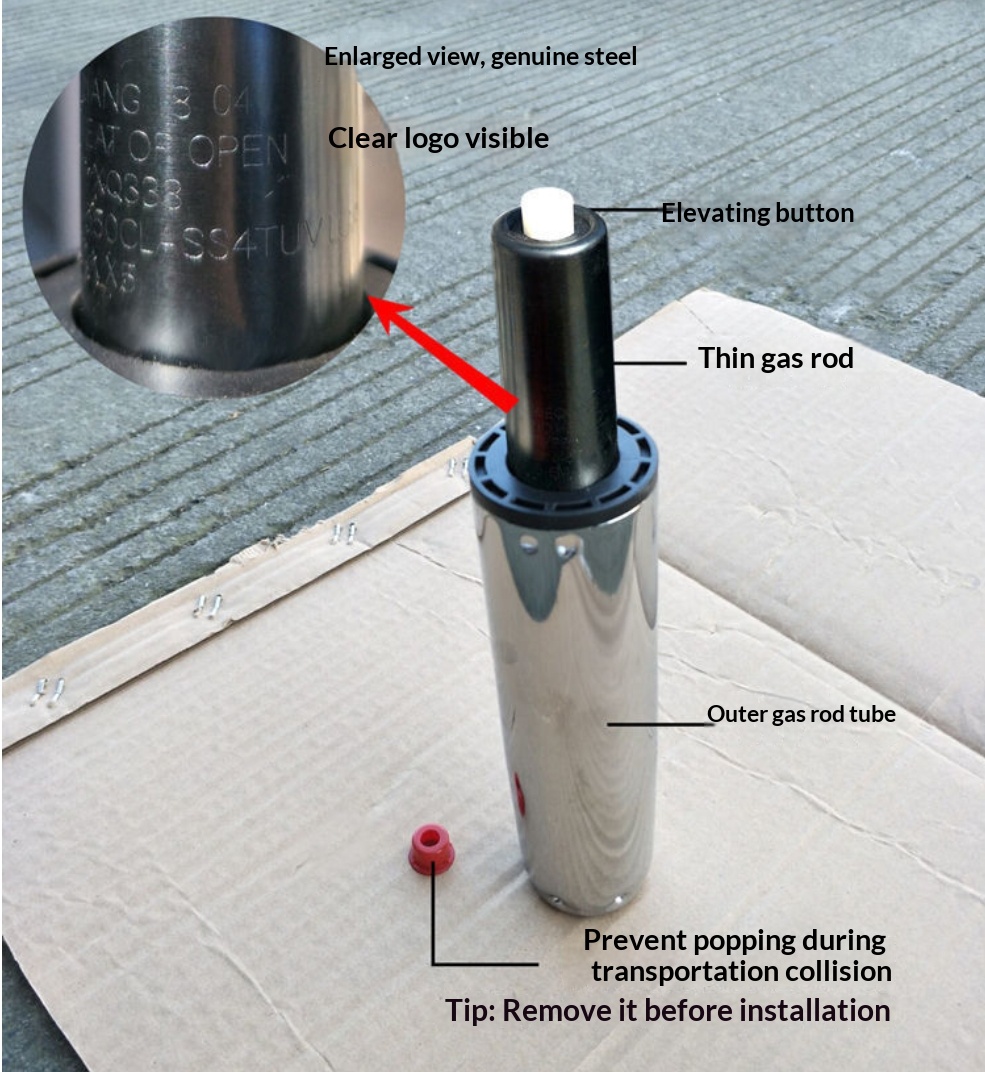
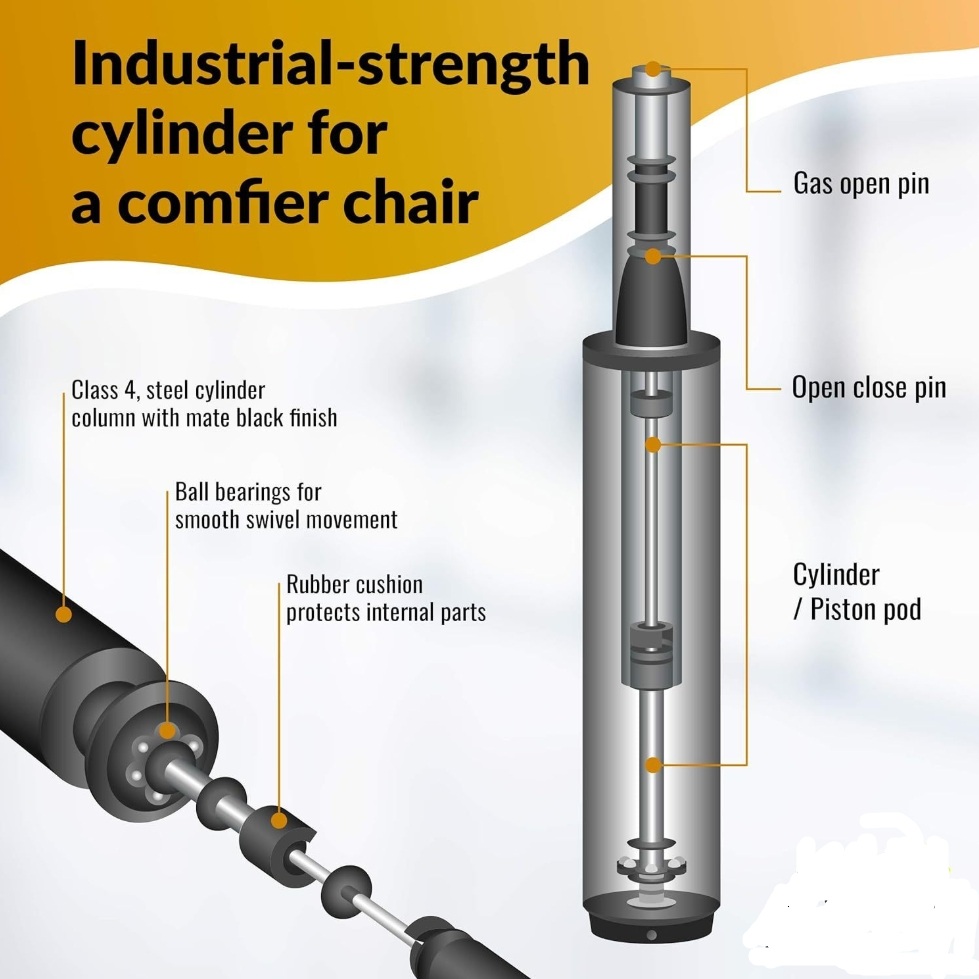
The outer cylinder uses Q235 steel and a reinforced construction designed for demanding seating applications.
The design is intended to provide reliable structural support under repeated use while reducing the risk of deformation associated with unsuitable lightweight replacements.
For high-load or bariatric applications, the correct cylinder must be selected according to:
- chair structure
- mechanism
- user load
- operating conditions
- required safety specifications
The cylinder should be evaluated as part of the complete chair system rather than as an isolated component.
Multi-Stage Sealing for Stable Height Control
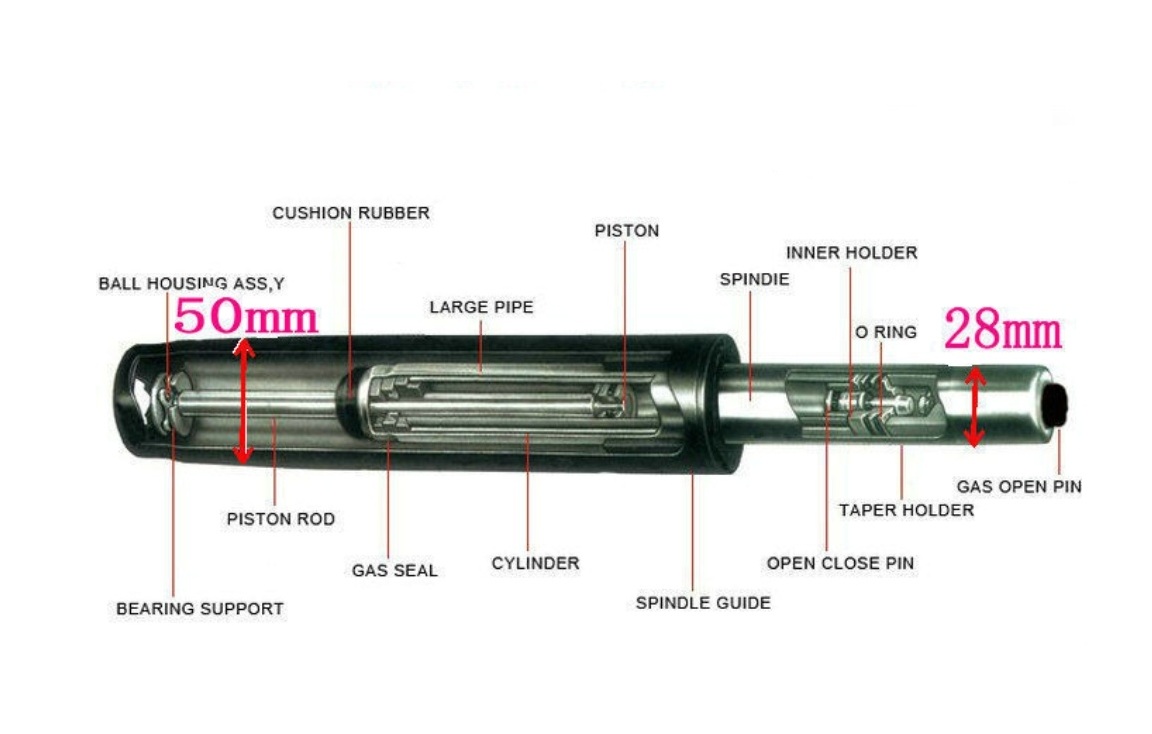
A gas cylinder depends on its internal pressure and sealing system to maintain seat height.
Failure can result from:
- seal degradation
- gas leakage
- valve-related problems
- internal wear
- corrosion
- repeated cycling
- unsuitable loading or operating conditions
The replacement design uses an industrial sealing system and controlled internal construction to support stable operation and reduce pressure-loss-related sinking.
Standard Taper Interface for Common Office Chairs
Compatibility depends on more than cylinder length.
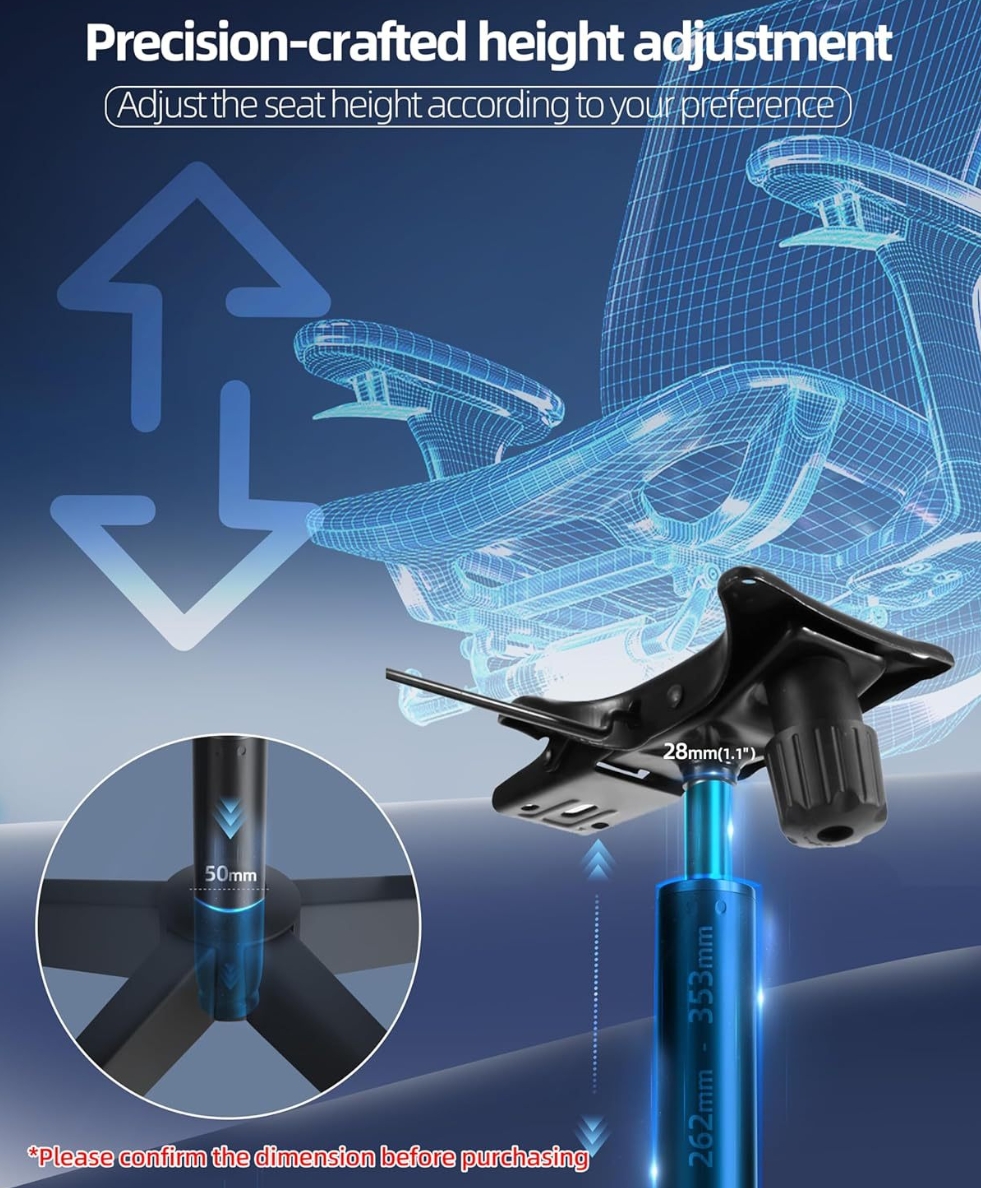
This configuration uses commonly used taper interfaces:
- Bottom taper: approximately 50 mm (2″)
- Top taper: approximately 28 mm (1.1″)
These dimensions are used across many office-chair applications, including seating from major commercial manufacturers.
Exact compatibility should be verified from the original chair and gas-cylinder specifications before larger-volume installation.
For older or unusual models, custom verification may be appropriate.
Variable Stroke Lengths for Different Seating Applications
Different chairs require different operating heights and travel ranges.
Available configurations can include:
- 100 mm stroke
- 120 mm stroke
- extended strokes up to approximately 260 mm for selected drafting or specialty seating applications
The correct stroke should be selected according to the required:
- minimum seat height
- maximum seat height
- mechanism geometry
- chair base
- user application
A longer stroke is not automatically a better solution.
Finishes for Different Applications
Available finishes may include:
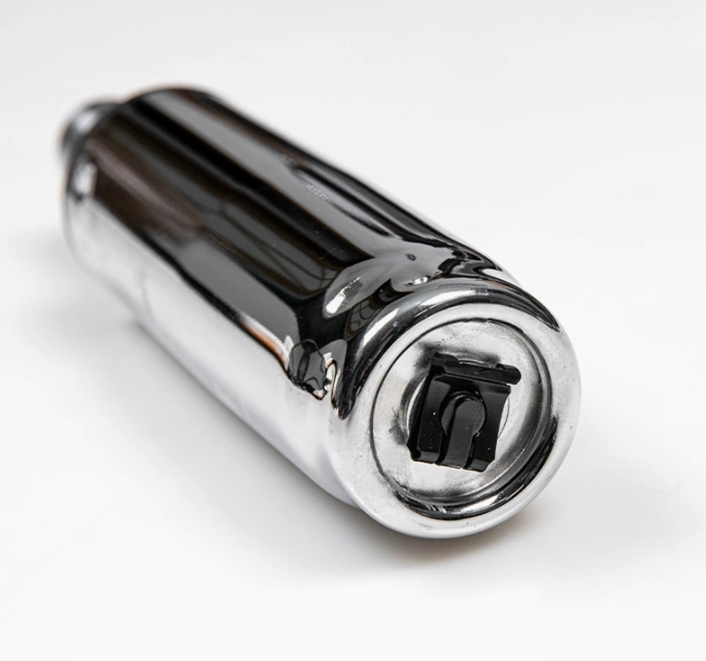
- polished chrome
- scratch-resistant matte black
Additional finishes can be discussed for B2B refurbishment or OEM programs where project requirements justify customization.
FAQ — Gas Lift Compatibility, Failure & Replacement
Why does an office chair gas lift fail?
A gas lift can fail for different reasons, including:
- seal degradation
- pressure loss or gas leakage
- internal wear
- corrosion
- valve-related problems
- repeated cycling
- excessive or uneven loading
- unsuitable operating conditions
The visible symptom may simply be:
The chair slowly sinks.
But the appropriate replacement depends on the actual failure condition and the specifications of the original system.
Why can a gas lift with the correct dimensions still be the wrong replacement?
A gas cylinder is not defined by one dimension.
Compatibility may involve:
- tube diameter
- bottom and top taper
- stroke length
- closed height
- extended height
- valve/mechanism interface
- load requirements
- chair base
- operating environment
A cylinder can physically fit the chair and still produce an unsuitable seat-height range or mechanical result.
For this reason:
Dimensional compatibility should be checked together with functional compatibility.
What should be checked before replacing a gas cylinder?
A useful specification record can include:
- Chair manufacturer and model
- Original gas-cylinder dimensions
- Bottom taper
- Top taper
- Closed height
- Extended height
- Stroke
- Mechanism interface
- Expected user load
- Intended operating environment
- Known failure symptoms
For an unknown or discontinued model, photographs, measurements, or a physical sample can be used to establish the required specifications.
When is a standard replacement the most practical solution?
A standard replacement is generally the simplest route when:
- the chair model is known;
- the interface is established;
- the required dimensions are clear;
- the operating conditions are understood;
- an appropriate cylinder specification already exists.
In these cases, introducing unnecessary customization can increase cost without creating additional value.
When is engineering verification worthwhile?
Additional verification becomes more valuable when:
- the chair is discontinued;
- the original cylinder is no longer available;
- the original specifications are missing;
- several similar chair models are involved;
- the project quantity is large;
- the consequences of an incorrect replacement are significant.
A practical verification path can include:
Existing part analysis → Specification reconstruction → Sample selection → Installation test → Functional verification → Larger-volume production
The objective is to move the highest compatibility risk into the sample-validation stage before a larger purchasing decision is made.
What if the original gas lift is no longer available?
There are several possible solution paths.
Standard Replacement
Use an existing cylinder with a verified compatible interface and operating range.
Functionally Compatible Alternative
Select a different cylinder that meets the required:
- dimensions
- stroke
- height range
- interface
- load requirements
Customized Specification
For unusual chairs, drafting stools, discontinued models, or OEM/refurbishment programs, a customized stroke or interface specification may be appropriate.
The objective is not necessarily to reproduce the original cylinder exactly.
The objective is:
Restore the required function with a compatible and economically practical specification.
How should gas-lift safety be evaluated for heavy-load applications?
A gas lift should not be selected based solely on a “heavy-duty” label.
The complete application should be considered:
- cylinder specification
- chair mechanism
- base
- fastening interfaces
- expected user load
- loading direction
- frequency of use
- operating environment
For commercial or bariatric seating, the selected cylinder should be appropriate for the complete assembly and supported by the relevant test or certification documentation where required.
Does a longer gas-lift stroke always provide a better result?
No.
A longer stroke can increase the available height range, but it can also change:
- minimum seat height
- maximum seat height
- mechanism position
- chair geometry
- operating clearance
The correct stroke is the one that matches the intended seating configuration.
How can gas-lift replacement cost be controlled?
The lowest unit price is not necessarily the lowest total cost.
The complete cost can include:
Cylinder Cost
Shipping
Installation Labor
Incorrect-Fit Risk
Rework
Warranty / Replacement
Inventory
Project Delay
A lower-cost cylinder may become more expensive if it creates repeated replacement or installation problems.
The useful comparison is:
Total replacement cost and risk over the intended service period.
How can a refurbishment company reduce gas-lift SKU complexity?
Instead of purchasing a different cylinder for every chair model, compatibility can be classified around:
- taper interface
- stroke
- closed height
- extended height
- load range
- application type
This makes it possible to identify common cylinder families and reduce unnecessary product variation.
For larger refurbishment operations, the most efficient configuration can be built around the actual chair population and replacement frequency.
Solution Guidance for Refurbishment Projects
The correct gas-lift solution depends on the application.
Small Repair
A verified standard cylinder may be the most economical choice.
Older or Discontinued Chair
Specification verification may prevent purchasing an incompatible replacement.
Multiple Chair Models
Grouping chairs by interface, stroke, and height range can reduce SKU complexity.
Large Refurbishment Program
A validated cylinder family, standard specifications, sample testing, and reusable compatibility data can improve purchasing consistency and reduce repeated engineering work.
OEM / Custom B2B Application
Custom stroke lengths, finishes, or other specifications can be considered where the project volume and application justify development.
Total Cost Matters More Than Cylinder Price
For refurbishment operations, a gas lift should be evaluated by the total economic result rather than the purchase price alone.
The relevant factors may include:
- component price
- shipping
- labor
- installation time
- fitment risk
- replacement frequency
- warranty exposure
- inventory complexity
- expected service life
The best solution is the one that provides the appropriate balance of:
compatibility + height range + load suitability + reliability + installation efficiency + total cost
The Principle Behind the Solution
The goal is not to recommend one gas cylinder for every chair.
Different chairs may require different:
- taper interfaces
- strokes
- heights
- load capacities
- operating characteristics
The objective is to identify the viable options, verify compatibility, compare their trade-offs, and select the level of customization appropriate for the project.
The solution may be:
- a standard replacement
- a different standard specification
- a customized stroke
- a customized interface
- or, in some cases, a different repair strategy altogether
We provide the engineering options and the information needed to evaluate them.
The final choice depends on the chair population, quantity, budget, required performance, and refurbishment objectives.