How Reverse Engineering, Custom Replacement Parts, and Refurbishment Are Creating the Future of Sustainable Commercial Seating
Executive Summary
For decades, the commercial office furniture industry has followed a simple and predictable lifecycle:
Design → Manufacture → Sell → Use → Replace
When an office chair reaches the end of its service life, the traditional solution has been straightforward:
Dispose of the old chair and purchase a new one.
However, this model is becoming increasingly inefficient.
Modern organizations are facing a combination of challenges:
- Rising furniture procurement costs
- Increasing sustainability requirements
- Supply chain uncertainty
- Limited availability of original replacement parts
- Large volumes of existing office furniture assets requiring maintenance
A critical shift is taking place:
Office chairs are no longer viewed only as products. They are becoming long-term assets that require lifecycle management.
This change is creating a new industrial category:
Office Chair Lifecycle Engineering
Office Chair Lifecycle Engineering focuses on extending the usable life of commercial seating through:
- Custom replacement components
- Reverse engineering
- Product refurbishment
- Small-batch manufacturing
- Engineering-based repair solutions
The fundamental question is changing.
The old question:
“How much does a new office chair cost?”
The new question:
“How much value can we recover from the office chairs we already own?”
This report explores why replacement engineering, custom component development, and refurbishment are becoming essential parts of the future commercial seating ecosystem.
1. The Hidden Economics of Office Chair Replacement
The Real Cost of Replacing Commercial Seating
When a company replaces an office chair, the purchase price is only one part of the total expense.
Many organizations underestimate the true cost of replacement because they calculate only the product cost.
A more accurate model is:
Total Replacement Cost = Product Cost + Logistics + Labor + Disposal + Operational Impact
Each factor contributes to the actual financial impact.
1.1 Product Acquisition Cost
The most visible expense is purchasing new chairs.
For example:
A company operates:
- 1,000 office chairs
- Average replacement chair cost: $400
The total furniture asset value:
1,000 × $400 = $400,000
This represents a significant investment.
1.2 Logistics and Installation Costs
Commercial seating replacement often involves:
- International transportation
- Warehousing
- Delivery coordination
- Assembly
- Facility management labor
Depending on location and project size, logistics and installation can add a significant percentage to the original purchase cost.
A $400 chair may represent a much higher real replacement expense after all operational costs are included.
1.3 Disposal and Environmental Costs
Old office chairs create additional challenges:
- Storage requirements
- Transportation for disposal
- Recycling fees
- Waste management
For large organizations, hundreds or thousands of discarded chairs create both financial and environmental pressure.

2. The Asset Value Hidden Inside Existing Office Chairs
A Broken Component Does Not Mean a Failed Chair
One of the biggest misconceptions in commercial furniture management is treating component failure as product failure.
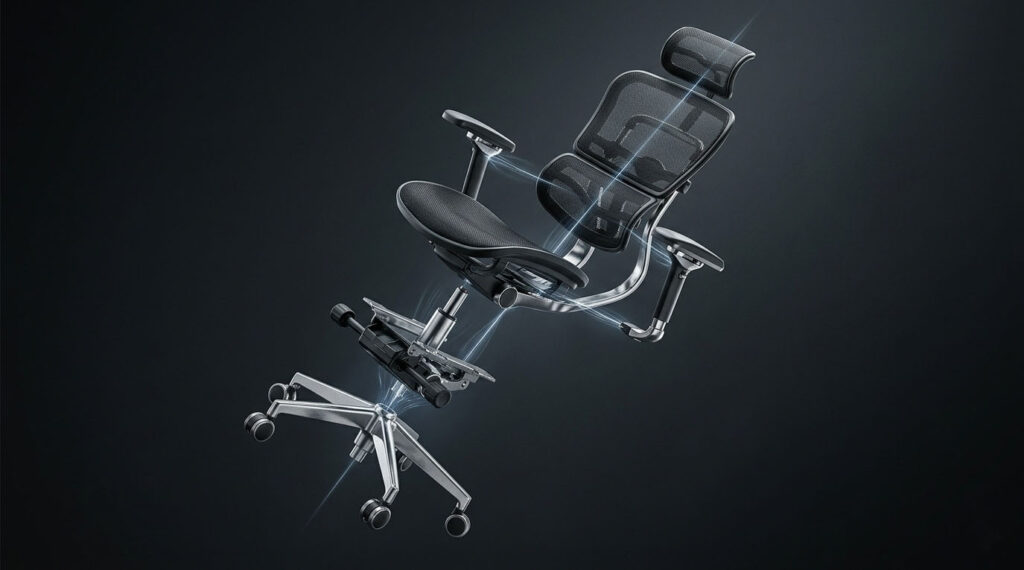
A typical high-quality office chair consists of many independent systems:
- Seating structure
- Base assembly
- Gas lift
- Casters
- Armrests
- Tilt mechanism
- Adjustment systems
In many cases, only one component fails while the majority of the chair remains fully functional.
The economic mistake is replacing an entire chair because of one damaged part.
The Component Failure Principle
A useful way to evaluate office furniture assets is:
Remaining Chair Value = Functional Structure + Replaceable Component Potential + Refurbishment Opportunity
A chair that requires a $50 replacement component may still retain hundreds of dollars of usable value.
3. The Financial Advantage of Replacement Engineering
A Cost Comparison Model
Consider a company with:
- 1,000 commercial office chairs
- Average chair replacement cost: $400
- 15% requiring repair within a maintenance cycle
Affected chairs:
1,000 × 15% = 150 chairs
Traditional Replacement Approach
Replacing all affected chairs:
150 × $400= $60,000
Additional costs may include:
- Shipping
- Installation
- Disposal
Lifecycle Engineering Approach
Assume:
Average replacement component cost:$60
Engineering and refurbishment cost:$40
Total restoration cost per chair:$100
150 × $100= $15,000
Financial Result
Replacement cost:$60,000
Restoration cost:$15,000
Potential savings:$45,000
Cost reduction:75%
This simple calculation explains why more companies are reconsidering traditional replacement strategies.
The goal is not simply buying cheaper furniture.
The goal is maximizing the return from existing furniture investments.
4. The Rise of the Office Chair Refurbishment Economy
Why Repair and Restoration Are Becoming Strategic
The refurbishment market is expanding because several forces are changing how companies manage workplace assets.
4.1 Economic Pressure Is Changing Purchasing Behavior
During periods of economic uncertainty, organizations become more focused on:
- Reducing capital expenditure
- Extending asset lifespan
- Improving operational efficiency
Replacing an entire office environment represents a major financial commitment.
Repairing and refurbishing existing seating provides an alternative:
Lower cost + Lower waste + Faster recovery
4.2 Sustainability Is Becoming a Business Requirement
Sustainability is no longer only a marketing message.
Companies increasingly evaluate:
- Waste reduction
- Circular economy practices
- Product lifespan
- Environmental impact
Extending the life of existing office furniture directly supports these goals.
A refurbished chair avoids:
- New material consumption
- Additional manufacturing energy
- Premature disposal
4.3 The Secondary Office Furniture Market Requires Better Solutions
The used office furniture ecosystem depends on restoration capability.
Participants include:
- Office furniture refurbishers
- Used furniture dealers
- Liquidation companies
- Facility management providers
Their business model depends on transforming used products into valuable inventory.
However, one problem repeatedly limits this market:
The availability of replacement components.
5. The Replacement Parts Problem
Why Standard Parts Cannot Solve Every Office Chair Challenge
At first glance, office chair components may appear standardized.
For example:
- Wheels
- Gas lifts
- Armrests
- Bases
However, commercial seating products are highly diverse.
Different chair models often have different:
- Mounting dimensions
- Structural designs
- Mechanical interfaces
- Material requirements
- Load specifications
A visually similar component may still fail because it does not meet the engineering requirements.
The Reality of Discontinued Office Chairs
Many premium office chairs are designed for long-term use.
However, product availability does not always match product lifespan.
A chair may remain valuable for:
10–15 years
while original replacement components may only be available for:
3–7 years
This creates a significant gap.
The product is still usable.
The component is unavailable.
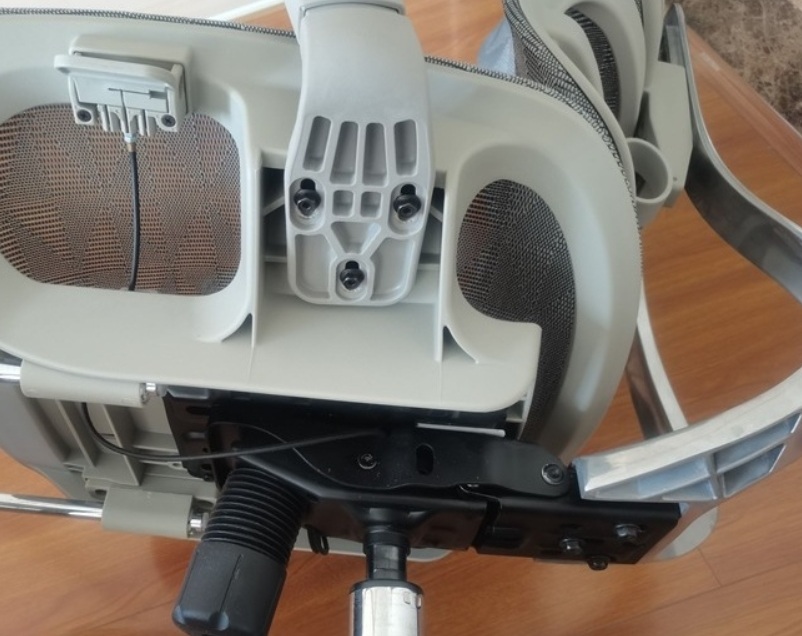
This is where replacement engineering becomes necessary.
Instead of asking:
“Can we buy this part?”
The better question becomes:
“Can we engineer a reliable replacement solution?”
6. From Replacement Parts to Replacement Engineering
The Evolution From Inventory-Based Supply to Solution-Based Manufacturing
Traditional replacement suppliers operate under an inventory model:
Customer:
“Do you have this component?”
Supplier:
“Yes or no.”
Replacement engineering operates differently.
Customer:
“This component no longer exists. Can you solve this problem?”
Engineering partner:
“We can analyze, redesign, and manufacture a replacement.”
This represents a fundamental change.
The value is no longer the physical component alone.
The value is:
- Engineering knowledge
- Problem-solving capability
- Manufacturing coordination
- Lifecycle extension
Why Standard Replacement Suppliers Cannot Solve the Modern Office Chair Problem
The Limitations of Traditional Parts Distribution
The traditional replacement parts industry was built around a simple assumption:
Demand can be predicted, and inventory can solve the problem.
This model works well for standardized components with stable demand.
Examples:
- Universal casters
- Standard gas lifts
- Common hardware
- Generic accessories
However, commercial office seating is moving into a more complex environment.
The problem is not that replacement parts are impossible to manufacture.
The problem is that thousands of chair models require thousands of different solutions.
7.1 The Complexity of Office Chair Components
A commercial office chair may contain dozens of individual components.
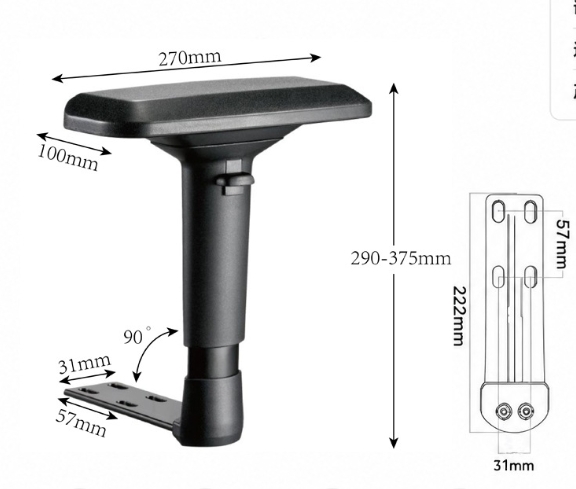
Even a single category such as armrests can involve:
- Fixed armrests
- Height-adjustable armrests
- 2D adjustable armrests
- 3D adjustable armrests
- 4D adjustable armrests
- Proprietary mounting systems
Two armrests may look almost identical but have completely different:
- Mounting distances
- Screw positions
- Load requirements
- Movement mechanisms
The Compatibility Challenge
A replacement component must satisfy multiple requirements simultaneously:
Compatibility = Geometry + Function + Strength + Manufacturing Feasibility
A part that satisfies only one requirement is not a successful replacement.
For example:
A plastic cover may fit visually but fail under repeated use.
A mechanism may support the chair but change the original sitting experience.
A mounting plate may attach correctly but fail under load.
7.2 Why Large Manufacturers Often Avoid This Market
At first glance, custom replacement parts seem like an attractive opportunity.
However, traditional manufacturers face several obstacles.
Low Volume Requirements
A refurbishment company may need:
- 20 pieces
- 50 pieces
- 200 pieces
For many factories, these quantities are too small.
Their business model depends on:
- Large orders
- Standardized production
- High-volume efficiency
High Engineering Input
Before production begins, every custom project requires:
- Design analysis
- Communication
- Technical drawings
- Prototype development
For factories focused on mass production, this additional engineering work may not be attractive.
High Product Variety
The replacement market does not have one standard product.
Every project may involve:
- Different brands
- Different models
- Different failure points
This makes inventory-based competition inefficient.
8. Reverse Engineering: The Missing Infrastructure Behind Replacement Solutions
What Is Reverse Engineering?
Reverse engineering is the process of understanding an existing product or component and recreating a manufacturable solution.
In the office furniture industry, it allows companies to restore components that are:
- Discontinued
- Unavailable
- No longer supported
- Not documented
Reverse engineering does not mean simply copying.
A professional approach involves:
- Understanding the original design purpose
- Identifying functional requirements
- Improving weaknesses
- Selecting appropriate manufacturing methods

The Reverse Engineering Workflow
Step 1: Product Identification and Technical Evaluation
The first stage is understanding the problem.
Information may include:
- Chair photos
- Component photos
- Existing samples
- Measurements
- Model information
- Usage requirements
The goal is to answer:
- What function does this component perform?
- How does it connect with the chair?
- What forces does it experience?
- Why did the original component fail?
Step 2: Dimensional Measurement and Data Collection
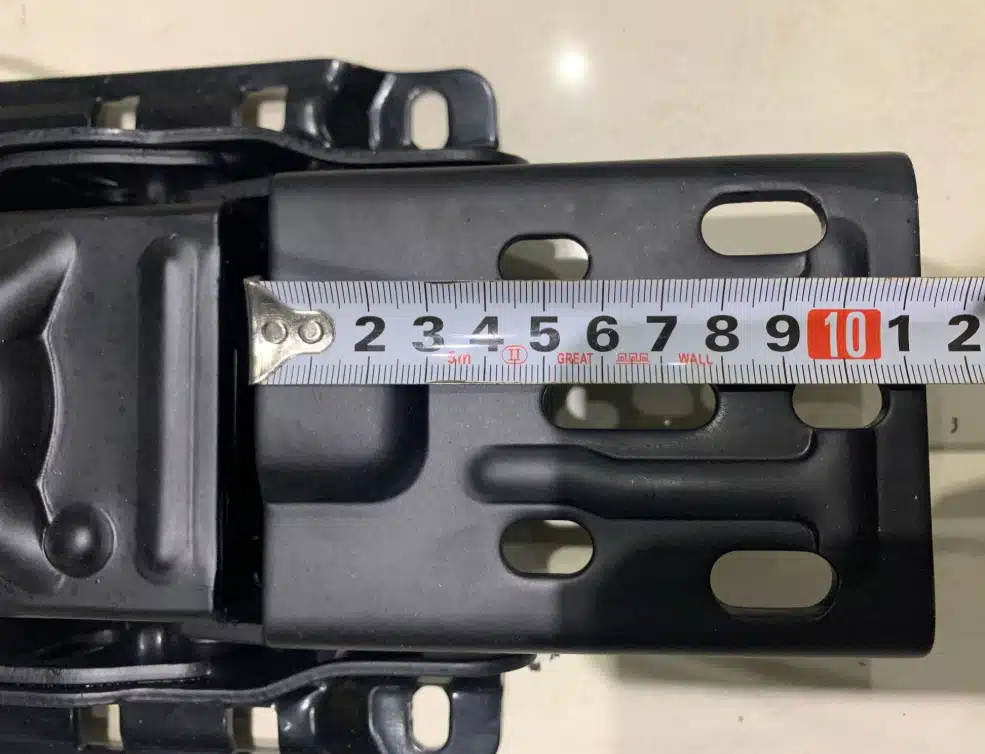
When original drawings are unavailable, physical analysis becomes essential.
Measurements may include:
- Overall dimensions
- Hole locations
- Connection points
- Material thickness
- Moving ranges
- Load-bearing areas
Precision is critical because small dimensional errors can affect:
- Installation
- Stability
- User experience
Step 3: CAD Reconstruction and 3D Modeling
The physical component is converted into a digital engineering model.
The process includes:
- 3D modeling
- Surface reconstruction
- Structural adjustment
- Manufacturing preparation
The purpose is creating a production-ready design.
A professional CAD model allows:
- Prototype creation
- Design modification
- Manufacturing communication
- Future reproduction
Step 4: Engineering Optimization
A replacement component does not always need to be identical to the original.
Sometimes the original design contains weaknesses.
Engineering optimization may improve:
- Material strength
- Structural support
- Connection reliability
- Manufacturing efficiency
Example:
An old armrest bracket repeatedly fails because of stress concentration.
A redesigned solution may include:
- Increased reinforcement
- Improved geometry
- Stronger material selection
The goal:
A better replacement, not simply an identical replacement.
9. Selecting the Right Manufacturing Method
Custom Replacement Manufacturing Requires Flexibility
Different components require different production strategies.
The wrong manufacturing process can create unnecessary costs or poor performance.
9.1 CNC Machining
Best for:
- Low-volume production
- Metal components
- Precision adapters
- Prototype parts
Advantages:
- High accuracy
- Flexible production
- No expensive tooling
Suitable quantity:
1–500 pieces

9.2 Injection Molding
Best for:
- Plastic armrests
- Covers
- Housing components
Advantages:
- High consistency
- Lower unit cost at larger volumes
Considerations:
- Mold investment
- Longer preparation time
Suitable quantity:
500+ pieces
9.3 Sheet Metal Fabrication
Best for:
- Brackets
- Support plates
- Structural adapters
Advantages:
- Strong mechanical performance
- Suitable for customized metal structures

9.4 3D Printing and Prototype Manufacturing
Best for:
- Early validation
- Fit testing
- Design verification
Advantages:
- Fast iteration
- Low initial cost
Manufacturing Method Selection Matrix
| Project Requirement | Recommended Method |
|---|---|
| 1–10 prototype pieces | 3D Printing / CNC |
| 10–500 replacement units | CNC / Fabrication |
| 500+ production units | Injection Molding / Mass Manufacturing |
| Complex hybrid components | Multi-process manufacturing |
10. Quality Validation: Turning a Design Into a Reliable Solution
A replacement component is successful only when it performs in real-world conditions.
Validation should evaluate:
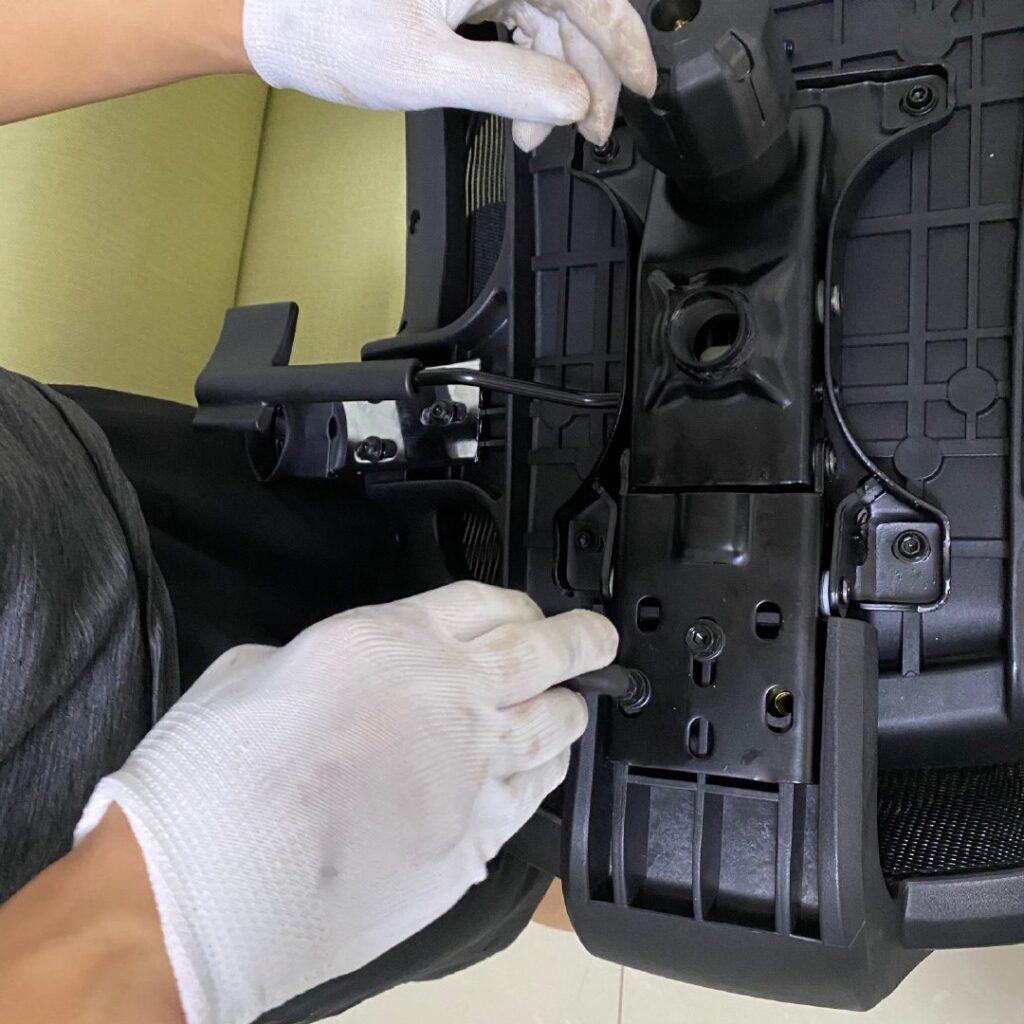
Fit Testing
Does the component correctly install on the original chair?
Testing includes:
- Connection accuracy
- Alignment
- Assembly process
Functional Testing
Does the replacement restore the original function?
Examples:
- Adjustment movement
- Locking operation
- Rotation
- Height adjustment
Load and Durability Testing
Commercial office chairs experience repeated stress.
Important factors include:
- Weight load
- Daily usage cycles
- Mechanical movement
A replacement solution must consider long-term reliability.

11. Case Study 1:
Restoring a Discontinued Office Chair Mechanism for a Refurbishment Company
Customer Background
A European office furniture refurbishment company specialized in restoring premium used office chairs.
The company had acquired approximately:
300 units of high-quality office chairs
The chair frames and upholstery were still in good condition.
However, one critical component created a major problem:
The original tilt mechanism was discontinued.
The original manufacturer no longer supplied replacement units.
The Business Problem
Without a replacement mechanism:
The chairs could not be restored.
The company faced two options:
Option 1:
Sell the chairs as incomplete products.
Estimated resale value:
$50–$80 per chair
Option 2:
Develop a replacement solution.
Potential refurbished value:
$300–$400 per chair
Engineering Solution
The development process included:
1. Physical Sample Analysis
The original mechanism was inspected.
Measurements were collected:
- Mounting dimensions
- Connection points
- Movement range
- Structural requirements
2. Reverse Engineering
A new digital model was created.
The design focused on:
- Compatibility
- Strength
- Manufacturing feasibility
3. Prototype Development
Sample units were produced and tested.
Adjustments were made to ensure:
- Correct installation
- Proper movement
- Stable operation
4. Small-Batch Production
The first production run:
100 replacement mechanisms
Business Impact
Without engineering support:
300 chairs risked losing significant value.
With replacement development:
The customer restored the ability to refurbish and resell the chairs.
Estimated Value Recovery
Assuming:
Refurbished chair value:
$350
100 restored chairs:
100 × $350=$35,000 recovered inventory value
The customer was not simply purchasing mechanisms.
They were purchasing:
the ability to recover previously unusable assets.
Key Lesson From This Case
The value of replacement engineering is not measured by the price of a component.
It is measured by the value it unlocks.
12. Case Study 2:
Creating a Custom Armrest Solution for Legacy Office Seating
Customer Background
A North American used office furniture distributor specialized in acquiring, refurbishing, and reselling commercial seating from corporate office liquidations.
The company had purchased a large batch of premium office chairs from a corporate relocation project.
Inventory:
500 office chairs
The chair frames, cushions, and mechanical systems were still functional.
However, one component created a major obstacle:
The original armrest assembly was no longer available.
The Business Challenge
The distributor identified that approximately:
40% of the chairs required armrest replacement.
Affected quantity:
500 × 40%=200 chairs requiring new armrest solutions
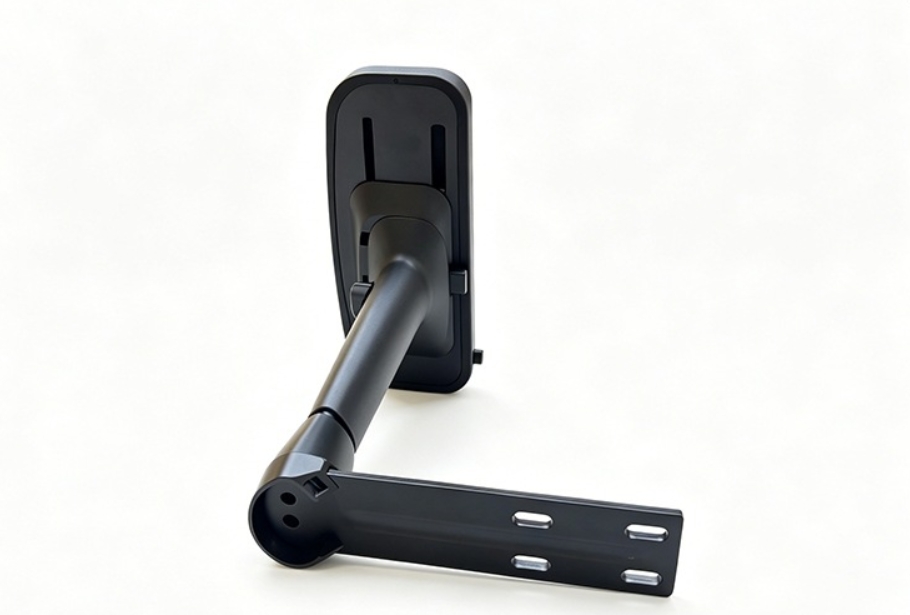
The company contacted traditional replacement suppliers.
The result:
- Original parts unavailable
- Universal alternatives did not fit
- Existing aftermarket parts affected chair appearance and function
The business faced a common refurbishment problem:
The chairs had market value, but one missing component prevented restoration.
The Engineering Approach
Instead of searching indefinitely for discontinued inventory, a custom replacement solution was developed.
Phase 1: Component Analysis
The original armrest was analyzed for:
- Mounting structure
- Adjustment movement
- Connection dimensions
- Load requirements
Phase 2: Reverse Engineering
The component was recreated digitally.
The design process focused on:
- Maintaining original compatibility
- Improving structural reliability
- Simplifying manufacturing
Phase 3: Manufacturing Development
The final solution included:
- Custom bracket design
- Reinforced structural areas
- Compatible mounting interface
- Production-ready specifications
Business Impact
Without replacement armrests:
200 chairs would have limited resale potential.
Assuming each refurbished chair could generate:
$250 resale value
Potential recovered inventory value:
200 × $250=$50,000
Development investment:
Approximately:
$3,000
Return on Investment

The customer did not purchase 200 armrests.
The customer purchased:
the ability to transform unusable inventory into profitable inventory.
Key Lesson
In refurbishment markets, the value of a replacement component is not determined by its manufacturing cost.
Its value is determined by:
The economic opportunity it restores.
13. The New Business Model:
From Selling Parts to Selling Solutions
The Industrial Supply Chain Is Changing
Traditional manufacturing competition has historically focused on:
- Production capacity
- Unit cost
- Inventory availability
However, complex replacement markets require a different capability.
The winning company is not necessarily the one with the largest factory.
It is the company that can connect:
Customer Problem → Engineering Solution → Manufacturing Capability → Business Value

The Difference Between a Supplier and an Engineering Partner
Traditional Supplier Model
Customer:
“I need this exact part.”
Supplier:
“Here is our available catalog.”
Engineering Partner Model
Customer:
“This part no longer exists. Can you solve this problem?”
Engineering partner:
“We will analyze the component, develop a solution, and manufacture a replacement.”
The second model creates significantly higher value because it solves problems that standard suppliers cannot address.
14. Office Seating Lifecycle Management:
The Future of Commercial Furniture
A New Way to Think About Office Furniture Assets
The future of office seating is not only about producing new chairs.
It is about managing the entire product lifecycle.
Traditional Furniture Lifecycle
Old Model:
Manufacture
↓
Sell
↓
Use
↓
Discard
↓
Replace
Lifecycle Engineering Model:
Manufacture
↓
Use
↓
Maintain
↓
Repair
↓
Replace Components
↓
Refurbish
↓
Reuse
↓
Extend Value
This represents a fundamental change in how companies think about commercial furniture.
15. The Four Principles of Office Seating Lifecycle Engineering
Principle 1:
Extend Product Life Before Replacing Products
A chair should not become obsolete because one component fails.
Engineering solutions allow businesses to preserve existing investments.
Principle 2:
Replace Components, Not Entire Assets
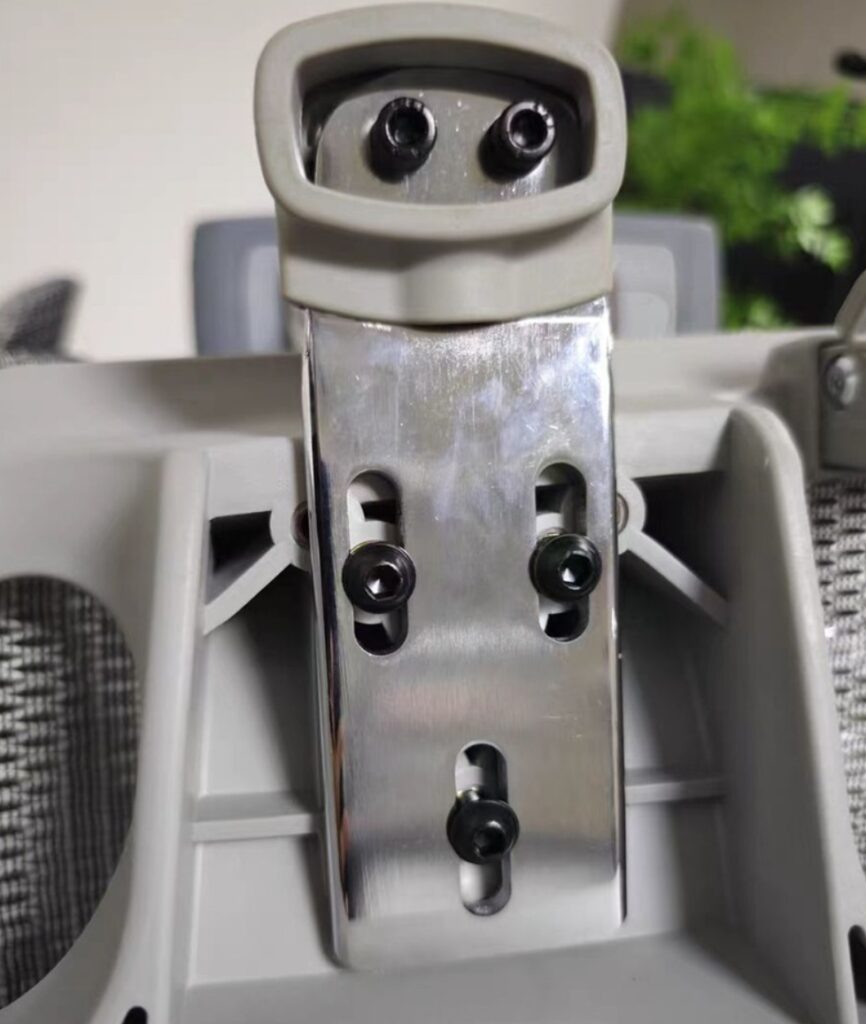
Many failures are component-level problems.
Replacing a $50–$100 component can preserve hundreds of dollars of remaining product value.
Principle 3:
Design for Long-Term Maintainability
Future furniture systems should consider:
- Repairability
- Component availability
- Modular design
- Replacement opportunities
Principle 4:
Manufacturing Must Become More Flexible
The future requires manufacturing systems capable of supporting:
- Low-volume production
- Customized solutions
- Legacy product support
16. Why Reverse Engineering Will Become a Competitive Advantage
The Missing Capability in the Furniture Industry
Many companies can manufacture.
Many companies can trade.
But fewer companies can do both:
Understand a complex product problem and convert it into a manufacturable solution.
Reverse engineering creates several advantages:
1. It Solves Legacy Product Problems
Old products often lack:
- Drawings
- Documentation
- Supplier support
Reverse engineering restores access.
2. It Reduces Dependency on Original Manufacturers
Businesses no longer need to depend entirely on OEM availability.
3. It Creates New Market Opportunities
Products previously considered obsolete can return to circulation.
4. It Supports Sustainable Business Models
Longer product lifecycles reduce unnecessary waste.

17. The Future Competitive Landscape
The Next Generation of Furniture Suppliers Will Not Only Sell Products
The future will belong to companies that provide:
Knowledge
Understanding complex customer problems.
Engineering
Creating practical solutions.
Manufacturing Integration
Connecting designs with production capability.
Lifecycle Support
Helping products remain valuable over time.
The industry is moving from:
Product Supply
toward:
Solution Engineering
18. Zechu’s Role in the Office Seating Lifecycle Ecosystem
Engineering Support for Commercial Seating Challenges
Zechu focuses on helping businesses solve difficult replacement and development problems in office seating.
The capability is built around three key areas:
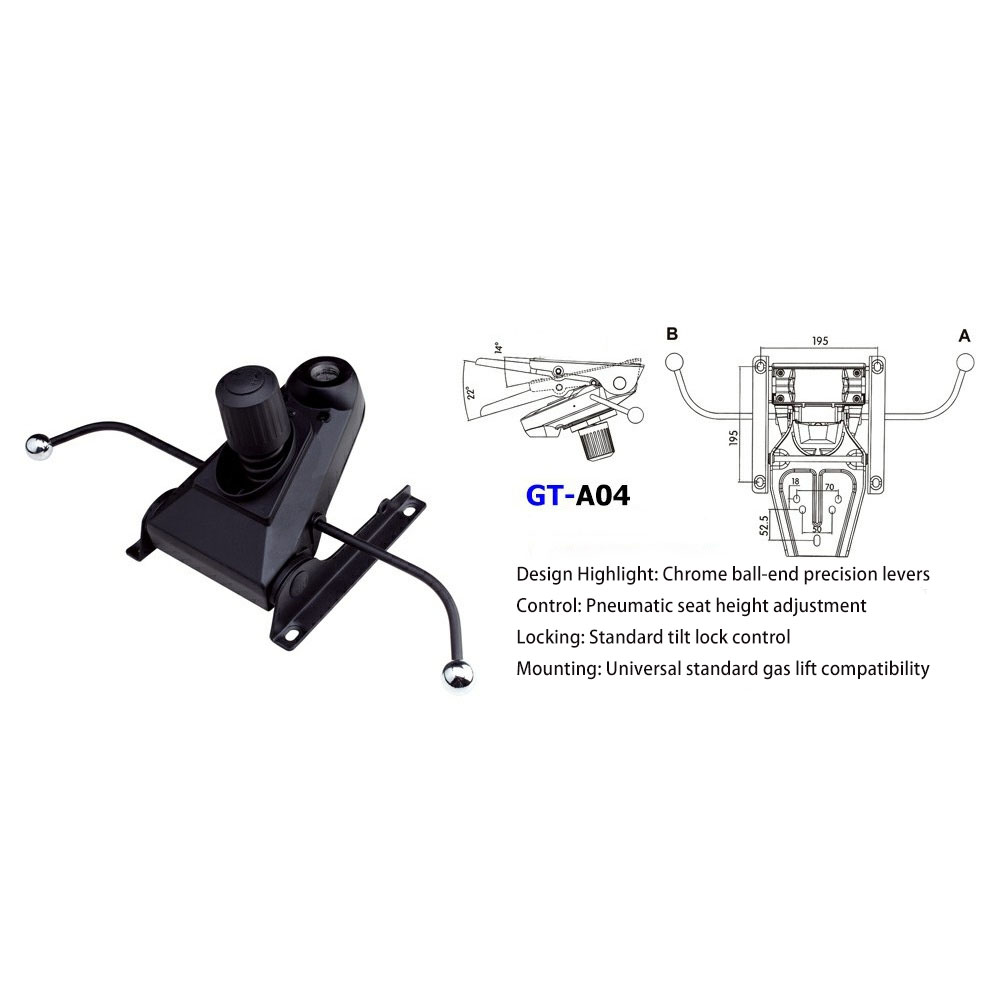
1. Custom Replacement Component Development
Supporting components including:
- Chair mechanisms
- Armrests
- Adapter plates
- Bases
- Structural components
- Custom assemblies
2. Reverse Engineering Services
Transforming unavailable components into manufacturable solutions through:
- Product analysis
- Dimensional reconstruction
- CAD development
- Prototype verification
3. Flexible Manufacturing Integration
Connecting engineering solutions with suitable manufacturing processes:
- CNC machining
- Injection molding
- Metal fabrication
- Assembly
- Surface treatment

19. A New Definition of Value in Office Furniture
The value of an office chair is no longer limited to its original purchase price.
A more accurate perspective is:
Total Lifecycle Value
=
Original Product Value
Maintenance Potential
Replacement Capability
Refurbishment Opportunity
Secondary Market Value
A chair that remains functional creates value for years.
A chair discarded because of one unavailable component represents lost economic opportunity.
20. Conclusion:
The Future of Office Seating Is Lifecycle Engineering
The commercial furniture industry is entering a new era.
The question is no longer only:
“How can we manufacture more chairs?”
The more important question is:
“How can we maximize the value of the chairs already in use?”
As businesses seek:
- Lower operating costs
- More sustainable solutions
- Longer asset lifecycles
- Greater flexibility
replacement engineering and refurbishment will become increasingly important.
The companies that succeed in the future will not simply provide products.
They will provide solutions.
They will combine:
- Engineering knowledge
- Manufacturing capability
- Problem-solving ability
- Lifecycle thinking
A damaged office chair should not automatically become waste.
A discontinued component should not automatically end a product’s useful life.
Through reverse engineering, custom replacement parts, and flexible manufacturing, existing seating assets can continue creating value.
About Zechu
Zechu provides engineering-driven solutions for commercial office seating challenges.
Our capabilities include:
- Custom replacement parts development
- Reverse engineering
- Office chair refurbishment support
- Low-volume manufacturing
- Custom component development
We help businesses restore, improve, and extend the lifecycle of commercial seating products.
Have a Discontinued or Unavailable Office Chair Component?
Share:
- Product photos
- Existing samples
- Chair model information
- Technical requirements
Our team can evaluate whether a replacement engineering solution can be developed.