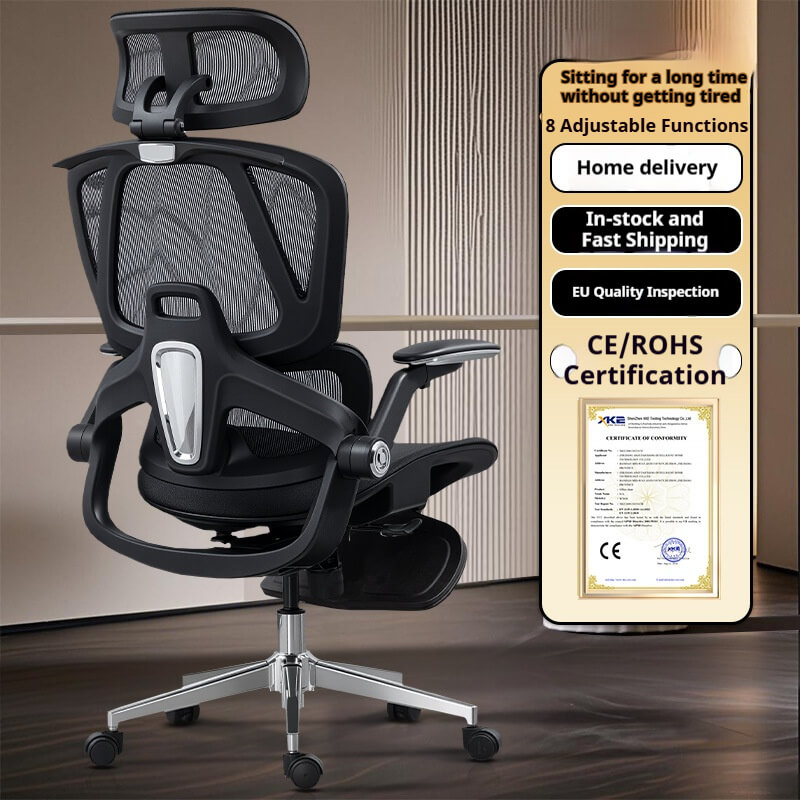
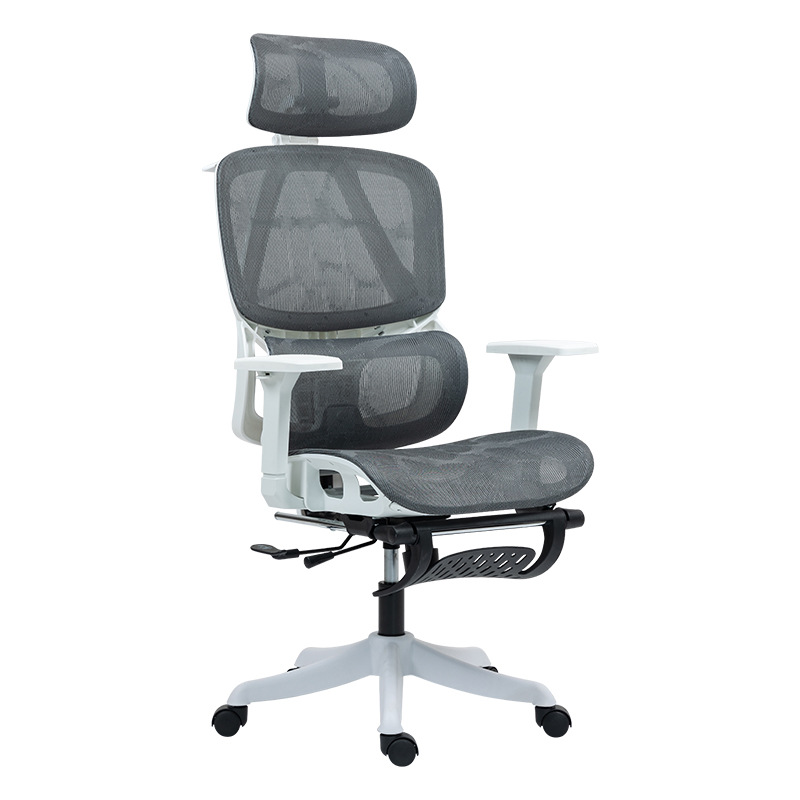
A used office chair can often be cleaned, repaired, and resold for a healthy profit. Yet many refurbishment projects never reach the showroom floor for one simple reason:
A missing or incompatible replacement component.
For office furniture refurbishers, liquidators, and used furniture dealers, sourcing replacement chair parts has become one of the most overlooked challenges in the industry. A chair frame may still be structurally sound, but a failed tilt mechanism, broken armrest, damaged caster, or incompatible mounting pattern can turn a profitable asset into unsellable inventory.
The problem is rarely the chair itself.
The problem is finding the right part.
The Hidden Cost of Unsellable Chairs
Most refurbishment businesses focus on acquisition costs, labor costs, transportation, and warehouse space.
However, many overlook the cost of partially completed inventory.
Imagine acquiring a batch of 100 used office chairs.
- 80 chairs require only cleaning.
- 15 chairs need minor repairs.
- 5 chairs need replacement components.
Those five chairs may represent only 5% of the inventory, but they often consume a disproportionate amount of time and labor.
Technicians search for discontinued parts.
Purchasing teams contact multiple suppliers.
Warehouse staff move incomplete inventory from one location to another.
Weeks later, the chairs are still sitting in storage generating no revenue.
The longer a chair remains unsold, the more it costs.

Why Standard Replacement Parts Often Fail
Many suppliers advertise “universal” office chair components.
In reality, the office furniture industry is anything but universal.
Different manufacturers use different:
- Mounting hole patterns
- Plate dimensions
- Control wire locations
- Gas lift specifications
- Armrest interfaces
- Seat structures
A mechanism that appears identical on paper may be impossible to install without modification.
For refurbishers handling mixed inventories from brands such as Steelcase, Herman Miller, Haworth, HON, Allsteel, and others, compatibility becomes a daily challenge.
A single mismatch can turn a 20-minute repair into a multi-hour project.
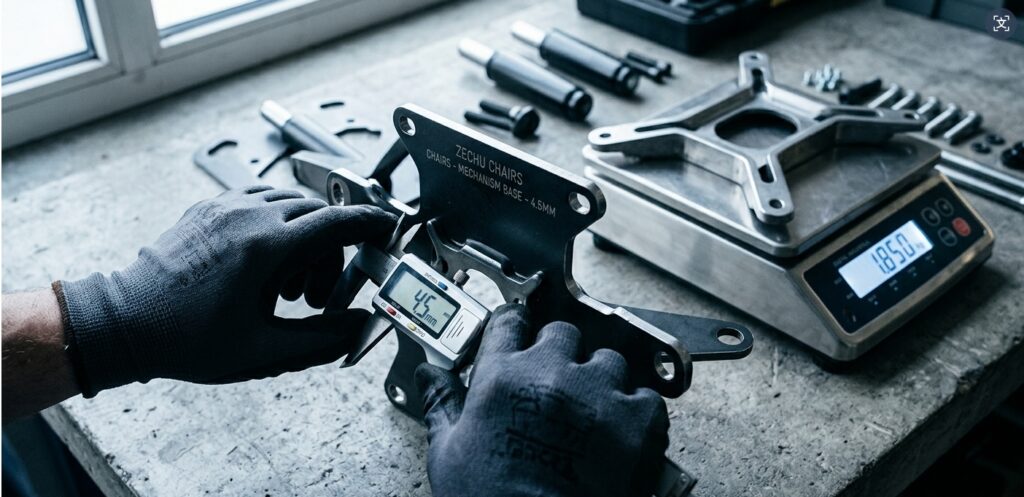
The Discontinued Parts Problem
One of the biggest issues facing refurbishers today is product obsolescence.
Office chairs often remain in service for 10–20 years.
Replacement components do not.
Manufacturers regularly discontinue:
- Mechanisms
- Armrest assemblies
- Seat sliders
- Specialty brackets
- Legacy hardware
When the original part is no longer available, refurbishers face three choices:
- Scrap the chair.
- Modify the chair.
- Develop a compatible replacement solution.
The first option wastes inventory.
The second increases labor costs and warranty risk.
The third is often the most profitable, yet many businesses do not realize it is possible.
Why Compatibility Matters More Than Price
Many buyers focus exclusively on unit cost.
A $5 savings on a component may seem attractive.
However, if technicians spend an additional 30 minutes adapting that component, the labor cost quickly exceeds the savings.
Successful refurbishment operations evaluate components based on:
- Installation time
- Compatibility
- Reliability
- Repeatability
- Warranty performance
The cheapest part is rarely the lowest-cost solution.
The best solution is the one that restores a chair to sellable condition quickly and consistently.
The Rise of Custom Replacement Components
As more furniture enters the circular economy, demand for custom replacement components continues to grow.
Instead of searching endlessly for discontinued parts, many refurbishers are beginning to work with manufacturers capable of developing compatible alternatives.
These solutions may include:
- Custom tilt mechanisms
- Adapter plates
- Modified mounting interfaces
- Replacement armrest assemblies
- Specialty gas lifts
- Custom brackets and hardware
In many cases, a compatible replacement can restore inventory that would otherwise be written off.
For large refurbishment operations, the financial impact can be substantial.

How Leading Refurbishers Reduce Downtime
The most efficient refurbishment companies follow a simple principle:
Standardize the repair process whenever possible.
Rather than treating every broken chair as a unique problem, they develop repeatable solutions for common failures.
This approach reduces:
- Technician labor
- Inventory holding time
- Purchasing complexity
- Warranty claims
Most importantly, it increases the number of chairs that can be returned to market.
The Future of Office Chair Refurbishment
The office furniture industry is changing.
Companies are increasingly focused on:
- Sustainability
- Asset recovery
- Circular economy initiatives
- Cost-effective workspace solutions
As a result, the volume of pre-owned office furniture entering the market continues to grow.
For refurbishment businesses, this creates significant opportunities.
But success will depend on more than finding inventory.
It will depend on how efficiently that inventory can be repaired, restored, and resold.
And in many cases, that process starts with finding the right replacement component.
Conclusion
Most unsellable office chairs are not truly unusable.
They are simply waiting for the right part.
For office furniture refurbishers, liquidators, and used furniture dealers, sourcing compatible replacement components can mean the difference between scrapped inventory and profitable resale.
Businesses that develop reliable solutions for discontinued, damaged, or incompatible components will be better positioned to increase recovery rates, reduce labor costs, and maximize the value of every chair that enters their warehouse.
Need Help With Difficult-to-Source Chair Components?
If you are dealing with discontinued mechanisms, non-standard mounting patterns, or hard-to-find replacement parts, we can help.