This technical briefing is designed for procurement officers, facility managers, and furniture importers who are tired of the “Foshan marketing script.” If you are looking for the cheapest unit price, this is not for you. If you are looking to mitigate the catastrophic financial and legal risks of sub-standard seating, read on.
1. The Hook: The $20 Saving That Costs You $200,000
In the world of BIFMA standard office chair China procurement, the most expensive mistake is the “spec-sheet lie.” Most buyers celebrate saving $15 per unit on a 2,000-piece order, only to face a 15% failure rate within 18 months.
When a non-compliant gas lift fails or a base snaps under a 250lb user in a New York or London office, the “savings” evaporate instantly. Between reverse logistics, replacement costs, and potential personal injury litigation, a “cheap” chair becomes a toxic asset. In the B2B space, a chair isn’t just furniture; it’s a liability shield. If it doesn’t meet ANSI/BIFMA X5.1, you are the one holding the shield when it breaks.
2. The Insider Truth: How the “BIFMA” Label is Faked in China
As your “internal line” in the Shunde and Foshan clusters, we need to address the industry’s dark secret: A “BIFMA Report” does not guarantee a BIFMA chair.
The “Golden Sample” Scam
Many factories send a “Golden Sample”—over-engineered and hand-assembled—to third-party labs like SGS or TUV. Once they receive the passing report for a BIFMA standard office chair from China, the mass production begins with “material optimization” (cost-cutting).
The Component Swap
- The Base: A BIFMA-compliant nylon base requires virgin PA66 material with 30% glass fiber. To cut costs, factories mix in “recycled regrind.” It looks identical but fails the static load test (2,500 lbs) after 12 months of UV exposure.
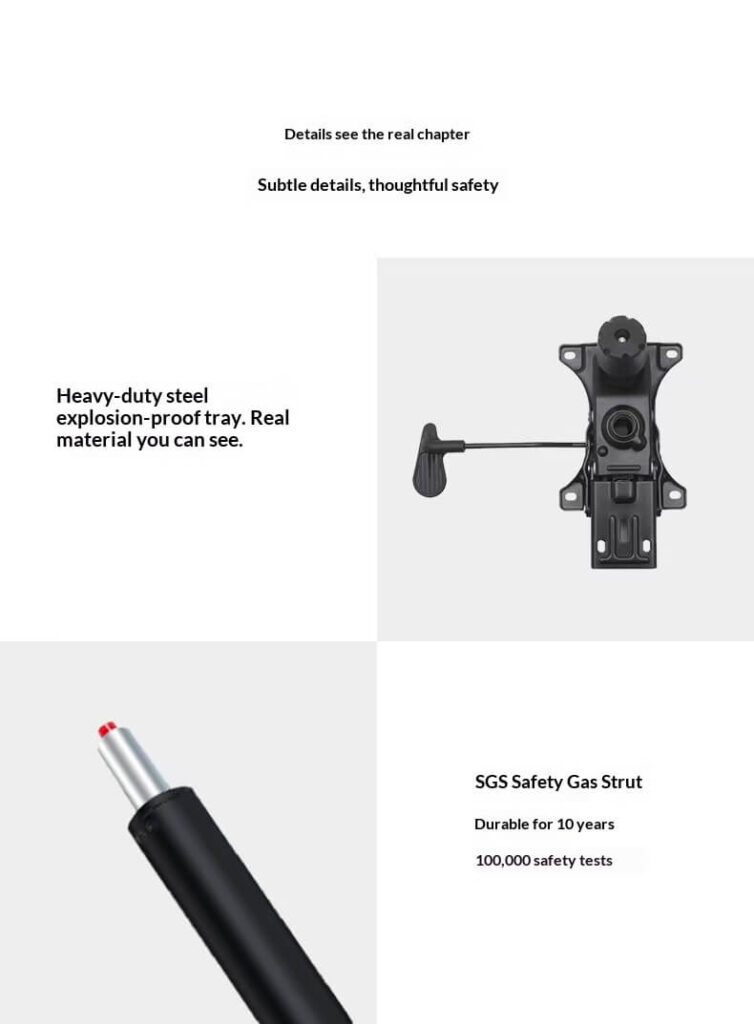
- The Gas Lift: Class 4 cylinders are required for heavy-duty use. Shady suppliers swap these for Class 2 cylinders with thinner walls. They might pass a 1-minute demo, but they won’t survive the 100,000-cycle drop test.
- The Foam: BIFMA looks at durability. Cheap “High Density” foam is often just loaded with calcium carbonate (stone powder) to increase weight and trick the buyer. It loses 40% of its loft in six months.
3. The ROI & Risk Breakdown: Calculating Total Cost of Ownership (TCO)
Stop looking at the FOB price. Start looking at the 5-year TCO. Below is a cold comparison between a generic “Market Grade” chair and a genuine BIFMA standard office chair from China.
| Cost Factor | Generic “Market Grade” Chair | Genuine BIFMA X5.1 Chair |
| Initial FOB Price | $45.00 | $85.00 |
| Annual Failure Rate | 8% – 12% | < 0.5% |
| 5-Year Replacement Cost | $135.00 (Assumes 3 chairs) | $85.00 (1 chair) |
| Shipping & Logistics (per unit) | $25.00 (x3 replacements) | $25.00 (Single shipment) |
| Brand/Legal Risk Weight | High (Structural failure risk) | Low (Tested safety margins) |
| Total 5-Year Cost (TCO) | $210.00+ | $110.00 |
The Reality: Choosing the BIFMA-certified path reduces your long-term capital expenditure by nearly 47%. In high-volume procurement, the “expensive” chair is actually the only way to save money.
4. The Proof: Engineering-Led Supply Chain Control
We do not ask for trust; we provide data. To ensure a BIFMA standard office chair in China actually meets the North American standard, our “defensive” protocol involves three non-negotiable pillars:
- On-Site Component Batch Testing: We don’t just trust the SGS report on the wall. We use portable Shore Durometers to check foam density and tension testers on random casters pulled from the assembly line—not the showroom.
- The 10% Destruction Rule: We pull 1% of every 1,000-unit batch and put them through a “backrest durability” cycle (120,000 repetitions) in the factory’s internal lab before the container is sealed.
- Material Traceability: We verify the invoices of the raw material suppliers. If a factory claims “DuPont Nylon” but can’t show the purchase order for the resin, the chair isn’t BIFMA compliant. Period.
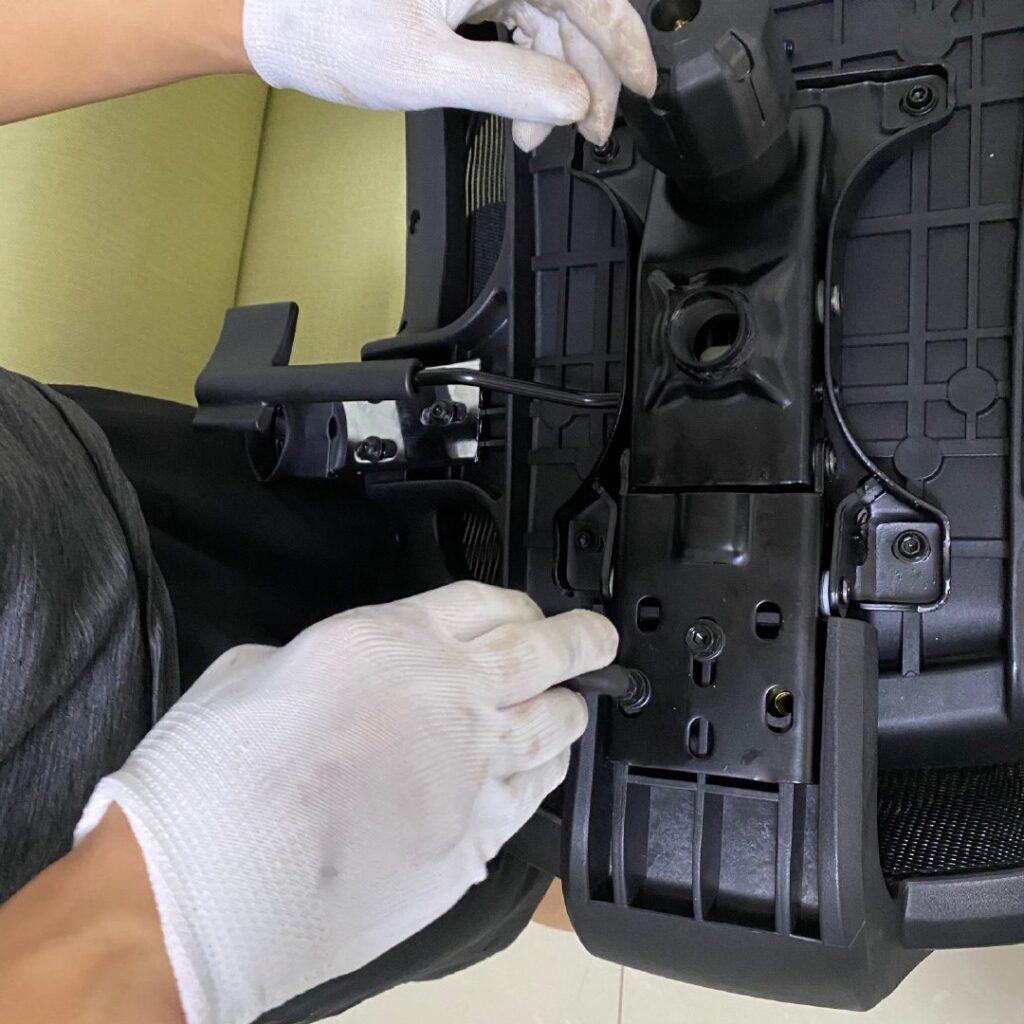
5. FAQ (Frequently Asked Questions)
What is the most critical BIFMA test for office chairs?
The ANSI/BIFMA X5.1 includes several, but the “Backrest Durability” and “Base Static Load” tests are where most Chinese export chairs fail. A compliant chair must withstand a functional load of 200 lbs and a proof load of 300 lbs on the backrest without structural compromise.
Can a $50 chair truly be BIFMA compliant?
Highly unlikely. Between the cost of certified Class 4 gas lifts, high-purity aluminum or nylon bases, and fire-retardant fabric/foam, the raw material cost alone often exceeds $50. Any quote lower than this for a BIFMA standard office chair in China is a red flag for “material substitution.”
How do I verify a factory’s BIFMA claim?
Check the date and the specific model name on the report. Many factories use one report for 50 different chair designs. Ensure the report is less than 2 years old and issued by a CNAS or ILAC-accredited laboratory.
Soft CTA: Audit Your Supply Chain
If you are currently importing chairs and aren’t sure if your “BIFMA” certs are worth the paper they’re printed on, we can help.
Don’t buy from us yet. Instead, let us perform a Document & Specification Audit on your current supplier’s last three test reports. We will identify the technical gaps and tell you exactly where your risk lies.
Would you like us to review your current supplier’s BIFMA test reports for discrepancies?