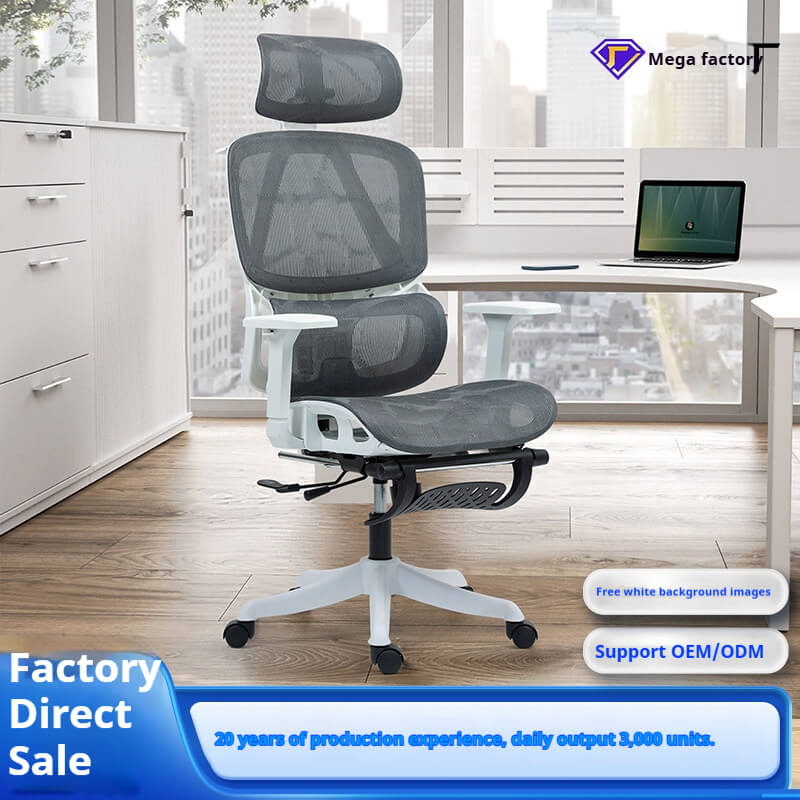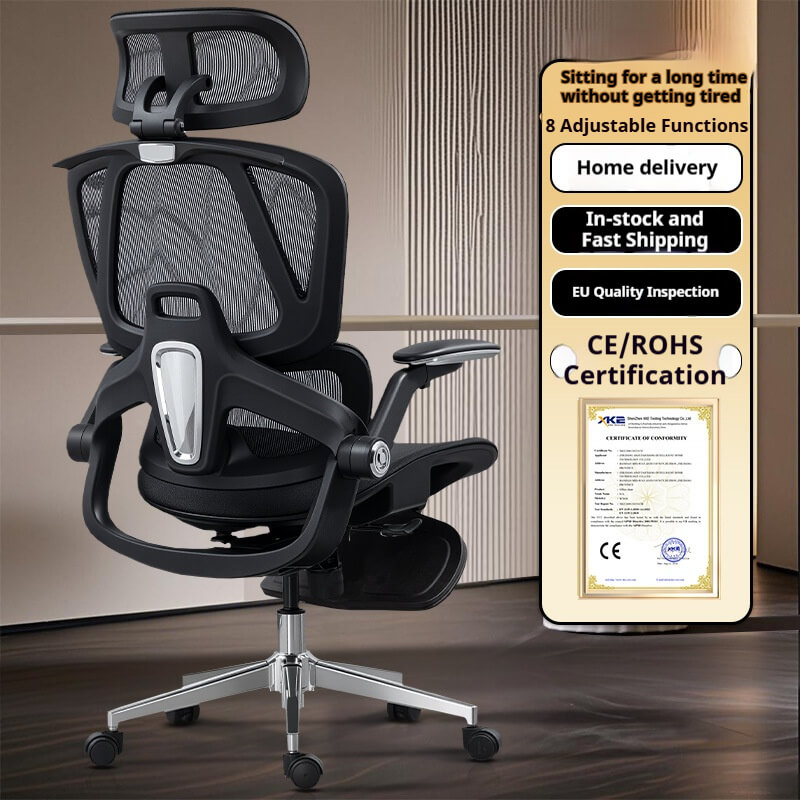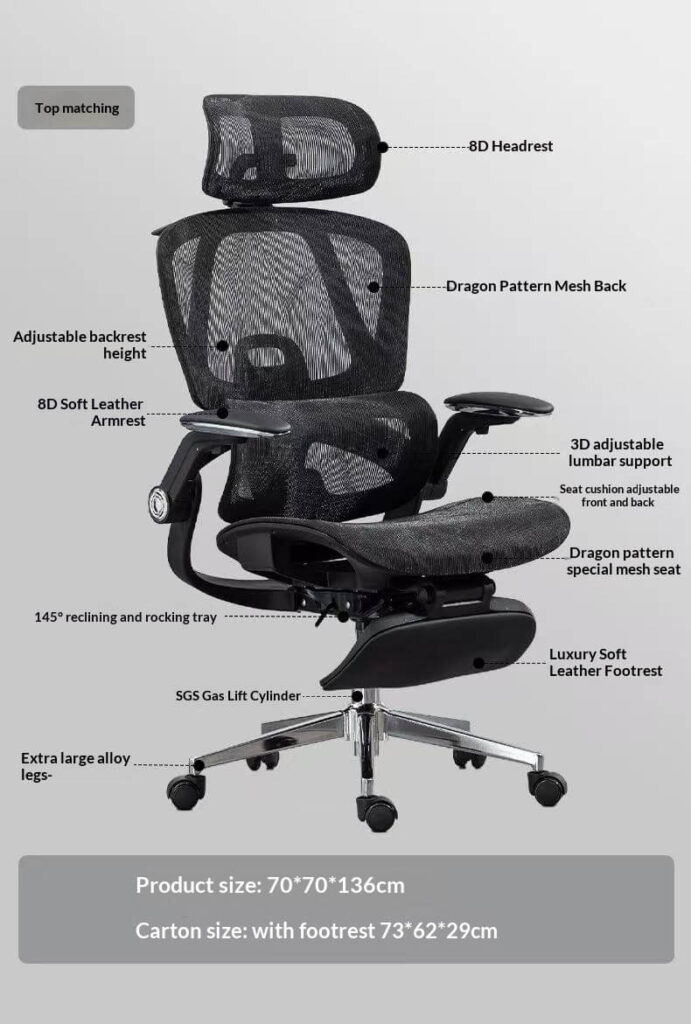
– The High Cost of “Consumer-Grade” Deception
If your procurement strategy for a 200-workstation floor looks anything like a consumer shopping on Amazon or IKEA, you have already failed.
The most significant drain on corporate facility budgets isn’t the initial purchase price—it is the replacement friction. In a professional environment, a chair failure isn’t just a broken caster; it is a disruption to a billable employee, a logistical headache for the facilities manager, and a potential liability claim. Most furniture categorized as “ergonomic” in the B2C sector is designed for 2–4 hours of casual daily use with a 24-month structural half-life.
When these units are deployed in a 40-hour-per-week professional setting, they hit their “fatigue limit” within 12 to 18 months. By year two, you aren’t managing an office; you are managing a graveyard of broken mesh and leaking gas lifts. Understanding the rigid commercial grade office seating requirements is the only way to stop this cycle of capital waste.

Phase 2: The Insider Truth – The Anatomy of a “Contract-Grade” Lie
In the Chinese manufacturing landscape, “Commercial Grade” is often used as a marketing adjective rather than a technical standard. To protect your investment, you must look past the fabric and understand the three technical “shadow zones” where factories cut costs:
- BIFMA X5.1 vs. “Self-Certified” Pseudoscience: True commercial grade office seating requirements dictate compliance with ANSI/BIFMA X5.1. Many suppliers claim “BIFMA Standards” while only testing the gas lift. A genuine contract-grade chair must pass the Backrest Strength Test (150 lbs functional / 250 lbs proof) and the Cyclic Base Attachment Test (2,500 lbs dead weight). If the supplier cannot produce a per-batch SGS or TUV report for the complete assembly, it is a consumer product in a suit.
- The Recycled Plastic Infestation: To hit aggressive wholesale price points, factories often mix “recycled regrind” into the nylon frames and outer shells. While eco-friendly in theory, it ruins structural integrity. Recycled nylon is brittle; under the constant stress of a 200-lb user leaning back, it develops micro-fractures. Contract-grade seating requires 100% Virgin Glass-Reinforced Polyamide (PA66).
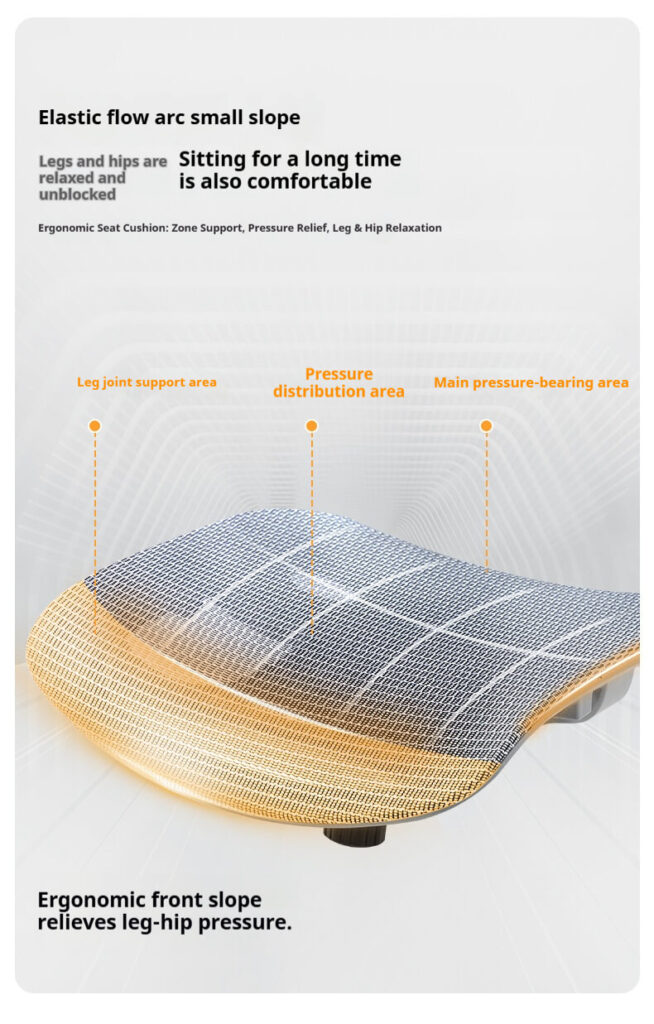
- Mesh Sag and Tensile Memory: Low-end mesh loses 30% of its tension within the first 5,000 “sit-down” cycles. By month six, the user is “bottoming out” against the frame. Commercial-grade mesh must be Elastomeric Polyester with a high memory retention rate, tested for 100,000+ double rubs.
Phase 3: The ROI & Risk Breakdown – The TCO Pivot
Procurement “Partners” don’t look at the invoice; they look at the Total Cost of Ownership (TCO) over a 5-year lease or ownership cycle.
| Cost Variable (Per 100 Chairs) | Consumer/B2C Grade ($120 Unit) | Professional Commercial Grade ($280 Unit) |
| Initial CAPEX | $12,000 | $28,000 |
| Warranty Support | Limited / Often Denied for “Commercial Use” | 5–10 Year On-Site/Parts Guarantee |
| Estimated Annual Failure Rate | 15% – 25% (Starting Year 2) | < 2% |
| Replacement Labor & Disposal | $45/unit (Administrative + Labor) | $0 |
| 5-Year Replacement Volume | ~80 Units (Near-total turnover) | ~5 Units (Minor repairs) |
| 5-Year Total Expenditure | ~$25,000+ | ~$29,500 |
| Real Asset Value at Year 5 | $0 (Landfill) | $4,000 (Residual Resale Value) |
The Financial Reality: The “cheap” option is a $25,000 expense that leaves you with zero assets and high liability. The commercial-grade option is a $28,000 investment that preserves employee health and maintains a residual asset value. In professional procurement, cheap is expensive.
Phase 4: The Proof – Component-Level Verification
We don’t ask you to trust a brand name. We provide a Technical Verification Portfolio that audits the chair down to its molecules. This is how we enforce commercial grade office seating requirements:
- Batch-Specific Testing: We don’t accept “model-level” certificates from 2022. We require “Lot-Specific” testing. If you order 500 chairs, we pull 2 units from the actual production line and send them to a third-party lab for destructive testing.
- The “Weight & Wall” Audit: We measure the wall thickness of the 5-star aluminum base. If it’s under 3.5mm, it’s rejected. We weigh the cold-cure foam; if the density is under 55kg/m³, it’s rejected.
- Traceability of Critical Components: We mandate the use of global tier-1 components (e.g., Samhongsa Class 4 gas lifts, Donati mechanisms, Gabriel or Wintex fabrics).
We are your “Defense Line” in China. Our value is not in finding a factory; it is in preventing the factory from defaulting on the quality they promised in the showroom.
Phase 5: Soft CTA & Professional FAQ
Buying office seating at scale without a technical audit is a gamble with your company’s OHS (Occupational Health and Safety) budget.
Next Logical Step: Send us the Technical Specification Sheet of your current “preferred” model. We will provide a Spec-Gap Analysis within 48 hours, highlighting where the design might fail to meet international commercial grade office seating requirements. No sales pitch—just a technical audit of your risk.
FAQ: Commercial Seating Standards
- Q: Can we use B2C chairs if our staff only works 3 days a week in-office?
- A: No. The “Commercial Grade” designation is about peak-load safety and longevity, not just hours used. A single failure during a high-stress moment creates the same liability regardless of how many days the chair was used.
- Q: Is “Weight Capacity” the same as “Commercial Grade”?
- A: Absolutely not. A chair can be rated for 400 lbs but still use cheap casters that will seize or a mesh that will sag within a year. Weight capacity is a static measure; commercial grade is a measure of durability over time.
- Q: Why do some commercial chairs have shorter warranties than B2C ones?
- A: Honesty. B2C brands offer “Lifetime Warranties” knowing 99% of consumers lose their receipts or won’t ship a chair back for $100. Commercial warranties are service-level agreements (SLAs) that factories actually expect to fulfill.