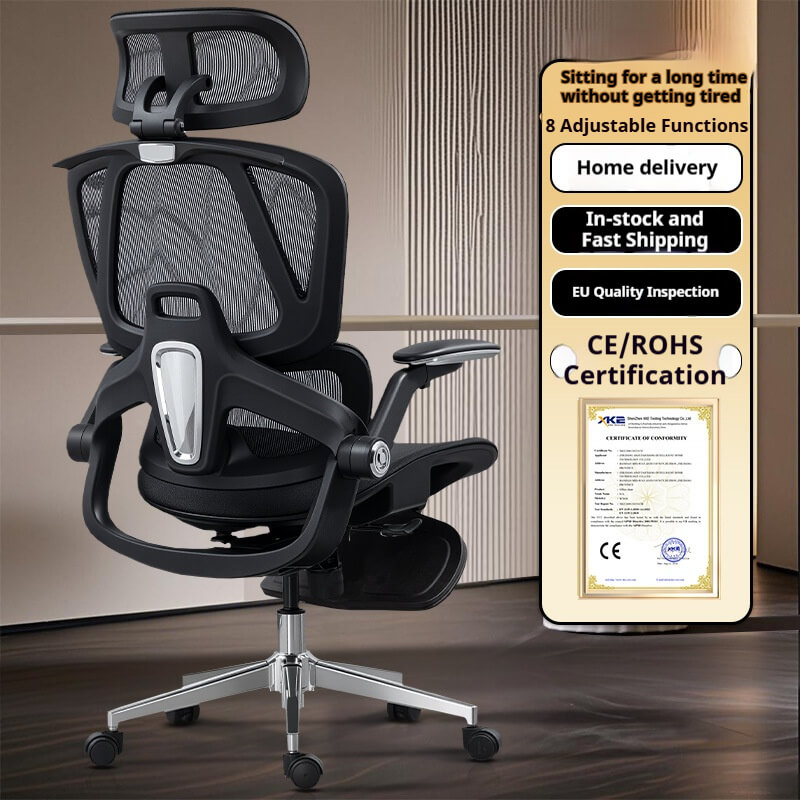
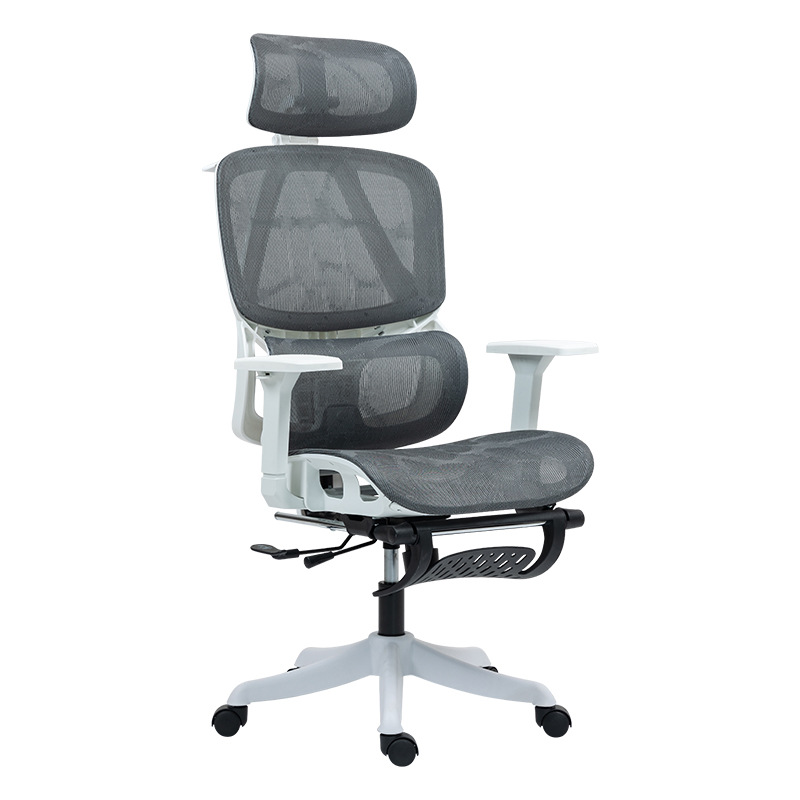
This technical briefing is for B2B procurement teams, facility directors, and furniture importers who are tired of dealing with RMA requests for flattened seat cushions. If you are chasing a $30 FOB price to win a low-bid contract, close this page. If you want to understand exactly why your corporate seating is failing within months and how to engineer that failure out of your supply chain, read on.
This is your definitive ergonomic chair foam density guide, written from the front lines of China’s manufacturing sector.
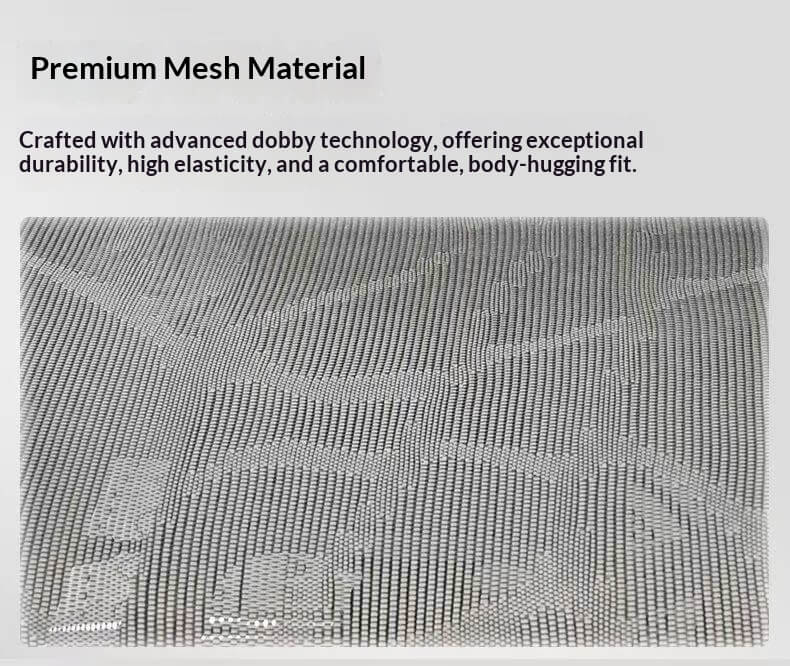
1. The Hook: The “Pancake Effect” Destroying Your Profit Margins
The most insidious failure in office furniture doesn’t happen with a loud snap; it happens silently, millimeter by millimeter.
You deploy 1,000 ergonomic chairs. On Day 1, they feel plush. By Day 180, your client’s employees are complaining of tailbone pain, sciatica, and numbness. The seat pan has bottomed out, compressing into a rigid, unforgiving pancake against the plywood base.
For the importer, the financial bleed is catastrophic. You saved $4 per chair on the initial FOB price by ignoring foam specifications, but you will now spend $45 per unit in reverse logistics, replacement parts, and labor, not to mention the permanent damage to your brand’s reputation. In the commercial seating world, cheap foam is not a cost-saving measure—it is a ticking time bomb.
2. The Insider Truth: Cut Foam, Cold-Cure, and the “Stone Powder” Scam
As your internal defense line in the supply chain, we must expose how the term “High-Density Foam” has been weaponized by factories to deceive buyers. Density is defined as mass per unit volume (
$$kg/m^3$$
), but numbers on a spec sheet are easily manipulated.
Here is the reality of Chinese foam manufacturing that sales reps will never tell you:
The Cut Foam Illusion (Scrap Polyurethane)
Low-end suppliers use block-cut polyurethane. They take massive blocks of low-density foam (20-30
$$kg/m^3$$
) and slice it into seat shapes. The cell structure is open and physically sheared by the blade. Under constant load, these broken cells collapse permanently. It feels incredibly soft in the showroom, but it will lose 50% of its resilience within 300 hours of continuous use.
Cold-Cure Molded Foam (The Standard)
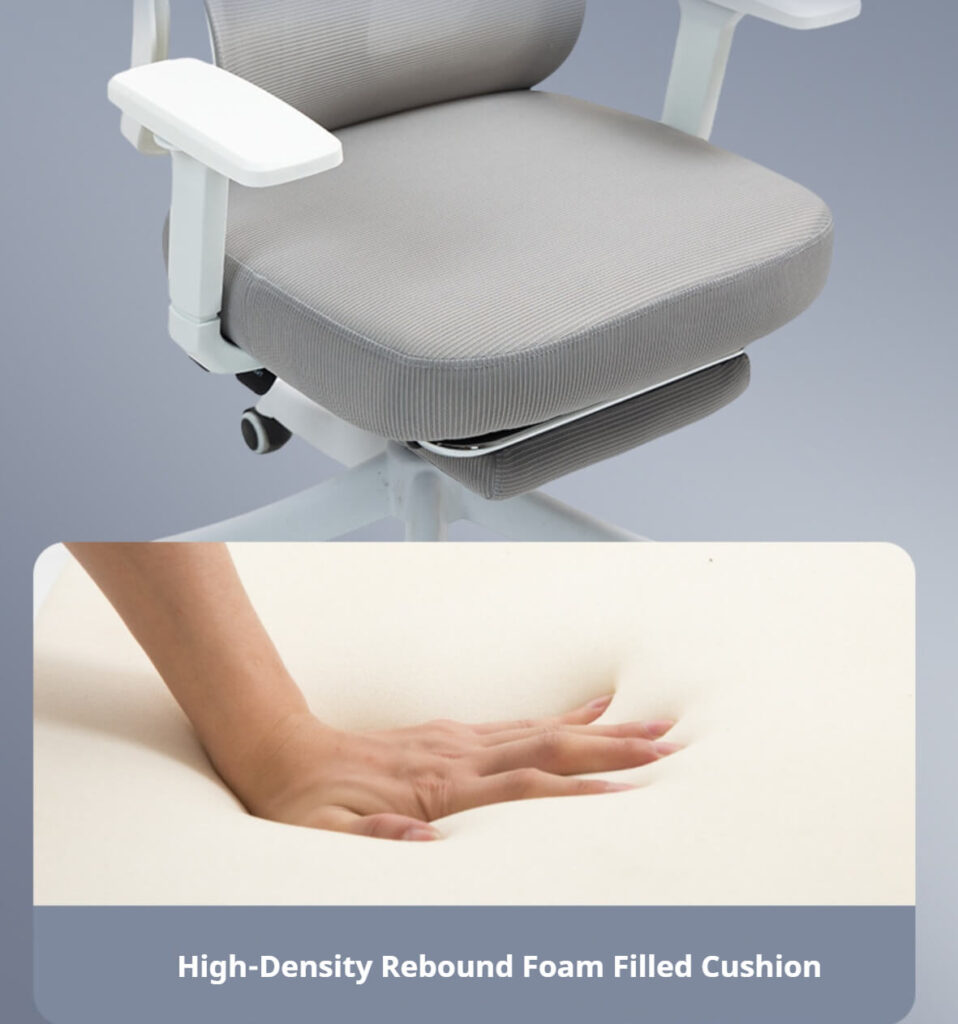
True ergonomic seating requires Cold-Cure Molded Polyurethane. Liquid chemicals are injected directly into a closed aluminum mold. As it expands and cures without heat, it forms a dense, continuous outer “skin” and a highly resilient internal cellular structure. It springs back instantly and distributes weight evenly.
The Industry’s Darkest Secret: Calcium Carbonate
Even if you specify 50
$$kg/m^3$$
density, factories can and will cheat. How? By mixing Calcium Carbonate (stone powder) into the liquid polyurethane before molding.
This artificially inflates the weight and density metrics, allowing a factory to pass a physical scale test. However, stone powder provides zero resilience. It destroys the foam’s elasticity, making it heavy, stiff, and prone to rapid internal crumbling. You paid for high-density foam; you received powdered rock.
3. The ROI & Risk Breakdown: Calculating the True Cost of Foam
Stop looking at the unit price and start calculating the Total Cost of Ownership (TCO) based on Indentation Load Deflection (ILD) and material purity. Below is a raw financial breakdown comparing typical factory-grade cut foam with genuine, unadulterated high-density molded foam.
| Metric / Cost Factor | Generic Cut Foam (Adulterated) | Genuine Molded Foam (55kg/m3) |
| Material Origin | Block-cut PU + Calcium Carbonate | Virgin Cold-Cure Polyurethane Injection |
| Initial Foam Cost (per chair) | $3.50 | $8.00 |
| Total Chair FOB Price | $40.00 | $44.50 |
| Effective Lifespan | 6 – 8 Months | 5 – 7 Years |
| Replacement Frequency (5 Yrs) | 4 – 5 times | 0 times |
| Replacement/Logistics Cost | $120.00+ | $0.00 |
| Total 5-Year Cost (TCO) | $160.00+ | $44.50 |
The Cold Math: Investing an extra $4.50 in genuine molded foam at the factory level eliminates $120.00 in downstream operational liabilities. If you are not verifying your foam density and purity, you are financing your own operational failure.
4. The Proof: Our Supply Chain Engineering Protocol
We do not trust factory spec sheets; we engineer compliance. To guarantee that your shipments align with the highest standards of this ergonomic chair foam density guide, our team executes rigorous, unannounced factory audits:
- The Cross-Section Analysis: We randomly select raw seat cushions from the assembly line and cut them in half. We inspect the cellular structure for the crucial outer “skin” of cold-cure molding and check for the chalky, brittle texture that indicates calcium carbonate adulteration.
- ILD & Rebound Testing: Density alone is useless without resilience. We utilize compression testing machines to verify the Indentation Load Deflection. A compliant B2B chair must retain a minimum of 90% of its original height after a 10,000-cycle compression test.
- Chemical Supply Chain Audits: We trace the polyol and isocyanate raw materials back to their source (e.g., BASF, Huntsman) by demanding to see the factory’s actual purchase orders, ensuring no unauthorized filler agents are entering the molds.
5. FAQ: Establishing an Unbreakable Spec
What is the minimum acceptable foam density for an ergonomic office chair?
For commercial environments (8+ hours of daily use), the absolute minimum is 45
$$kg/m^3$$
for molded foam. Heavy-duty or 24/7 dispatch seating should utilize 55 to 65
$$kg/m^3$$
. Anything below 40
$$kg/m^3$$
will fail prematurely.
How can I tell if my current supplier is using cut foam instead of molded?
Look at the edges and the underside of the cushion (if accessible). Molded foam has a smooth, sealed surface (a “crust”) conforming perfectly to the shape of the seat. Cut foam will have sharp, geometric edges or rough, porous surfaces where the blade sliced through the block.
Does higher density mean the seat will be uncomfortably hard?
No. This is a common misconception. Density dictates durability and weight support; ILD (Indentation Load Deflection) dictates firmness. A highly skilled manufacturer can formulate high-density foam that is also remarkably soft and yielding.
Audit Your Current Specs (Soft CTA)
If you are currently importing chairs and are experiencing higher-than-normal RMA rates for seating components, the problem is likely hidden beneath the fabric.
Do not rely on the factory’s word. Send us the technical specification sheet or a physical cushion sample from your current supplier. We will run a forensic analysis on the density, ILD, and chemical composition to determine exactly where the failure is occurring.