Upgrade Heavy-Use Office Chairs Without Replacing the Entire Seat
A worn or underspecified chair mechanism can affect recline control, seat stability, and the remaining service life of an otherwise valuable chair.
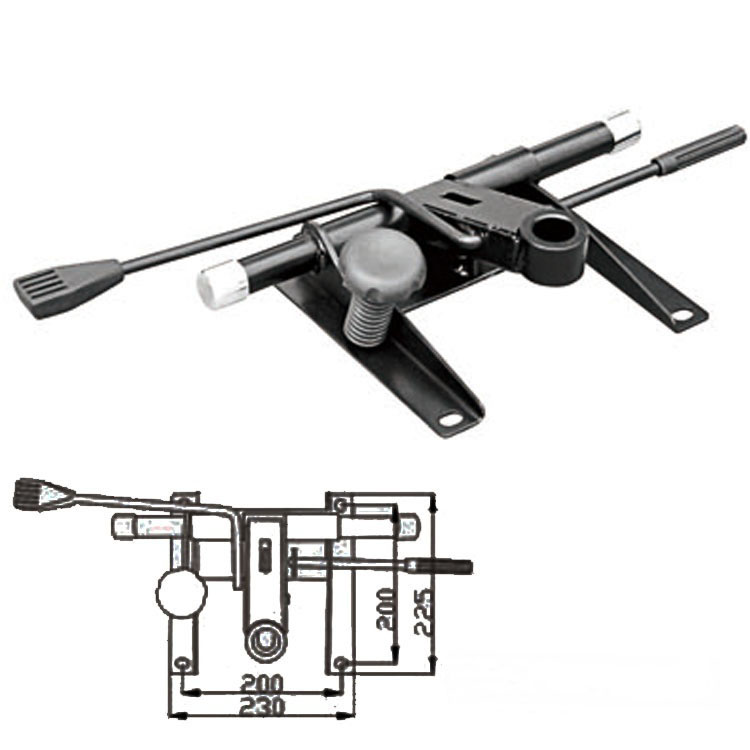
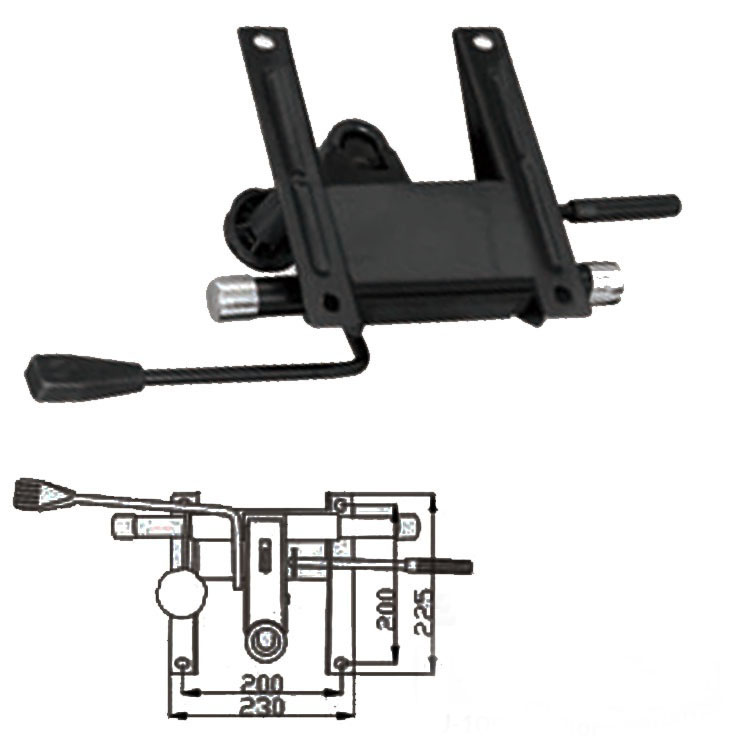
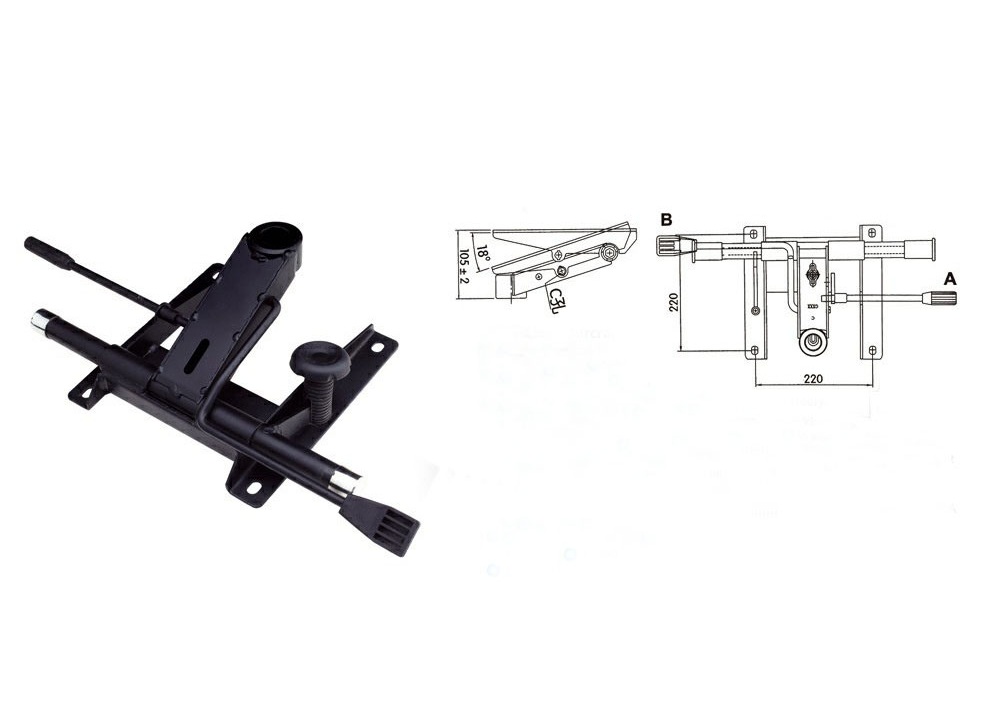
This heavy-duty synchronized-tilt mechanism is designed for executive, bariatric, commercial, and intensive-use office seating applications, providing a reinforced control platform for refurbishment and replacement projects.
It combines:
- synchronized tilt movement
- 5-position tilt locking
- adjustable tension control
- reinforced steel construction
- slotted mounting adjustment
The correct mechanism should always be evaluated together with the chair, seat pan, base, gas lift, expected load, and intended operating conditions.
1. Heavy-Duty Tension Control & 5-Position Lock
Heavy-use seating places greater demands on both the tilt mechanism and its locking system.
This configuration uses an oversized tension-control knob to provide greater adjustment range for heavier users and higher-load seating applications.
The dual-lever control system incorporates a 5-position multi-locking mechanism, allowing selected recline positions to be retained during normal use.
This configuration is particularly suited to:
- executive seating
- bariatric seating
- commercial office chairs
- 24/7 control-room seating
- high-frequency refurbishment programs
The actual permissible load and operating performance depend on the complete chair assembly and applicable test requirements.
2. 195 × 195 mm Mounting Pattern With Slotted Adjustment
Mounting compatibility is one of the most important factors in mechanism replacement.
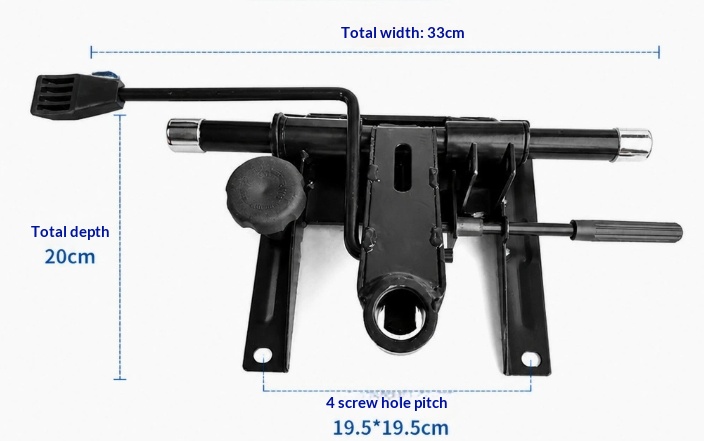
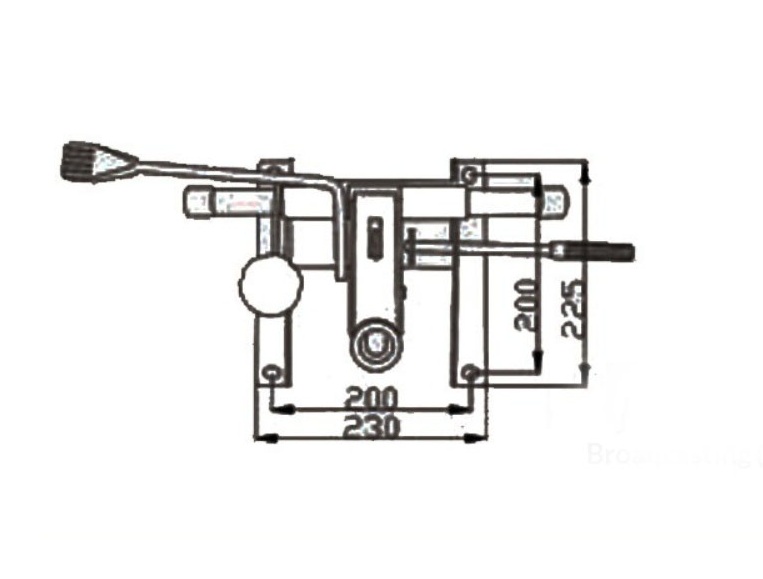
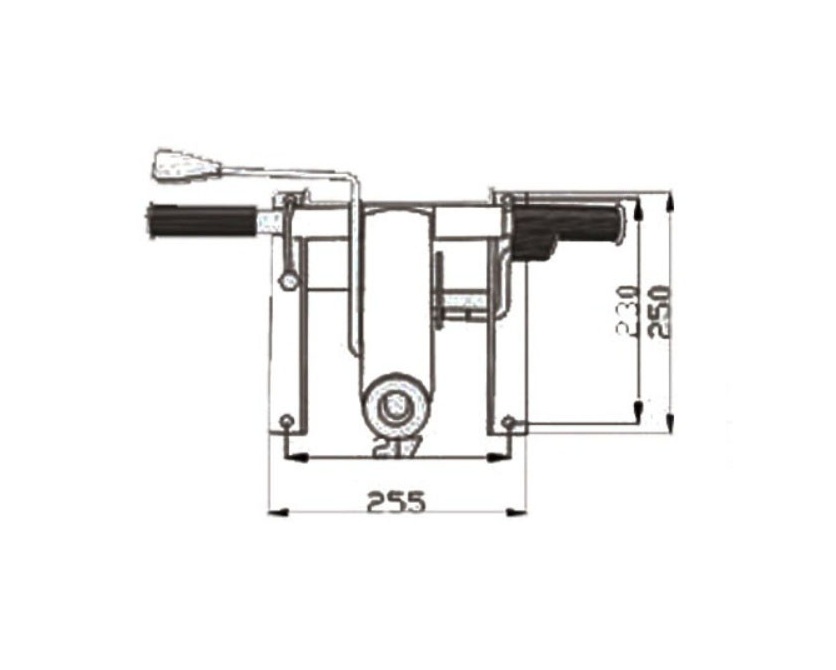
The nominal mounting pitch is:
195 × 195 mm
approximately 7.67 × 7.67 in
In addition to the nominal hole pattern, the mounting locations incorporate slots to accommodate a defined range of dimensional variation.
This can help when older seat pans have:
- manufacturing variation
- previous repair modifications
- small dimensional deviations
- accumulated tolerance differences
The slotted interface is intended to reduce unnecessary re-drilling in suitable applications.
It does not eliminate the need to verify:
- actual hole spacing
- hole diameter
- mounting surface
- bolt engagement
- seat-pan geometry
- surrounding clearance
before installation.
3. Reinforced Steel Construction
The mechanism uses reinforced cold-rolled steel components and continuous seam-welding processes intended for demanding commercial seating applications.
The purpose of the reinforced structure is to improve resistance to:
- deformation
- local bending
- repeated loading
- long-term mechanical stress
A heavy-duty mechanism should not be evaluated by plate thickness alone.
The complete structural system includes:
Seat Pan + Mechanism + Fasteners + Gas Lift + Base + User Load
For high-load or intensive-use applications, the appropriate mechanism should be validated against the intended chair configuration and applicable performance requirements.
4. Designed for Refurbishment and Replacement
This mechanism can be used where the original chair mechanism is:
- worn
- damaged
- discontinued
- difficult to source
- no longer suitable for the intended application
For straightforward replacements, the existing mounting pattern can be checked against the 195 × 195 mm configuration.
Where the original mounting interface differs, customized mounting or reverse-engineering options can be considered separately.
5. When the Standard Pattern Is Not Enough
Not every chair uses the same mounting geometry.
If a refurbishment project requires:
- a different mounting pitch
- additional structural reinforcement
- a different tilt configuration
- a custom lever arrangement
- modified seat-pan geometry
the standard mechanism can be evaluated as a starting platform rather than automatically designing a completely new mechanism.
Where appropriate, the project can move through:
Existing Mechanism Review → Interface Mapping → Modification / Custom Design → Prototype → Validation → Production
This can reduce unnecessary development cost when the existing mechanism architecture is already suitable.
FAQ — Heavy-Duty Chair Mechanism Selection & Replacement
What makes a chair mechanism suitable for heavy-duty use?
Heavy-duty performance is not determined by one feature.
The complete application should be considered, including:
- mechanism structure
- mounting interface
- fasteners
- seat pan
- gas lift
- chair base
- user load
- loading direction
- frequency of use
- tilt and locking requirements
A reinforced mechanism can provide a stronger platform, but the complete chair assembly still determines the actual operating capability.
Why can a mechanism with the correct 195 × 195 mm pattern still be unsuitable?
Matching the mounting pitch is only the first compatibility check.
The replacement should also be evaluated for:
- hole diameter
- slot range
- seat-pan geometry
- mechanism height
- tilt axis
- lever position
- gas-lift interface
- surrounding clearance
- required seat height
- functional movement
A correct bolt pattern does not automatically guarantee correct system geometry.
When should this 5-position synchro mechanism be used?
This configuration may be appropriate where the application requires:
- synchronized seat/back movement
- multiple locked recline positions
- adjustable tilt tension
- frequent daily use
- higher-load seating
It can be considered for executive, bariatric, commercial, and intensive-use seating where the specified mechanism characteristics match the application.
What should be checked before ordering?
A practical compatibility check can include:
- Chair model
- Existing mechanism model
- Mounting pitch
- Hole diameter
- Seat-pan dimensions
- Mechanism dimensions
- Lever position
- Required tilt function
- Required lock positions
- User-load requirements
- Gas-lift interface
- Available clearance
For unknown or discontinued chairs, photographs, measurements, or the original mechanism can be used as engineering references.
What if the original mechanism is discontinued?
There are several possible solution paths.
Standard Replacement
Use a mechanism whose mounting and functional specifications already match.
Modified Replacement
Use an existing mechanism and adapt the mounting interface where the difference is limited.
Custom Mounting Solution
Develop a customized interface when the mechanism itself is suitable but the chair-side pattern is different.
Full Custom Mechanism
Use reverse engineering and new tooling when the original function or geometry cannot be achieved with an existing platform.
The most economical route depends on quantity, technical differences, and future demand.
Can the slotted mounting holes compensate for all seat-pan variations?
No.
Slots are useful for controlled positional adjustment, but they cannot compensate for:
- major pattern differences
- incorrect hole diameter
- inadequate bolt engagement
- poor edge distance
- structural interference
- incompatible seat-pan geometry
The actual seat-pan should be measured whenever compatibility is uncertain.
How can a heavy-duty mechanism affect the rest of the chair?
Replacing a mechanism can alter more than tilt behavior.
Changes in mechanism geometry can affect:
- seat height
- seat angle
- center of rotation
- gas-lift position
- lever clearance
- relationship between seat and backrest
Therefore, mechanism replacement should be evaluated as a system-level compatibility problem rather than an isolated component exchange.
How should high-load or bariatric applications be evaluated?
For high-load applications, review the complete load path:
User → Seat Pan → Mechanism → Fasteners → Gas Lift → Base → Casters → Floor
Each interface contributes to overall performance.
The mechanism should therefore be selected according to the complete chair design, expected load, usage frequency, and applicable testing or certification requirements.
How can refurbishment companies reduce mechanism SKUs?
If multiple chair models share similar:
- mounting patterns
- tilt functions
- seat geometry
- load requirements
they may be grouped around a common mechanism family.
A practical system can contain:
- standard configurations
- limited mounting variants
- controlled custom exceptions
This can reduce:
- inventory complexity
- repeated engineering
- sourcing complexity
- refurbishment lead time
The optimal SKU count depends on the actual chair population and order frequency.
How can development costs be controlled for custom applications?
A new mechanism does not always need to start from zero.
Possible cost-control approaches include:
- reusing an existing mechanism architecture
- modifying only the mounting interface
- reusing common hardware
- standardizing lever components
- validating a prototype before tooling
- grouping similar chair models
For larger projects, the development cost can be evaluated against expected repeat demand rather than treating every custom requirement as a one-time expense.
How should a large refurbishment project be handled?
For larger projects, a structured process can include:
Chair Model Identification
→ Mounting Pattern Classification
→ Mechanism Family Selection
→ Sample / Prototype Fit Check
→ Functional Validation
→ Production
→ Reusable Specification
This approach can turn repeated replacement requirements into a controlled mechanism platform rather than a series of one-off purchases.
Solution Guidance for Different Applications
Standard Repair
Use the standard 195 × 195 mm configuration when the interface and functional requirements are already compatible.
Heavy-Use Executive Seating
Evaluate the synchronized tilt, locking positions, tension range, and complete structural load path.
Bariatric Seating
Review the complete chair system rather than relying on the mechanism’s heavy-duty designation alone.
Mixed Refurbishment Inventory
Group chair models by mounting pattern, function, and load requirement to reduce SKU complexity.
Non-Standard Chair Models
Consider mounting modification, adapter development, or reverse engineering before committing to a completely new mechanism.
Large B2B Programs
Use sample validation and reusable specifications to reduce repeated engineering and procurement work.
Total Cost Matters More Than Mechanism Price
For a refurbishment project, the cost of a mechanism is only one part of the decision.
The total cost can include:
Mechanism Cost
Engineering
Prototype
Tooling
Installation Labor
Rework
Inventory
Warranty / Replacement
Future Development
A slightly more expensive mechanism can still be the lower-cost solution if it reduces installation problems, rework, SKU complexity, or repeated replacement.
The objective is therefore:
The lowest practical total cost for the required function, compatibility, reliability, and future demand.
The Principle Behind the Solution
A heavy-duty mechanism is not valuable simply because it is thicker or stronger.
Its value comes from how well the mechanism, chair, user load, geometry, and operating requirements work together.
The available solution may be:
- a standard mechanism
- a modified mounting interface
- an adapter
- a custom configuration
- a new mechanism design
The right choice depends on the actual project.
We provide the engineering options, compatibility information, and validation path needed to evaluate those choices.
The customer can then select the solution that best matches its quantity, budget, application, and refurbishment objectives.