Stop Replacing Cheap Casters Over and Over
Standard twin-wheel nylon casters can wear quickly, create rolling noise, and may damage sensitive hard floors.
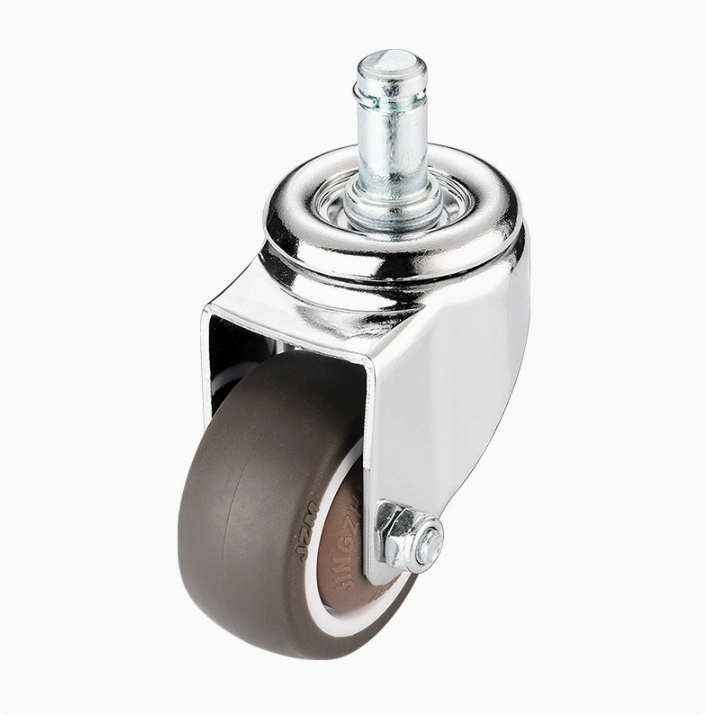
These heavy-duty replacement casters combine TPR wheels, reinforced steel brackets, and precision ball bearings to improve rolling performance, reduce noise, and provide better floor protection for demanding office seating applications.
They are designed for refurbishment, replacement, and heavy-use office chair applications where durability, compatibility, and floor protection matter.
Reinforced Steel Bracket for Heavy-Duty Use
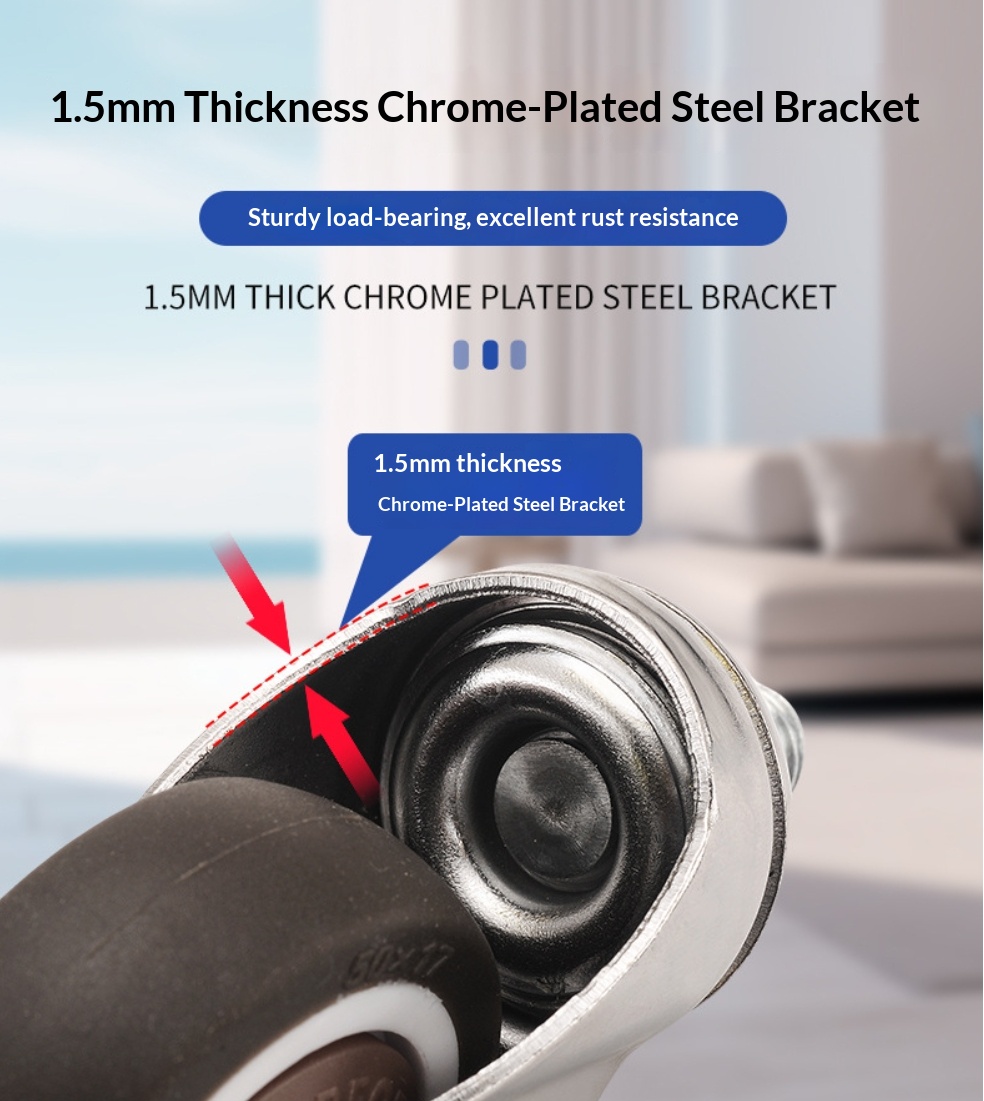
The main bracket is formed from 1.5 mm thick chrome-plated carbon steel to provide a stronger mounting structure than common lightweight plastic caster housings.
This design is intended for demanding seating applications, including:
- executive office chairs
- extended-use seating
- high-load applications
- refurbishment projects
- replacement of damaged or worn casters
The correct caster should still be selected according to the chair structure, expected load, and application.
Smooth, Low-Friction Rolling
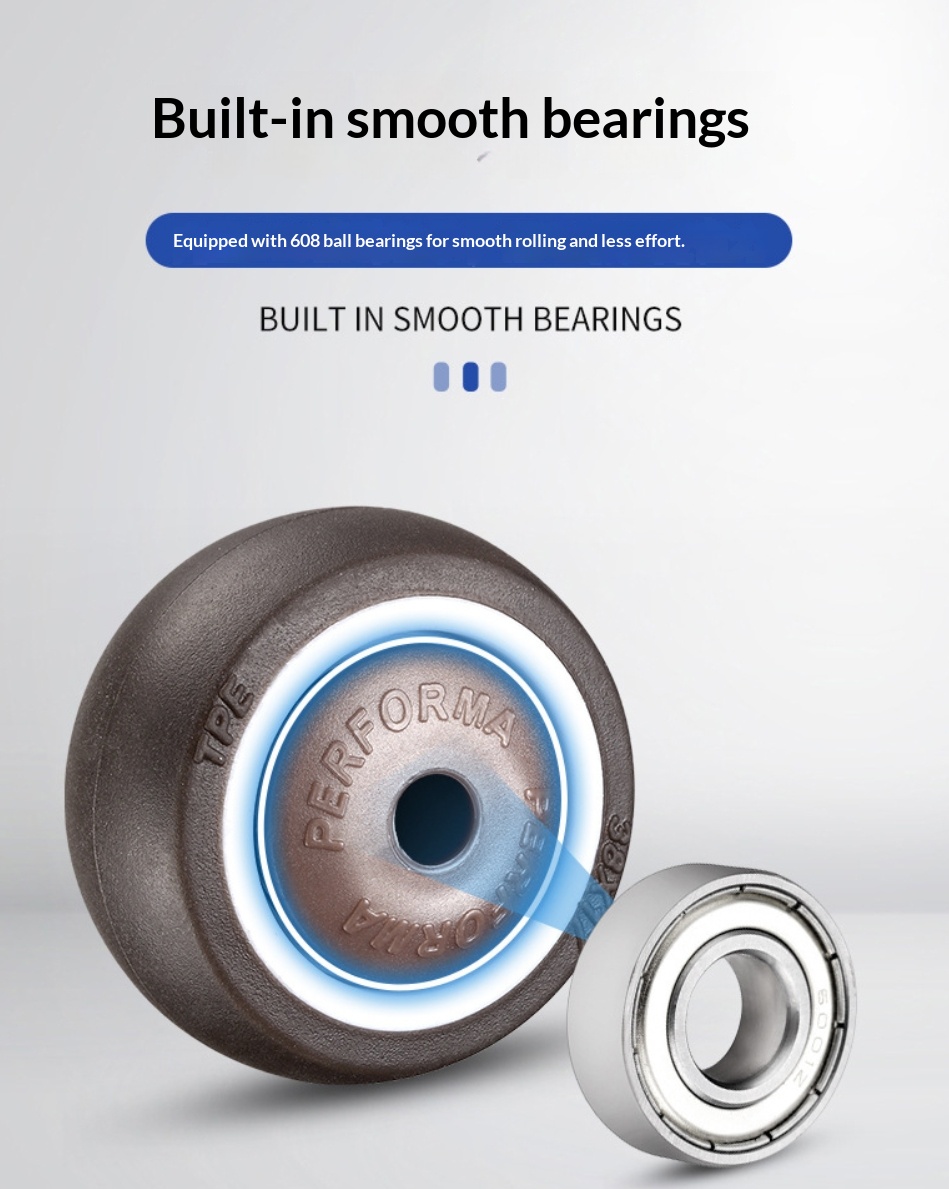
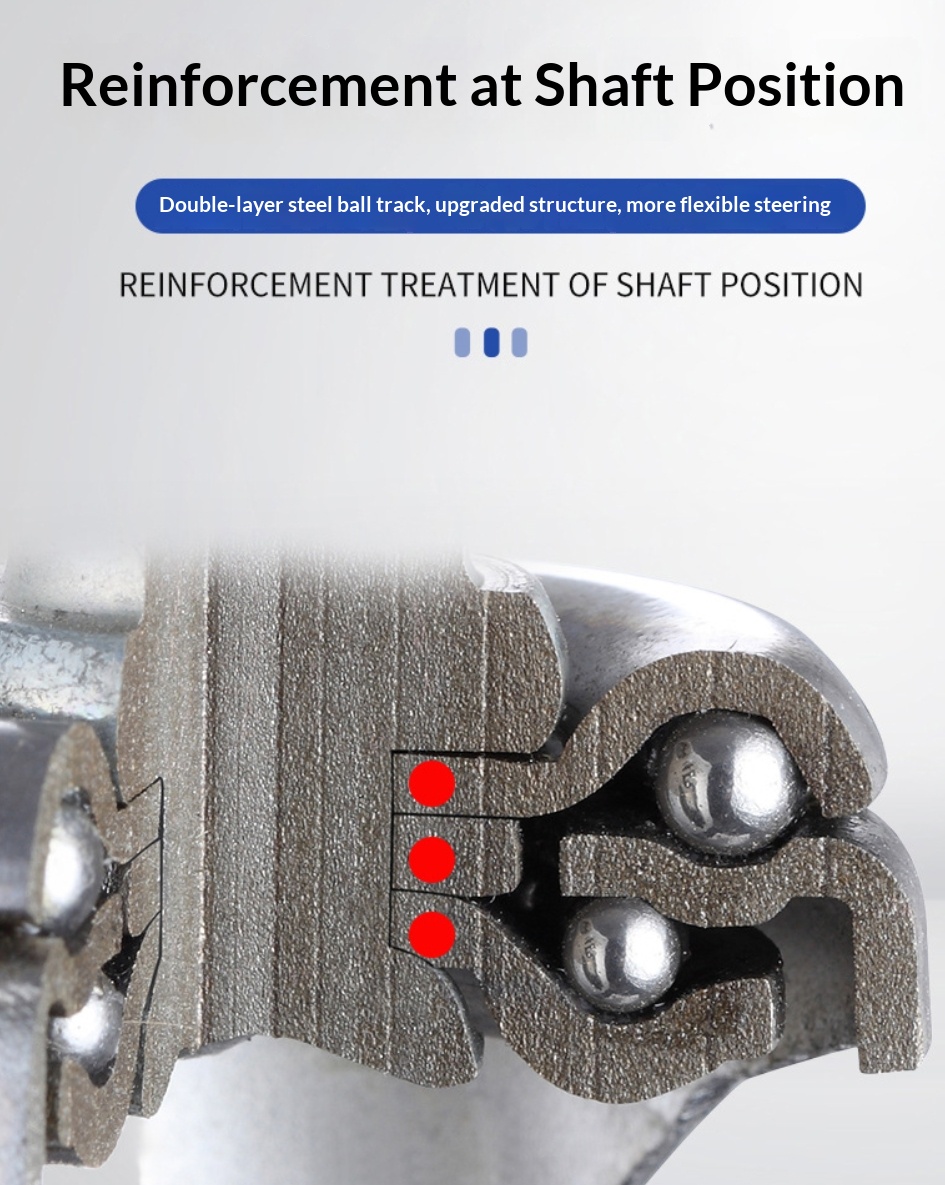
Each wheel uses a 608 deep-groove ball bearing to reduce rolling resistance and improve swivel movement.
The bearing-supported design helps provide:
- smoother rolling
- reduced drag
- quieter movement
- more consistent swivel action
- improved resistance to common hair and debris-related rolling problems
Caster performance still depends on the chair, floor condition, load, and installation environment.
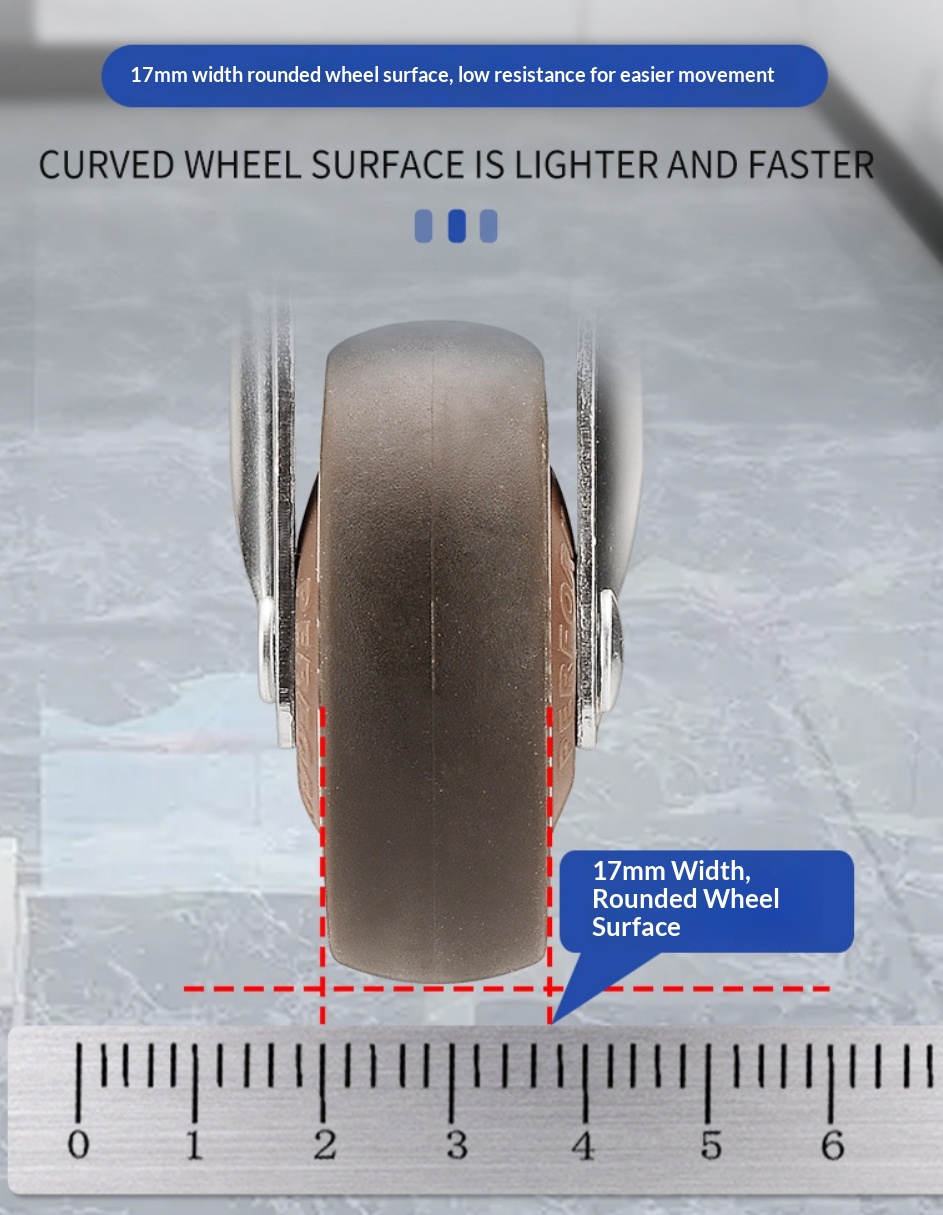
TPR Wheels for Hard-Floor Applications
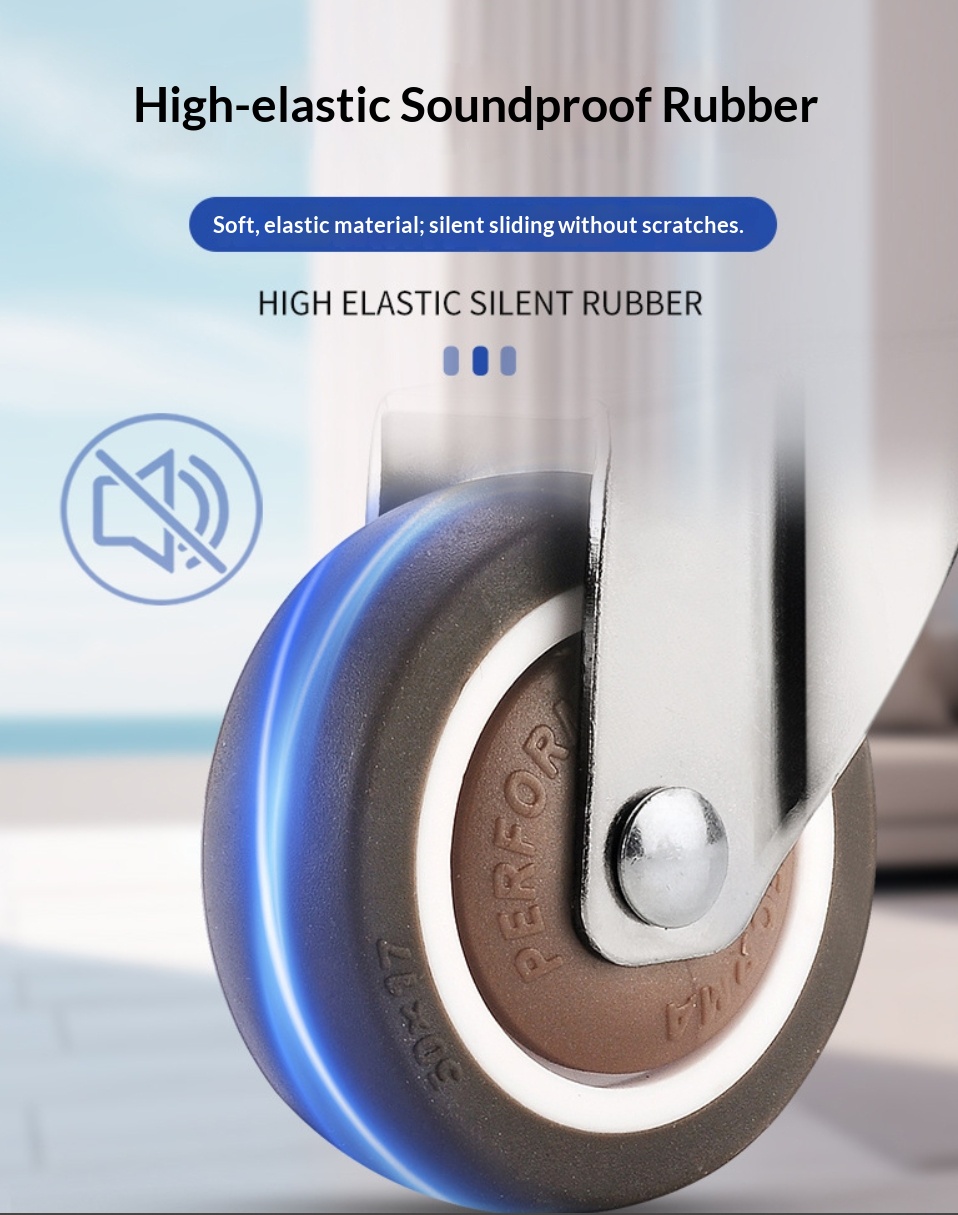
The TPR wheel surface is designed for common hard-floor environments where conventional hard nylon wheels may be unsuitable.
Suitable applications may include:
- hardwood
- laminate
- marble
- finished commercial flooring
- other common hard surfaces
Wheel selection should still take the actual floor material and operating environment into account.
Exact-Fit Stem Options
A caster is not correctly matched simply because its wheel diameter is correct.
The mounting interface must also be compatible.
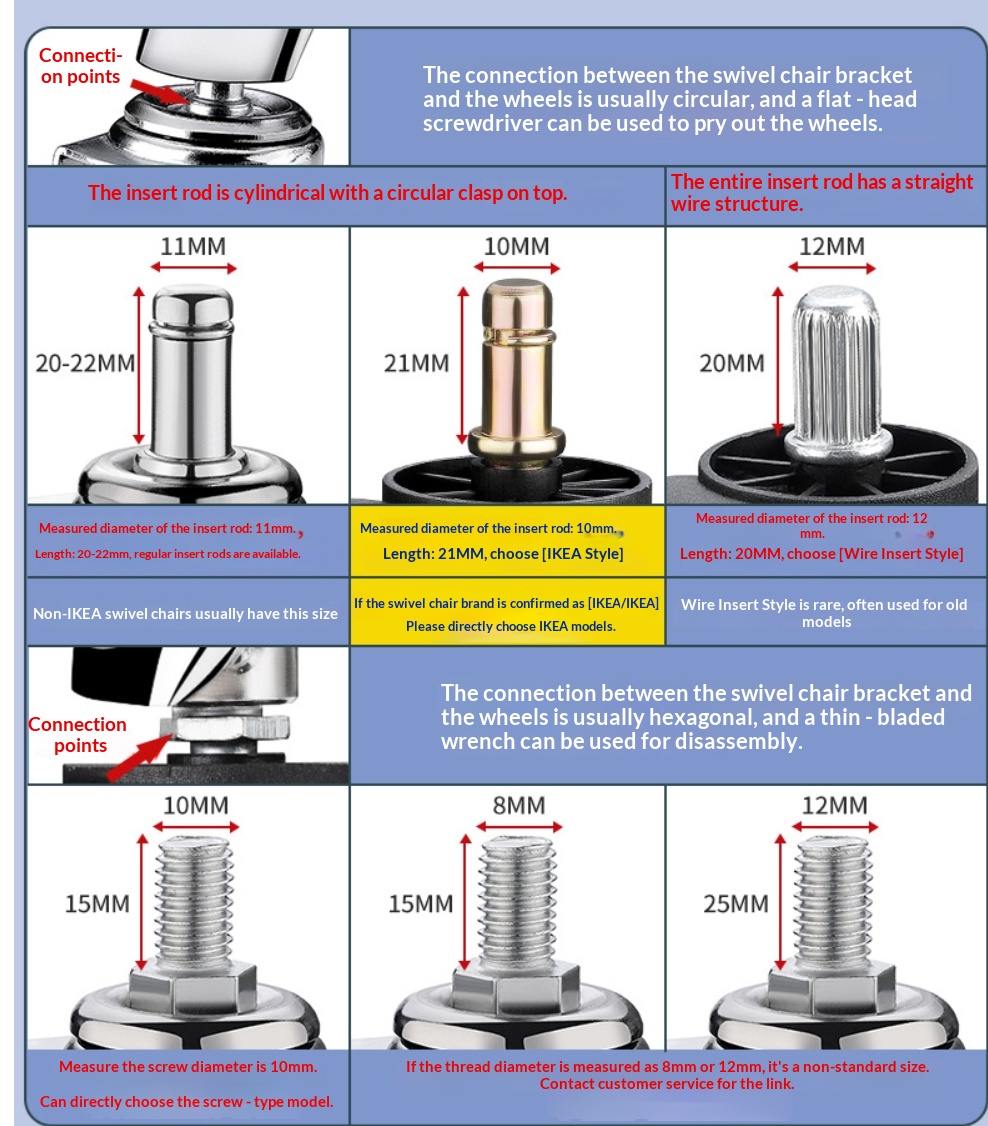
Available stem configurations include:
Standard 11 mm × 22 mm
7/16″ × 7/8″ grip-ring stem
A common office-chair stem configuration used across many commercial seating applications, including numerous Herman Miller, Steelcase, and Haworth chairs. Verify the original stem dimensions before ordering.
IKEA-Compatible 10 mm Stem
Designed for seating using the corresponding 10 mm mounting interface. Compatibility should be confirmed against the original chair base.
Oversized 12 mm Stem
For selected older or specialized chair bases requiring a larger stem interface.
Threaded M8 / M10 Options
For specialized applications, older frames, and customized OEM or refurbishment projects requiring a threaded mounting connection.
FAQ — Caster Compatibility & Selection
Why is caster replacement more than choosing the same wheel size?
Because wheel diameter is only one part of caster compatibility.
The complete interface may include:
- stem type
- stem diameter
- stem length
- mounting interface
- wheel diameter
- wheel width
- overall caster height
- load requirement
- swivel geometry
- brake configuration
- surrounding clearance
A caster can physically enter the chair base while still producing an unsuitable result.
The correct replacement therefore needs to match the mounting interface and operating requirements, not just the wheel size.
Can the wrong caster affect chair height and stability?
Yes.
Changing the overall caster height can change the relationship between:
- floor and chair base
- seat height
- center of gravity
- mechanism position
- wheel contact point
A significant height difference may also affect the operating position of the chair mechanism.
For this reason, caster selection should consider the complete assembled geometry, not only the wheel itself.
How should I verify whether these casters fit an older office chair?
For an older or unknown chair model, verify the following before ordering:
- Stem type
- Stem diameter
- Stem length
- Mounting interface
- Original caster height
- Wheel diameter and width
- Chair/base clearance
- Expected load
- Floor application
For larger refurbishment projects, physical sample testing is recommended before committing to a larger quantity.
What if the original caster is discontinued?
A discontinued caster does not necessarily require an exact reproduction of the original product.
There are several possible approaches.
Direct Replacement
Use an existing caster with a matching interface and suitable performance specifications.
Functionally Compatible Alternative
Use another caster that provides the required:
- stem compatibility
- height
- load capacity
- wheel characteristics
- operating performance
Customized Interface Solution
Where the original chair uses an unusual or obsolete mounting interface, a modified stem or adapter solution may be considered.
The objective is:
Restore reliable function without unnecessarily reproducing an obsolete component.
How can I reduce caster SKUs for a large refurbishment operation?
A large refurbishment company does not necessarily need one caster for every chair model.
Instead, caster compatibility can be organized by:
- stem standard
- stem dimensions
- overall height
- load range
- wheel specification
- floor application
This can allow multiple chair models to share the same validated caster configuration.
The result can be:
- fewer SKUs
- lower inventory complexity
- simpler purchasing
- faster refurbishment
- easier replacement management
The optimal number of configurations depends on the actual chair population and purchasing volume.
Can one caster fit every office chair?
No single caster should be assumed to fit every office chair.
Different chair bases use different mounting interfaces, dimensions, and height requirements.
The practical goal is not unlimited compatibility.
It is:
Maximum practical compatibility with a controlled number of verified configurations.
For a mixed refurbishment inventory, identifying common stem and height families can often provide much broader coverage than selecting casters one chair model at a time.
Solution Guidance for Refurbishment Projects
For small replacement jobs, the most economical solution may simply be a correctly matched standard caster.
For larger inventories, a more structured approach may provide better value:
Chair model identification
→ Stem & height classification
→ Caster family grouping
→ Sample verification
→ Standardized purchasing
→ Repeatable refurbishment
This shifts caster replacement from a one-off purchasing decision into a repeatable compatibility system.
The Key Principle
The cheapest caster is not always the lowest-cost solution.
The real cost may include:
Caster price + installation labor + incorrect-fit risk + rework + repeated replacement + inventory complexity.
The best solution is therefore the one that provides the right balance of:
compatibility + durability + floor suitability + installation efficiency + total cost.