Replace Broken Arms Without Replacing the Entire Chair
Armrests are often one of the first chair components to show wear, cracking, peeling, or mechanical failure—especially in high-use commercial seating.
Replacing the entire chair is not always necessary.
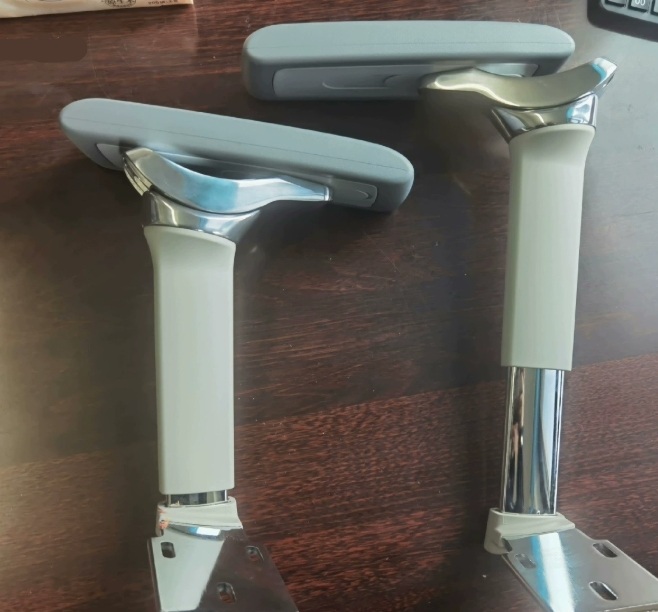
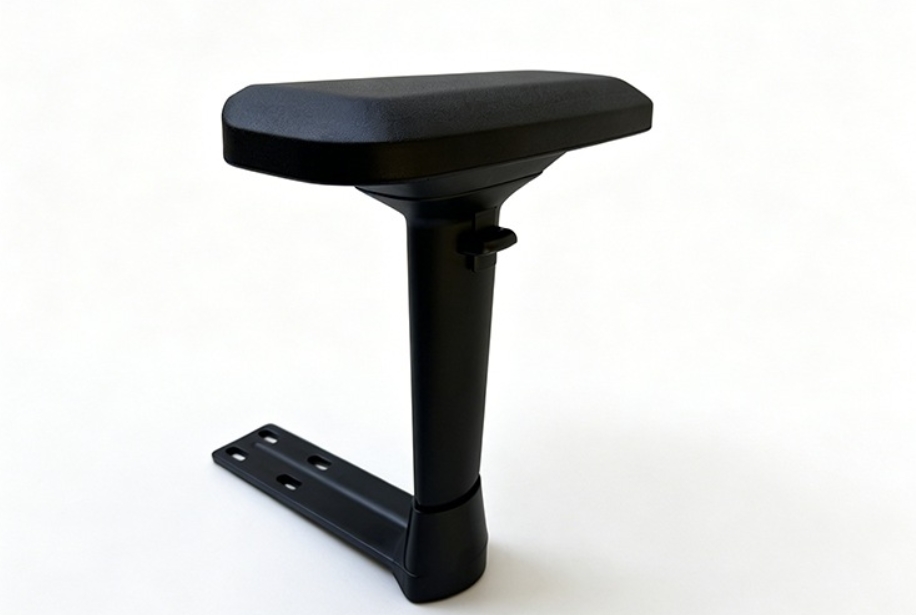
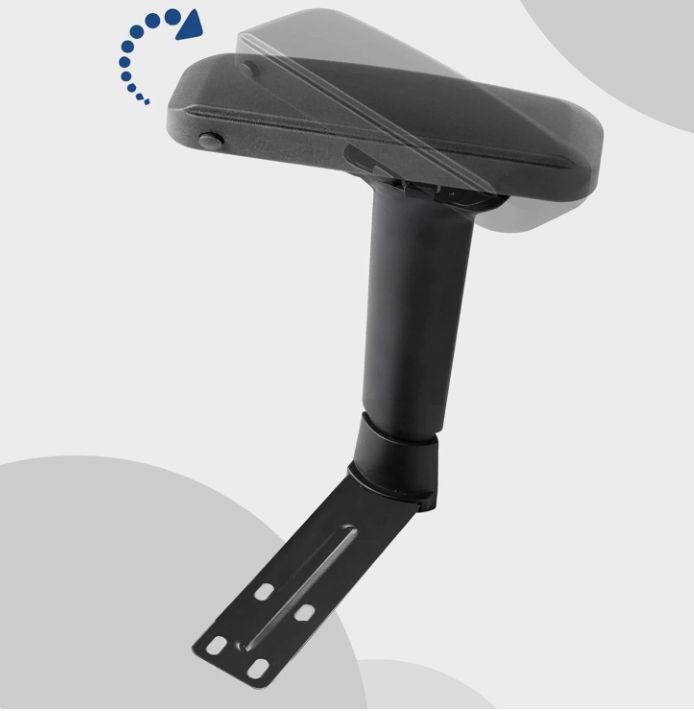
This heavy-duty 4D replacement armrest assembly is designed for office chair repair, refurbishment, and ergonomic upgrades, combining a reinforced mounting system with multi-directional adjustment to help extend the useful life of existing seating.
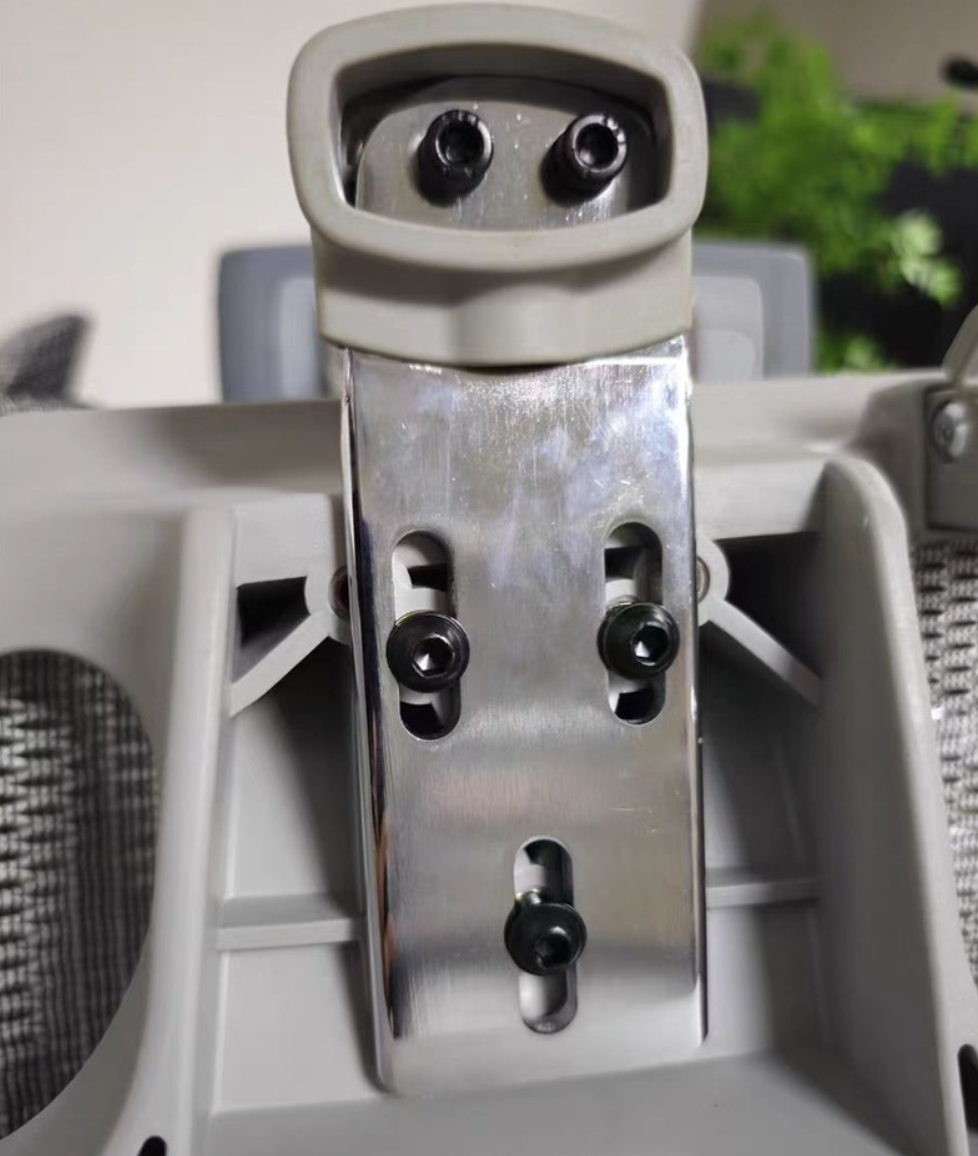
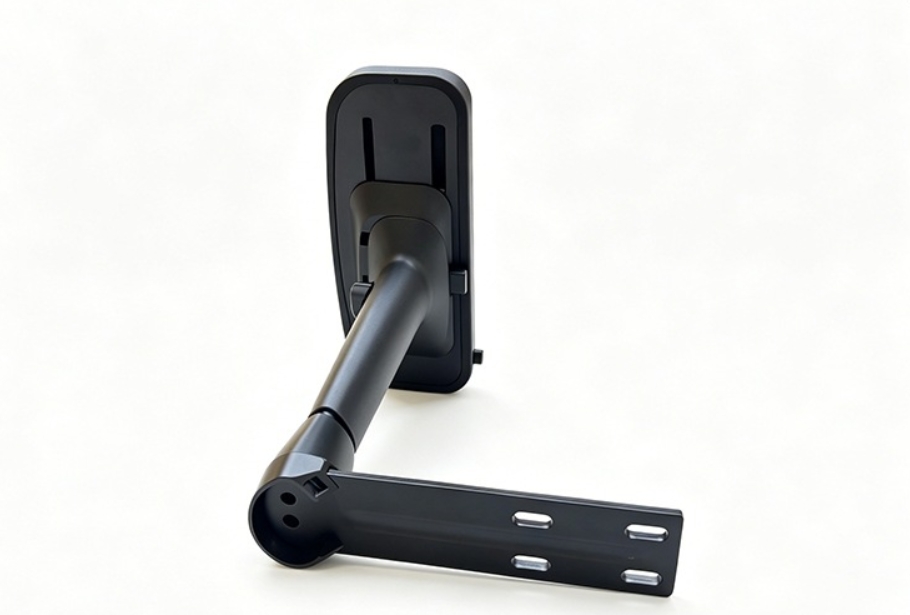
Slotted Mounting Bracket for Easier Retrofitting
Hole alignment is one of the most common challenges when replacing an armrest on an older or different chair model.
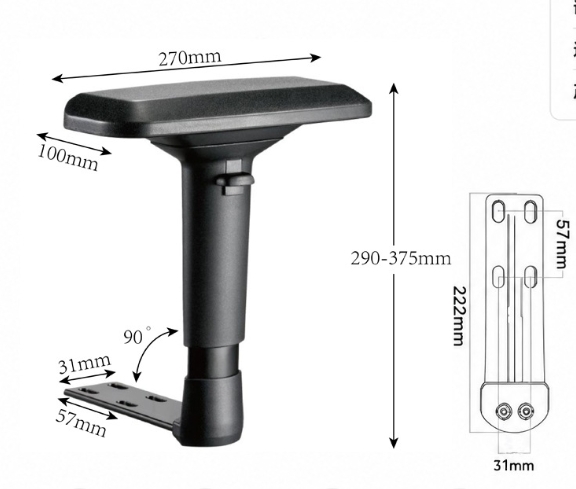
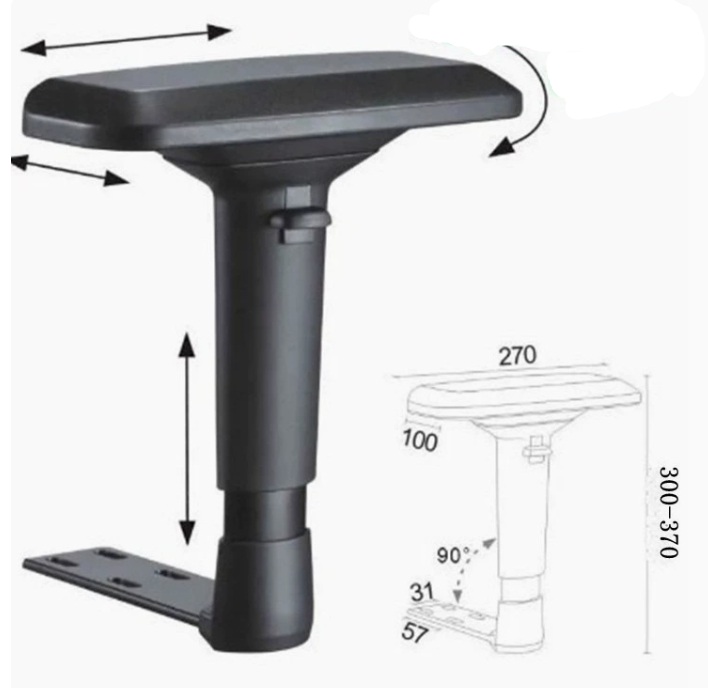
The mounting bracket uses elongated precision-machined slots to accommodate a range of mounting positions around a 57 mm × 31 mm hole pattern, with approximately ±5 mm of positional adjustment.
The slotted interface can help absorb normal dimensional variation without requiring secondary drilling in suitable applications.
Common mounting options include:
- Standard bottom-mount chair frames
- M6 or M8 fastening hardware, where applicable
- Refurbishment projects involving older or discontinued chair models
- Custom applications where the original mounting pattern is no longer readily available
Fit should still be verified against the original chair frame before production or larger-volume installation.
4D Adjustment for Commercial Seating
The armrest is designed to provide multiple adjustment functions for different desk positions, working postures, and user requirements.
Height Adjustment
Approximately 70 mm of vertical travel, with an overall armrest height range of approximately 295–365 mm, depending on the configuration.
Arm-Pad Depth Adjustment
The PU arm pad provides approximately 40 mm of forward/backward adjustment to accommodate different desk positions and user preferences.
Pivot Adjustment
The arm support can pivot laterally to better accommodate different working positions, including forward-facing typing and more relaxed seating postures.
The adjustment architecture is designed around mechanical locking and controlled movement to reduce unnecessary looseness during normal use.
Durable PU Arm Pads
The arm pads use high-density polyurethane (PU) designed for demanding office seating environments.
The material can provide a combination of:
- comfort
- durability
- resistance to everyday wear
- easier integration into refurbishment programs
For B2B refurbishment and OEM projects, additional options may include:
- customized surface finishes
- matte-black polymer components
- polished aluminum or chrome finishes
- customized PU hardness, where technically and commercially appropriate
A Replacement Solution for Existing Furniture Assets
For refurbishment companies, the objective is not always to reproduce every detail of the original armrest.
Depending on the chair condition and project requirements, several approaches may be possible:
- direct replacement
- functionally equivalent replacement
- modified mounting interface
- customized armrest assembly
- modular armrest configuration
The most suitable approach depends on:
- chair model
- mounting geometry
- quantity
- required adjustment range
- expected usage
- cost
- future replacement demand
The goal is to restore reliable function while controlling development, inventory, and installation costs.
FAQ — Armrest Compatibility, Replacement & Refurbishment
Why is armrest replacement more complicated than it appears?
An armrest is not only a visible comfort component.
A reliable replacement needs to consider both the mechanical interface and the functional interface.
Important factors may include:
- mounting hole pattern
- bolt spacing
- bracket geometry
- height
- depth
- pivot range
- arm-pad dimensions
- overall height
- structural load
- clearance with the seat, backrest, and desk
An armrest can physically attach to a chair and still be unsuitable if its geometry or adjustment range is incorrect.
What if the original armrest is discontinued?
The original part does not necessarily need to be reproduced exactly.
Possible solution paths include:
Direct Replacement
Use an existing armrest with a compatible interface.
Functionally Equivalent Replacement
Maintain the important characteristics of the original while updating the design where appropriate.
Modified Interface
Adapt the mounting interface to accept an available replacement armrest.
Custom Armrest Assembly
Develop a new bracket, support, arm pad, or complete assembly when the original configuration is no longer practical to source.
The appropriate path depends on quantity, condition, compatibility, expected service life, and total project cost.
Can the slotted mounting bracket fit different chair models?
The slotted design can accommodate a range of mounting positions around compatible hole patterns, including applications based on a 57 mm × 31 mm mounting pattern.
However, “slotted” does not mean “fits every chair.”
Compatibility still depends on:
- hole location
- mounting surface
- bolt size
- bracket geometry
- surrounding clearance
- required armrest position
For an unfamiliar chair model, the mounting interface should be measured and verified before larger-volume installation.
What should be checked before ordering an armrest replacement?
A practical compatibility check can include:
- Chair model or available product information
- Mounting hole pattern
- Hole diameter
- Hole spacing
- Mounting surface geometry
- Required armrest height
- Required depth adjustment
- Pivot requirements
- Clearance around the seat and backrest
- Expected usage and load conditions
Where original information is incomplete, photographs, measurements, or a physical sample can be used to establish the interface.
Can one armrest assembly support multiple chair models?
Potentially, where the underlying mounting and functional interfaces are sufficiently similar.
Possible architectures include:
- common armrest assembly + different mounting interface
- common bracket + different adapter
- modular arm-pad configuration
- grouped chair-model compatibility
The goal is not unlimited compatibility.
The goal is:
High practical coverage with a controlled number of configurations.
This can reduce:
- SKU complexity
- tooling duplication
- inventory
- engineering repetition
- refurbishment lead time
How can custom armrest development costs be controlled?
A new assembly does not always need to start from zero.
Depending on the application, existing components may be reused, such as:
- arm pads
- adjustment mechanisms
- brackets
- fasteners
- common mounting hardware
Engineering effort can then focus on the incompatible interface or the specific function that needs to change.
For larger refurbishment programs, grouping similar chair models before development can further reduce:
- engineering hours
- tooling cost
- minimum order requirements
- inventory complexity
What if the original chair frame is slightly different from the nominal dimensions?
This is common with older furniture.
Differences may result from:
- manufacturing variation
- previous repairs
- deformation
- wear
- accumulated tolerance
The correct response is not automatically to drill new holes.
Possible approaches include:
- verifying the actual mounting geometry
- using the available slot adjustment
- modifying the bracket
- developing a model-specific adapter
- redesigning the interface
The appropriate solution depends on the magnitude and location of the variation.
How can armrest problems be prevented before production?
Before committing to larger-volume production or installation:
- identify the exact chair model
- verify the mounting interface
- confirm required adjustment range
- check surrounding clearance
- inspect the original armrest and frame
- review the fastening method
- validate a physical prototype where appropriate
For repeated refurbishment programs, the validated configuration can be recorded and reused as a standard specification.
Solution Guidance for Refurbishment Projects
The right armrest solution depends on the project rather than the part alone.
Small Repair
A verified standard replacement may provide the simplest route.
Older or Discontinued Model
A modified or customized mounting solution may avoid unnecessary disposal of otherwise usable furniture.
Multiple Chair Models
A grouped compatibility strategy can reduce the number of unique configurations.
Large Refurbishment Program
A standardized armrest family, validated mounting interfaces, and reusable engineering data can help reduce repeated development and inventory complexity.
Total Cost Matters More Than Unit Price
For refurbishment projects, the cost of an armrest is only one part of the decision.
The broader cost may include:
Component Cost
Installation Labor
Engineering / Development
Tooling
Inventory
Rework
Failure Risk
Future Replacement Cost
A lower-priced component can become more expensive if it creates installation problems, repeated replacement, or unnecessary engineering work.
The objective is therefore not simply to minimize the purchase price.
It is to find a solution with the best balance of:
compatibility + function + durability + installation efficiency + total cost + future reuse
The Principle Behind the Solution
The objective is not to force every chair into one armrest configuration.
Nor is it to reproduce every discontinued component exactly.
The objective is to identify the viable solution paths, understand the trade-offs, validate the interface, and select the level of customization appropriate for the project.
The possible solution may be:
- a standard replacement
- a modified component
- an adapter
- a customized assembly
- a modular system
- or, where appropriate, no new component at all
We provide the engineering options and the information needed for the customer to make the decision.
The final choice depends on the customer’s quantity, budget, chair population, performance requirements, and refurbishment objectives.