A Practical Decision Framework for Repair, Replacement, Upgrade, or Retirement
The real cost of refurbishment isn’t the replacement part — it’s the decision behind it.
A Question Everyone Faces, and No One Answers the Same Way
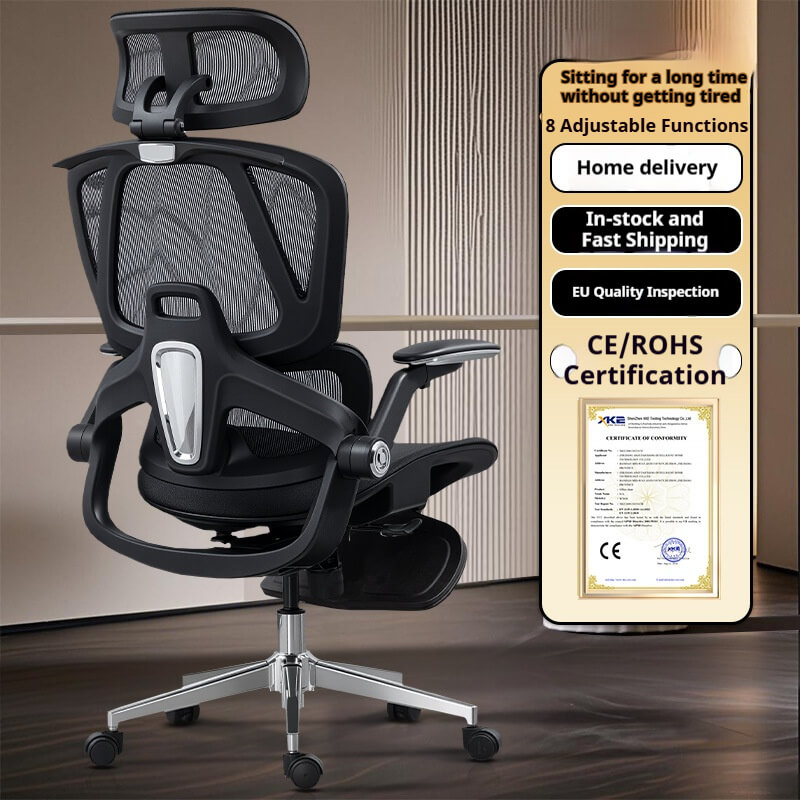
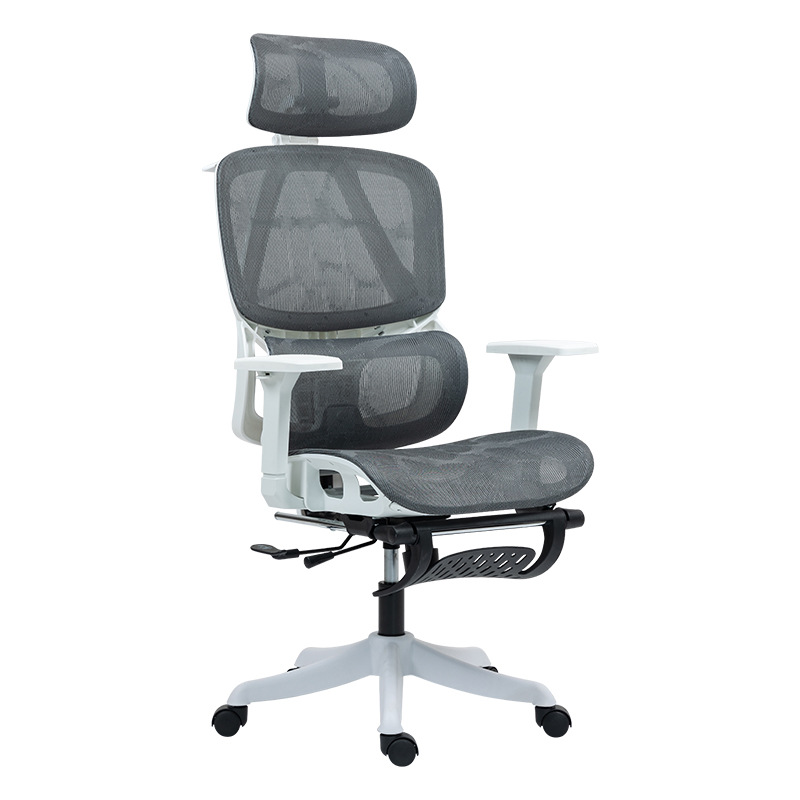
Picture a chair that’s been in service for a few years.
It looks fine from across the room. Sit in it, though, and you notice things:
- a faint creak when you lean back;
- a gas cylinder that sinks slightly over the course of a day;
- an armrest with more play than it should have;
- a base that feels less solid than it once did.
Should it go back on the market as-is?
Should one component be replaced?
Should the chair receive a full refurbishment?
Or should it be removed from circulation altogether?
Put the same chair in front of ten people who resell, refurbish, maintain, or manage office furniture, and you may get ten different answers.
Some will say:
“Used furniture is supposed to show wear.”
Others will say:
“If it is being sold as refurbished, it should meet a higher standard than ‘it still works.’”
Both positions can be reasonable.
That is exactly the problem.
The industry does not lack repair knowledge. It lacks a consistent framework for deciding when repair, refurbishment, upgrading, continued use, parts harvesting, or retirement actually makes sense.
Why “Should I Refurbish It?” Is Not a Simple Question
The instinct is to treat the decision as binary:
Broken → fix it.
Not broken → leave it.
That logic breaks down quickly.
The actual decision spans several dimensions:
- Safety — Does the condition create a meaningful risk to the user?
- Function — Does the chair still perform its intended function?
- Condition — Is the issue cosmetic, functional, structural, ergonomic, or some combination?
- Market Position — What standard does the intended buyer expect?
- Economics — Does the investment recover enough value to justify itself?
- Future Risk — What is the expected cost of leaving the issue unresolved?
A chair can still be usable and still be unsuitable for a particular resale market.
Just as often, a chair can have a minor defect that does not justify a complete teardown.
Repairability is not the same thing as a refurbishment requirement.
The first decision is therefore not:
“What part should I replace?”
It is:
“What outcome are we trying to achieve?”
Step One: Classify the Problem, Not the Part
Before deciding what to replace, determine what kind of problem is actually present.
Most office-chair issues fall into five broad categories.
1. Cosmetic
Examples include:
- scuffs
- fabric wear
- faded finishes
- minor surface damage
These may affect perceived value without creating a functional or safety problem.
2. Functional
Examples include:
- a tilt lock that no longer holds;
- a gas cylinder that no longer maintains height;
- an adjustment mechanism that no longer operates correctly.
These directly affect how the chair performs.
3. Structural
Examples include:
- cracks;
- weakened joints;
- deformation;
- damaged mounting interfaces;
- compromised bases or frames.
These require a different level of attention because the underlying structure may be affected.
4. Ergonomic
Examples include:
- insufficient armrest adjustment;
- loss of intended seat depth;
- damaged lumbar support;
- changes in operating geometry.
The chair may still function, but no longer perform as intended.
5. Safety-Critical
Any condition that could create a meaningful failure risk under normal use belongs here.
A safety-critical issue should not be justified away by resale value or repair economics.
Safety is a gate, not a score.
If a component or structure cannot reasonably meet the required safety standard, the chair should not move forward simply because the refurbishment appears profitable.
The Four Economic Accounts Behind the Decision
Once safety and basic functional requirements are understood, the economic decision can be evaluated through four core accounts.
These accounts should not be confused with a single “repair cost.”
1. The Cost of Doing Nothing
If the issue goes unaddressed, what does it actually cost?
“Still works” does not automatically mean “zero cost.”
Possible consequences include:
- lower resale value;
- lower close rate when defects are noticed;
- buyer complaints;
- returns;
- additional service calls;
- technician rework;
- longer inventory dwell time;
- project delays;
- reputational cost with repeat customers.
A part may cost $20.
The cost of ignoring it may be much larger.
The cost of inaction is often the least visible account — and one of the most important.
2. The True Cost of the Repair
The parts invoice is not the real repair cost.
A more useful estimate includes:
Parts + Labor + Shipping + Tooling + Downtime + Rework Risk
A $20 gas cylinder illustrates the point.
If installation takes 40 minutes once disassembly, testing, and possible rework are included, the real cost is several times higher than the component price alone.
The same principle applies to:
- mechanisms;
- armrests;
- casters;
- bases;
- adapters;
- upholstery components.
A cheap part is not necessarily a cheap repair.
3. The Value the Repair Actually Creates
The next question is:
What value does the repair recover or create?
That can include:
- increased resale value;
- improved buyer acceptance;
- access to a higher-value market;
- additional useful life;
- lower expected service claims;
- better consistency across a refurbished batch.
Not all repairs create value equally.
Some repairs simply prevent further depreciation.
Others genuinely increase the commercial value of the chair.
That distinction matters.
A $40 repair that adds $20 of market value is not automatically attractive.
A $40 repair that protects $150 of resale value or prevents a high-cost post-sale failure is a different calculation.
4. The Expected Cost of Future Failure
This is the account most often omitted.
The question is not:
“Does it still work today?”
The better question is:
“What is the likelihood of failure later, and what will that failure cost if it happens?”
A simple model is:

Illustrative example
Consider an aging gas cylinder that still functions today.
| Replace Now | Leave in Service | |
| Immediate component cost | $30 | $0 |
| Illustrative probability of failure within 12 months | — | ~40%* |
| Illustrative downstream cost if failure occurs | — | $150–$250* |
| Illustrative expected downstream cost | — | $60–$100* |
*Illustrative assumptions only. Actual failure probability and downstream cost depend on component age, condition, usage, environment, warranty obligations, and service practices.
In this example, the $30 “saving” from doing nothing is not necessarily a saving once expected failure cost is considered.
The point is not that every aging cylinder should be replaced.
The point is:
Preventive replacement should be evaluated against expected future cost, not judged only by the fact that the part still works today.
The Market Sets the Standard
There is no single refurbishment threshold that applies to every chair.
The same chair can be acceptable in one market and unacceptable in another.
Low-Cost Used Market
Buyers may accept:
- visible wear;
- minor cosmetic flaws;
- reasonable signs of prior use;
- minor non-critical noise.
Refurbished Market
Expectations usually rise:
- core mechanisms should function reliably;
- critical components should meet the intended use;
- cosmetics should meet a defined baseline.
Premium Refurbished / Corporate Resale
The standard can rise further:
- consistent appearance;
- ergonomic performance;
- smooth operation;
- reduced defect risk;
- defined warranty expectations.
Therefore, the first market question is not:
“What is wrong with this chair?”
It is:
“Who is this chair ultimately going to, and what standard does that market require?”
Warranty and seller responsibility should also be considered.
A chair sold “as-is” is not evaluated under the same risk model as a chair sold with a six-month or one-year warranty.
Scale Changes the Math
A decision that makes sense for one chair may not make sense for 1,000 chairs.
Volume changes:
- labor efficiency;
- bulk-parts pricing;
- inspection cost per unit;
- inventory exposure;
- rework cost;
- process standardization opportunities.
For one chair, the question may be:
“Should I fix this unit?”
For a 1,000-chair project, the question may become:
“Should we establish a standard response for this defect category across the entire batch?”
This is where refurbishment becomes an operations problem rather than a series of individual repair decisions.
A defect that is uneconomical to handle one chair at a time may become economical when:
- parts are purchased in volume;
- labor is batched;
- tools are reused;
- inspection is standardized;
- work is organized by defect category.
From “Repair or Not” to an Asset Strategy
Once the four economic accounts, safety requirements, market position, warranty exposure, and scale are considered, the decision should no longer be binary.
There are at least six legitimate outcomes.
| Decision | Meaning |
| Keep | No action is required for the intended market and use |
| Repair | Correct the specific issue without broader refurbishment |
| Refurbish | Restore multiple areas to meet the target condition |
| Upgrade | Replace a component with a better or more suitable one |
| Harvest | Recover usable components and retire the remainder |
| Retire | Remove the chair from circulation |
Reducing every case to “repair” or “do nothing” throws away four other legitimate strategies.
A Decision Framework That Make Trade-Offs Visible
A practical framework does not need to produce a magical universal score.
Instead, it should make the inputs explicit.
- Condition
- Structural condition
- Functional condition
- Cosmetic condition
- Ergonomic condition
- Economics
- Refurbishment cost
- Post-refurbishment value
- Labor
- Inventory
- Expected failure cost
- Context
- Target market
- Warranty obligation
- Usage intensity
- Project quantity
This creates a decision sequence:


The purpose is not to replace professional judgment.
It is to make the judgment:
- visible;
- repeatable;
- explainable;
- comparable.
Three Illustrative Cases
Case 1 — Good Cosmetic Condition, Minor Noise
- The chair has a small creak but remains structurally sound and functionally correct.
- Repair cost is low.
- The intended market is general used resale where minor operating noise is reasonably expected and disclosed.
- The issue does not affect safety or core function.
- Possible outcome: Keep
The key point is that a defect does not automatically justify a repair simply because a repair is technically possible.
Case 2 — Premium Chair With an Aging Gas Cylinder
- The chair has strong resale value.
- The gas cylinder still works, but shows age and increasing height instability.
- Replacement cost is low relative to the chair’s value.
- The target market expects reliable operation and the seller assumes some post-sale responsibility.
- The expected cost of failure can therefore exceed the cost of preventive replacement.
- Possible outcome: Repair before sale
Again, the point is not that every aging cylinder should be replaced.
The point is that the decision changes when resale value, warranty exposure, and expected failure cost are considered together.
Case 3 — 500 Chairs With Five Defect Categories
A 500-chair batch contains:
- gas-lift issues;
- worn casters;
- armrest failures;
- mechanism problems;
- cosmetic defects.
A chair-by-chair approach creates repeated decisions and inconsistent labor.
A batch approach can instead:

The economics can change because:
- parts can be purchased in volume;
- labor can be organized by task;
- inspection can be standardized;
- similar problems can share one solution.
- Possible outcome: Classify, standardize, and batch-refurbish
The optimal process for a fleet is often different from the optimal process for a single chair.
Six Common Mistakes
1. Pricing the Part and Stopping There
Ignoring labor, downtime, rework, and installation turns a partial number into a false total.
2. Judging Only by “Does It Still Work?”
A component can be functioning today while carrying a meaningful future failure risk.
3. Judging Only by Appearance
A chair can look excellent while having a functional or structural problem.
4. Applying One Standard to Every Market
The acceptable condition for low-cost used furniture is not necessarily acceptable for premium refurbished furniture.
5. Applying Unit Economics to Batch Economics
A process that loses money on one unit may become profitable when 500 or 1,000 units are handled systematically.
6. Ignoring the Expected Cost of Failure
Saving money today can create a larger liability after resale.
What Should a Real Refurbishment Standard Answer?
A useful standard should not begin with:
“What should be replaced?”
It should begin with:
“What outcome are we trying to achieve, at what total cost, and with what acceptable level of risk?”
That changes the order of the decision.
Instead of:
Problem—— Replace Part
The process becomes:
Condition——Risk——Market Requirement——Economic Return——Strategy——Validation
Only then should the question become:
Which component, if any, should be replaced?
The Full Framework in One Pass
For every chair, ask:
- What is actually wrong?Cosmetic, functional, structural, ergonomic, or safety-critical?
- What happens if nothing is done?Resale loss, complaints, downtime, future failure, or no meaningful consequence?
- What will the repair genuinely cost?Parts, labor, shipping, downtime, tooling, and rework?
- What value will the repair recover or create?Higher resale value, higher acceptance, longer useful life, or lower future service cost?
- What is the expected cost of future failure? Probability×downstream consequence
- What does the target market require?Used, refurbished, premium refurbished, corporate, or warranty-backed?
- Does scale change the economics?One chair, 50 chairs, or 5,000 chairs can produce different optimal answers.
- What strategy best fits the result?Keep / Repair / Refurbish / Upgrade / Harvest / Retire
There Is No Universal Answer — and That Is the Point
There is no single refurbishment threshold that applies to every chair, every market, or every project.
A good framework is not supposed to make the decision for you.
It is supposed to make the trade-offs visible.
It should allow two people looking at the same chair to explain why they reached different decisions — or, ideally, allow them to reach the same decision because they are using the same assumptions.
Whether the job involves one chair or one thousand, the objective is the same:
Make the decision measurable, repeatable, and economically defensible.
The best refurbishment decision is not necessarily the one that makes the chair perfect.
It is the one that achieves the condition the market actually requires, at the lowest reasonable total cost and risk, for whatever the chair’s next life is going to be.
And sometimes that means replacing a part.
Sometimes it means doing nothing.
Sometimes it means upgrading.
Sometimes the correct decision is to recover the usable components and retire the chair.
The goal is not to refurbish more chairs. The goal is to make better refurbishment decisions.