A Provenance, Value, and Next-Life Decision Framework
A used office chair is not defined by the moment it reaches a second owner. Its condition, value, and risk were largely determined long before it was called “used.”
A Question of Value Beyond the Initial Price
Why do companies choose used office chairs in the first place?
Because the economics can be attractive.
A used commercial chair can provide access to:
- established ergonomic designs;
- higher-quality components;
- discontinued or premium models;
- large quantities of compatible inventory;
- lower acquisition cost than equivalent new seating.
For a company furnishing a workplace, a reseller rebuilding inventory, or a refurbisher processing corporate furniture, the ability to acquire a large number of commercially useful chairs at a lower entry price can create a meaningful advantage.
But a low acquisition price does not automatically mean a low total cost.
The better question is:
What did we actually acquire, what condition is it in, and what will it cost to give it a commercially viable next life?
Before a Chair Becomes “Used,” Where Did It Come From?
Does every used office chair have the same history?
No.
“Used” describes ownership status, not provenance.
Two chairs can look identical on a warehouse floor while having completely different histories.
- One may have spent five years in a normal corporate office.
- Another may have spent five years in a 24/7 control room.
- Another may have been used intermittently in an executive office and then stored for two years.
- Another may have already been repaired once, rebuilt from mixed components, or held in inventory after a failed refurbishment project.
These histories matter because they influence:
- wear;
- remaining useful life;
- failure risk;
- completeness;
- component compatibility;
- resale value;
- refurbishment cost.
Main Routes into the Second-Hand Market
What are the main ways an office chair enters the second-hand market? A practical provenance map can include several routes:
- Corporate Relocation or Office ClosureLarge numbers of chairs can leave a company when an office relocates, downsizes, closes, consolidates, or changes its furniture standard. This channel can create relatively large, model-consistent batches.
- Corporate Furniture RefreshA company may replace functioning chairs because it is changing brand standards, workplace design, ergonomic policy, or office aesthetics. This is important because a chair can become “used” without being functionally worn out.
- Dealer Trade-In or BuybackFurniture dealers or service providers may recover existing chairs during a workplace replacement project. The advantage can be better traceability and more predictable quantities.
- Lease or Contract ReturnsLeased or contract-managed furniture may return to a supplier or asset manager at the end of an agreement. Condition and documentation can vary significantly depending on the contract and use history.
- Liquidation and AuctionFurniture can enter secondary markets through corporate liquidation, auction, insolvency, and asset disposition. Prices may be attractive, but condition consistency and completeness can be less predictable.
- DonationChairs no longer required by one organization may be transferred to nonprofits, community organizations, schools, or other users. Some are usable immediately. Others may require preparation before resale or reuse.
- Refurbisher or Reseller AcquisitionA specialist may purchase mixed inventories from several upstream sources and consolidate them into a secondary market. At this stage, the chair’s physical condition may be more standardized than its original provenance.
- Parts Recovery and Material RecoverySome chairs enter the recycling ecosystem only after their remaining product value has already been judged insufficient for whole-chair reuse. That does not necessarily mean every component has zero value.
Why Does the Chair’s Origin Matter?
Because the source often predicts the condition more effectively than the word “used.”
Imagine two batches:
Batch A
500 chairs from a corporate office that was refreshed after five years.
- same model family;
- same office environment;
- similar usage;
- consistent quantity;
- limited component variation.
Batch B
500 chairs assembled from liquidation, auction, donation, and mixed reseller inventory.
- many models;
- different ages;
- different usage histories;
- unknown repairs;
- different component conditions.
Both are “500 used chairs.”
But the economic problem is completely different.
Batch A may support:
Standardized Inspection + Standardized Refurbishment + Batch Purchasing
Batch B may require:
Classification + Sorting + Model Identification + Selective Refurbishment + Parts Harvesting
So provenance is not background information.
It is an input to the refurbishment strategy.
The Advantages and Disadvantages of Used Seating
What are the biggest advantages of buying used office chairs?
Is the lower purchase price the main advantage? It is one advantage, but not the only one. Used office chairs can offer:
- Lower Capital Cost: The initial acquisition price can be significantly below the original purchase price of the chair.
- Access to Premium Models: A secondary market can make previously expensive commercial seating available to buyers who would not purchase it new.
- Existing Engineering Value: The chair already contains an established mechanism, frame, ergonomic geometry, seat structure, base, and adjustment system. You are not paying to develop the entire product from zero.
- Large-Quantity Acquisition: Corporate liquidations and office transitions can release hundreds or thousands of matching units, creating opportunities for fleet reuse, resale, refurbishment, and standardized maintenance.
- Lower Replacement of New Products: Extending the life of an existing chair can reduce the need to manufacture and purchase another complete chair.
What are the disadvantages?
What is the biggest weakness of used office chairs?
Uncertainty.
A new chair starts with relatively clear specifications and a known production state. A used chair may come with uncertainty about:
- age;
- previous use;
- service history;
- hidden wear;
- component condition;
- previous modifications;
- storage environment;
- remaining service life.
That uncertainty has economic value. The cheaper the acquisition becomes, the easier it is to overlook it.
Acquisition Price vs. Economic Value
Does a low purchase price create a false sense of savings?
It can.
Consider two illustrative examples:
| Metric | Chair A | Chair B |
| Purchase price | $180 | $220 |
| Additional recovery cost | $150 | $60 |
| Total next-life cost | $330 | $280 |
| Expected resale value | $300 | $380 |
| Illustrative contribution | –$30 | +$100 |
Chair B cost more to acquire.
Yet it produced the better economic outcome.
The lesson is simple:
Acquisition price is not the same thing as economic value.
Why can a more expensive used chair actually be the better purchase?
Because value is determined by the relationship between:
Purchase Price + Recovery Cost + Risk
and:
Recoverable Value+ Future Usefulness
A higher-priced chair may have:
- better structural condition;
- better brand demand;
- stronger resale value;
- fewer missing components;
- lower refurbishment requirements;
- more predictable future performance.
A cheaper chair can become expensive if too much of its remaining value must be rebuilt.
What to Check Before Buying: The Intake Assessment
The first assessment should not begin with the replacement-parts catalog.
It should begin with the asset itself.
A practical intake can include:
- Identity: manufacturer; model; approximate age; configuration.
- Provenance: previous environment; known service history; source channel; storage history.
- Condition: cosmetic; functional; structural; ergonomic; safety-critical.
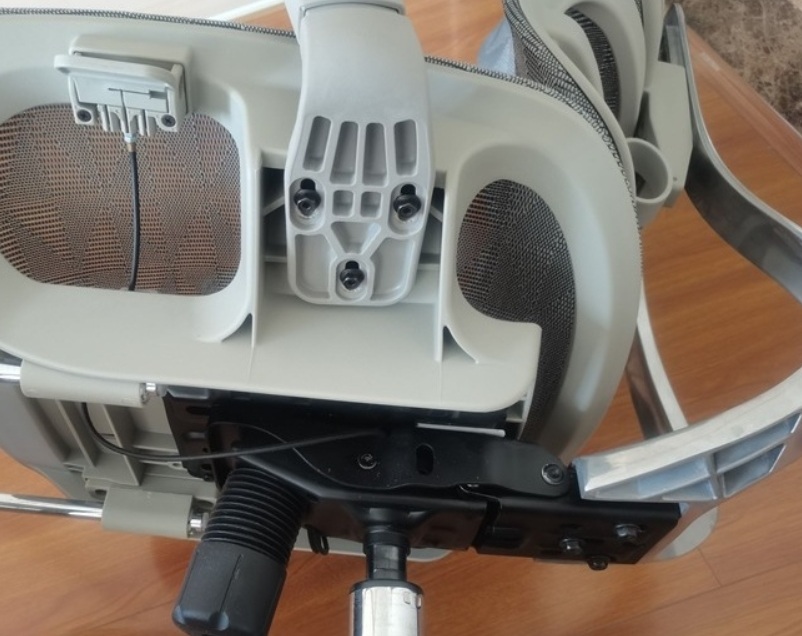
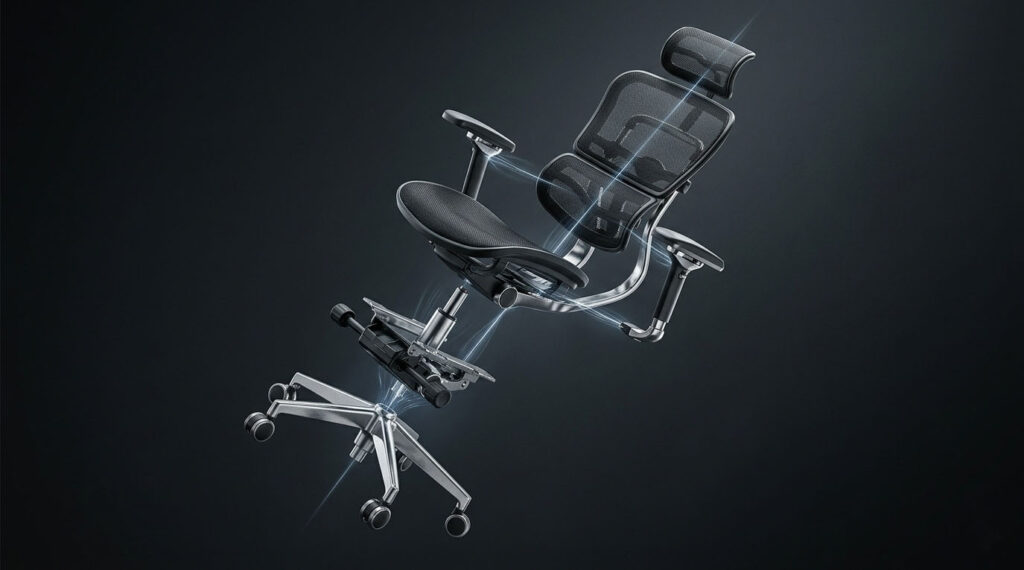
- Completeness: armrests; mechanism; casters; gas cylinder; base; hardware; other model-specific components.
- Market: target buyer; expected resale condition; warranty expectations.
- Economics: acquisition cost; preparation cost; expected resale value; inventory time; failure risk.
Can the source channel help predict refurbishment cost?
Yes, but only as an input. For example:
- Corporate Refresh: May offer consistent models, predictable quantities, and relatively uniform use. This can support batch processing.
- Liquidation: May offer a lower acquisition cost and large volume, but can also create more mixed conditions, missing parts, and greater inspection requirements.
- Auction: May offer attractive unit economics, but buyers may have less information before acquisition.
- Dealer Trade-In: May offer greater model consistency and better documentation.
- Mixed Reseller Inventory: Can provide broad model variety but may require more sorting and classification.
The source does not determine the final answer. It changes the probability distribution of the problem you are buying into.
When Is a Used Chair Worth Refurbishing?
A chair becomes a stronger refurbishment candidate when several conditions align:
- the underlying frame is sound;
- the market value remains strong;
- the model is still desirable;
- replacement components are available or reproducible;
- repair costs are manageable;
- future failure risk can be controlled;
- the target market rewards the improved condition.
A chair becomes a weaker candidate when:
- structural risk is high;
- parts are extremely difficult to obtain;
- refurbishment cost approaches or exceeds recoverable value;
- resale demand is weak;
- the remaining life is uncertain.
Does every defect justify replacing a component?
No.
A defect should be evaluated in context.
- A light scratch may require no intervention.
- A loose armrest may require repair if the target market expects a higher condition standard.
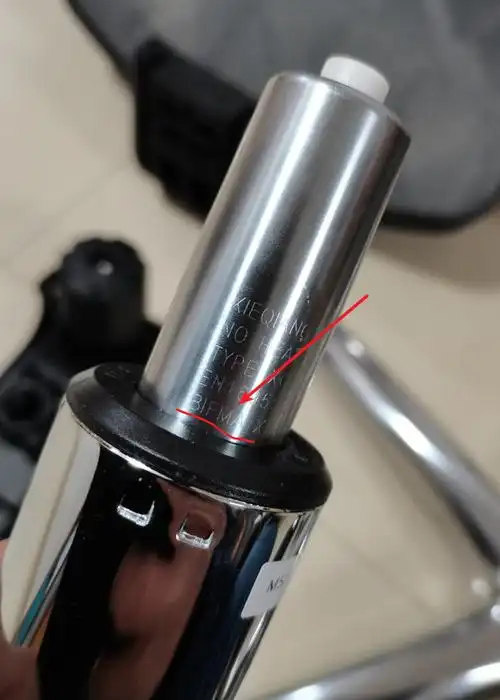
- A gas cylinder may still function but have enough age and uncertainty to justify preventive replacement in a warranty-backed premium resale program.
- A structurally compromised base may make further refurbishment inappropriate.
Therefore:
The correct question is not “Can we replace it?” but “Does replacing it improve the next-life economics and risk profile enough to justify the investment?”
Defining the Restoration Spectrum
These terms should not be treated as interchangeable:
- Used: The chair changes ownership or enters a secondary market. No significant restoration is necessarily implied.
- Repaired: A specific defect is corrected.
- Refurbished: Multiple aspects of the chair are restored to meet a defined target condition.
- Remanufactured: The product undergoes a deeper restoration process involving substantial disassembly, inspection, replacement or restoration of components, reassembly, and validation.
- Upgraded: A component or system is improved beyond its original configuration.
For buyers, the distinction matters. For sellers, it defines the level of investment and the condition being promised.
Next-Life Channels: Where Should a Recovered Chair Go?
Not every recovered chair belongs in the same channel. A practical classification can be:
- Keep / Reuse: Condition already meets the intended market standard.
- Repair: A localized issue should be corrected.
- Refurbish: Several areas require systematic restoration.
- Upgrade: An improved component can increase value or extend usability.
- Remanufacture: A deeper restoration process is economically justified.
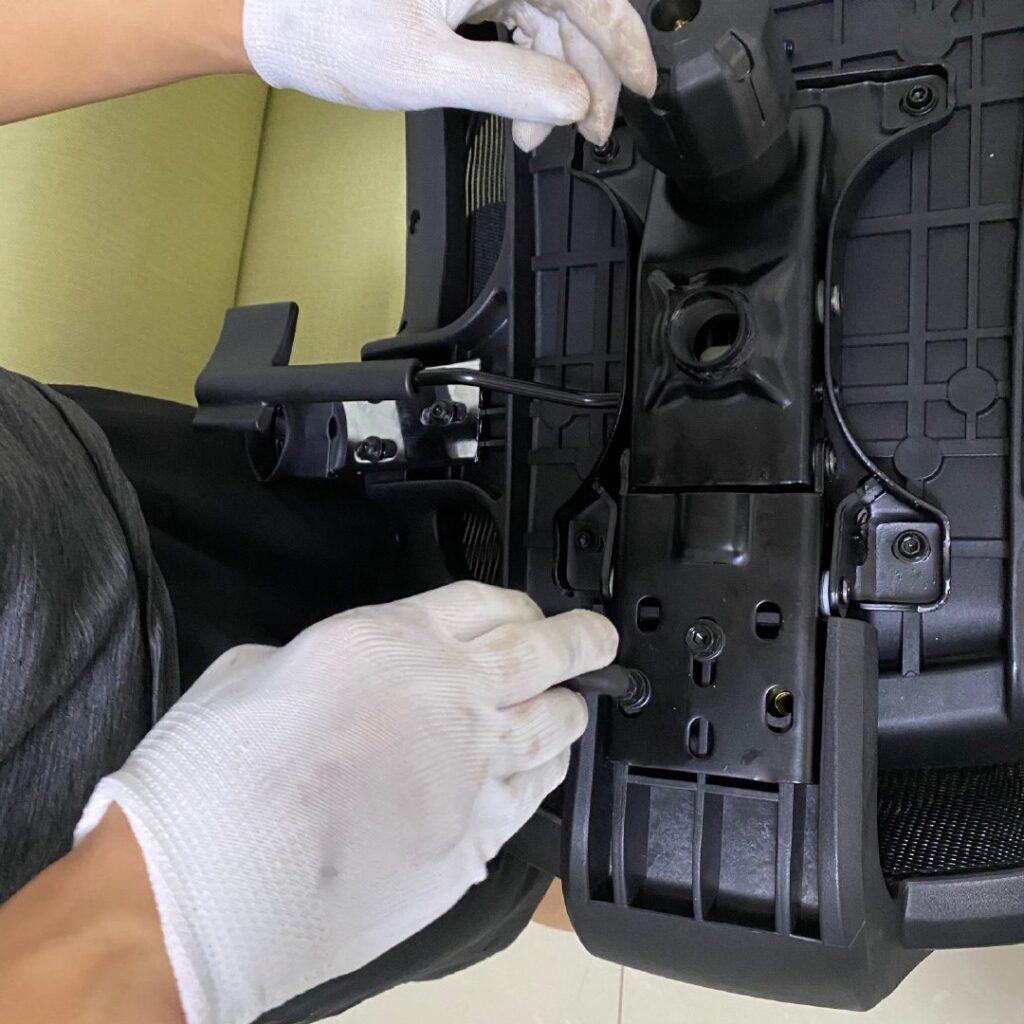
- Parts Harvest: The complete chair is not worth restoring, but individual components remain valuable.
- Recycle: Whole-product recovery no longer makes economic sense, but materials retain value.
- Retire: Safety or economics no longer justify continued use.
What should determine that classification?
A useful decision sequence is:
Safety——Condition——Provenance——Market Requirement——Risk——Total Cost——Recoverable Value——Scale——Next-Life Channel
This is important because two chairs with identical appearance may deserve completely different treatment if their provenance, risk, target market, repair cost, and expected resale value are different.
Can a chair be worth more as parts than as a complete product?
Absolutely.
This is one of the most overlooked parts of asset recovery.
A chair may require $170 to restore as a complete unit, but the expected post-refurbishment value may be only $180. That leaves very little economic room.
However, the same chair may contain recoverable components worth:
- Base: $40
- Mechanism: $30
- Armrests: $25
- Casters: $15
- Other hardware: $10Total component recovery value: $120
In this case, the whole chair may not justify refurbishment. But the chair may still be a valuable source of components.
When should the whole chair be retired?
Retirement becomes more reasonable when:
- structural or safety issues cannot be economically controlled;
- restoration cost exceeds recoverable value;
- key components cannot be reliably restored;
- the target market will not support the required investment;
- useful components have already been harvested.
At that point, the remaining value may move from whole product to components and finally to materials. The objective is to reduce value loss as gradually as practical.

Does Scale Change the Decision?
Yes.
One chair and 1,000 chairs should not necessarily follow the same process.
At scale, the economics of labor, parts procurement, inspection, transportation, inventory, quality control, and engineering can change significantly.
A defect that is not worth addressing individually may become worth standardizing when found across hundreds of identical chairs.
The process can therefore change from chair-by-chair judgment to category-based decision standards.
The Real Economic Question
It is not:
“How much cheaper is this chair than a new chair?”
It is:
“How much does this asset cost to acquire, prepare, hold, support, and ultimately place into its next viable market?”
A more complete model is:
Total Next-Life Cost = Acquisition + Inspection +Repair + Refurbishment +Labor + Logistics + Inventory + Expected Failure Cost + Warranty Exposure
Then compare that with:
Next-Life Value = Expected Resale Value + Extended Useful Life + Market Upgrade Value + Future Reuse Potential
When is buying used office furniture actually a good business decision?
When the remaining value is large enough to compensate for:
- acquisition uncertainty;
- recovery cost;
- operational risk;
- inventory cost;
- future obligations.
A used chair does not need to be perfect. It needs to be economically recoverable, technically serviceable, and appropriate for its intended next market.
That is a much more useful standard than simply calling something “good” or “bad.”

A Framework, Not a Universal Rule
There is no universal standard for every used chair.
And that is precisely why provenance and classification matter.
- A corporate-refresh batch of high-end ergonomic chairs should not necessarily be evaluated the same way as mixed auction inventory.
- A chair intended for premium corporate resale should not necessarily be restored to the same level as a low-cost used chair.
- A chair sold with a warranty should not necessarily carry the same unresolved risk as an as-is sale.
There is no single universal threshold. There should instead be a repeatable decision framework.
What should a responsible used-office-chair decision framework ultimately answer?
It should answer five questions:
- Where did the chair come from? (Provenance)
- What condition is it actually in? (Condition)
- What does its target market require? (Market)
- What will the next life really cost? (Economics + Risk)
- Where can the remaining value be preserved most effectively? (Reuse / Repair / Refurbish / Upgrade / Remanufacture / Parts Harvest / Recycle / Retire)
Conclusion
Used office chairs are not automatically better than new chairs. They are not automatically worse either.
They represent a different economic structure.
- The advantage is potentially: lower acquisition cost + access to existing product value
- The disadvantage is potentially: uncertainty + recovery cost + future risk
The business opportunity lies in understanding the difference.
A well-sourced batch with consistent models and strong residual value can be an excellent asset. A cheap mixed inventory with unknown condition can become a warehouse full of hidden liabilities. The purchase price alone cannot tell you which one you have.
The purpose of this framework is not to tell a refurbisher to buy a chair, nor to tell a reseller to replace a component. Its purpose is to make the trade-offs visible:
Provenance——Condition——Market——Risk——Total Cost——Recoverable Value——Scale——Next-Life Strategy
A used office chair is not valuable because it is cheap. It is valuable when its remaining product, component, or material value can be converted into a viable next life at a reasonable total cost and risk.