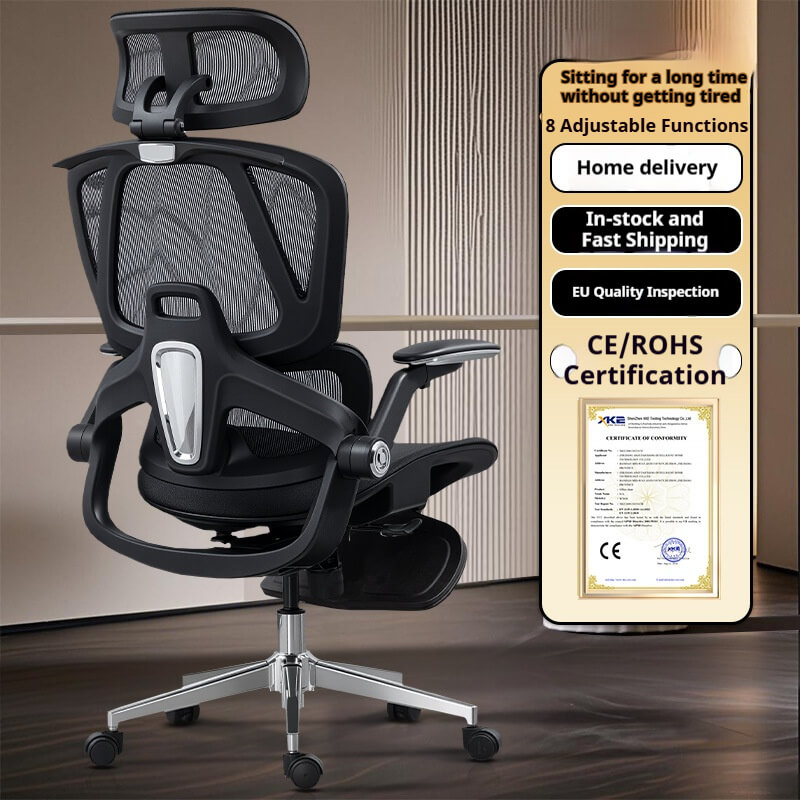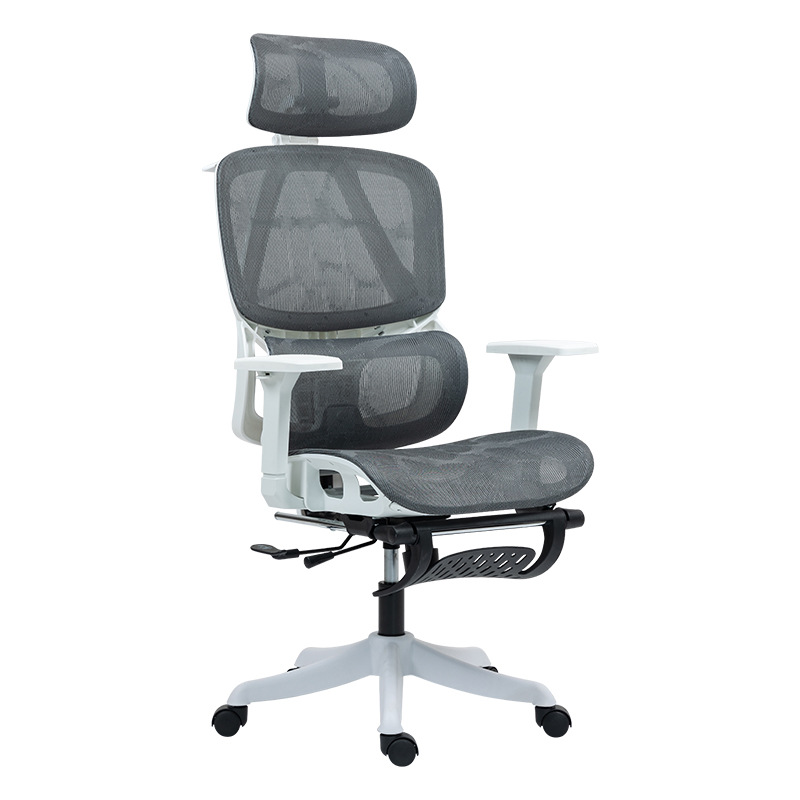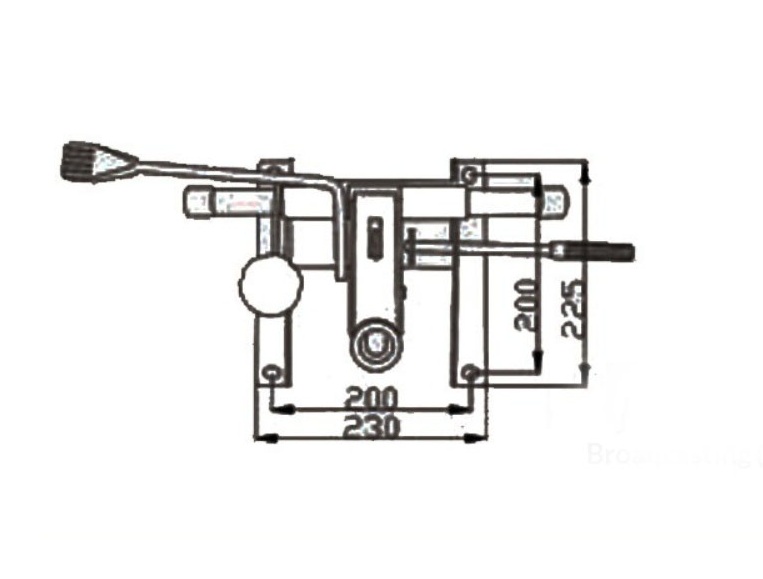
For refurbishers, repair companies, and used-office-furniture businesses, the value of a chair mechanism is not the price of the part. It is the ability to turn a difficult chair problem into a workable, repeatable, and economically viable solution.
Why is the chair mechanism such an important replacement component?
Because it sits at the center of the chair’s mechanical system.
It connects the seat structure above with the gas lift and base below, while also controlling functions such as:
- tilt;
- locking;
- tension;
- seat movement;
- lever operation;
- load transfer.
For a refurbisher, the important question is therefore not:
“How much does this mechanism cost?”
It is:
“Can this mechanism restore the chair to a condition where the chair can be sold, reused, or kept in service?”
That is where the real value begins.
Why can one failed mechanism make an otherwise valuable chair difficult to sell?
Because the chair and the replacement mechanism are not independent.
A high-value used chair may still have:
- a good frame;
- good upholstery;
- a desirable brand;
- usable armrests;
- a serviceable base.
But if the original mechanism is damaged or discontinued, the entire chair can become difficult to restore.
The result is often not a $50 mechanism problem.
It is:
a much larger asset becoming stuck in inventory.
For a refurbisher, restoring the mechanism can therefore recover value far beyond the value of the component itself.
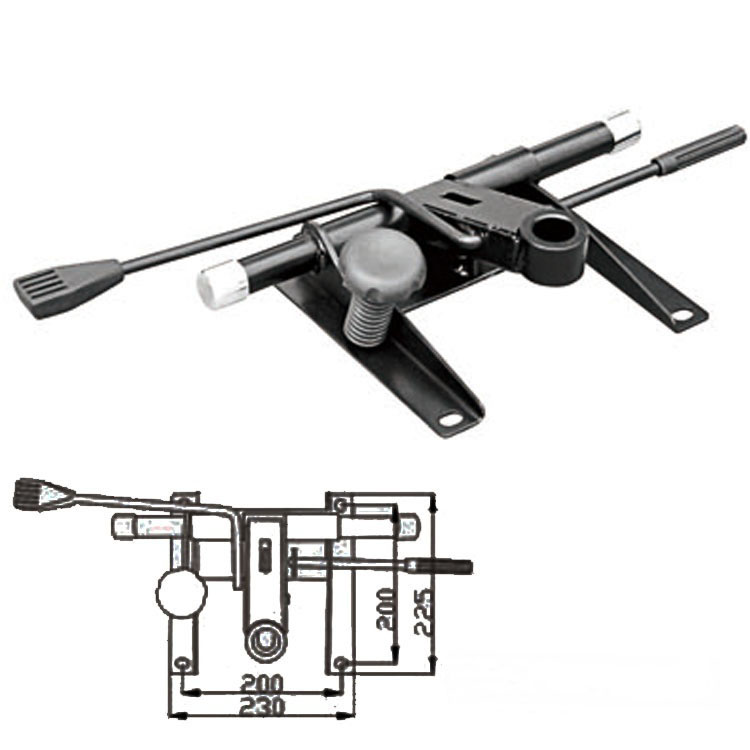
Why can’t a refurbisher simply buy the closest standard mechanism?
Sometimes a standard mechanism is exactly the right answer.
But “looks similar” does not mean “works correctly.”
Compatibility can depend on:
- mounting hole pattern;
- hole diameter;
- seat-pan geometry;
- mechanism height;
- pivot position;
- tilt geometry;
- gas-lift interface;
- lever location;
- surrounding clearance;
- required operating range.
A mechanism can physically bolt onto a chair while still changing how the chair behaves.
That is why the first question should be:
What does this chair actually require?
Not:
Which mechanism looks closest in the catalog?
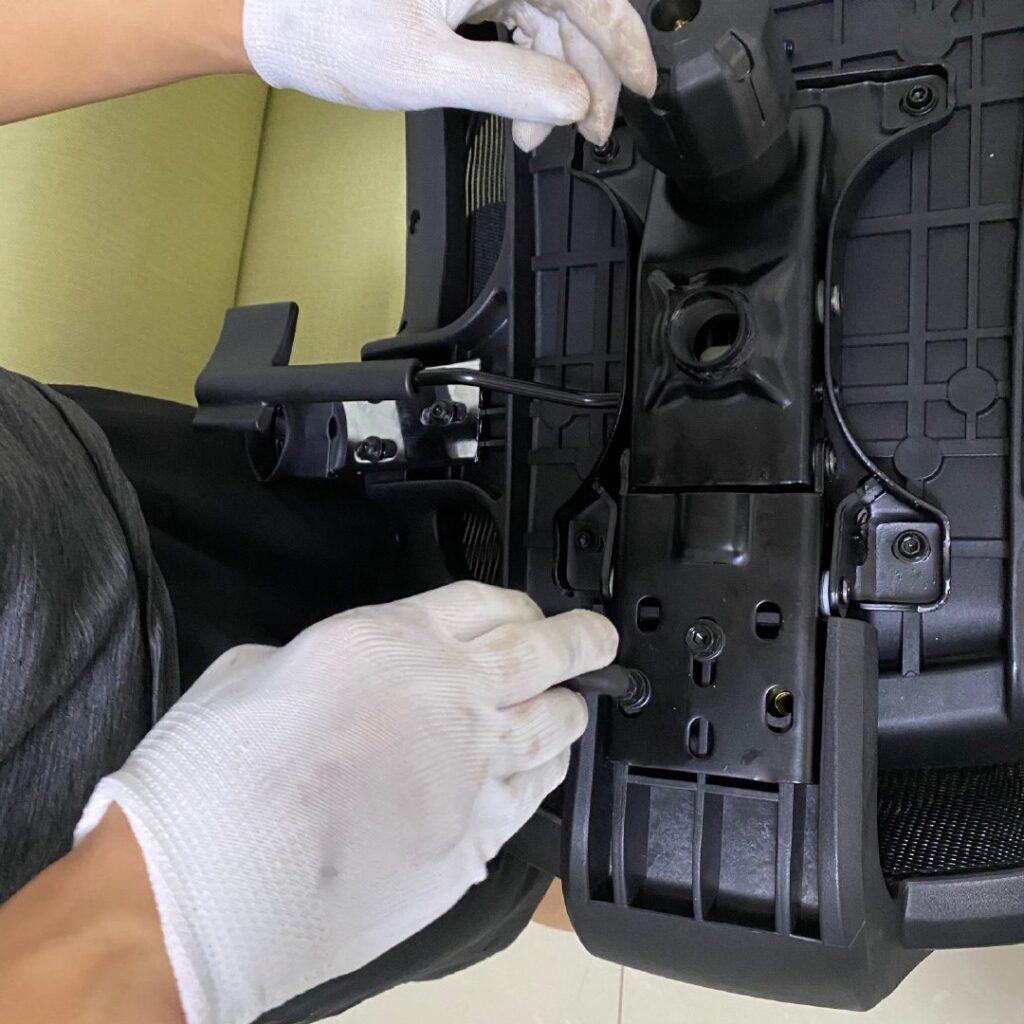
What do you need to know before deciding on a replacement mechanism?
At minimum, the project should establish:
- chair model;
- original mechanism;
- mounting pattern;
- seat-pan dimensions;
- required tilt function;
- lock positions;
- seat-height relationship;
- gas-lift interface;
- lever location;
- clearance around moving components;
- expected user load;
- intended use.
For discontinued chairs, the original mechanism or a physical sample can provide an important engineering reference.

What if the original mechanism is discontinued?
That does not automatically mean the chair is finished.
There are several possible solution paths:
1. Standard Replacement
Use an existing mechanism when the interface and function already match.
2. Modified Replacement
Use an existing mechanism and change the chair-side interface where the difference is limited.
3. Adapter Solution
Create an intermediate mounting solution where that is more economical than redesigning the mechanism itself.
4. Reverse-Engineered Replacement
Reconstruct the original mechanism or a functionally equivalent design from:
- physical samples;
- measurements;
- mating parts;
- CAD data;
- functional requirements.
5. New Custom Configuration
Redesign the mechanism when the original architecture no longer meets the required function, geometry, or application.
The correct solution depends on the actual problem.

How do you know whether to reproduce the original mechanism or redesign it?
This is one of the most important decisions.
Exact reproduction can make sense when:
- the original design is still appropriate;
- compatibility must remain unchanged;
- the quantity justifies development;
- the original function is still valuable.
Redesign may make more sense when:
- the original part had known weaknesses;
- the original interface is obsolete;
- manufacturing cost can be reduced;
- multiple chair models can be grouped;
- a stronger or more practical architecture is available.
The goal should not automatically be:
Copy the old part.
The goal should be:
Restore the required function and compatibility with the most practical total cost and risk.
How can a mechanism be reverse-engineered without the original CAD?
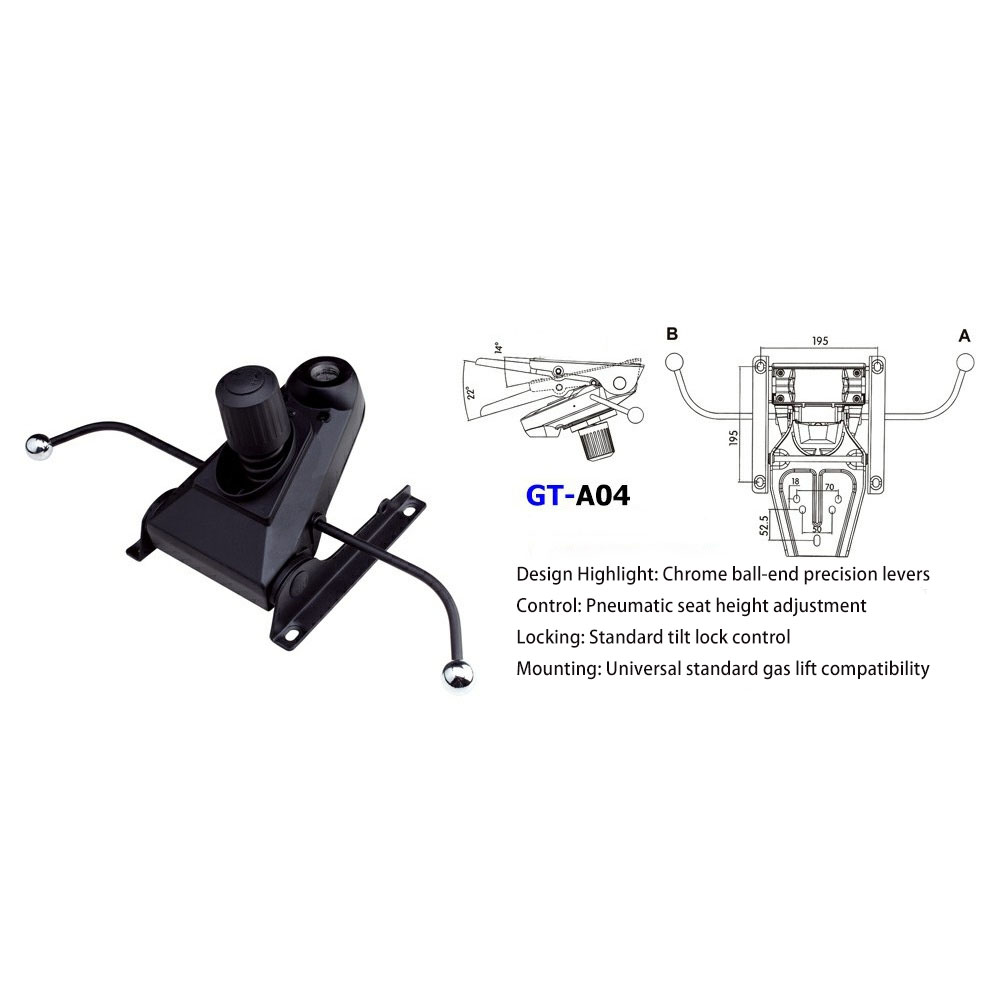
A physical sample can be enough to start in many cases.
A typical process is:
Physical Sample——Teardown \& Inspection——Dimensional Measurement——CAD Reconstruction——Interface Review——Prototype——Physical Fit Validation——Production
The important point is that the physical sample is not simply copied blindly.
The engineer needs to distinguish:
- original geometry;
- wear;
- deformation;
- manufacturing tolerance;
- previous modifications.
Mating parts and the complete chair can provide additional reference information.
How do you know the reconstructed CAD is actually correct?
The CAD model should be checked against the features that matter to the final assembly.
These can include:
- mounting holes;
- pivot axes;
- reference surfaces;
- critical clearances;
- mechanism height;
- functional angles;
- gas-lift interface;
- lever positions.
The purpose is not to create a visually identical 3D model.
The purpose is to create an engineering model that can support:
Prototype——Validation——Production
Why is a physical prototype so important?
Because CAD can tell you whether the geometry appears correct.
A physical prototype can tell you whether the mechanism actually works with the chair.
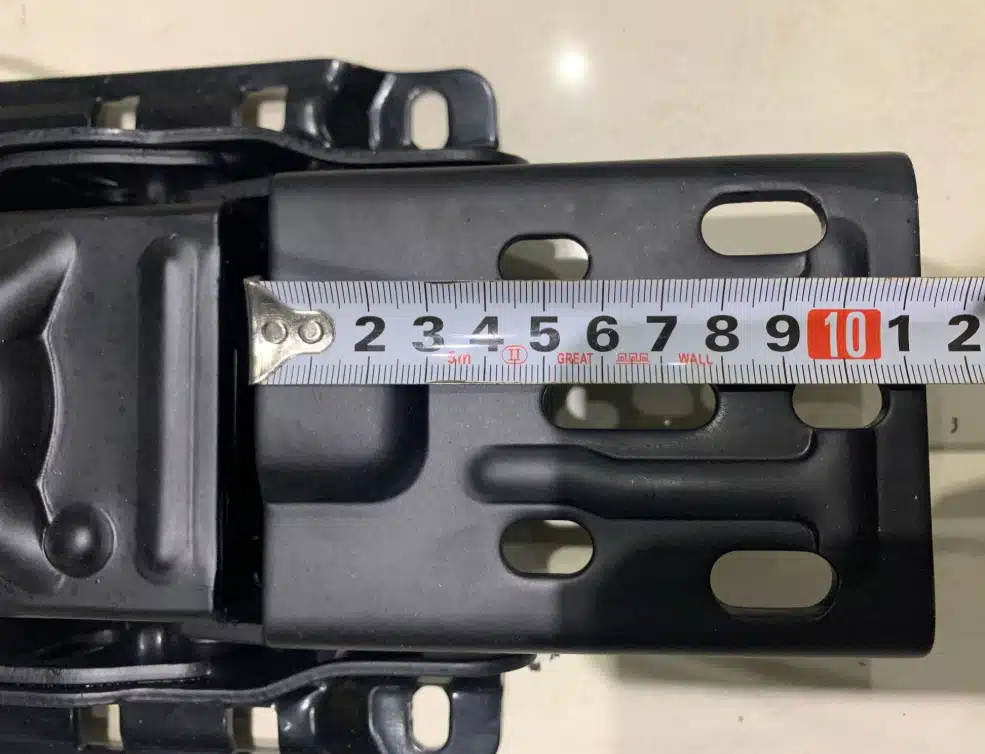
It allows you to check:
- bolt alignment;
- interference;
- clearance;
- seat position;
- tilt movement;
- lever access;
- interaction with the gas lift;
- interaction with the base;
- actual assembly conditions.
This is especially valuable before expensive production tooling.
The prototype is where a theoretical solution becomes a physical answer.
Why should a refurbisher care about validation before tooling?
Because tooling mistakes become expensive when discovered late.
A simplified sequence is:
- CAD mistake ——cheap to correct.
- Prototype mistake ———— more expensive, but still manageable.
- Tooling mistake —— expensive.
- Production mistake —— potentially very expensive.
So the purpose of prototype validation is not to add another step.
It is to:
move expensive mistakes to an earlier and cheaper stage.
How can you tell whether a custom mechanism is economically worthwhile?
This is where the mechanism becomes a business decision rather than an engineering exercise.
You need to compare:
Development Cost (CAD + Prototype + Tooling + Production + Installation)
against:
Recovered Chair Value resale value + avoided replacement cost + future demand + reduced repair or warranty exposure)
A simple starting point is:

A technically successful project can still be a poor investment if the recovered value is too small.
Can a small quantity justify custom mechanism development?
Sometimes.
Quantity matters because fixed engineering costs can be spread across more units.
For example:
If development costs are $3,000, then a 10-unit project carries $300 development cost per unit before manufacturing.
At 300 units, the same development becomes $10 per unit before manufacturing.
The same engineering project can therefore be uneconomical at one volume and attractive at another.
This is why:
Quantity should be considered before deciding whether customization is worthwhile.

What if the quantity is small but the chairs are valuable?
Then customization may still make sense.
Suppose only 20 premium chairs are involved.
If each restored chair has high residual value, a relatively small development investment may still recover significant asset value.
Conversely, a large quantity of low-value chairs may still not justify a complicated custom mechanism.
The right calculation is:
development investment relative to recoverable asset value and future demand.
Can one custom mechanism support several chair models?
Potentially.
This is where mechanism development can become more valuable than a one-off repair.
Similar chair models can sometimes be grouped by:
- mounting pattern;
- seat geometry;
- tilt function;
- load requirement;
- lever configuration.
A common mechanism platform may then support:
- several mounting variants;
- controlled interface changes;
- a family of related chair models.
The objective is not unlimited compatibility.
It is:
maximum practical coverage with a controlled number of configurations.
How can a refurbisher reduce the number of mechanism SKUs?
Instead of developing one mechanism for every chair model:
- identify recurring mounting patterns;
- group similar functions;
- identify common load requirements;
- determine which interfaces can share one architecture;
- use controlled variants only where necessary.
This can reduce:
- inventory;
- repeated engineering;
- supplier complexity;
- purchasing effort;
- refurbishment lead time.
The mechanism then becomes a platform rather than a one-off component.
What are the most common reasons a replacement mechanism fails after installation?
The mechanism itself may not be the only problem.
Common causes can include:
- incorrect mounting geometry;
- unsuitable fasteners;
- wrong mechanism height;
- gas-lift incompatibility;
- interference with surrounding parts;
- incorrect lever position;
- unsuitable tilt geometry;
- insufficient structural support.
This is why the mechanism should be evaluated as part of the complete chair.
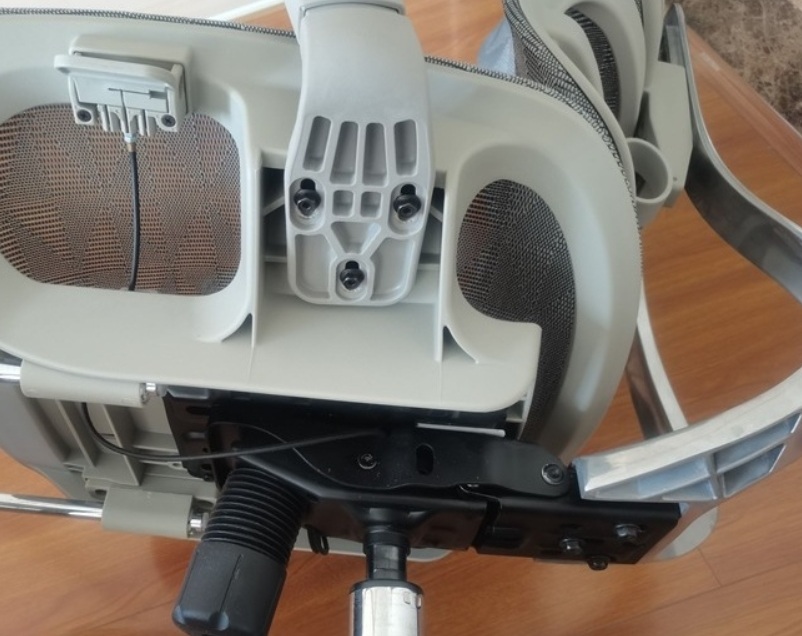
What does “heavy-duty” actually mean for a chair mechanism?
It should not simply mean:
“The steel is thicker.”
Heavy-duty suitability can involve:
- structural design;
- material;
- weld quality;
- load path;
- locking mechanism;
- spring system;
- mounting interface;
- repeated cycling;
- complete chair configuration.
A heavy-duty mechanism only delivers its intended benefit when the rest of the chair can support the same application.
The relevant question is:
What load and operating environment is the complete chair expected to withstand?
What if the mechanism works, but the chair still feels wrong?
That can indicate a system-level mismatch.
For example:
- tilt resistance may be wrong;
- return force may be wrong;
- seat angle may have changed;
- pivot geometry may differ;
- the mechanism may alter seat height;
- the gas-lift relationship may have changed.
In other words:
Mechanical attachment is not the same thing as functional compatibility.
A successful replacement should restore the required behavior, not merely produce a successful bolt connection.
When should a refurbisher repair a mechanism instead of replacing it?
Repair can make sense when:
- the mechanism architecture is still suitable;
- the damaged component can be reliably restored;
- repair cost is substantially below replacement cost;
- the repaired mechanism can be validated;
- future reliability remains acceptable.
Replacement may be preferable when:
- wear is widespread;
- critical components are unavailable;
- the original design is obsolete;
- repair cost approaches replacement cost;
- future failure risk remains high.
The correct choice depends on the complete economic and technical picture.
What if the whole chair is not worth refurbishing?
The mechanism may still have value.
A chair that is uneconomical to restore as a complete unit can sometimes become a source of:
- usable mechanisms;
- bases;
- armrests;
- casters;
- gas lifts;
- hardware.
So:
A chair that is not worth refurbishing is not necessarily a chair with no remaining value.
The mechanism may have more value as a recovered component than as part of the original chair.

What should a refurbisher actually expect from a mechanism supplier?
Not just a catalog.
A useful supplier should be able to answer:
- Do you understand the interface?
- Can you measure it?
- Can you calculate the implications of changing it?
- Can you make the prototype?
- Can you verify the prototype in the real chair?
- Can you identify a different solution if the first approach is not economical?
- Can you reproduce the validated design consistently?
That is the difference between buying a component and outsourcing a difficult engineering problem.
What is the real value of a chair mechanism?
It is not the value of the steel, spring, lever, or bearing inside it.
For a refurbisher or repair company, the real value is:
A $50 mechanism may help recover a $300 chair.
A well-designed custom mechanism may allow a refurbisher to continue purchasing and processing an entire chair model that would otherwise become too difficult to support.
And a validated mechanism platform may reduce the number of unique solutions required across hundreds or thousands of chairs.
That is where the value moves from component to solution.
Does every mechanism problem require reverse engineering?
No.
The practical order should be:
Standard Replacement——Modified Component——Adapter——Reverse Engineering——Custom Mechanism
Use the simplest solution that satisfies the technical and economic requirements.
Reverse engineering is valuable precisely because it gives you another option when standard supply no longer works.
It should not be treated as an automatic answer.
Conclusion: The Principle Behind Choosing a Chair Mechanism Solution
The objective is not to sell the most complicated mechanism.
It is not to force every chair into one standard.
It is not even to reproduce the original component exactly.
The objective is to understand the chair, the interface, the function, the risk, the quantity, and the economics well enough to choose a practical solution.
That solution may be:
- a standard mechanism;
- a modified mechanism;
- an adapter;
- a reverse-engineered replacement;
- a new custom configuration;
- or, sometimes, no new mechanism at all.
The value is not simply in making the part.
The value is in understanding the problem, calculating the options, building the solution, validating the result, and making the outcome predictable enough for the customer to move forward.
A good mechanism supplier should not only tell you what they can make.