For office furniture refurbishers, replacing a faulty chair mechanism should be straightforward.
In reality, it rarely is.
A chair arrives with a damaged tilt mechanism. The technician removes the old unit, searches for a replacement, and finds what appears to be a matching “universal” mechanism online. The dimensions look close enough. The price is attractive. The supplier claims it fits most office chairs.
A week later, the replacement arrives.
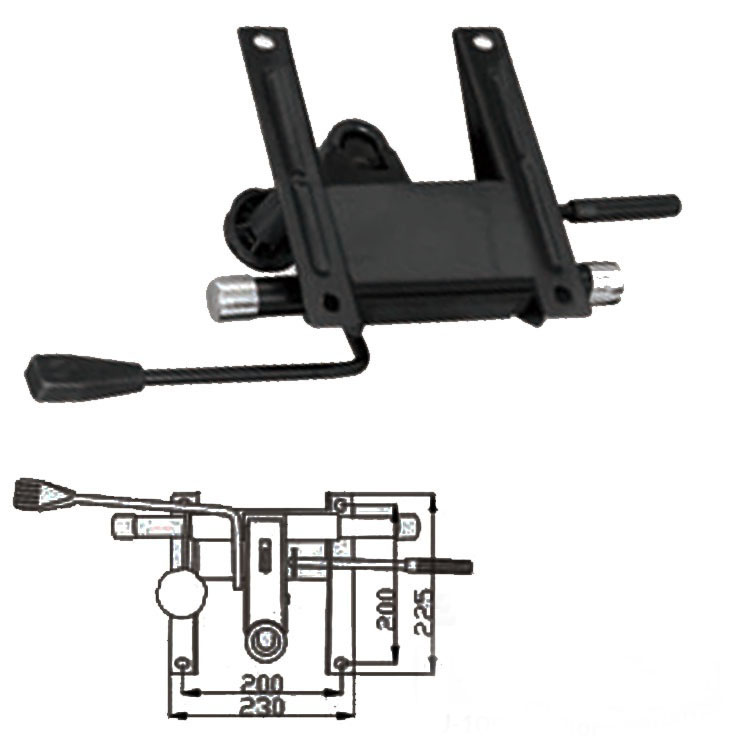
The mounting holes don’t align.
The control wire exits from the wrong position.
The gas lift interface sits slightly off-center.
The chair still can’t be sold.
Situations like this occur every day throughout the refurbishment industry.
The question is no longer whether a replacement mechanism is needed.
The real question is:
Should you use a universal mechanism or invest in a custom solution?
Why Refurbishers Prefer Universal Mechanisms
The appeal of universal mechanisms is obvious.
They are:
- Widely available
- Lower cost
- Easy to source
- Faster to order
- Suitable for common chair models
For refurbishment companies processing large volumes of standard office chairs, universal mechanisms can be an efficient solution.
When compatibility is confirmed, they offer several advantages.
Lower Initial Cost
Universal mechanisms are produced in larger quantities and are typically less expensive than custom-engineered alternatives.
For high-volume refurbishment projects, even small savings can become significant.
Faster Procurement
Because standard mechanisms are usually stocked by suppliers, lead times are shorter.
This helps reduce inventory downtime.
Simplified Inventory Management
Many repair operations prefer keeping a small inventory of commonly used mechanisms rather than sourcing unique components for every project.
In the right circumstances, universal mechanisms work well.
The challenge begins when compatibility becomes uncertain.
The Problem With “Universal”
The word “universal” is often misleading.
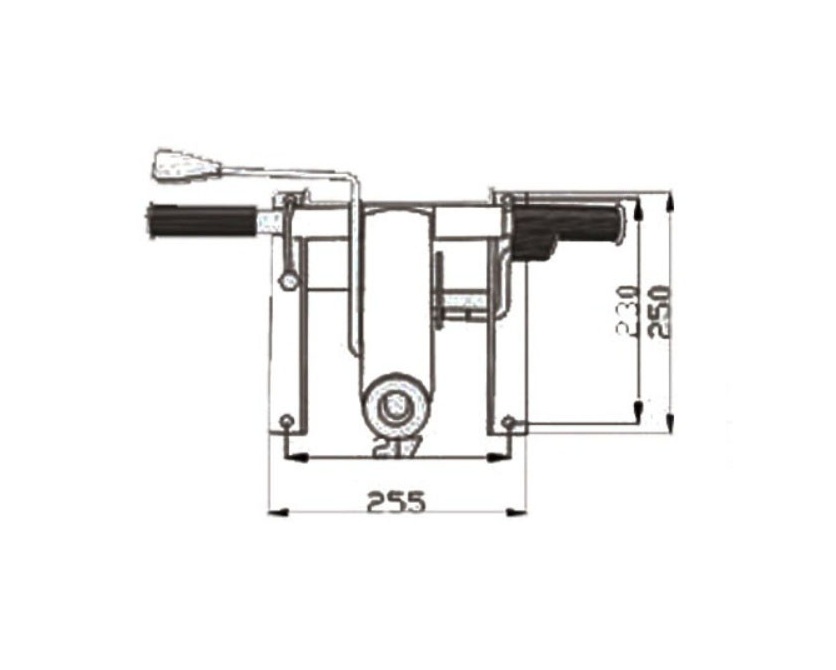
The office chair industry has never adopted a truly universal mounting standard.
Manufacturers use different:
- Hole patterns
- Plate dimensions
- Wire-control layouts
- Seat structures
- Gas lift interfaces
- Reclining systems
A mechanism may fit dozens of chair models and still fail to fit the one sitting in your warehouse.
For refurbishers handling mixed inventories from multiple brands, this creates a recurring problem.
What appears to be a simple repair quickly becomes a custom adaptation project.
The Hidden Costs of Universal Mechanisms
Many buyers focus only on purchase price.
However, the true cost of a mechanism includes far more than the invoice amount.
Consider a refurbishment technician earning $25 per hour.
If a universal mechanism requires:
- Additional drilling
- Adapter fabrication
- Seat modifications
- Multiple installation attempts
The labor cost can quickly exceed the savings gained from buying the cheaper part.
In many refurbishment operations, labor is more expensive than hardware.
The cheapest mechanism is not always the most economical solution.
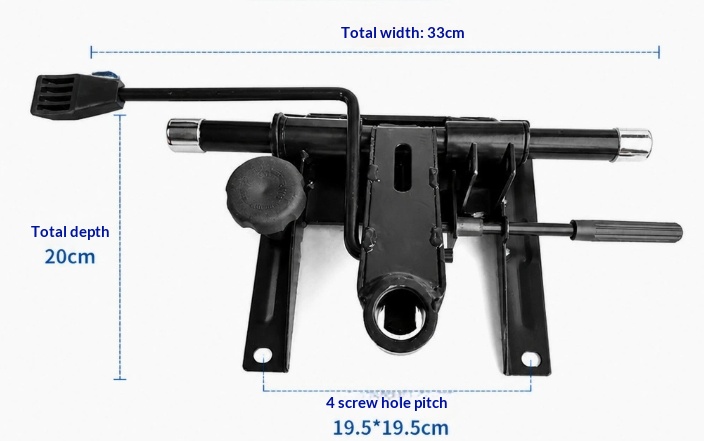
When Custom Mechanisms Become the Better Option
Custom mechanisms are often misunderstood.
Many buyers assume custom means:
- Extremely expensive
- Long lead times
- Suitable only for large manufacturers
That assumption is increasingly outdated.
Today, many refurbishment companies use custom solutions specifically to recover inventory that would otherwise be discarded.
A custom mechanism may be the better choice when:
- Original parts are discontinued
- Mounting patterns are non-standard
- Large numbers of similar repairs exist
- Modification labor is excessive
- Warranty concerns are increasing
In these situations, a properly engineered custom solution can reduce total project costs.
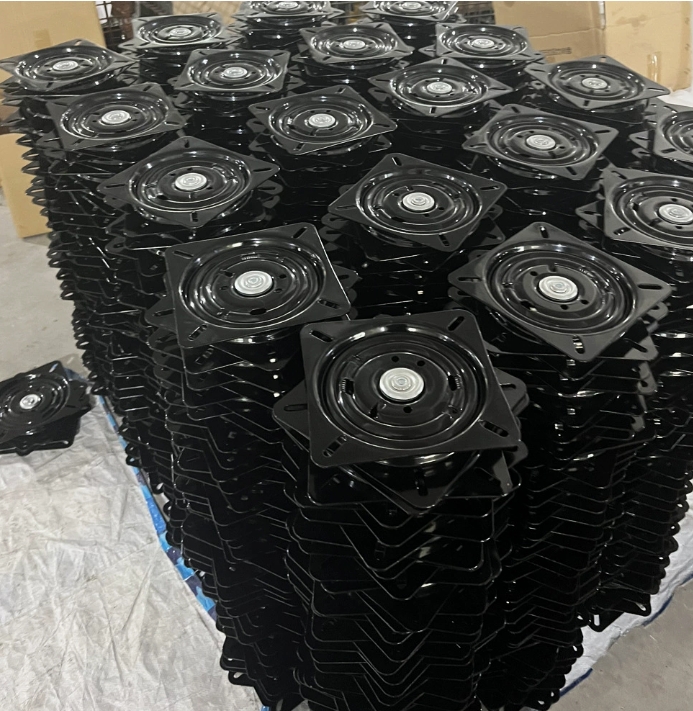
The Role of Adapter Plates
One of the most practical solutions sits between universal and fully custom mechanisms:
Adapter plates.
Rather than redesigning the entire mechanism, an adapter plate allows a standard mechanism to fit a non-standard chair frame.
Benefits include:
- Faster installation
- Lower engineering costs
- Improved compatibility
- Reduced modification work
For many refurbishers, adapter plates provide the best balance between cost and flexibility.
Instead of forcing technicians to alter the chair, the adapter solves the compatibility issue.
Comparing Universal and Custom Solutions
Universal Mechanisms
Advantages
- Lower purchase cost
- Faster availability
- Easier inventory management
- Suitable for common applications
Disadvantages
- Compatibility limitations
- Additional labor requirements
- Higher risk of fitment issues
- Not suitable for many discontinued models
Custom Mechanisms
Advantages
- Designed for specific applications
- Better installation efficiency
- Reduced modification work
- Improved refurbishment consistency
- Greater inventory recovery rates
Disadvantages
- Higher initial investment
- Engineering requirements
- Longer lead times for first production
The Inventory Recovery Perspective
Most refurbishers evaluate replacement components from a purchasing perspective.
The more profitable approach is to evaluate them from an inventory recovery perspective.
Consider two scenarios.
Scenario A
A chair cannot be repaired using a standard mechanism.
The chair is scrapped.
Inventory value recovered:
$0
Scenario B
A compatible custom solution restores the chair to sellable condition.
Inventory value recovered:
$200–$800+ depending on chair model
Viewed this way, the cost of the replacement mechanism becomes only a small part of the equation.
The real question becomes:
How much value can be recovered from inventory that would otherwise remain unsellable?
How Leading Refurbishers Make the Decision
Successful refurbishment companies rarely choose one approach exclusively.
Instead, they use a tiered strategy.
Standard Inventory
Use universal mechanisms whenever compatibility is confirmed.
Problem Inventory
Use adapter plates when minor compatibility issues exist.
High-Value Inventory
Develop custom solutions for premium or frequently encountered chair models.
This approach balances:
- Cost
- Speed
- Compatibility
- Recovery rate
while maximizing refurbishment profitability.
The Future of Office Chair Refurbishment
As more organizations embrace furniture reuse and sustainability initiatives, refurbishment companies are processing a wider variety of chair models than ever before.
Many of these products are:
- Older
- Discontinued
- Proprietary
- Difficult to source parts for
As a result, the ability to engineer compatible replacement solutions is becoming a competitive advantage.
Refurbishers that can solve compatibility challenges efficiently will recover more inventory, reduce waste, and improve profitability.
Conclusion
Universal mechanisms remain an excellent solution for many refurbishment projects.
However, they are not a cure-all.
When compatibility issues, discontinued parts, or excessive labor costs enter the equation, custom mechanisms and adapter plates often provide a more effective long-term solution.
The most successful refurbishment companies understand that the goal is not simply to buy the cheapest component.
The goal is to return more chairs to sellable condition as quickly and profitably as possible.
Need Help With a Non-Standard Chair Mechanism?
If you’re dealing with discontinued parts, unusual mounting patterns, or difficult compatibility issues, we can help evaluate a solution.