For most office furniture refurbishers, profit is determined long before a chair reaches the showroom floor.
Acquisition costs matter.
Labor costs matter.
Transportation costs matter.
But one factor is often overlooked:
The availability of replacement parts.
Every year, thousands of otherwise valuable office chairs are delayed, discounted, or discarded because a critical component is no longer available.
A broken mechanism.
A damaged armrest.
A proprietary seat slider.
A discontinued bracket.
These parts may represent only a small percentage of the chair’s total value, yet they frequently determine whether inventory becomes revenue or waste.
For refurbishment businesses, discontinued components are more than a maintenance problem.
They are a profit problem.
The Hidden Financial Impact of Discontinued Parts
Consider a common scenario.
A refurbishment company acquires a batch of 100 used office chairs from a corporate liquidation project.
Most of the chairs require only cleaning and minor repairs.
However, several chairs need replacement components before they can be sold.
At first glance, the issue seems minor.
Unfortunately, if those components are discontinued, the entire economics of the project can change.
The business must now:
- Search for alternative suppliers
- Contact manufacturers
- Compare compatibility options
- Store incomplete inventory
- Allocate technician time for evaluation
What should have been a simple refurbishment project becomes a resource-intensive recovery effort.
Meanwhile, inventory remains unsold.
Inventory Sitting in the Warehouse Generates No Revenue
One of the largest costs associated with discontinued parts is inventory stagnation.
Many refurbishment companies focus on acquisition cost but underestimate carrying cost.
An unsold chair occupies:
- Warehouse space
- Inventory capital
- Administrative resources
- Technician attention
The longer a chair remains incomplete, the lower its effective profitability becomes.
A chair waiting three months for a discontinued component often produces significantly lower returns than a chair repaired and sold within a week.
Inventory velocity is one of the most important drivers of refurbishment profitability.
Discontinued parts slow that velocity.

Labor Costs Increase Faster Than Most Buyers Realize
When a replacement part is readily available, repair is predictable.
When the part is discontinued, labor costs increase rapidly.
Technicians spend time:
- Researching alternatives
- Comparing dimensions
- Testing compatibility
- Performing modifications
- Reinstalling components
These tasks rarely appear on purchasing reports.
However, they consume valuable labor hours.
For many refurbishment companies, labor represents a larger expense than the replacement component itself.
A low-cost repair can quickly become an expensive project once compatibility investigations begin.
Discounted Inventory Reduces Recovery Value
In some cases, refurbishers choose to sell chairs with known defects rather than continue searching for unavailable parts.
This creates another problem:
For example:
A fully functional chair may sell for:
$350
The same chair sold “as-is” with a defective mechanism may sell for:
$150
Or less.
The missing component may only be worth a few dollars, yet it can reduce resale value by hundreds.
When multiplied across dozens or hundreds of units, the financial impact becomes substantial.
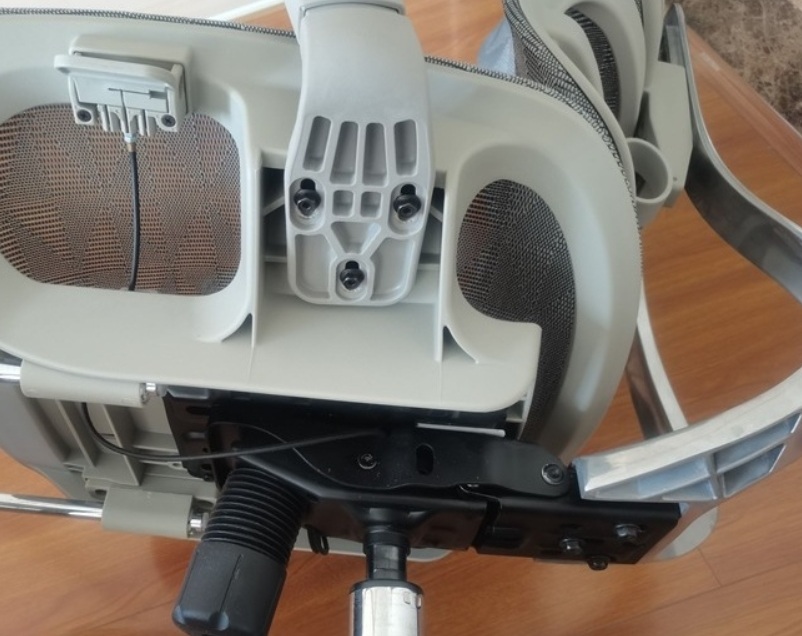
Scrapping Chairs Is Often More Expensive Than Repairing Them
The chair is removed from inventory and written off.
From an accounting perspective, the problem disappears.
From a profitability perspective, the loss remains.
Every scrapped chair represents:
- Acquisition cost
- Transportation cost
- Inspection cost
- Storage cost
- Lost revenue opportunity
The chair may still be structurally sound.
Its only problem may be a single unavailable component.
In these situations, the true cost of discontinuation becomes visible.
Why the Problem Is Growing
The office furniture industry is changing.
Organizations are keeping furniture in service longer than ever before.
Premium office chairs often remain operational for:
- 10 years
- 15 years
- 20 years or more
Replacement parts do not always remain available for the same period.
Manufacturers regularly discontinue:
- Tilt mechanisms
- Armrest assemblies
- Seat controls
- Specialized hardware
- Legacy support components
As older furniture continues circulating through the secondary market, refurbishment companies encounter discontinued parts more frequently.
The challenge is no longer occasional.
It is becoming routine.
The Most Profitable Refurbishers Think Differently
Leading refurbishment companies no longer evaluate replacement parts solely based on purchase price.
Instead, they evaluate:
- Inventory recovery rate
- Repair speed
- Compatibility
- Labor efficiency
- Revenue potential
Their objective is not simply to find the cheapest component.
Their objective is to maximize the percentage of inventory that can be returned to market.
This shift in thinking changes how replacement solutions are evaluated.
Alternative Solutions Are Often More Profitable
When original parts are discontinued, many refurbishers assume the chair cannot be repaired.
In reality, several alternatives may exist.
These include:
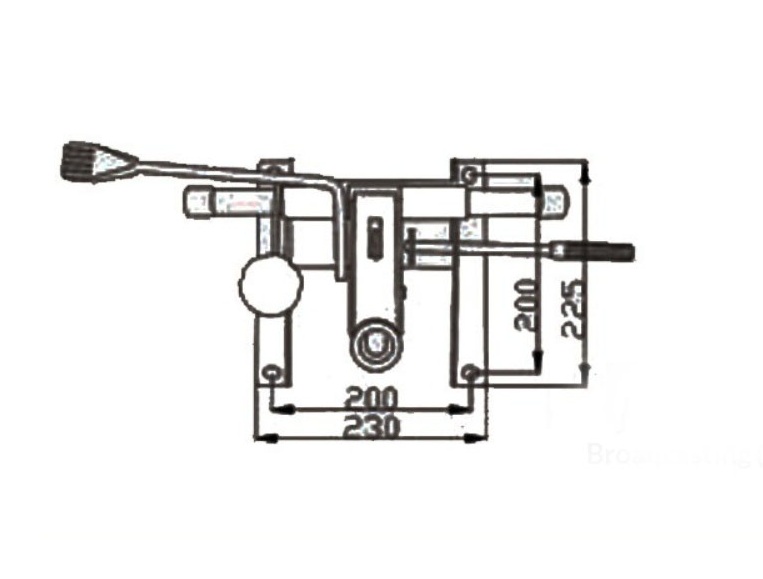
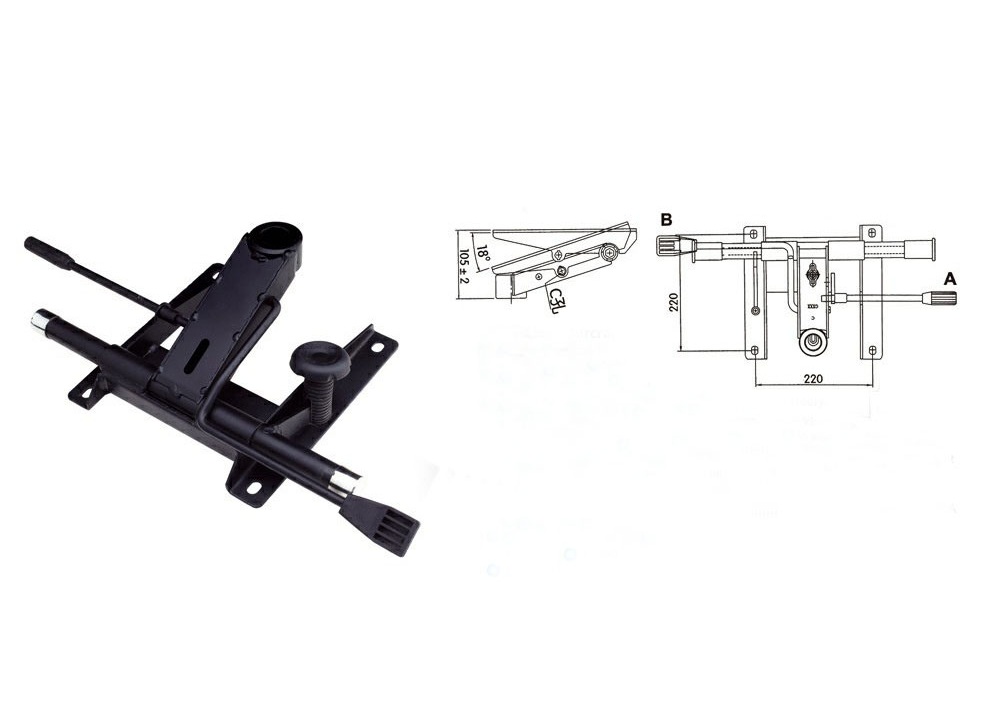
- Compatible replacement mechanisms
- Adapter plates
- Custom mounting solutions
- Replacement armrest systems
- Engineered compatibility components
The goal is not necessarily to recreate the original design.
The goal is to restore functionality efficiently and economically.
In many cases, a compatible alternative can recover far more value than continuing to search for an unavailable original part.
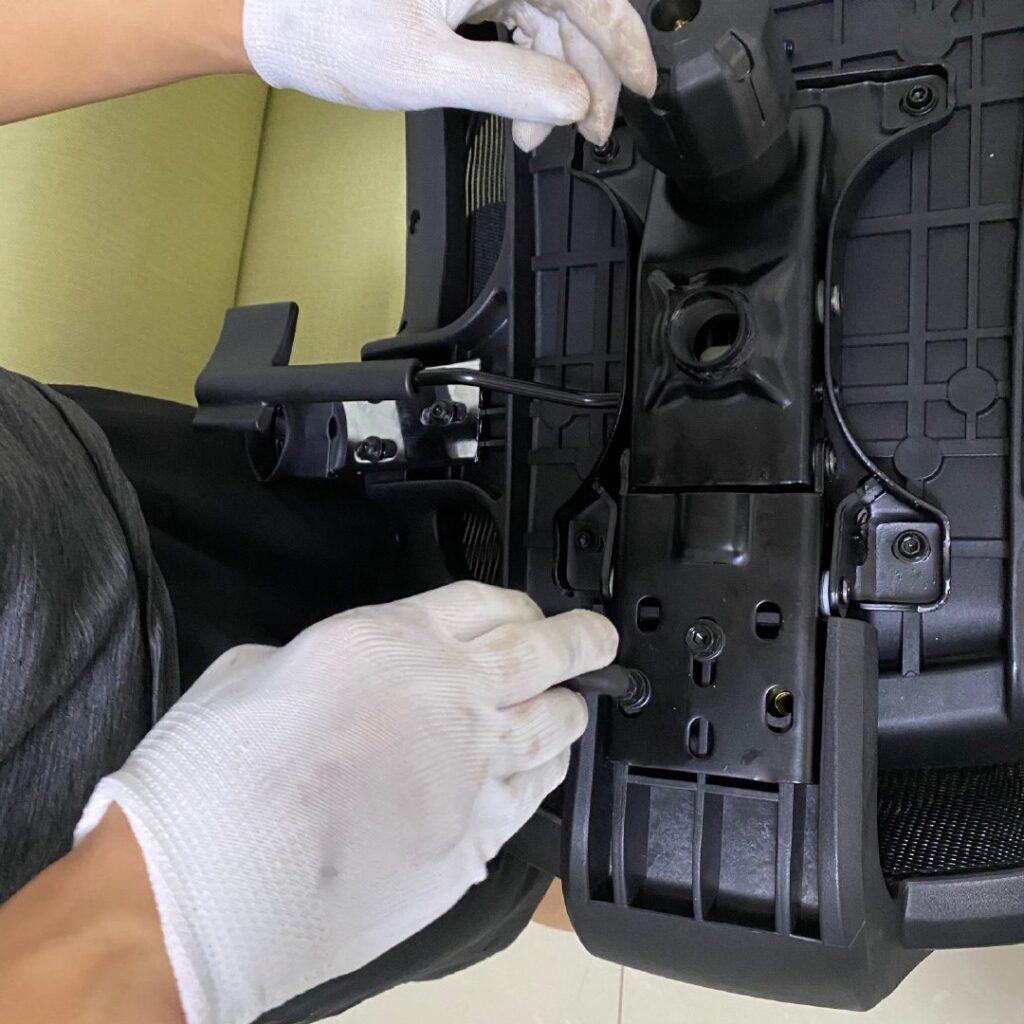
A Simple Profitability Example
Consider two refurbishment projects.
Project A
Original mechanism discontinued.
No alternative solution pursued.
Chair written off.
Recovered value:
$0
Project B
Compatible replacement solution identified.
Chair restored to full functionality.
Resale value:
$300
Replacement solution cost:
$40
Net recovery:
$260
The difference is not the component cost.
The difference is the inventory recovered.
This is why successful refurbishers focus on recovery value rather than part price alone.
The Competitive Advantage of Solving Compatibility Problems
As more furniture enters the circular economy, refurbishment companies face increasing pressure to process inventory efficiently.
The businesses that can solve discontinued-part challenges consistently gain several advantages:
- Higher inventory recovery rates
- Faster turnover
- Reduced warehouse congestion
- Lower labor waste
- Improved profit margins
Over time, these advantages compound.
What begins as a replacement-part strategy becomes a competitive advantage.
Conclusion
Discontinued chair parts may seem like a small operational issue, but their impact on profitability can be significant.
They increase labor costs, slow inventory turnover, reduce recovery value, and force businesses to scrap otherwise sellable products.
For office furniture refurbishers, liquidators, and repair companies, the ability to overcome discontinued-part challenges is becoming increasingly important.
The companies that develop efficient replacement and compatibility solutions will recover more inventory, generate more revenue, and protect profit margins in an increasingly competitive market.
Struggling to Source a Discontinued Chair Component?
If you’re dealing with a discontinued mechanism, damaged armrest, non-standard mounting pattern, or hard-to-find replacement part, we can help evaluate compatible alternatives.