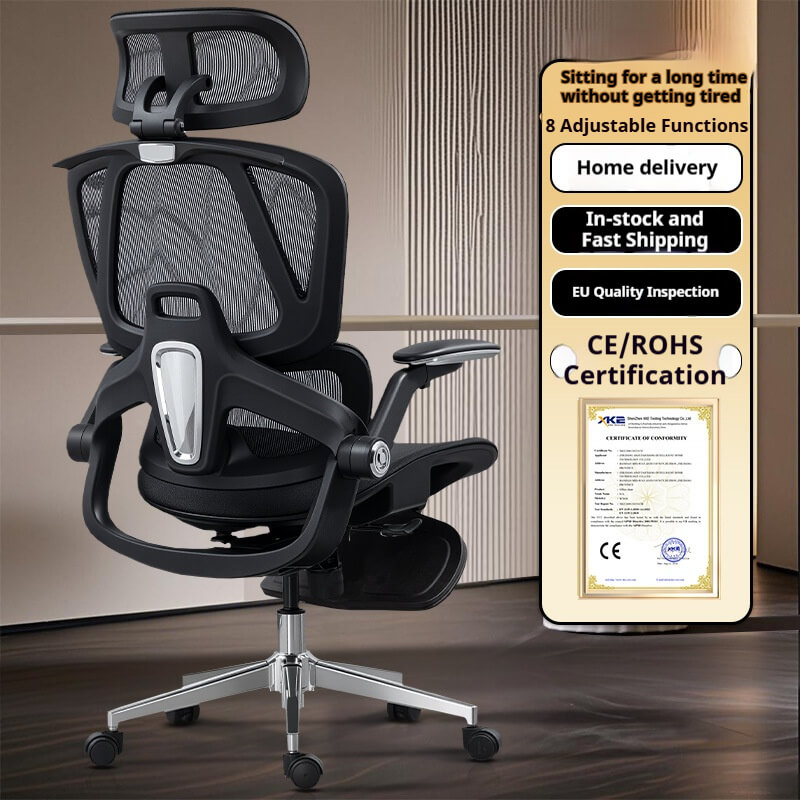
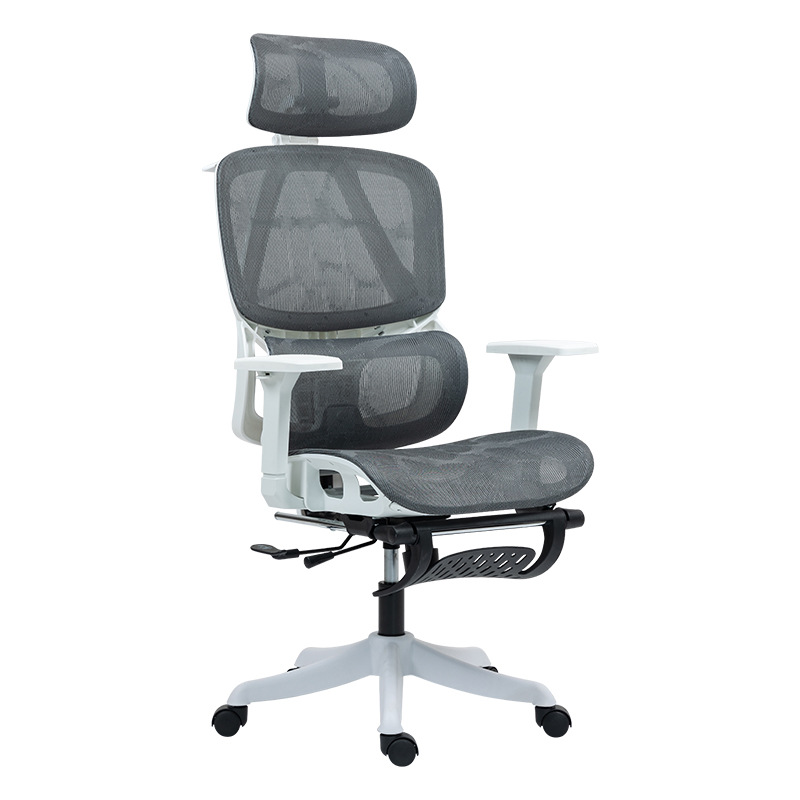
When an office chair needs a replacement component, OEM parts are often the first option considered.
That makes sense. OEM parts are designed for the original chair and are generally the easiest reference for fit and specifications.
But OEM is not always the most practical option.
A part may be discontinued, difficult to source, expensive, or uneconomical once minimum order quantities and shipping are included.
At the same time, choosing a replacement part is not simply about finding a cheaper alternative.
The replacement still needs to fit, function properly, meet the required quality level, and make economic sense for the project.
So how should office furniture refurbishers, repair companies, and other businesses evaluate OEM and replacement parts?
Here are some of the most common questions.
FAQ: OEM and Replacement Parts for Office Chairs
1. What is an OEM office chair part?
An OEM part is a component supplied by the original equipment manufacturer or produced to the original manufacturer’s specifications.
Examples can include:
- Chair mechanisms
- Armrests and arm pads
- Mesh components
- Structural components
- Gas lifts
- Chair bases
- Casters
OEM parts are often preferred when the original component is available and the cost is reasonable.
2. What are replacement or aftermarket office chair parts?
Replacement or aftermarket parts are components produced by a supplier other than the original chair manufacturer.
They may be designed as direct replacements for an existing component or developed from an existing part through measurement, reverse engineering, prototyping, and manufacturing.
The important question is not simply who made the original part.
The important question is whether the replacement provides the required fit, function, quality, and commercial value.
3. Is an OEM part always better than a replacement part?
Not necessarily.
OEM can be the best choice when the original part is readily available, reasonably priced, and appropriate for the repair.
But there are situations where OEM is no longer practical.
For example:
- The part has been discontinued.
- The manufacturer no longer supports the chair model.
- The OEM price is too high.
- The minimum order quantity is too large.
- Lead time is too long.
- International shipping makes the total cost uneconomical.
In these situations, a properly engineered replacement can provide another practical option.
The goal is not to replace OEM simply because it is OEM.
The goal is to find a solution that makes the repair or refurbishment commercially viable.
4. When should a business consider replacement parts instead of OEM?
A replacement part is worth considering when obtaining the original part creates a problem that cannot be justified economically or practically.
For example, imagine a refurbisher has a large number of office chairs that are otherwise usable, but one component is no longer available.
Buying an entirely new chair is unnecessary.
But if the OEM replacement costs too much, repairing the existing inventory may also stop making sense.
This is where a replacement component can change the economics of the repair.
The question becomes:
Can the chair be restored at a cost that still leaves enough value for resale?
5. Can a discontinued office chair part be reverse engineered?
In many cases, yes.
Reverse engineering can be used when an original component is unavailable and a replacement needs to be developed.
Depending on the component, the process may involve:
- Inspecting the original part
- Measuring critical dimensions
- Creating a 3D model
- Reviewing materials and construction
- Producing a prototype
- Checking fit and function
- Adjusting the design if necessary
- Moving to production
For complex components, prototyping before mass production can help identify fit issues before larger manufacturing costs are committed.
6. Can replacement parts be made for older office chair models?
Potentially, yes.
Older chair models can be particularly suitable for replacement-part development when the chair itself still has useful resale or operational value but original components are no longer readily available.
The age of the chair is not necessarily the deciding factor.
More important questions include:
- Is the original component available?
- Can the component be accurately measured or modeled?
- Is there enough demand?
- Does the chair still justify repair or refurbishment?
- Can the replacement be manufactured at a practical cost?
7. Does a replacement part have to be cheaper than the OEM part?
No.
Price is important, but it is only one part of the calculation.
A replacement can still be commercially attractive because of:
- Better availability
- Lower minimum order quantity
- Shorter or more practical lead time
- More flexible customization
- Better shipping economics
- Availability for discontinued models
The relevant comparison is not always:
OEM unit price vs. replacement unit price
It is often:
Total cost of obtaining and using the part.
That can include tooling, production, shipping, inventory, lead time, and the value recovered from the repaired chair.
8. What quantity is needed to make a custom replacement part worthwhile?
There is no universal minimum quantity.
It depends on the component and manufacturing process.
A project may involve:
- 50 pieces
- 500 pieces
- 1,500 pieces
- Or significantly more
The economics can change substantially with quantity.
For example, a custom mesh component may be technically straightforward to produce, but the cost structure at a small quantity can be very different from an order of 1,500 pieces.
That is why quantity should be considered together with manufacturing method, tooling, quality requirements, and shipping.
A part being technically possible does not automatically mean the project is commercially practical.
9. What should be included when calculating the cost of replacement parts?
Looking only at the factory unit price can give an incomplete picture.
A more useful calculation may include:
Part cost + tooling/development + packaging + shipping + applicable fees = practical landed cost
For international projects, shipping can be particularly important.
A replacement part that looks inexpensive at the factory may become much less attractive once transportation and other costs are included.
For refurbishers and repair companies, the final question should therefore be:
What will the replacement actually cost when it reaches the business?
10. How important is fit when choosing a replacement office chair part?
Fit is critical.
A replacement part may look similar to the original and still fail to work properly if critical dimensions, mounting points, interfaces, or tolerances are incorrect.
For custom replacement components, fit should therefore be considered during development rather than after mass production.
This is one reason prototyping can be valuable.
A prototype can provide an opportunity to check the physical fit before committing to a larger production run.
11. How can a business verify the quality of a custom replacement part?
Quality should be considered as part of the project from the beginning.
Depending on the component, quality assurance may include:
- Dimensional inspection
- Material verification
- Fit testing
- Functional testing
- Appearance inspection
- Sample approval
- Production inspection
The specific quality-control process should depend on the component and its application.
For an office chair part, simply producing something that looks similar is not enough.
It needs to perform the function required by the chair.
12. Are replacement parts only useful for repairing broken chairs?
No.
Replacement parts can also be useful in refurbishment and resale operations.
A chair may have a damaged arm pad, worn mesh, failed mechanism, or other defective component while the rest of the chair remains usable.
Replacing that component can allow the business to restore the chair instead of treating the entire chair as unsellable inventory.
This is particularly relevant when the chair itself still has market value.
In other words:
One unavailable component does not necessarily mean the entire chair has lost its value.
13. How do you decide between OEM and a custom replacement?
A practical evaluation can start with six questions:
1. Is the OEM part available?
If yes, determine availability and lead time.
2. What is the total OEM cost?
Include shipping and other relevant costs.
3. Is the chair worth repairing?
Consider the chair’s expected resale or operational value.
4. Can a replacement be engineered?
Evaluate the component’s geometry, material, function, and manufacturing requirements.
5. What quantity is actually required?
Quantity can significantly affect the economics.
6. Does the final solution make commercial sense?
The technical solution still needs to work financially.
OEM or Replacement: Which Is Better?
There is no universal answer.
OEM is often the right choice when the original part is available, suitable, and economically reasonable.
A replacement may make more sense when the OEM component is discontinued, unavailable, overpriced, or otherwise impractical.
The important point is that replacement parts should not be viewed simply as cheaper versions of OEM parts.
They are another option for solving a supply and repair problem.
For office chair refurbishment and repair businesses, the ultimate goal is usually not to buy a particular type of component.
It is to restore a chair reliably and economically.
That means the best solution is the one that balances:
Fit + Function + Quality + Availability + Quantity + Total Cost
When those factors work together, a replacement component can do more than replace a broken part.