When an office chair breaks, the chair itself is not always the problem.
In many cases, one missing, damaged, discontinued, or overpriced component is enough to make an otherwise usable office chair difficult or impossible to sell.
For office furniture refurbishers, repair companies, used office furniture dealers, and businesses managing large quantities of chairs, finding the right office chair replacement parts can therefore be more important than replacing the entire chair.
This guide explains how to identify replacement parts, evaluate whether a replacement is suitable, and determine when a custom replacement may make more economic sense than searching indefinitely for the original component.
Why Office Chair Replacement Parts Matter
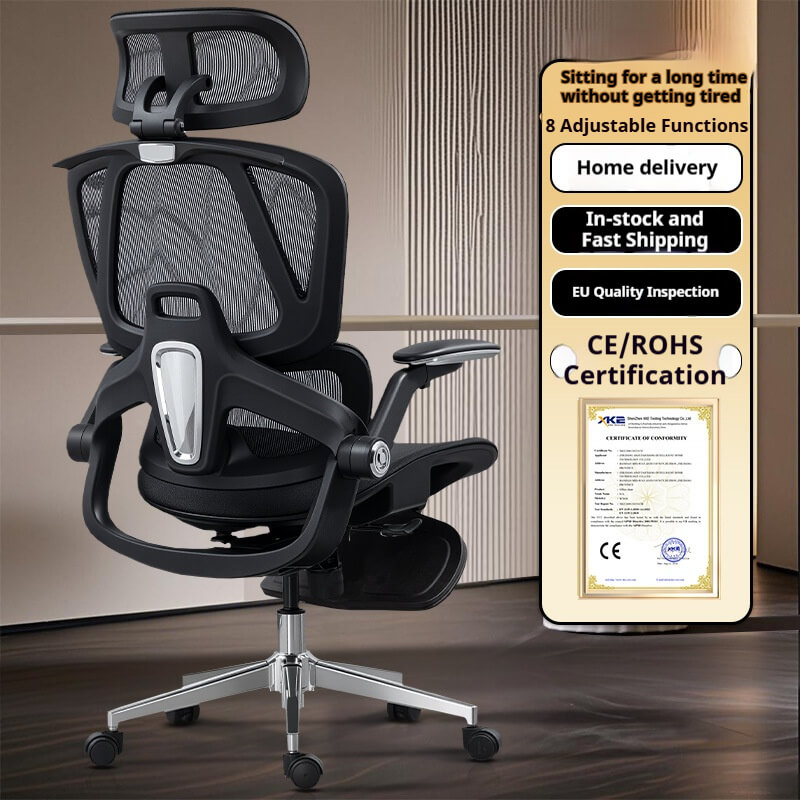
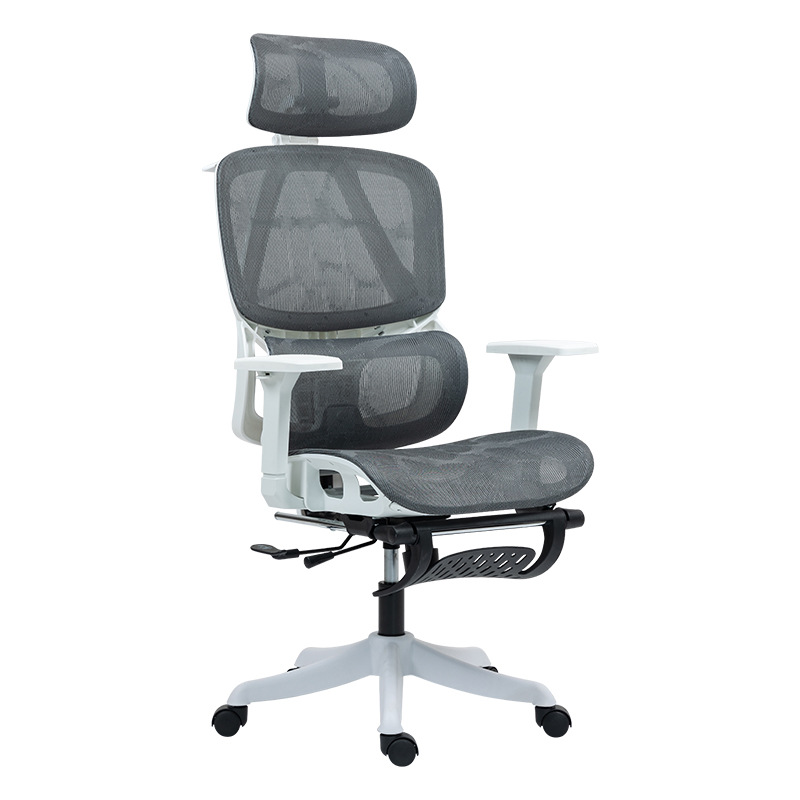
An office chair is a system made up of multiple components.
A typical chair may include:
- Seat
- Backrest
- Mechanism
- Armrests
- Arm pads
- Base
- Casters
- Gas lift
- Tilt components
- Headrest
- Lumbar support
- Mesh
- Mounting hardware
- Structural components
When one of these components fails, the rest of the chair may still be perfectly usable.
The economic problem is that the value of the entire chair can become dependent on the availability of one relatively small part.
For an individual user, this can mean an inconvenient repair.
For a refurbisher holding hundreds or thousands of chairs, it can mean significant inventory value becoming difficult to recover.
The Real Cost of a Missing Chair Part
A replacement part should not be evaluated only by its purchase price.
The real cost may include:
Part cost + shipping + import cost + labor + downtime + inventory holding cost + lost resale opportunity
A cheap part is not necessarily the cheapest solution.
Likewise, an expensive original part is not necessarily the best economic solution.
The important question is:
What is the most practical way to restore the chair to a usable and sellable condition?
That changes the way replacement parts should be evaluated.
Original OEM Parts vs. Replacement Parts
When a chair component fails, the first option is often to search for the original OEM part.
That makes sense when the original component is:
- Available
- Reasonably priced
- Easy to source
- Compatible with the existing chair
- Available in the required quantity
However, OEM sourcing can become difficult when a chair model is discontinued or when the manufacturer no longer supplies a particular component.
When OEM Parts Make Sense
Original OEM parts can be the simplest solution when availability and cost are reasonable.
They may also be important when a specific certification, warranty, or manufacturer requirement applies.
The point is not that replacement parts are always better than OEM parts.
The point is that OEM availability should be evaluated against the actual repair and resale economics.
When Replacement Parts Become Relevant
A replacement component may become worth considering when:
- The original part has been discontinued
- The manufacturer no longer supplies the component
- The OEM minimum order quantity is too high
- The OEM price is not economically viable
- International shipping makes the original part impractical
- The chair model is old but still structurally useful
- A large quantity of similar chairs needs to be refurbished
In these situations, the objective is not to claim that a replacement is the original part.
The objective is to restore the required function and value of the chair with a suitable alternative.
What Makes a Good Office Chair Replacement Part?
A replacement component should not be judged only by whether it physically fits.
There are at least three different levels of compatibility.
Fit
The part must physically attach to the chair.
This can involve:
- Mounting hole position
- Hole diameter
- Overall dimensions
- Thread specifications
- Connection points
- Clearance
- Interface geometry
A component that cannot physically mount to the chair is obviously unsuitable.
But physical fit is only the first step.
Function
A replacement component must also perform the function required by the chair.
For example, a chair mechanism may need to provide specific movement, locking, adjustment, or load-bearing behavior.
Two components can have similar dimensions while behaving differently in actual use.
Fit does not automatically mean function.
Reliability
The final question is whether the replacement can perform consistently under normal use.
This is especially important for components exposed to:
- Repeated movement
- Mechanical loads
- User weight
- Impact
- Friction
- Repeated adjustment
- Long-term use
Therefore:
Fit ≠ Function ≠ Reliability
A replacement part is not truly successful simply because it can be installed.
How Replacement Office Chair Parts Are Developed
When an original component is unavailable, developing a replacement normally requires more than simply measuring the outside dimensions.
The process can involve several stages.
Part Identification
The first step is determining exactly which component needs to be replaced.
Useful information may include:
- Chair brand
- Chair model
- Part number
- Photos
- Overall dimensions
- Mounting dimensions
- Quantity required
- Application
- Existing part condition
Accurate identification prevents unnecessary development work.
Measurement and Reverse Engineering
When drawings or technical specifications are unavailable, the existing component can be examined and measured.
Depending on the component, this may include:
- Critical dimensions
- Mounting interfaces
- Geometry
- Material
- Thickness
- Connection methods
- Moving interfaces
- Load-bearing areas
However, reverse engineering is not simply copying dimensions.
The important question is:
What does this component need to do?
Understanding the function helps determine which dimensions and characteristics are actually critical.
Prototype Development
For complex or critical components, a prototype can be useful before committing to larger production quantities.
A prototype may be used to verify:
- Physical fit
- Installation
- Movement
- Interface compatibility
- Basic function
A prototype can reduce the risk of discovering a design problem after a large production run.
Quality Assurance
Quality assurance is an essential part of replacement-part development.
A replacement component should be evaluated against the requirements that matter for its application.
Depending on the part, this may include:
- Dimensional inspection
- Material verification
- Fit testing
- Functional testing
- Load-related evaluation
- Surface and finishing inspection
- Production consistency
The specific inspection requirements depend on the component.
Quality is not simply “the part looks good.”
Quality means the component consistently meets the requirements it was designed to meet.
Why Large-Quantity Projects Are Different
Ordering one replacement part and replacing 1,500 components are two very different problems.
At small quantities, the primary concern may simply be whether the part works.
At larger quantities, additional factors become important.
Unit Cost
Manufacturing economics can change significantly with volume.
Shipping
A lower unit price may not produce a lower total cost if freight is excessive.
Consistency
When hundreds or thousands of components are produced, consistency between batches becomes increasingly important.
Quality Control
A quality problem affecting one component is very different from a quality problem affecting an entire production batch.
Installation
The replacement should ideally be practical to install at the customer’s operation.
For large-volume refurbishment, the goal is not simply to manufacture more parts.
The goal is to create a repeatable solution.
How to Decide Whether a Replacement Part Is Economically Viable
Before developing a replacement, calculate the economics of the entire solution.
A simple framework is:
Recoverable Chair Value − Total Refurbishment Cost = Potential Recovered Value
Where total refurbishment cost may include:
- Replacement component
- Manufacturing
- Shipping
- Duties and import costs
- Labor
- Installation
- Testing
- Other refurbishment expenses
For example, imagine a used office chair that could potentially be resold for $250.
If the total cost of restoring it is $80, the repair may be economically meaningful.
But if restoring the same chair costs $230, the situation is very different.
The purpose of a replacement part is not to make the part itself cheap.
The purpose is to make the overall chair economically viable.
Common Mistakes When Sourcing Office Chair Replacement Parts
Looking Only for the Exact Original Part
Searching endlessly for an original discontinued component can sometimes cost more time and money than evaluating a suitable replacement.
Looking Only at Unit Price
A $10 component with $30 shipping is not necessarily cheaper than a $15 component with efficient shipping.
Assuming Similar Appearance Means Compatibility
Two parts can look nearly identical while having different dimensions, materials, mounting interfaces, or functional characteristics.
Ignoring Quantity
The best sourcing solution for 10 chairs may not be the best solution for 1,000 chairs.
Skipping Quality Verification
A replacement that works on one test chair does not automatically prove that an entire production batch will be consistent.
Prototype validation and quality control become increasingly important as quantity increases.
When Should You Consider Custom Replacement Parts?
Custom development may be worth considering when several conditions exist at the same time.
The original part is unavailable
The manufacturer has discontinued it or cannot supply the required quantity.
The original part is too expensive
The OEM price makes refurbishment economically unattractive.
The chair itself still has value
The frame, upholstery, mechanism, or other components remain usable.
There are enough chairs
The quantity is large enough to justify development and production costs.
The replacement has a clear economic purpose
The replacement cost is significantly lower than the value it helps recover.
The larger the quantity and the higher the value of the underlying chairs, the more important the economics of the replacement solution become.
Replacement Parts Are About More Than Manufacturing
It is easy to think of a replacement-part supplier as simply another manufacturer.
But the actual problem is often different.
A refurbisher does not necessarily need:
“A newly manufactured component.”
They need:
A practical way to turn an otherwise unsellable chair back into a sellable asset.
That distinction matters.
The component is the physical solution.
The recovered value is the business result.
How ZeChu Approaches Office Chair Replacement Parts
At ZeChu, we focus on customized office chair components and replacement-part development for situations where standard sourcing may not be practical.
Our work can involve:
- Existing-part measurement
- Reverse engineering
- Replacement component development
- Prototype verification
- Customized production
- Quality assurance
- Production for larger quantities
We do not position replacement components as original OEM parts when they are not.
Instead, the objective is straightforward:
Develop a suitable replacement that fits the application, performs the required function, meets the required quality standards, and makes economic sense for the customer.
For Refurbishers and Used Office Furniture Businesses
This can be particularly relevant when a business has a large quantity of office chairs that are difficult to sell because one or more components are unavailable or too costly to replace.
Instead of automatically treating those chairs as dead inventory, it may be worth asking:
What exactly is preventing these chairs from being sold?
Sometimes, the answer is one component.
Frequently Asked Questions
What are office chair replacement parts?
Office chair replacement parts are components used to repair or restore an office chair when an original component is damaged, unavailable, discontinued, or economically impractical to source.
Common examples include mechanisms, armrests, arm pads, bases, casters, gas lifts, mesh components, and other structural or functional parts.
Can discontinued office chair parts be replaced?
In many cases, yes.
The feasibility depends on the original component, its function, available information, required quantity, materials, manufacturing method, and economic requirements.
Does a replacement part have to be identical to the original?
Not necessarily.
A replacement component must be suitable for the intended application. Depending on the situation, the critical requirements may include fit, function, strength, reliability, dimensions, and installation compatibility rather than visual identity alone.
Is a replacement part the same as an OEM part?
No.
An OEM part is an original component supplied by the original equipment manufacturer or its authorized supply chain.
A replacement part is an alternative component developed or sourced to replace the original.
They should not be represented as the same thing.
How can I find the right replacement office chair part?
Start by collecting as much information as possible:
- Chair brand
- Model
- Existing part number
- Photos
- Dimensions
- Mounting details
- Required quantity
- Application
- Target cost
For difficult or discontinued components, detailed photographs and measurements can significantly improve the evaluation process.
Is custom replacement development expensive?
It depends on the complexity of the component and the quantity required.
A simple component may require relatively little development work, while a complex mechanical component may require detailed measurement, engineering, prototyping, and testing.
The right question is not simply “What does the replacement part cost?”
It is:
“Does the replacement create enough recovered value to justify the total cost?”
Final Thoughts
An office chair does not necessarily become worthless because one component fails.
In many cases, the real problem is not the chair.
It is the availability, cost, or practicality of the replacement part.
For businesses managing large quantities of office furniture, this distinction can matter.
When OEM parts are available at a reasonable cost, they may be the simplest solution.
When they are discontinued, unavailable, or economically impractical, a properly developed replacement may provide another path.
The key is to evaluate the complete solution:
Fit. Function. Reliability. Quality. Cost. Shipping. Quantity.
Because the goal is not simply to manufacture another part.
The goal is to recover the value of the chair that the part was preventing you from using or selling.
Need Help Evaluating a Replacement Part?
If you have an office chair component that is discontinued, unavailable, difficult to source, or too costly, ZeChu can evaluate the part and determine whether a replacement solution is technically and economically practical.
Share the chair model, photos, existing part, required quantity, and any available dimensions to start the evaluation.