Abstract
With the global popularization of digital office work, sedentary behavior has become the leading trigger of chronic musculoskeletal pain. This white paper explores the mechanical changes of human anatomy in a seated state from an anatomical perspective, and provides a systematic pain relief and posture optimization framework based on biomechanical research and clinical medical evidence.
1. The Anatomical Crisis Under Static Load: Why Sitting Causes Pain
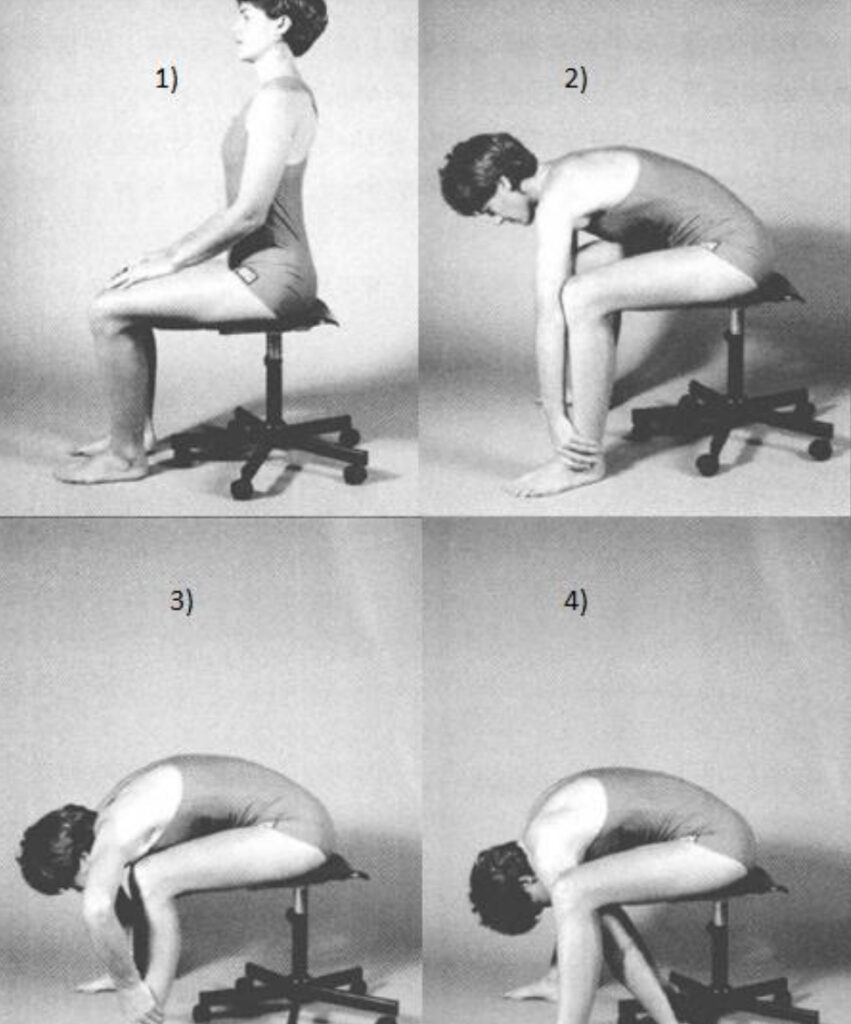
The structure of the human spine did not evolve for prolonged static sitting. When the body transitions from standing to sitting, the pelvis tilts posteriorly, causing the natural lumbar lordosis of the spine to flatten or even reverse.
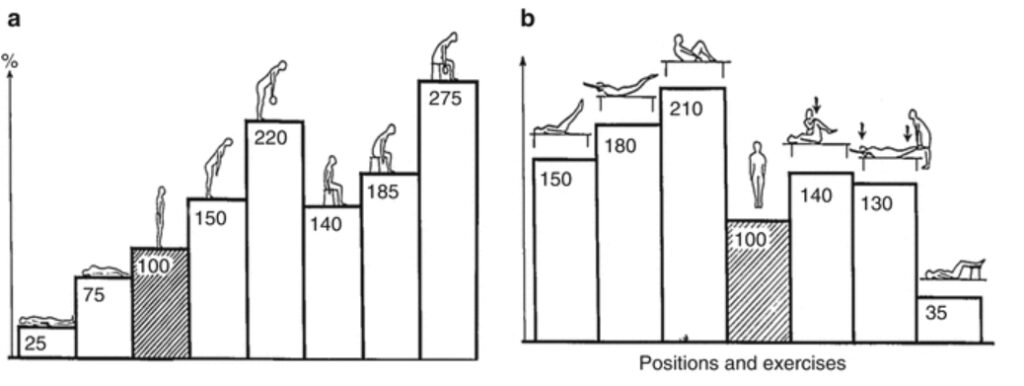
- Intervertebral Disc Pressure Analysis: According to the classic experiment Intradiscal Pressure Measurements by Nachemson et al., when the body is in a relaxed sitting position with forward lean, the pressure on the L3 (third lumbar vertebra) disc reaches 185% of that in a standing position.
- Tissue Ischemia Risk: Research from the National Institute for Occupational Safety and Health (NIOSH) notes that static postures restrict blood circulation, leading to the accumulation of metabolic waste (such as lactic acid) in local muscle tissue, triggering non-specific lower back pain.
2. Neutral Spine: The Gold Standard Based on Biomechanics
The core of achieving pain-free sitting is maintaining a Neutral Spine — the state where the load is most evenly distributed across all spinal segments.
2.1 The Pelvis: The Cornerstone of the Kinetic Chain
- Expert Insight: In her seminal work Diagnosis and Treatment of Movement Impairment Syndromes, master physical therapist Shirley Sahrmann emphasizes that pelvic alignment determines the shape of the entire upper spine.
- Core Guideline: The ischial tuberosities (sit bones) must bear weight evenly. It is recommended to maintain an anterior pelvic tilt of approximately 10°-15° to preserve the spine’s natural physiological curvature.
2.2 The Cervical Spine: Leverage Principles to Fix “Forward Head Posture”
- Academic Support: In The Physiology of the Joints, Kapandji notes that for every 2.5cm of forward head displacement, the weight borne by the base of the cervical spine increases by approximately 4.5kg.
- Correction Protocol: The earlobe should align vertically with the acromion (shoulder peak). This significantly reduces the eccentric contraction load on the trapezius and levator scapulae muscles.

3. Dynamic Relief Strategy: From “Fixed Support” to “Micro-Movement”
Clinical evidence consistently confirms that no single posture can be maintained long-term without adverse effects.
- The McKenzie Method: According to the mechanical diagnosis and therapy system developed by Robin McKenzie, periodic extension exercises can effectively shift the pressure of posteriorly protruding nucleus pulposus forward. It is recommended to perform lumbar extension exercises every 45 minutes.
- The 20-8-2 Principle: This gold-standard formula was proposed by Professor Alan Hedge, Director of the Cornell University Ergonomics Laboratory (CUErgo): For every 20 minutes of sitting, you should stand for 8 minutes, and perform 2 minutes of walking or stretching.
4. Scientific Selection of Assistive Devices: Aligned with International Ergonomic Standards
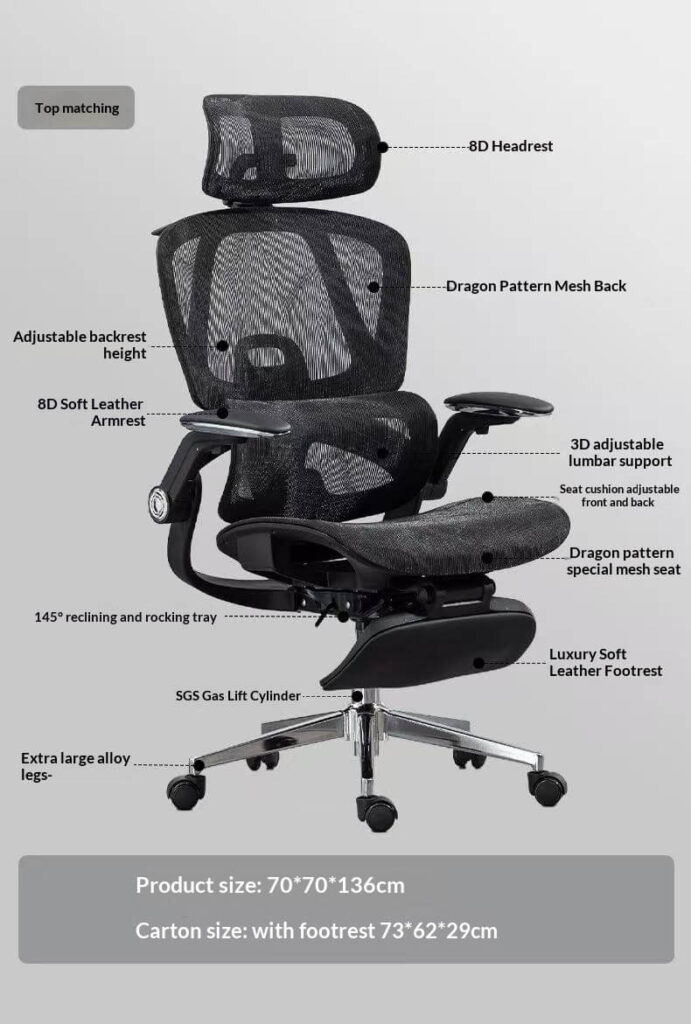
When screening office equipment, reference should be made to the ANSI/BIFMA G1-2013 and ISO 9241-5 global standards.
表格
| Structural Component | Scientific Requirement | Clinical Significance |
|---|---|---|
| Lumbar Support Height | Aligned with the L3-L5 vertebrae (the apex of the lumbar lordosis) | Reduces multifidus muscle fatigue (Cochrane Library, 2019) |
| Seat Pan Depth | 5cm ± 2cm gap between the popliteal fossa and the front edge of the seat | Prevents compression of the popliteal artery and reduces deep vein thrombosis (DVT) risk |
| Armrest Width | Support spacing matches shoulder width | Reduces tension in the rotator cuff muscle group (Mayo Clinic) |
5. FAQ: Expert Answers to Body Structure & Pain Questions
Q1: Why do I still feel stabbing pain in my lower back even when I’m sitting up very straight?
Expert Analysis: World-leading spinal biomechanics expert Dr. Stuart McGill points out that overly deliberate “chest out and back straight” posture forces the erector spinae muscles of the back into a state of long-term high-tension compression. True pain-free sitting is about balance, not rigidity — it relies on external support from the seat, not sustained muscle exertion.
Q2: Are lumbar rolls really effective?
Evidence Support: A randomized controlled trial published in the Journal of Physical Therapy Science (JPTs) showed that using a lumbar roll matched to the physiological curvature of the spine significantly reduces electromyography (EMG) activity in the paraspinal muscles, thereby relieving muscle fatigue.
Q3: Is hip numbness from prolonged sitting a sign of structural damage?
Analysis: This is most commonly associated with piriformis syndrome. As explained by the Cleveland Clinic, numbness occurs when the sciatic nerve is compressed. The solution is to increase the pressure distribution area of the seat cushion and perform regular gluteal activation exercises.
6. Conclusion
Relieving sedentary pain does not rely on a single expensive device, but a systematic framework combining posture awareness, biomechanical alignment, and intermittent dynamic adjustment. By adhering to the neutral spine principle and using evidence-based ergonomic support, you can effectively reverse the degenerative pressure on the spine caused by static load.
References & Authoritative Sources
- Nachemson, A. L. (1981). The Lumbar Spine: An Orthopaedic Challenge. Spine. (Core data support for intervertebral disc pressure)
- McGill, S. M. (2015). Low Back Disorders: Evidence-Based Prevention and Rehabilitation. Human Kinetics. (Seminal work on spinal biomechanics)
- Sahrmann, S. (2002). Diagnosis and Treatment of Movement Impairment Syndromes. Mosby. (Musculoskeletal alignment theory)
- BIFMA (Business and Institutional Furniture Manufacturers Association). (2013). G1-2013 Ergonomics Guideline.
- Cornell University Ergonomics Laboratory (CUErgo). Sitting and Standing at Work. (Research on sit-stand alternation by Professor Alan Hedge)
- Mayo Clinic. (2024). Office Ergonomics: Your How-to Guide.
Need Personalized Spine Health Support?
Would you like a customized Office Spine Health Self-Screening Checklist for yourself or your team?
Or would you like to dive deeper into biomechanical exercise prescriptions for specific symptoms (such as cervical spondylosis)?