Introduction
In office furniture refurbishment, many problems appear to be simple technical issues.
- A hole does not match.
- A component cannot be installed.
- A replacement part does not fit.
At first glance, the solution seems obvious:
“Adjust the hole position.”
However, in real refurbishment projects, the problem is rarely just a dimensional error.
A hole spacing mismatch is often a symptom of a deeper challenge:
The loss of certainty between an existing product and its original manufacturing information.
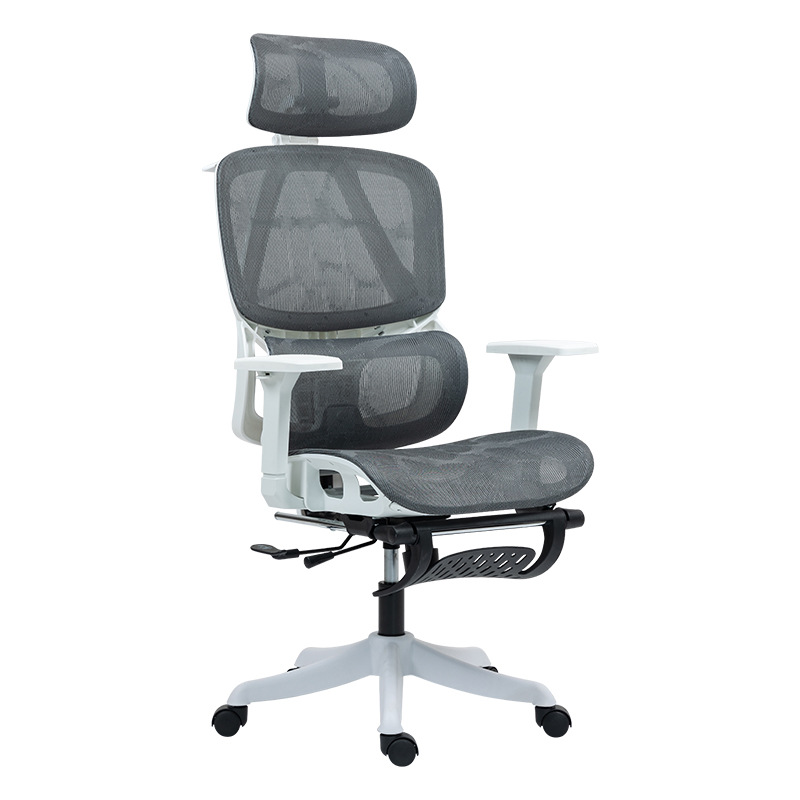
When an office chair has been in the market for years, the original manufacturer may no longer exist, production may have stopped, and technical documentation may have disappeared.
The challenge is no longer simply manufacturing a replacement component.
The real challenge is:
How can an existing asset regain a reliable path back into the market?
1. The Surface Problem: Hole Spacing Does Not Match
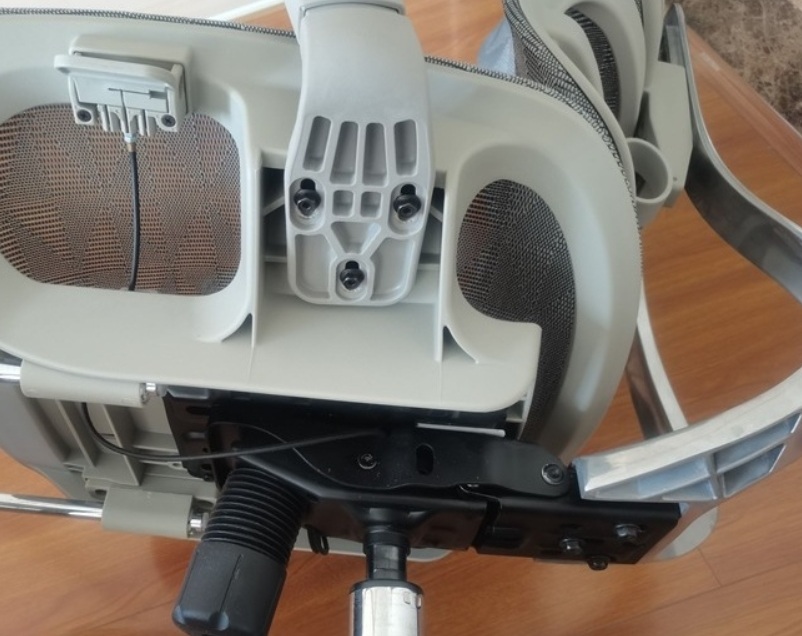
A base plate is one of the most critical structural components of an office chair.
It connects:
- seat structure
- tilt mechanism
- gas lift
- user weight support system
When hole spacing is incorrect, several problems appear:
- mounting holes cannot align
- screws cannot be installed correctly
- assembly time increases
- additional modification is required
- refurbishment schedules are delayed
For a single chair, this may appear insignificant.
But for refurbishment companies handling hundreds or thousands of chairs, a small mismatch can become a large operational problem.
However, the important question is:

2. Why Hole Spacing Errors Occur
2.1 Loss of Original Manufacturing Data
Many office chairs have long product lifecycles.
During this period:
- manufacturers may disappear
- models may be discontinued
- CAD drawings may no longer be available
- suppliers may change
- original specifications may be lost
The refurbishment company still has the physical product.
But it no longer has the original engineering information behind the product.
This creates the first uncertainty.
The challenge becomes:
How do you rebuild manufacturing confidence from incomplete information?
2.2 Measurement Is Not Always Equal to Engineering Data
Many people believe:
“If we measure the old part, we can reproduce it.”
But measurement alone does not always reveal the complete design logic.
A component may have:
- wear from years of usage
- deformation from repeated loading
- damaged surfaces
- previous modifications
More importantly, measuring distance between two holes does not explain:
- why those holes are positioned there
- what forces they experience
- what tolerances are acceptable
A replacement component is not successful because it matches a number.
It is successful because it restores the original function.
2.3 Manufacturing Tolerance Accumulation
Even when the design information is correct, manufacturing introduces another layer of uncertainty.
Possible causes include:
- stamping deviation
- tooling wear
- welding deformation
- machining tolerance
- material variation
A difference of several millimeters may seem small.
But in a mechanical connection system, small dimensional changes can affect:
- alignment
- stress distribution
- long-term durability
2.4 Copying Dimensions Does Not Always Restore Performance
One common mistake in replacement components is:
“Make it look the same.”
But appearance is not function.
A base plate is designed around:
- load distribution
- structural strength
- fatigue resistance
- connection stability
A component can physically fit and still fail prematurely.
The goal is not to reproduce a shape. The goal is to reproduce reliability.
3. The Real Cost of a Wrong Solution
When a hole spacing problem occurs, the cheapest solution is not always the lowest-cost solution.
The real cost includes:
- Direct Cost
- component cost
- machining cost
- tooling cost
- Hidden Cost
- additional labor
- installation delays
- repeated testing
- project delays
- customer complaints
- warranty risk
A cheaper component that requires repeated modification may become more expensive than a properly engineered solution.
The correct question is not:
“How much does this part cost?”
The correct question is:
“What is the total cost of uncertainty?”
4. Possible Solutions and Their Trade-Offs
There is no single solution suitable for every situation.
The optimal approach depends on:
- quantity
- future demand
- product value
- risk tolerance
- required lifespan
Solution 1: Modify the Existing Component
- Suitable for: small quantity projects, minor dimensional differences, temporary requirements.
- Advantages:
- lowest immediate cost
- fastest implementation
- Limitations:
- difficult to standardize
- may not solve structural issues
- unsuitable for repeated production
This solution works when the problem is small.
Solution 2: Reverse Engineering and Reproduction
- Suitable for: stable demand, repeated refurbishment projects, important product models.
- Process:Existing component↓Engineering analysis↓CAD reconstruction↓Prototype production↓Fit testing↓Final production
- Advantages:
- creates reliable manufacturing data
- improves repeatability
- reduces future uncertainty
The value is not only producing one part. The value is rebuilding a manufacturing foundation.
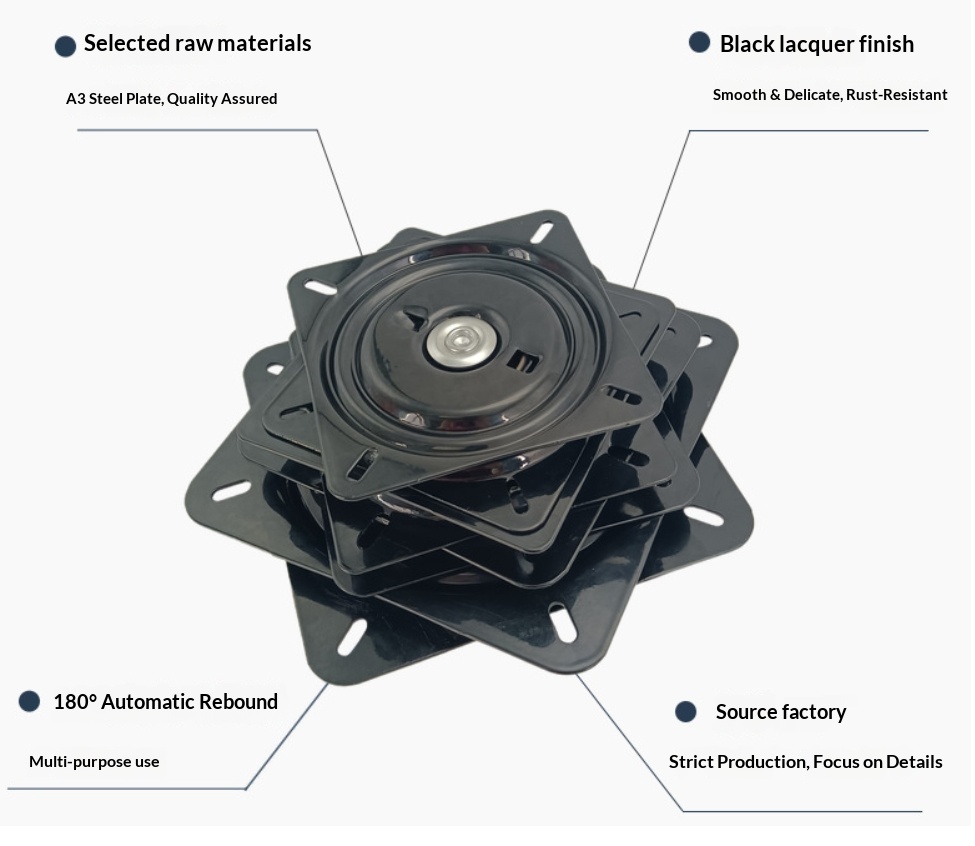
Solution 3: Redesign Through an Adapter Solution
Sometimes reproducing the original component is not the best solution.
Especially when:
- the original manufacturer disappeared
- multiple models require support
- original designs are outdated
A better approach may be creating a new connection solution.
For example:
Existing chair structure
↓
New adapter design
↓
Standard replacement component
This can create:
- wider compatibility
- lower development cost
- easier future supply
Instead of restoring the past, it creates a new solution for the future.
5. How to Choose the Optimal Solution
The best solution is not the most advanced solution. It is the solution with the highest overall value.
A practical decision model should consider:
Total Cost of Solution = Development Cost + Production Cost + Modification Cost + Failure Risk + Labor Cost + After-sales Cost + Time Cost
For example:
- Case A: 20 chairs require repair. A small hole adjustment may be the most reasonable choice.
- Case B: 5,000 chairs require refurbishment. Creating reliable engineering data may provide better long-term ROI.
- Case C: Multiple discontinued models exist. A redesigned adapter solution may create the highest flexibility.
The best solution depends on the business objective. Not just the technical problem.
6. Prevention: The Best Solution Happens Before Production
The strongest suppliers do not only solve problems. They reduce the possibility of problems happening.
A reliable refurbishment component process should include:
Step 1: Information Collection
Before production, confirm:
- original component condition
- dimensions
- installation method
- load requirements
- usage environment
Step 2: Engineering Reconstruction
Convert uncertain information into reliable data:
- CAD drawings
- technical specifications
- manufacturing requirements
Step 3: Prototype Validation
Before mass production, test:
- installation
- fit accuracy
- structural performance
- practical usage
Step 4: Production Control
Ensure:
- repeatability
- consistency
- stable quality
Conclusion: The Real Problem Is Not Hole Spacing
A hole spacing error appears to be a small manufacturing problem.
But behind it exists a larger challenge:
How do refurbishment companies restore value when original product information, suppliers, and manufacturing systems disappear?
The purpose of a replacement component is not simply to replace a damaged part.
The purpose is to restore confidence.
Because in refurbishment, the biggest cost is not always the component itself. The biggest cost is uncertainty.
A reliable solution transforms:
Unknown information
↓
Engineering understanding
↓
Validated production
↓
Predictable results
The future of refurbishment is not only about producing replacement parts.
It is about creating certainty where the original supply chain no longer exists.