Why the Next Stage of Sustainability May Depend on the Businesses Nobody Sees
Introduction: The World Has Recognized Circular Economy. But Something Is Still Missing.
Over the past decade, circular economy has moved from a relatively niche environmental concept into a global economic direction.
- Governments are developing circular economy policies.
- Corporations are publishing sustainability commitments.
- Industries are examining ways to reduce waste, improve resource efficiency, and extend product lifecycles.
The traditional model:
Take → Make → Use → Dispose
is being challenged by a new approach:
Maintain → Repair → Reuse → Refurbish → Remanufacture → Recover Value
The direction of change is already visible.
However, an important question remains largely unexplored:
What happens between the moment an asset leaves its first owner and the moment it returns to economic value?
This is the missing layer of circular economy.
1. Circular Economy Has a Visible Side. But Its Most Important Work Happens Beneath the Surface.
When people talk about circular economy, they usually see the visible side:
- sustainable design
- recycling targets
- environmental regulations
- ESG reports
- carbon reduction strategies
These are important. They establish the direction.
But every transformation requires more than direction. It requires an operating system.
- The internet was not created only because people wanted digital communication. It required networks, servers, infrastructure, and technical systems.
- E-commerce was not created only because people wanted online shopping. It required payment systems, logistics, warehouses, and fulfillment networks.
Circular economy follows the same principle. The idea of reuse is simple. Making reuse economically possible is not.
Between an abandoned asset and a renewed asset exists a hidden ecosystem:
- evaluation
- collection
- logistics
- repair
- refurbishment
- component replacement
- quality control
- redistribution
This ecosystem determines whether circularity can scale.
2. The Biggest Misunderstanding: Circular Economy Is Not Only About Waste Reduction
A common perception is that circular economy is mainly about preventing waste. But waste is only the final stage.
The deeper challenge is:
A product does not become circular simply because it is reused. It becomes circular when it can successfully return to the market with economic value.
This requires something often overlooked: Restoration capability.
The ability to:
- identify remaining value
- restore functionality
- extend lifespan
- rebuild market confidence
Without restoration capability, circular economy remains an ambition. With restoration capability, circular economy becomes an operating model.
3. Commercial Assets Are Entering a New Lifecycle Challenge
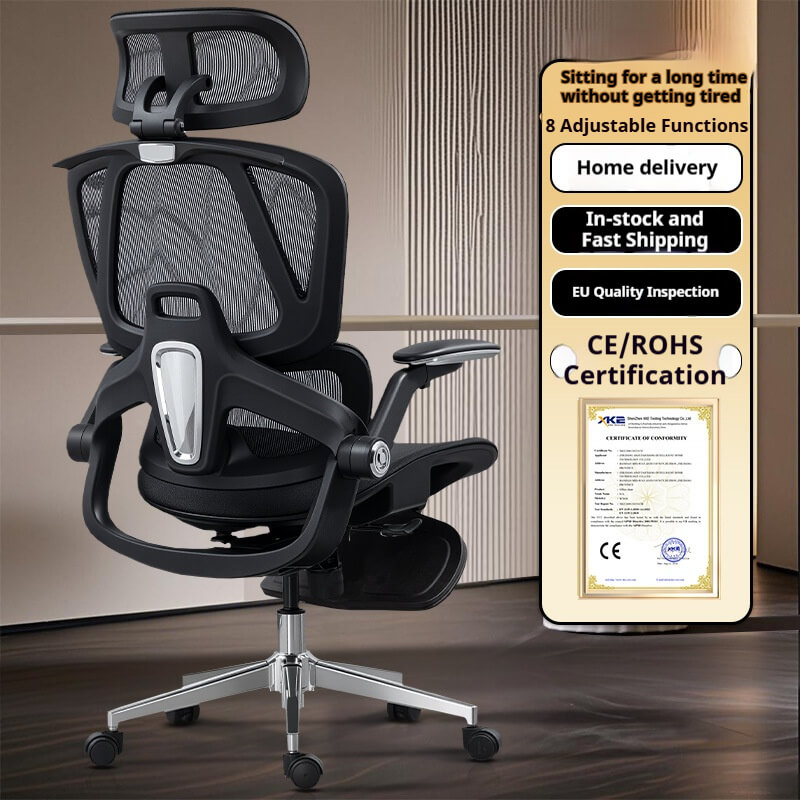
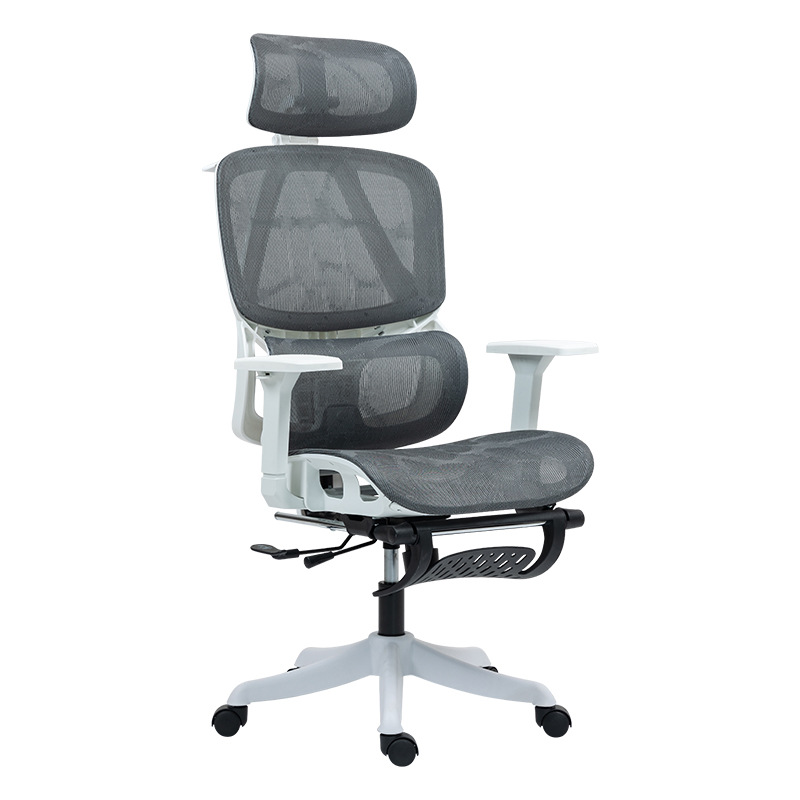
One area where this challenge is becoming increasingly visible is commercial office furniture.
For decades, office furniture followed a relatively simple lifecycle:
Manufacturing ↓ Purchase ↓ Use ↓ Replacement ↓ Disposal
However, several global changes are disrupting this traditional model.
The First Change: Workplace transformation
The growth of:
- hybrid work
- flexible offices
- workplace optimization
has changed how companies use physical office space.
The Second Change: Economic pressure
Companies increasingly examine:
- operating costs
- asset utilization
- unnecessary expenditure
Replacing everything with new products is no longer always the default choice.
The Third Change: Sustainability expectations
Companies are under increasing pressure to demonstrate:
- responsible resource management
- reduced waste
- improved lifecycle performance
These forces are happening simultaneously. None of them alone creates a major shift. But together:
- Cost pressure
- Changing workplaces
- ESG expectations
- Existing asset value
- Circular economy development
create a new question: What happens to the enormous amount of commercial assets already in existence?

4. The Market Usually Shows the Result. Few People See the Process.
Search for office furniture reuse today, and most companies communicate similar messages:
- affordable solutions
- cost savings
- sustainable choices
- quality used furniture
These messages are understandable. They describe the customer-facing outcome. But they rarely reveal the invisible journey behind that outcome.
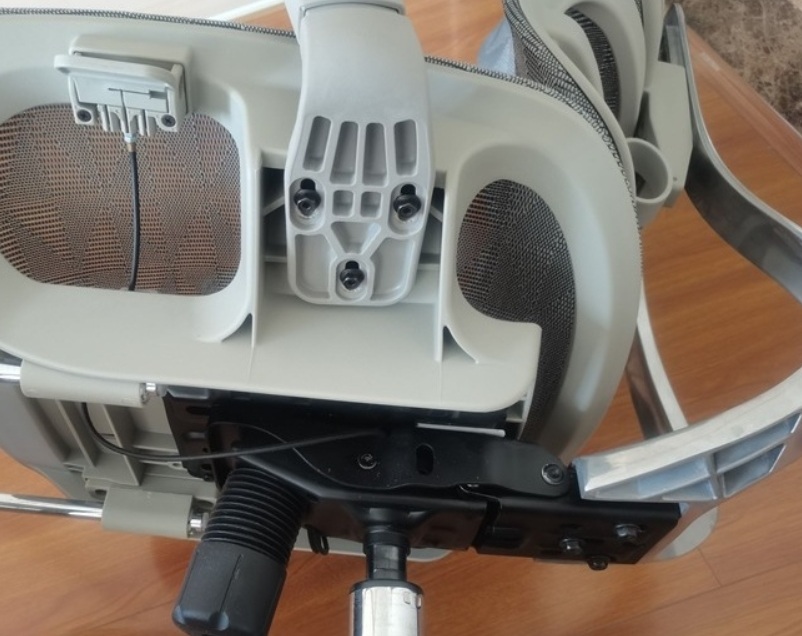
A commercial office chair does not simply move from one company to another. Its second lifecycle may require:
Office closure or relocation
↓
Asset recovery
↓
Transportation
↓
Condition assessment
↓
Classification
↓
Repair decisions
↓
Refurbishment
↓
Component replacement
↓
Quality verification
↓
Return to market
The market sees: “Used office furniture.”
But behind that phrase exists an entire recovery system.
5. The Hidden Participants of Circular Economy
One of the most interesting observations about circular economy is this: Many companies are already performing circular economy functions.
They simply do not always appear under the same identity. They may call themselves:
- office furniture dealers
- liquidators
- refurbishment companies
- repair specialists
- workspace providers
- remanufacturing businesses
Different names. Different business models. But many are connected through the same fundamental activity:
They operate beneath the surface. Not because they are insignificant. But because the market has not yet created a unified language to describe their collective role.
6. The Industry Has a Visibility Problem, Not an Existence Problem
This distinction matters. Many emerging industries do not begin because they suddenly appear. They begin because existing activities become recognized as part of a larger system.
- Before the concept of “software as a service,” companies already provided software remotely.
- Before “sharing economy,” people already shared resources.
- Before “cloud computing,” businesses already used remote servers.
The activity existed. The framework came later.
Commercial asset recovery may be experiencing a similar stage. The participants exist. The demand exists. The need exists. But the ecosystem remains fragmented.

7. The Next Evolution: From Product Sales to Lifecycle Management
The traditional economy asks:
“How many new products can be sold?”
A circular economy asks a different question:
“How much value can be preserved from products that already exist?”
This represents a fundamental shift. A product may no longer be viewed as having one commercial life. Instead, it may have multiple value cycles.
The future may increasingly reward organizations capable of:
- recovering assets
- restoring value
- extending lifespan
- maintaining quality across lifecycles
8. The Future Is Not About Prediction. It Is About Following Existing Signals.
Nobody can know the future with certainty. But future possibilities often emerge from the accumulation of present conditions.
When multiple independent trends move in the same direction:
- Economic pressure
- Sustainability requirements
- Resource efficiency goals
- Changing workplace models
- Existing asset accumulation
- Improving recovery capabilities
a new market structure becomes possible.
The question is not: “Will circular economy exist?” It already does.
The question is: Which industries will build the infrastructure required for circularity to operate at scale?
9. The Invisible Infrastructure May Become the Foundation of the Next Circular Economy Stage
The next stage of circular economy may not be defined only by manufacturers creating more sustainable products.
It may also be defined by the businesses that help existing products continue their journey. The organizations that:
- recover
- repair
- restore
- rebuild
- and return value to existing assets.
These businesses may represent a critical but underestimated layer of the circular economy ecosystem.
Conclusion: Bringing the Invisible Into View
The future of circular economy will not be created only in policy documents or sustainability reports. It will also be created by thousands of companies operating between ownership cycles.
- The companies that understand remaining value.
- The companies that restore functionality.
- The companies that make reuse economically possible.
Today, many of these participants remain fragmented and largely invisible.
But visibility is often the first step toward recognition. And recognition is often the first step toward building a mature industry.
The world has already started discussing circular economy.
The next question is: Who will build the invisible infrastructure that allows circular economy to truly work?