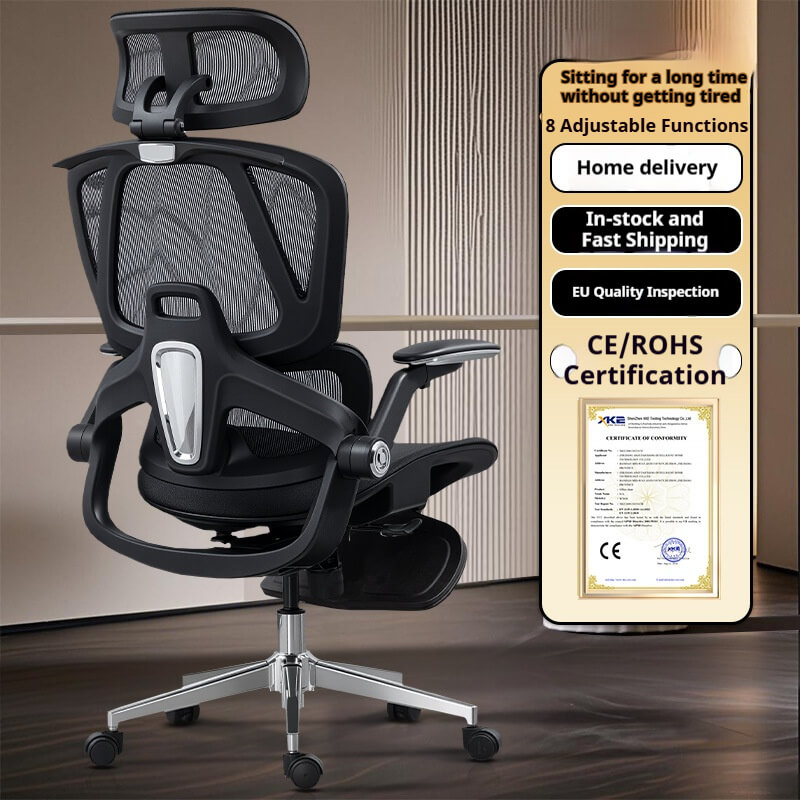
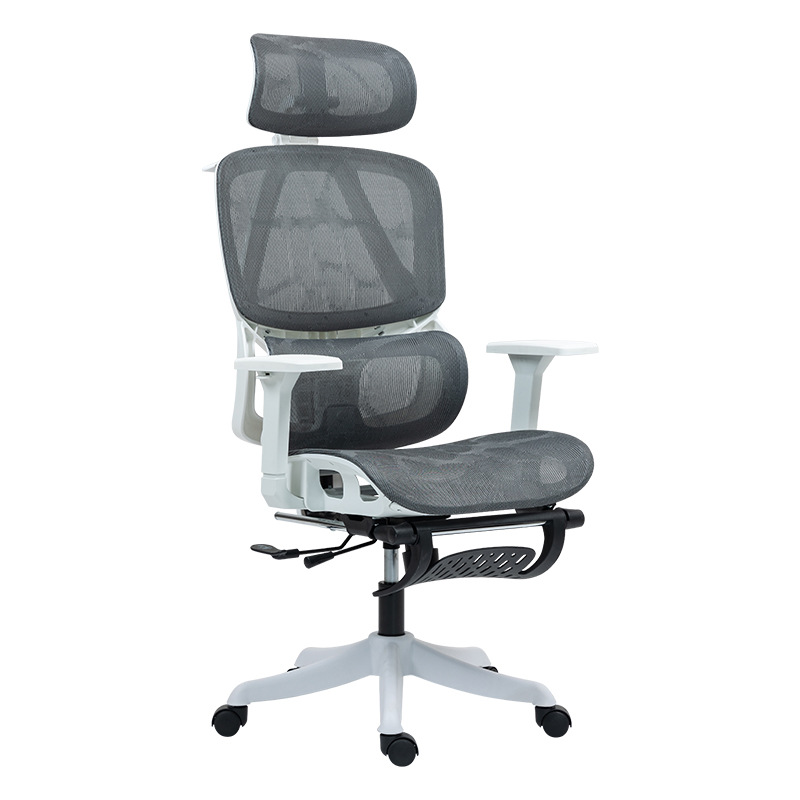
Introduction: Why Does a $500 Chair Get Discarded Over a $20 Part?
In the secondary office furniture industry, a persistent yet rarely discussed problem exists: A massive volume of high-value office furniture leaves the market not because it is completely broken, but because the Return on Investment (ROI) of repairing it no longer pencils out.
A commercial office chair with a designed lifespan of 10+ years typically features:
- High-strength frames
- Adjustable mechanisms
- Ergonomic design
- Brand equity
- Secondary market demand
However, when a critical component faces issues such as:
- Discontinuation
- Lack of OEM supply
- Excessive procurement pricing
- Unreasonable Minimum Order Quantities (MOQ)
This asset transforms instantly from a “salable asset” into an “inventory burden.”
The surface problem appears to be:
“A missing part.”
The actual problem is:
“Does continued investment still generate sufficient value?”
This is the true economic core of the office furniture circular economy: Whether the ROI is re-balanced.

Part I: The Real Problem Isn’t Damage—It’s a Broken Value Chain
Many assume that furniture reaches the end of its lifecycle due to:
- Aging
- Wear and tear
- Physical damage
In real commercial markets, however, a large volume of furniture exits circulation not because the product lacks underlying value, but because the final 10% of recovery cost exceeds the remaining 90% of asset value.
A Real Economic Model
Assumptions:
- Original Market Value (New Retail Price): $\$1,200$
- Secondary Refurbished Selling Price: $\$350 – \$500$
Acquisition & Refurbishment Costs:
- Used furniture procurement: $\$50$
- Freight/Transport: $\$20$
- Inspection: $\$10$
- Cleaning: $\$15$
- Manual labor (refurbishment): $\$40$
- Current Baseline Cost: $\$135$
Scenario A: Minor Maintenance
If the chair only requires:
- Cleaning
- Adjustments
- General consumable replacements
- Total Cost: $\$150$
- Selling Price: $\$400$
- Net Profit: $\$250$
- Result: Extremely healthy ROI.
Scenario B: Component Failure (Standard OEM Replacement)
If the armrest assembly breaks:
- OEM quote: $\$90$
- Freight: $\$20$
- Lead time: 8 weeks
- Labor: $\$15$
- Added Cost: $\$125$
- Total Investment: $\$275$
- Selling Price: $\$400$
- Net Profit: $\$125$
- Result: Acceptable, though margins narrow.
Scenario C: Discontinued OEM Parts (The Trap)
If the OEM part is discontinued, forcing you to source:
- Used salvage parts: $\$150$, OR
- Purchasing a full assembly kit: $\$200$
- Total Cost: $\$385 – \$425$
- Selling Price: $\$400$
- Result: Profit drops to near zero ($0).
- Commercial Decision: Scrap the chair.
Conclusion: The chair isn’t unrepairable; its economic model has failed.
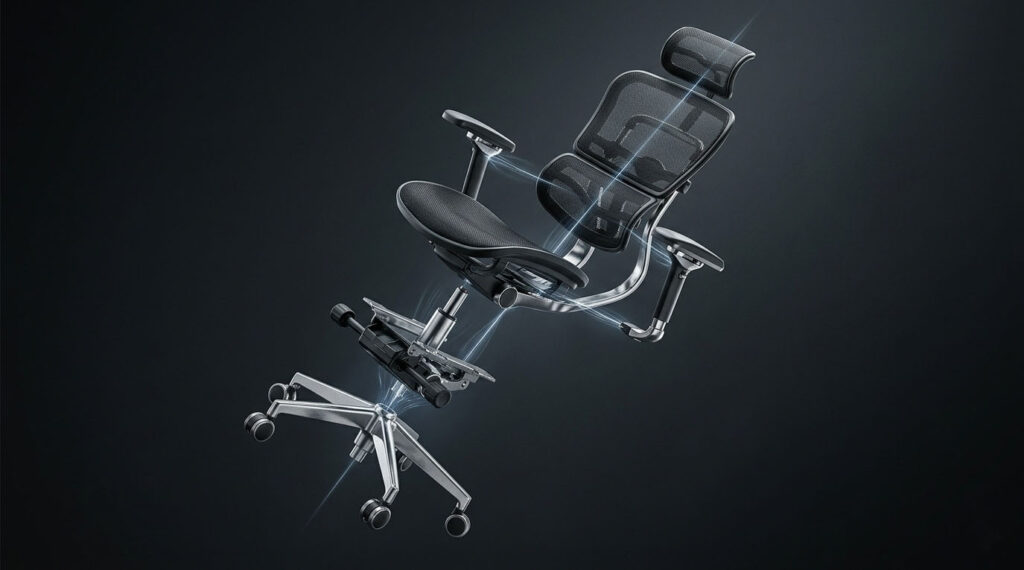
Part II: Why Enterprises Choose Disposal Over Repair
Many ask: “Since it is still functional, why not fix it?”
The answer is simple: Businesses do not make decisions based on emotion; they make decisions based on ROI.
Enterprises evaluate inputs including:
- Time
- Labor
- Parts
- Warehousing
- Management overhead
Against outputs including:
- Sales revenue
- Inventory turnover
- Asset recovery value
If repair input ($\$300$) > recovered asset value ($\$250$), any commercial company will choose to halt operations.
This is not waste; it is basic economic law.
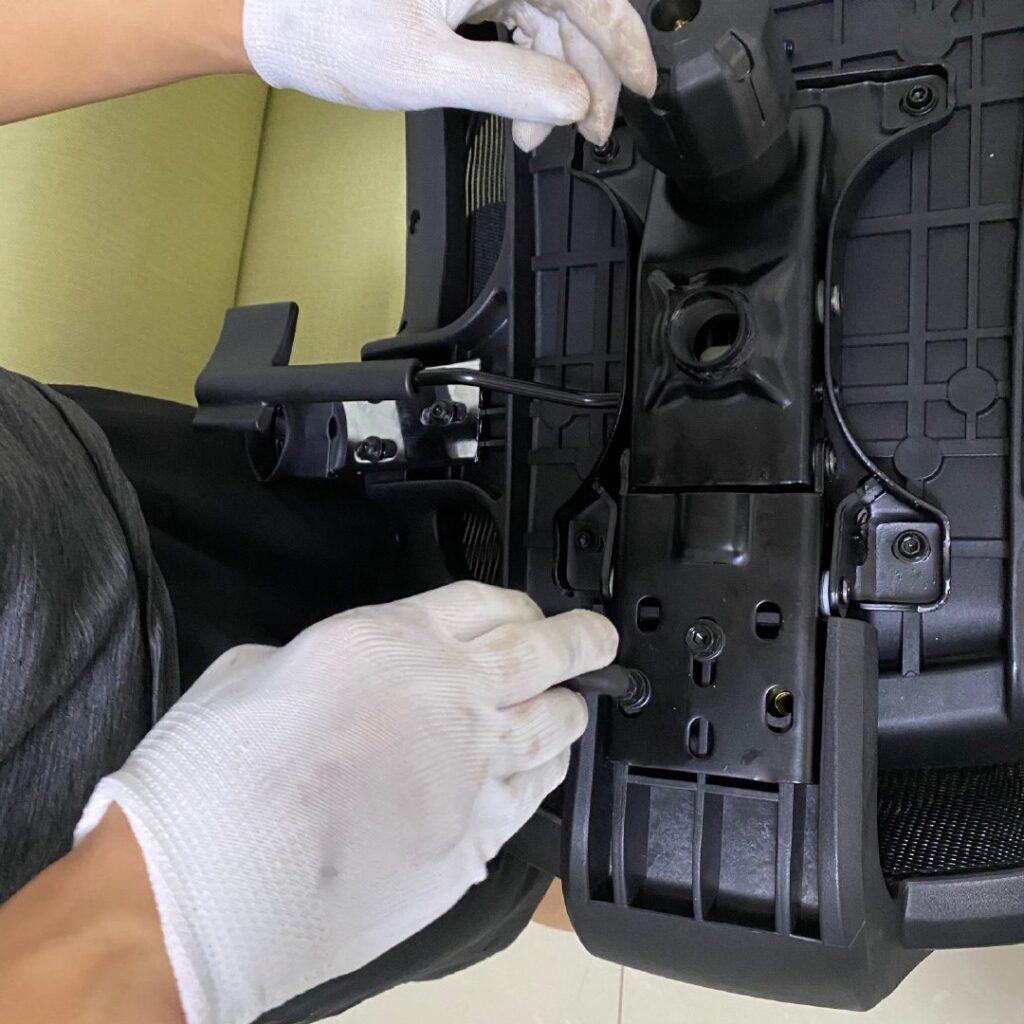
Part III: The Hidden Cost—Unrecoverable Assets
Many enterprises focus heavily on initial purchase prices while ignoring Asset Recovery Rate.
What is the Asset Recovery Rate? Simply put:
If you recover 100 used office chairs, and 80 can be successfully resold, your recovery rate is 80%.
If 20 units fail to recover due to supply chain gaps, the loss is not just 20 physical chairs—it is the future cash flow those 20 chairs represent.
Case Study:
A corporate furniture liquidation company receives 500 commercial office chairs with an average resale value of $\$250/\text{unit}$.
- Theoretical Inventory Value: $\$125,000$
- Upon inspection, 100 units face minor component failures.
Path 1: Unrecoverable
- Loss: $100 \times \$250 = \mathbf{\$25,000}$
Path 2: Economical Recovery
- If managed through rational cost control, adding $\$40/\text{unit}$ in parts:
- Total Input: $\$4,000$
- Recovered Asset Value: $\$25,000$
- Net Value Added: $\mathbf{\$21,000}$
Takeaway: Asset recovery capability is, at its core, an asset appreciation engine.
Part IV: Why the OEM Ecosystem Fails the Secondary Market
A frequent question raised is: “Why not work directly with original manufacturers (OEMs)?”
Because the supply chain logic of new products fundamentally opposes the supply chain logic of secondary products.
| OEM Focus | Secondary/Refurbished Market Focus |
| : | : |
| High-volume batches | Small quantities |
| Brand-new models | 10-year-old legacy models |
| Long-term stable product lines | Non-standard, sporadic demands |
The Mismatch Example:
A refurbishment firm holds 12 units of an older office chair model requiring 12 replacement armrests.
- To an OEM, this is an economically unviable order due to mold-opening costs, production rescheduling, and administrative overhead.
- To the refurbisher, however, those 12 chairs represent a recovery value of $\$4,000 – \$6,000$.
Because the value scales differ entirely, secondary markets require distinct, specialized supply chain solutions.
Part V: Durability vs. Recoverability Economics
Many brands market their products using slogans like: “Our furniture lasts for 20 years.”
Few, however, account for what happens after those 20 years: Can it still be economically restored?
A product’s lifecycle consists of two distinct phases:
- Primary Lifecycle: Manufacturing $\rightarrow$ Usage
- Secondary Lifecycle: Collection $\rightarrow$ Refurbishment $\rightarrow$ Resale
Many items excel in their primary lifecycle yet fail in their secondary lifecycle. The root cause is rarely structural quality failure; rather, it is the failure to establish a viable maintenance economic model.
Part VI: The Core of Future Industry Competition
Future competition will move far beyond who can manufacture better initial furniture. It will center on who can keep asset values active for longer periods.
Forward-thinking enterprises increasingly prioritize:
- Circular economy integration
- Asset utilization rates
- Sustainability credentials
- Total Cost of Ownership (TCO)
The True Lifecycle Value Formula:

- Lower recovery costs $\rightarrow$ Increased lifecycle value.
Frequently Asked Questions (FAQ)
Q1: Is a broken office chair worth repairing?
Answer: It depends entirely on the ratio of Repair Cost to Post-Recovery Market Value. If the proportion is balanced, it is worth fixing. If distorted, scrap it.
Q2: Why are component gaps more critical for high-end office chairs?
Answer: High-end furniture carries significantly higher residual value. A $\$500$ chair easily justifies a $\$50$ component restoration investment, whereas a $\$50$ budget chair does not.
Q3: Do customized parts inherently carry high costs?
Answer: The sticker price of a part matters less than the new asset value it unlocks. Spending $\$30$ to rescue a $\$300$ asset makes absolute economic sense.
Q4: What is the single biggest waste in the office furniture industry?
Answer: It is not manufacturing overcapacity; it is the premature retirement of massive volumes of structural assets that still hold intrinsic value.
Final Verdict: What is the Industry’s Real Challenge?
The fundamental challenge is not:
- A lack of global raw materials,
- An inability to manufacture, or
- A technical inability to repair.
These are merely symptoms. The ultimate bottleneck is whether input costs align with recovered yields.

Therefore, the true mission for the future of the office furniture circular economy isn’t just about supplying spare parts—it is about optimizing recovery pathways so more commercial assets can re-qualify for profitable circulation. This is the core mechanism for extending furniture lifecycles.