A Complete Framework to Reduce Refurbishment Risk, Cost, and Long-Term Loss
Introduction
In office furniture refurbishment, some failures appear to be simple replacement problems.
- A chair no longer stays at the correct height.
- A gas lift cylinder sinks under load.
- A chair becomes unstable after years of use.
The immediate solution seems obvious:
“Replace the gas lift.”
However, in real refurbishment operations, the problem is rarely just the component itself.
A failed gas lift can create a chain reaction:
- additional labor costs
- delayed refurbishment schedules
- customer complaints
- warranty risks
- reduced profitability
The real challenge is not finding another cylinder.
The real challenge is:
How can refurbishment companies restore reliability while minimizing cost and uncertainty?
1. The Visible Problem: A Gas Lift Stops Working
A gas lift is one of the most frequently replaced components in office chairs.
Its function appears simple:
- adjust seat height
- support user weight
- maintain stable positioning
When it fails, common symptoms include:
- chair slowly lowering
- inability to adjust height
- unstable movement
- abnormal noise
- reduced user comfort
At this point, many companies focus only on the replacement part.
But a deeper question needs to be asked:
Why did the failure happen, and how can future failures be prevented?
2. Why Do Office Chair Gas Lifts Fail?
2.1 Natural Lifecycle Degradation
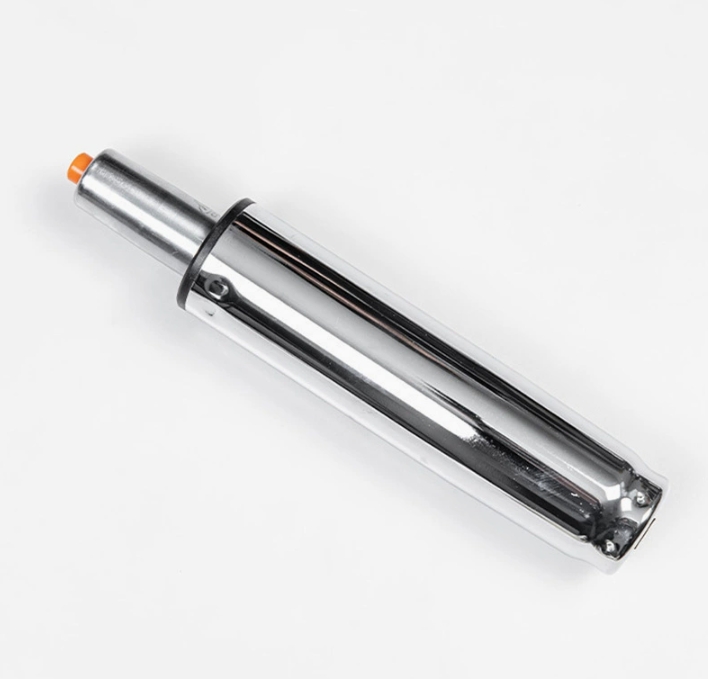
A gas lift is a mechanical system, not just a metal tube.
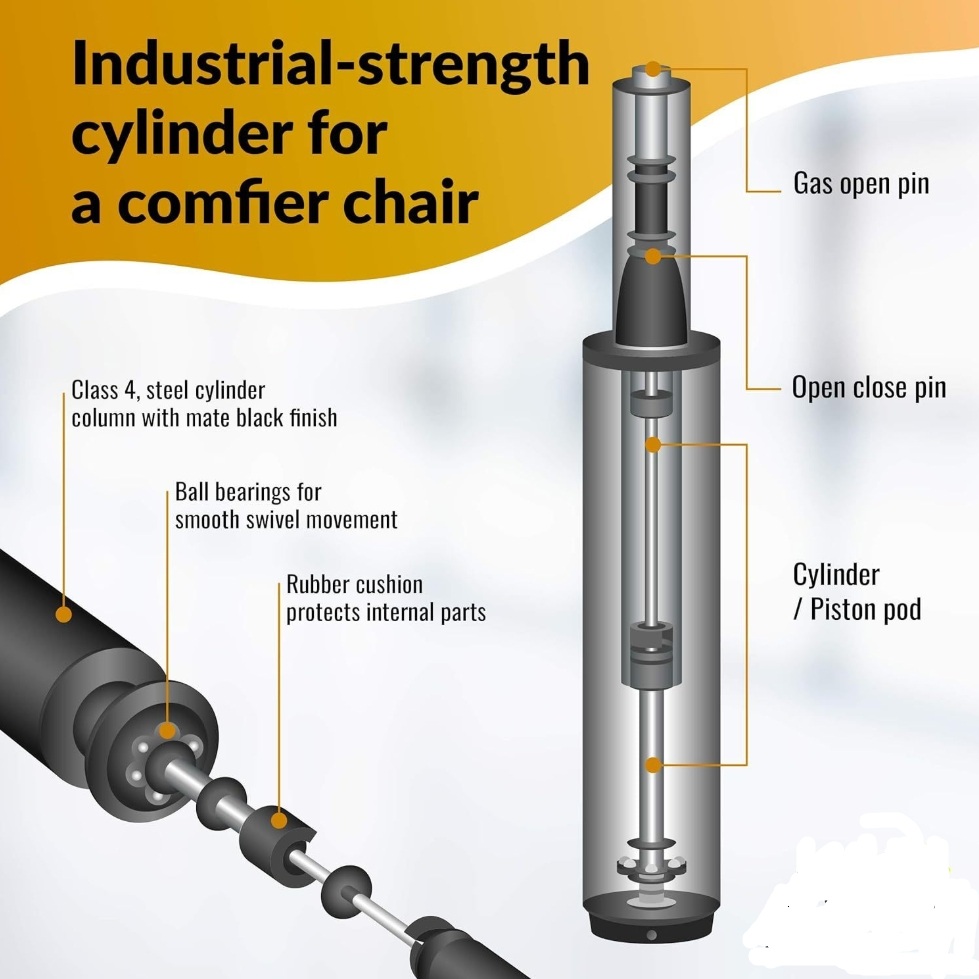
Its internal structure includes:
- compressed gas chamber
- piston rod
- sealing system
- valve mechanism
- cylinder body
Over years of use, components experience:
- seal aging
- pressure loss
- internal wear
- corrosion
- fatigue from repeated loading
A chair used occasionally in a private office and a chair used daily in a commercial environment do not have the same lifecycle expectations.
Therefore, replacement decisions cannot rely only on appearance.
2.2 Incorrect Specification Matching
One of the most common mistakes in refurbishment is assuming:
“Any gas lift with the same size will work.”
In reality, compatibility depends on multiple factors:
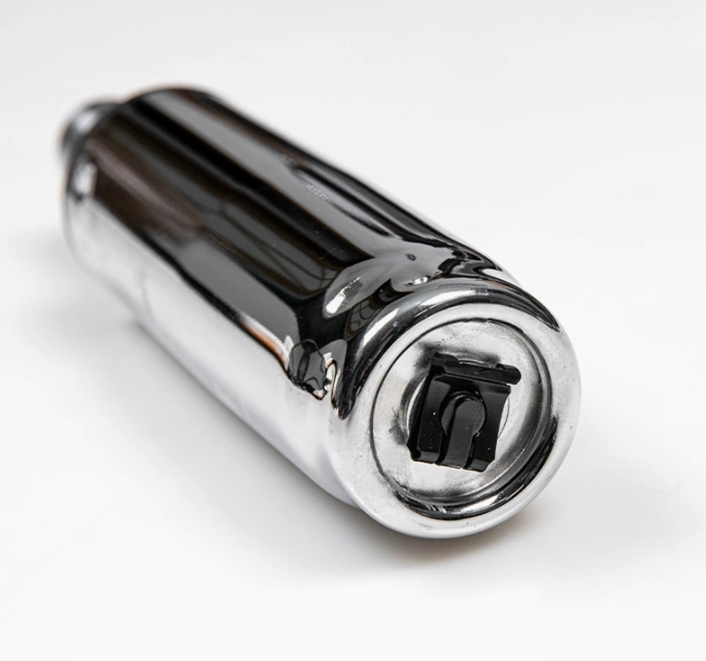
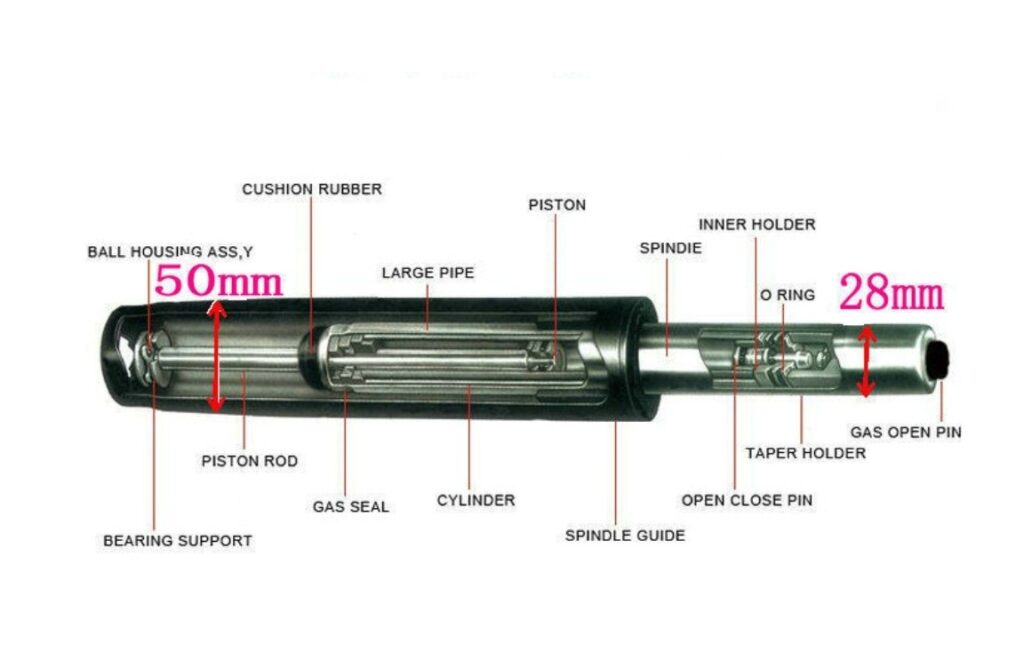
- Tube Diameter: The external diameter affects structural compatibility.
- Stroke Length: The travel distance determines the adjustment range.
- Overall Height: The final chair height depends on the complete assembly.
- Cone Size and Connection Geometry: The connection between gas lift, base, and mechanism must match correctly.
- Load Capacity: Different applications require different durability levels.
A component that works temporarily may not provide reliable long-term performance.
A gas lift failure is often not caused by a bad product. It may be caused by selecting the wrong solution.

3. The Hidden Problem: Missing Engineering Information
This is one of the biggest challenges in refurbishment.
Many office chairs remain valuable long after their original production ends.
However:
- original manufacturers disappear
- models are discontinued
- technical drawings are unavailable
- suppliers change
- historical data is lost
The refurbishment company still has the physical chair.
But the engineering information behind it is gone.
This creates uncertainty.
The question becomes:
How do we make a reliable replacement decision without complete original data?
4. Why The Cheapest Gas Lift Can Become The Most Expensive Choice
Many companies naturally focus on purchase price. A lower-cost component appears attractive.
However, the real cost is not the unit price.
The real cost includes:
- Direct Cost
- component price
- shipping
- inventory
- Operational Cost
- installation labor
- replacement time
- testing
- Failure Cost
- customer complaints
- warranty replacement
- reputation damage
- lost future business
A $15 component that fails repeatedly may cost significantly more than a $25 component that provides predictable performance.
The lowest purchase price is not always the lowest total cost.
5. Possible Solutions and Their Trade-Offs
There is no single solution for every refurbishment project. The correct choice depends on:
- quantity
- chair value
- expected remaining lifecycle
- risk tolerance
- future demand
Solution 1: Standard Replacement
- Suitable for: common chair models, clear specifications, small quantities.
- Process:Identify requirements↓Match specifications↓Install and test
- Advantages:
- lowest immediate investment
- fastest implementation
- Risks:
- depends heavily on correct information
- limited flexibility
Solution 2: Build A Component Data System
For companies handling large volumes of refurbished chairs, repeated searching creates unnecessary cost.
A better approach is building internal knowledge:
- Record chair models, gas lift specifications, supplier information, failure history, and performance feedback.
The goal: Reduce future decision time. Every solved case becomes future value.
Solution 3: Engineering Verification Process
For discontinued or uncertain models, a more reliable approach is required.
- Process:
- Step 1: Existing Component Analysis: Review dimensions, connection points, operating environment, and failure condition.
- Step 2: Specification Confirmation: Determine required height range, load requirement, and compatibility.
- Step 3: Prototype Testing: Before large purchase, install sample, test function, and confirm performance.
- Step 4: Production Decision: Only after validation, move to larger quantities.
The purpose is simple: Move uncertainty from the customer environment into a controlled testing environment.
6. How To Choose The Optimal Solution?
The best solution is not the most expensive one. It is the solution that creates the highest overall return.
A practical evaluation should consider:
Total Cost of Ownership = Component Cost + Labor Cost + Failure Probability+ Replacement Cost + Customer Risk + Time Cost
For example:
- Scenario A: 20 chairs requiring repair. A standard replacement may be the best choice.
- Scenario B: 1,000 chairs from a corporate relocation project. Creating reliable specifications and testing may provide much higher ROI.
- Scenario C: Multiple discontinued chair models. A flexible compatibility solution may create the greatest long-term value.
The correct question is not:
“How cheap is this component?”
The correct question is:
“How much uncertainty does this solution remove?”
7. Prevention: The Best Failure Is The One That Never Happens
The most valuable suppliers do not only solve problems. They prevent them.
A reliable refurbishment process should include:
- Before Purchasing: Confirm chair model, original component information, dimensions, load requirements, and application environment.
- Before Mass Ordering: Complete sample testing, installation verification, and performance evaluation.
- During Long-Term Cooperation: Maintain supplier records, failure feedback, and improvement data.
This transforms replacement from a reaction into a controlled process.
8. The Real Value Behind A Replacement Component
A gas lift is only a component. But the business value behind it is much larger.
A reliable solution helps refurbishment companies:
- protect inventory value
- reduce labor waste
- avoid repeated failures
- improve customer confidence
- increase project profitability

Conclusion
An office chair gas lift failure may look like a small replacement issue.
But behind this small component exists a larger business challenge:
How can refurbishment companies restore value when original product information, suppliers, and manufacturing systems are no longer available?
The answer is not simply:
“Find another gas lift.”
The answer is:
Create a reliable process that transforms uncertainty into predictable results.
Because in refurbishment, the most expensive problem is often not the component itself. It is the uncertainty surrounding the decision.
The future of refurbishment is not only about replacing parts.
It is about creating certainty, reducing risk, and protecting the value of existing assets.