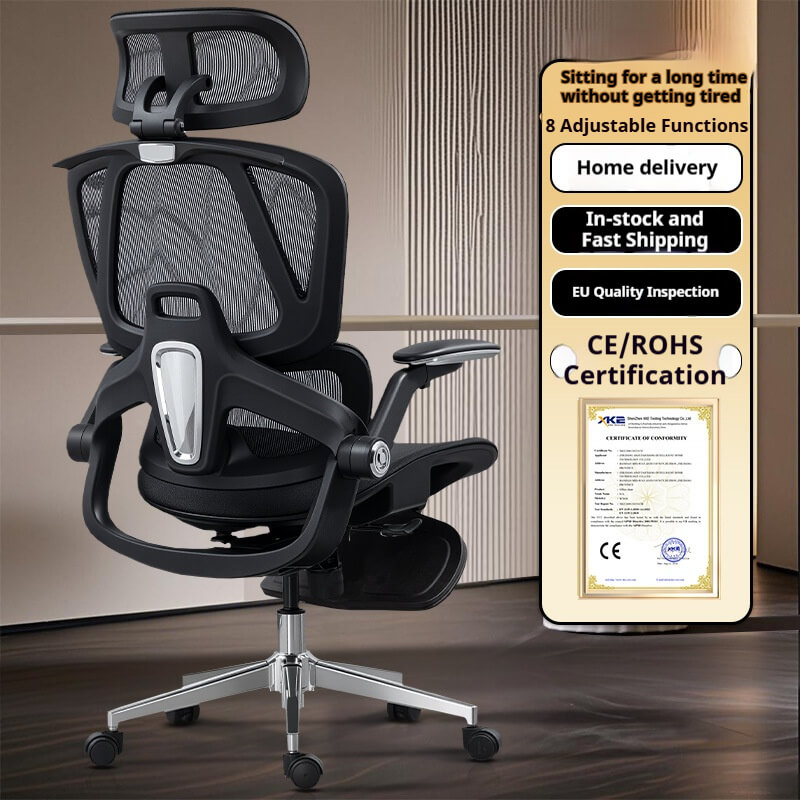
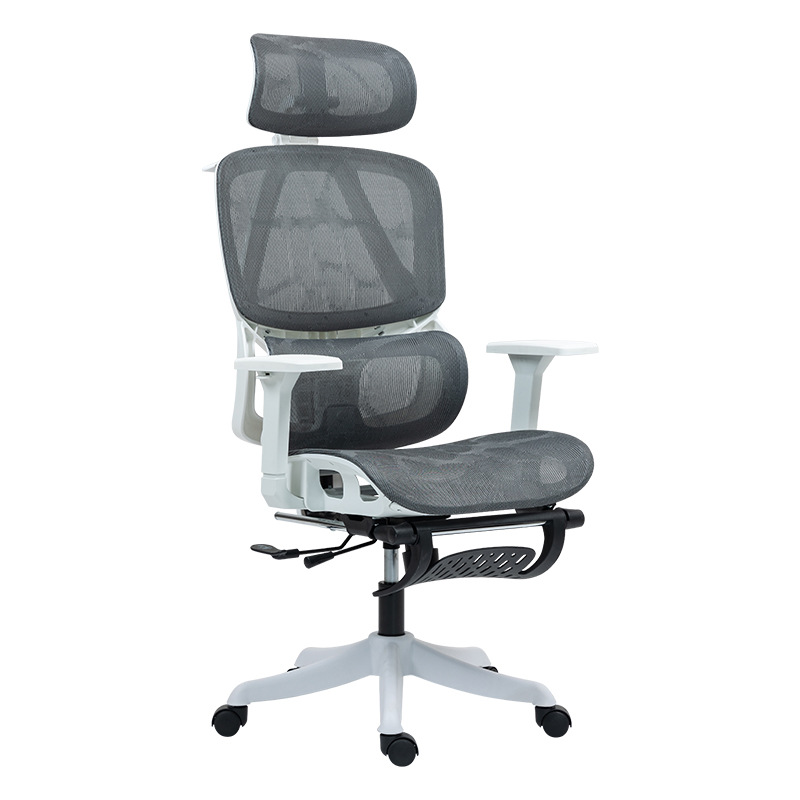
A discontinued office chair part does not necessarily mean the chair has reached the end of its useful life.
For office furniture refurbishers, repair companies, used office furniture businesses, and other companies handling large quantities of chairs, this situation can be surprisingly common.
A chair may still have a valuable frame, mechanism, backrest, seat, or other components. But when one important part is no longer available, the entire chair can become difficult or uneconomical to sell.
The question is not simply where to find a replacement part.
The more important question is:
What is the most practical way to recover the value of the chair?
There are several possible solutions, and custom replacement parts or reverse engineering should not necessarily be the first one.
1. Start With the Original OEM Part
When an original OEM part is still available, reasonably priced, and supplied reliably, it is usually the simplest option.
Using the original component preserves the original chair configuration and reduces uncertainty around:
- Fit and compatibility
- Function
- Appearance
- Material
- Quality
- Installation
- Long-term supply
If the original part can solve the problem at a reasonable total cost, there may be little reason to develop a replacement.
A replacement part should solve a problem that actually exists. It should not be introduced simply because a replacement manufacturer is available.
2. Consider Compatible or Donor Parts
When the original office chair part has been discontinued, another option may be to source a component from the same or a compatible chair.
For some refurbishment projects, donor parts can provide a practical way to restore chairs without developing a new component.
However, this approach depends on several factors.
The donor part needs to be compatible. Its condition needs to be acceptable. There needs to be enough supply for the number of chairs being repaired, and the total cost of sourcing, removing, transporting, and installing the parts needs to make sense.
For a small number of chairs, this may be practical.
For hundreds or thousands of chairs, finding enough suitable donor parts may become a problem in itself.
3. Look for Existing Replacement Parts
If OEM and donor parts are not practical, an existing replacement component from another manufacturer may be another option.
This can sometimes provide a faster and more economical solution than developing a new part.
But price alone should not determine the decision.
The replacement should be evaluated against the actual requirements of the chair, including:
- Dimensions
- Mounting points
- Function
- Load requirements
- Material
- Durability
- Safety requirements
- Appearance
- Expected service life
A lower unit price does not automatically mean a lower total cost.
A replacement that does not fit properly, requires modification, fails prematurely, or creates additional installation work can make an apparently inexpensive part much more expensive in practice.
4. When Should You Consider Custom Replacement Parts?
Custom replacement parts and reverse engineering generally become more relevant when the existing options no longer make practical or commercial sense.
For example:
- The original part has been discontinued.
- The OEM part is available but too expensive.
- The original supplier can no longer provide consistent supply.
- Suitable donor chairs are difficult to find.
- Existing aftermarket parts do not fit.
- Existing replacement parts do not meet the required specifications.
- The quantity of chairs is large enough to justify development.
- The chairs still have enough residual value to make refurbishment worthwhile.
At this point, reverse engineering can provide another path.
But the question should not simply be:
“Can this part be manufactured?”
Almost any component can be manufactured if enough time and money are invested.
The more useful question is:
“Can we develop a replacement that makes sense for the entire chair refurbishment project?”
Reverse Engineering Is More Than Copying a Part
Reverse engineering an office chair component is not simply a matter of measuring an old part and producing an identical-looking piece.
The replacement needs to work within the chair’s existing system.
That means understanding the original component, how it connects to surrounding parts, what function it performs, what loads or forces it experiences, and what requirements the replacement needs to meet.
Depending on the project, the process may include:
Measurement → Analysis → Optimization → Engineering Drawings → Prototype → Validation → Manufacturing
The exact process can vary from project to project.
A mechanism, armrest, structural component, mesh component, or other chair part may require completely different engineering decisions.
Even two parts that look similar externally may have different dimensional, material, or functional requirements.
This is why custom replacement manufacturing is not simply a matter of choosing something from a catalog.
The Goal Is Not to Recreate the Past
When an original office chair part is discontinued, the objective of reverse engineering does not necessarily have to be creating an exact historical copy in every respect.
The practical objective is to develop a replacement that meets the requirements of the application.
That may include:
- Correct fit
- Required functionality
- Appropriate material
- Required strength or durability
- Acceptable appearance
- Manufacturability
- Reasonable production cost
- Reliable supply
The requirements depend on the chair and the refurbishment project.
The best solution is therefore not necessarily the most sophisticated one.
It is the solution that satisfies the agreed requirements while making economic sense.
What About Small Quantities?
Custom replacement manufacturing is not limited to large production orders.
A project may involve one replacement part, a small batch, or thousands of components.
The economics will naturally be different.
Quantity can affect:
- Tooling decisions
- Manufacturing methods
- Unit cost
- Production planning
- Shipping
- Lead time
However, quantity should not change the technical requirements agreed for the project.
The part still needs to fit.
It still needs to perform its intended function.
The required quality still needs to be maintained.
And the total solution still needs to make sense.
Quantity changes the economics. It does not change the requirements.
How to Evaluate the Total Cost of an Office Chair Replacement Part
One of the most important mistakes in refurbishment projects is looking only at the price of the replacement component.
The real calculation is broader.
A useful way to think about the project is:
Potential Recovery Value = Expected Resale Value − Refurbishment Cost − Replacement Component Cost − Labor − Logistics
The replacement part is only one variable.
For example, a replacement component with a lower unit price may not be the better option if it has high shipping costs, requires additional modification, takes significantly longer to install, or creates quality problems.
Conversely, a custom component with a higher unit cost may make commercial sense if it allows a large quantity of otherwise difficult-to-sell chairs to be recovered.
The relevant question is therefore not:
“How cheap is the part?”
It is:
“What does the complete recovery solution cost, and what value does it unlock?”
Quality Should Be Part of the Solution From the Beginning
Quality should not simply mean inspecting the finished parts before shipment.
It starts much earlier.
The original component needs to be understood correctly.
Measurements need to be reliable.
The design needs to reflect the actual application.
The manufacturing method needs to be appropriate.
Where necessary, prototypes can be used to verify fit and function before moving into larger-scale production.
Quality requirements should also be agreed before manufacturing begins, rather than being treated as something to consider only after the parts have been produced.
This is particularly important for custom office chair replacement parts because the part must work within an existing chair rather than as an isolated product.
Every Replacement Project Is Different
There is no universal replacement part solution for every office chair.
Every project may involve different:
- Chair models
- Existing components
- Measurements
- Materials
- Functional requirements
- Quantities
- Cost targets
- Manufacturing requirements
- Logistics requirements
For that reason, each custom project needs to be evaluated on its own circumstances.
The process may result in a custom replacement part.
It may result in a modified design.
It may involve prototyping before production.
Or, after evaluating the options, the conclusion may be that an OEM or existing replacement component is actually the better choice.
That conclusion is also useful.
The objective should be to find the appropriate solution, not to force every problem into a custom manufacturing process.
How Ze Chu Approaches Custom Office Chair Replacement Parts
At Ze Chu, we focus on customized office chair components and replacement solutions for situations where existing supply options are no longer practical.
We do not start with a fixed product inventory and try to fit every project around it.
We start with the component and the problem that needs to be solved.
Depending on the project, this can involve:
Measurement → Engineering Analysis → Design Optimization → Drawings → Prototype Validation → Manufacturing → Quality Control
The exact approach depends on the requirements.
We also understand that a custom replacement is not automatically the right answer.
If an OEM part, compatible component, or existing replacement solution is more practical for a particular project, that option should be considered.
When custom manufacturing is justified, the goal is to provide a replacement that meets the agreed technical and commercial requirements and helps make the chairs worth recovering.
From Discontinued Parts to Recoverable Chairs
A discontinued office chair component can turn an otherwise usable chair into difficult inventory.
But the disappearance of the original part does not necessarily mean the value of the chair has disappeared.
There may be several ways forward:
OEM replacement → Compatible or donor part → Existing replacement component → Custom replacement → Reverse engineering
The right choice depends on the actual project.
Custom reverse-engineered office chair parts are not the answer to every refurbishment problem.
They become valuable when the conventional options no longer provide a practical path forward.
The goal is not simply to manufacture another part.
The goal is to recover the value that is still in the chair.
We solve the problem in front of us — not the inventory behind us.