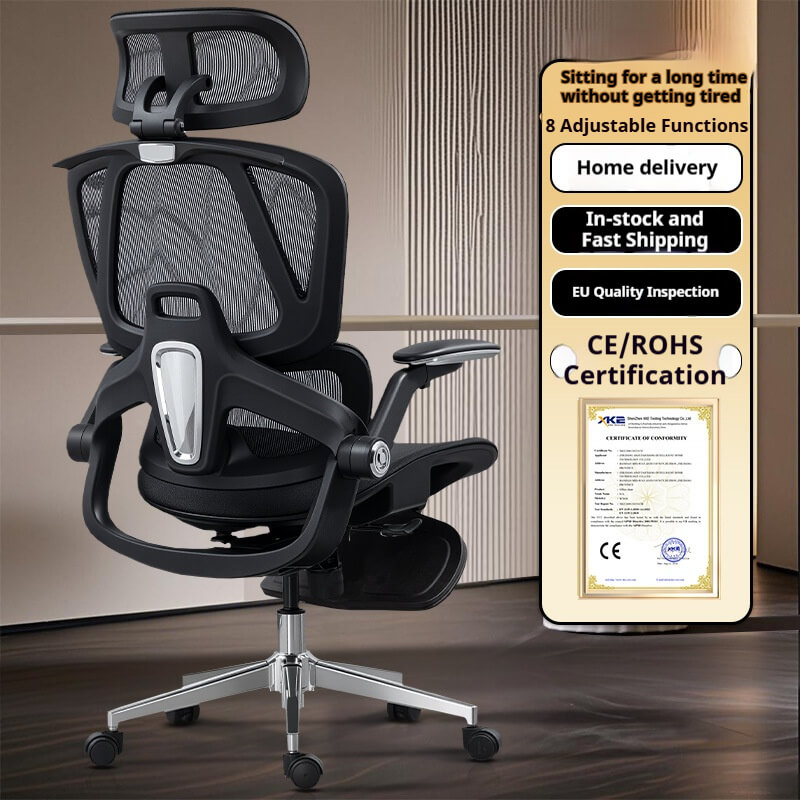
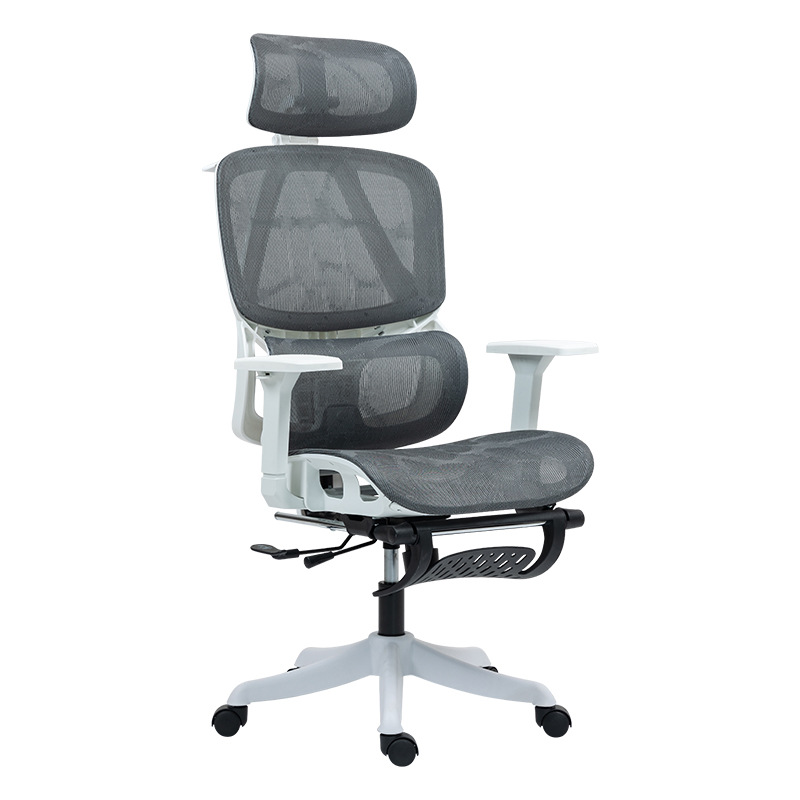
A used office chair is not simply a repair problem. It is a next-life value decision.
A chair can be old and still be valuable. It can also be cheap and still be uneconomical to recover.
For refurbishers, repair companies, resellers, and office-furniture asset managers, the important question is not simply whether a chair can be fixed.
It is:
What is the most practical and valuable next life this chair can support?
The answer may be reuse, repair, refurbishment, adaptation, reverse engineering, parts recovery, recycling, or retirement.
1. Is a used office chair worth refurbishing?
Sometimes.
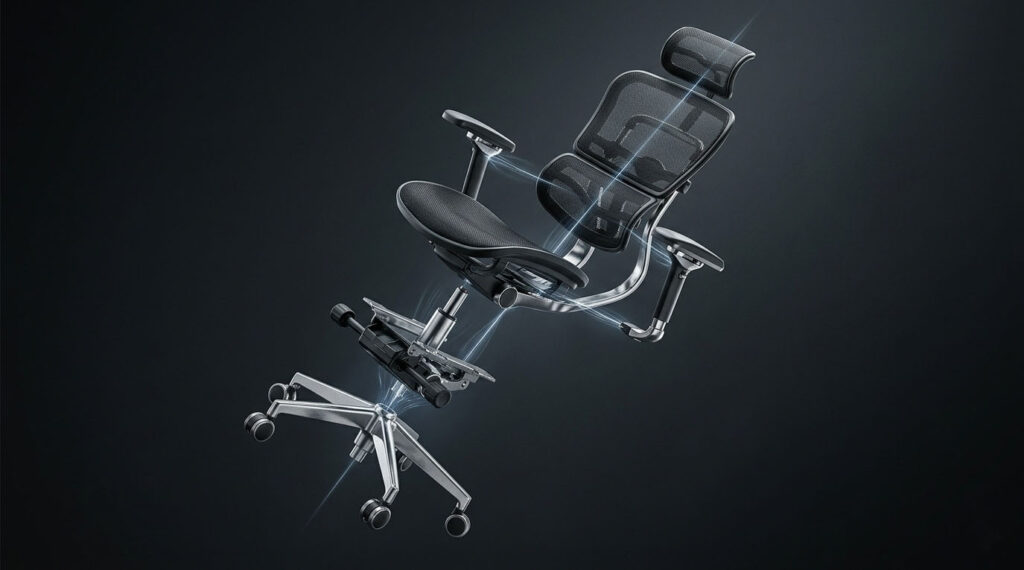
A used office chair may still retain value through its frame, mechanism, ergonomic design, brand, configuration, and demand in the secondary market.
But the acquisition price is only the first number.
A more useful calculation is:
Total Recovery Cost = Acquisition + Parts + Labor + Testing + Rework + Logistics + Inventory + Risk
That should be compared with the chair’s expected value after recovery.
A $150 chair that needs another $150 of work is not automatically a better investment than a $220 chair that needs only $60 of work.
The decision begins with the next-life economics, not the purchase price.

2. What is the difference between repairing and refurbishing an office chair?
Repair normally addresses a specific failure.
Examples include:
- replacing a gas lift;
- replacing casters;
- repairing an armrest;
- replacing a mechanism.
Refurbishment is broader. It may include cleaning, inspection, replacement of multiple worn components, upholstery work, functional checks, and preparation for resale or continued use.
The distinction matters because not every chair needs a full refurbishment.
A chair with one failed component may only need a targeted repair.
3. When should an office chair be repaired instead of replaced?
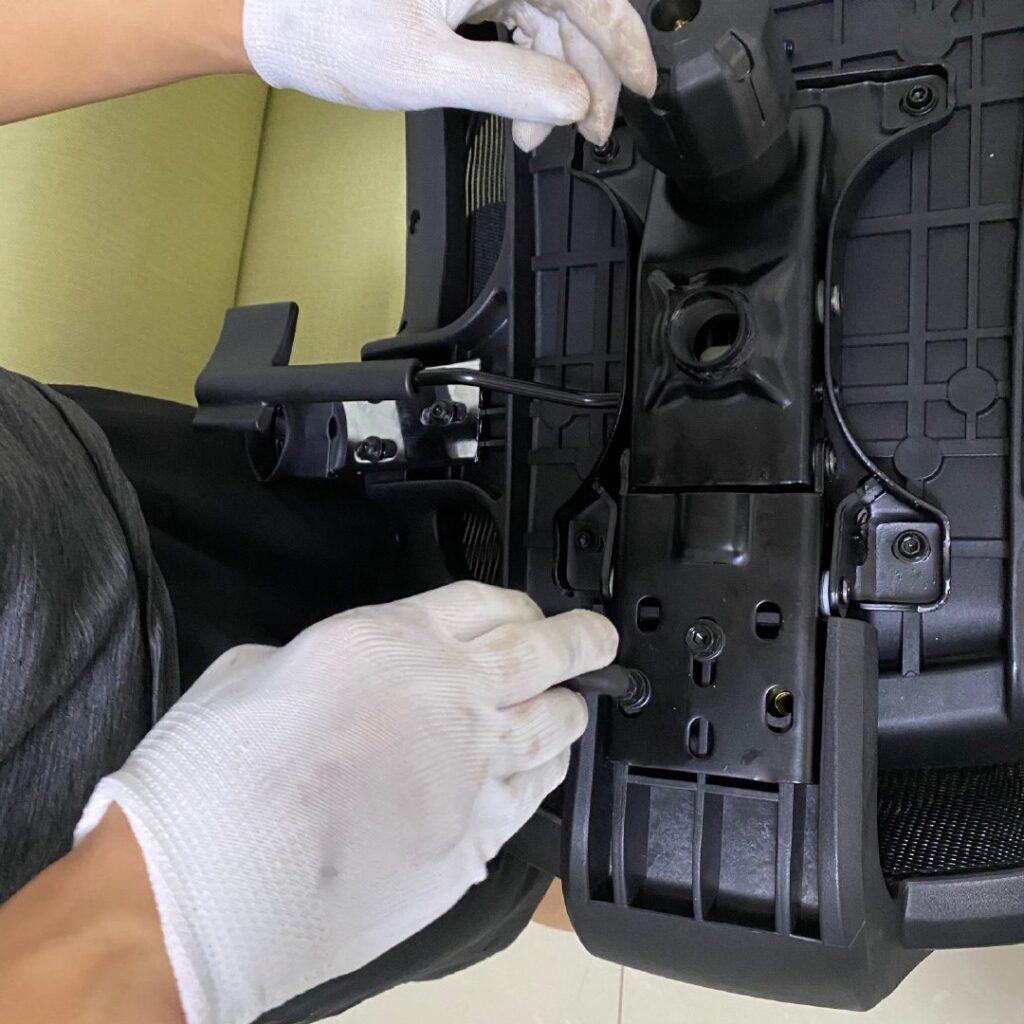
Repair generally makes more sense when:
- the main structure remains sound;
- the chair still has market value;
- the defect is localized;
- replacement parts are obtainable;
- the repair cost is reasonable relative to the value recovered.
For example, a failed caster does not normally justify retiring an otherwise valuable commercial chair.
The key is to identify the actual failure before deciding the fate of the whole asset.
4. When does refurbishment stop making economic sense?
Refurbishment becomes difficult to justify when recovery cost approaches or exceeds the value that can realistically be recovered.
But “recovery cost” must include more than the replacement part.
Consider:
Parts + Labor + Testing + Rework + Logistics + Warranty Exposure
A $25 component may require substantial labor to install.
A $40 repair may also create $100 of additional value.
Conversely, a $60 repair may add only $30 of resale value.
The right question is therefore:
How much value does this repair recover or protect?

5. What should be checked before refurbishing an office chair?
A useful inspection should separate at least five areas.
Safety
Check structural and safety-critical components first.
Function
Test height adjustment, tilt, locking, casters, arms, and other intended functions.
Structure
Look for cracks, deformation, weakened joints, and damaged mounting points.
Ergonomics
Check whether the chair still provides the required adjustment and support.
Market condition
A chair acceptable in a low-cost used market may not meet the standard expected in premium refurbished resale.
This is why there is no single definition of “ready for resale.”
6. Does “still works” mean a chair is ready for resale?
No.
This is one of the most important distinctions in refurbishment.
A chair may still operate while carrying:
- an aging gas lift;
- loose or worn arm components;
- excessive mechanism play;
- degraded casters;
- abnormal noise;
- structural wear.
Whether those conditions justify intervention depends on:
condition + target market + expected risk + recovery cost
A working component is not automatically a replacement candidate.
But a working component is also not automatically risk-free.
7. Should an old but still working component be replaced?
Not automatically.
A preventive replacement can make sense when:
- the component is highly failure-sensitive;
- the chair has high residual value;
- the seller provides a warranty;
- failure would create significant service cost;
- the replacement is inexpensive relative to the asset.
It may make little sense when:
- the chair has low resale value;
- the market accepts the existing condition;
- failure consequences are limited;
- replacement would destroy the available margin.
The comparison should therefore be:
Replacement Cost vs. Expected Cost of Leaving the Risk Unresolved
not:
Replacement Cost vs. $0
8. What happens when the original office chair part is discontinued?
A discontinued part does not automatically mean the chair is finished.
Several routes may exist:
- Standard Replacement: —— use an existing compatible part.
- Modified Replacement: —— adapt an existing part to the chair.
- Adapter: —— create a new mounting interface between otherwise compatible components.
- Reverse Engineering: —— reconstruct the original or required component.
- Custom Development: —— create a new component where the original architecture or interface is no longer practical.
The correct route depends on the chair, the part, the interface, the quantity, and the economics.

9. Can a discontinued office chair part be reverse-engineered?
Often, yes.
A project may begin with:
- a physical sample;
- photos;
- measurements;
- mating components;
- existing CAD;
- or other surviving information.
The important point is that reverse engineering should not simply reproduce a worn or damaged shape.
The objective is to understand:
- critical geometry;
- mounting interfaces;
- movement;
- clearances;
- load requirements;
- material requirements;
- functional behavior.
A typical development path is:
Reference——Measurement——CAD Reconstruction——Prototype——Fit \& Functional Validation——Production
This moves the project from an uncertain physical problem to a repeatable engineering solution.
10. Can one photo be enough to start a custom replacement-part project?
Yes, for an initial assessment.
No, not necessarily for a final quotation or production release.
A photo can help identify:
- the component;
- the chair model;
- the overall geometry;
- visible interfaces;
- possible manufacturing routes.
Additional information may then be required:
- key dimensions;
- mounting details;
- material or hardness;
- required quantity;
- photos of the mating assembly;
- physical sample.
This distinction matters.
A photo can start the conversation without being sufficient to finish the engineering.
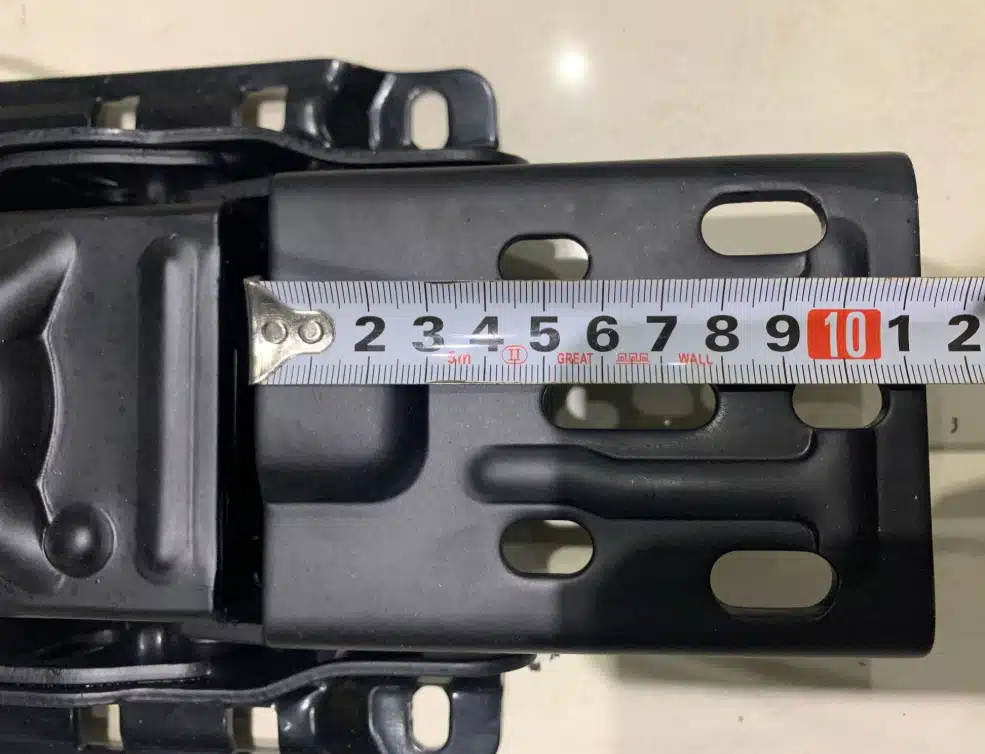
11. What if a standard replacement part exists but does not fit?
Then the problem is no longer simply “find a replacement.”
It becomes a fitment problem.
Differences may involve:
- mounting-hole pattern;
- hole spacing;
- mechanism height;
- pivot location;
- clearance;
- gas-lift interface;
- lever location;
- surrounding geometry.
The best solution may be a Modified Part or an Adapter Plate rather than a completely new component.
The goal is to use the simplest solution that safely achieves the required fit and function.
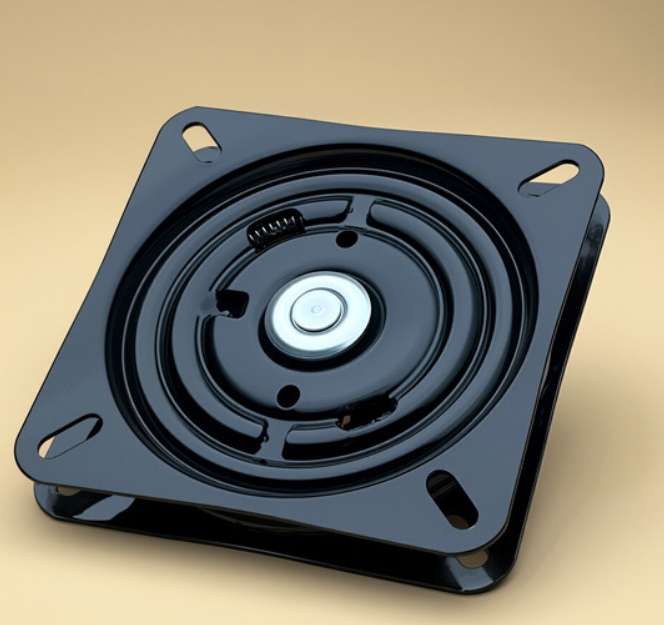
12. When does an adapter plate make sense?
An adapter plate is useful when the existing components are fundamentally suitable, but their interfaces do not match.
For example:
Original chair mounting pattern \replacement mechanism mounting pattern
An adapter can bridge that difference without redesigning the entire mechanism.
For refurbishers, this can be an efficient solution when:
- the chair is still valuable;
- a suitable replacement mechanism already exists;
- only the interface differs;
- the quantity does not justify a new mechanism.
But an adapter also introduces:
- another component;
- another assembly step;
- additional fasteners;
- possible height changes;
- possible clearance or structural issues.
So the adapter should be evaluated as part of the complete solution.
13. When does a custom chair mechanism make more sense than an adapter?
When the problem is no longer just the mounting holes.
A custom mechanism may become more practical when:
- the mechanism height is wrong;
- the pivot geometry is wrong;
- tilt range is wrong;
- operating force is wrong;
- lever position is incompatible;
- surrounding clearance is insufficient;
- the adapter would add too much height or complexity;
- the required load or function differs from the available mechanism.
In that situation, an adapter may only connect two incompatible components.
A custom mechanism can address the underlying mechanical relationship.
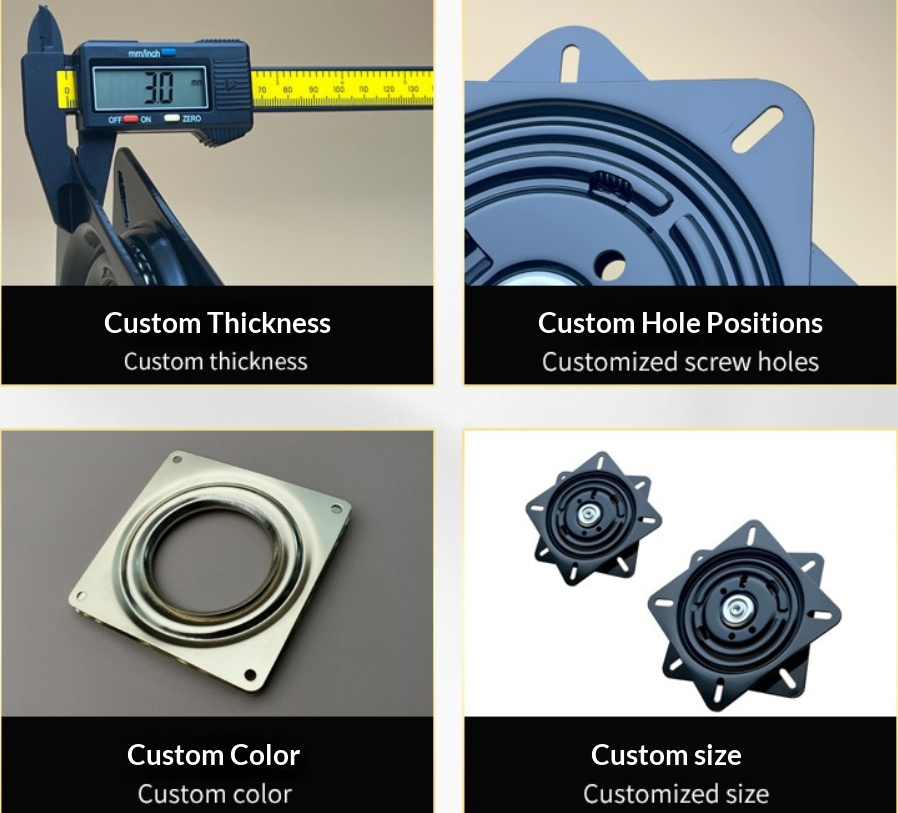
14. How should a refurbisher decide between a standard part, adapter, and custom part?
A practical order is:
- Standard replacement: Does an existing part actually fit and perform correctly?
- Modified replacement: Can an existing part be adapted economically?
- Adapter: Can the interface be solved without changing the underlying mechanism?
- Reverse engineering: Is the original or required geometry unique enough to justify reconstruction?
- Custom development: Would a new configuration create the best technical and economic outcome?
The important principle is:
Do not make a custom part when a standard part is sufficient. Do not force a standard part when it creates a larger problem.
15. How do you know if custom development is economically worthwhile?
Custom development introduces fixed costs.
For example:
Engineering + CAD +Prototype +Tooling
may be relatively expensive for a small quantity.
But that cost can become reasonable when:
- the chairs have high residual value;
- the component is used across many units;
- repeat demand is expected;
- the standard market has no suitable replacement;
- the custom solution reduces labor or warranty costs.
The important calculation is not simply:
“What does the custom part cost?”
It is:
“What value does the custom solution unlock?”
16. Can a small quantity justify a custom part?
Yes.
Quantity matters, but it is not the only variable.
A small batch may still make sense when:
- the chairs have high value;
- the part is difficult or impossible to source;
- the development route is relatively simple;
- the solution will be reused later.
A larger batch may still be uneconomical when:
- the chairs have low resale value;
- the required engineering is extensive;
- the remaining demand is uncertain.
Therefore:
Low volume is a reason to calculate carefully, not an automatic reason to reject customization.
17. Is a chair with a broken mechanism still valuable?
Often, yes.
The mechanism may be the reason the chair cannot currently be sold, but the rest of the chair may remain valuable.
It may still have:
- a sound frame;
- desirable upholstery;
- a valuable brand;
- usable armrests;
- a good base;
- a serviceable gas lift.
That means a mechanism problem can sometimes be understood as:
a supply-chain bottleneck preventing an existing asset from returning to the market.
This is why the value of a replacement mechanism can be much greater than the price of the mechanism itself.
18. What if the whole chair is not worth refurbishing?
Then the next question should be:
Is the chair worth dismantling?
A complete chair may be uneconomical to restore while individual components still have value.
Possible recovery targets include:
- mechanisms;
- bases;
- armrests;
- casters;
- gas lifts;
- hardware.
This creates a different value equation:
Whole-Chair Recovery Value versus Parts Recovery Value
If parts recovery is higher, dismantling can be the more rational outcome.
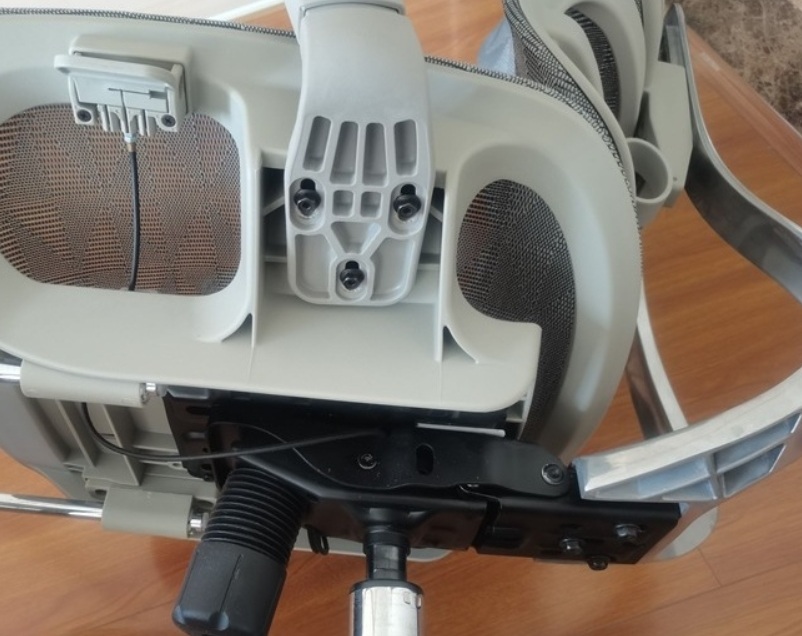
19. When should a chair be recycled or retired?
A chair becomes a stronger retirement candidate when:
- safety cannot be restored economically;
- structural condition is poor;
- repair cost exceeds recoverable value;
- critical parts cannot be reliably replaced;
- future demand is too weak;
- component recovery has little remaining value.
At that point, the remaining value may shift from Whole Product to Components and finally Materials.
Retirement is therefore not always a failure.
Sometimes it is simply the correct final stage of value recovery.
20. Is refurbishment always more sustainable than buying new?
Not automatically.
Refurbishment can extend useful life and keep existing products in circulation, but the right recovery route depends on:
- what actually needs to be replaced;
- how much material and labor are required;
- transportation;
- expected remaining life;
- whether the chair would otherwise be reused.
The strongest principle is simpler:
Choose the least intensive recovery route that safely preserves useful value.
Sometimes that means reuse. Sometimes repair. Sometimes refurbishment. Sometimes parts recovery.
21. What is the most expensive mistake in used-office-chair refurbishment?
Treating the visible problem as the entire problem.
- A broken arm pad may be easy to solve.
- A discontinued mechanism may block the resale of the entire chair.
- A cheap replacement may fit poorly and create extra labor.
- A custom solution may look expensive until it is compared with the value of hundreds of chairs that can be recovered.
- And an apparently unusable chair may still contain valuable components.
The surface problem is only the starting point.
22. So what is the right question to ask about a used office chair?
Not:
“Can we fix it?”
And not:
“What is the cheapest replacement part?”
The better question is:
“What is the highest-value practical next life this chair can safely support?”
A chair may be:
- Reused if it already meets the required condition.
- Repaired if one localized failure is holding it back.
- Refurbished if several areas need restoration.
- Adapted if the chair can work with a modified interface.
- Reverse-engineered if a critical discontinued component must be recreated.
- Custom-developed if no existing solution is technically or economically suitable.
- Dismantled if the whole chair is not worth restoring but the components are.
- Recycled or retired if little useful value remains.
23. Is there a universal rule for deciding what to do?
No.
There should be a repeatable decision process, not a universal answer.
A responsible assessment can be reduced to:
Safety——Condition——Market——Cost——Risk——Remaining Value——Next-Life Route
The sequence matters.
Safety comes first.
Economics comes after condition is understood.
The final decision comes after considering what the chair can realistically become.
Final FAQ: When Should You Save the Chair?
A used office chair should not be judged only by its age, appearance, or purchase price.
It should be judged by the relationship between:
Remaining Asset Value and Cost and Risk of Recovery
- If a relatively small intervention can return a valuable chair to the market, repair may be the right answer.
- If several components must be restored, refurbishment may make sense.
- If standard parts no longer fit, an adapter or custom solution may be justified.
- If the whole chair cannot justify further investment, parts recovery may preserve more value.
- And when no practical route remains, retirement may be the correct decision.
A used office chair is not simply something to repair or replace.
It is an asset with a remaining value, a remaining life, and several possible next destinations.
The goal is not to refurbish every chair.
The goal is to make the best decision about what that chair should become next.